
Call Us : 207-994-5109
Mon – Fri: 8 am to 9 pm & Sat – Sun: 10 am to 8 pm
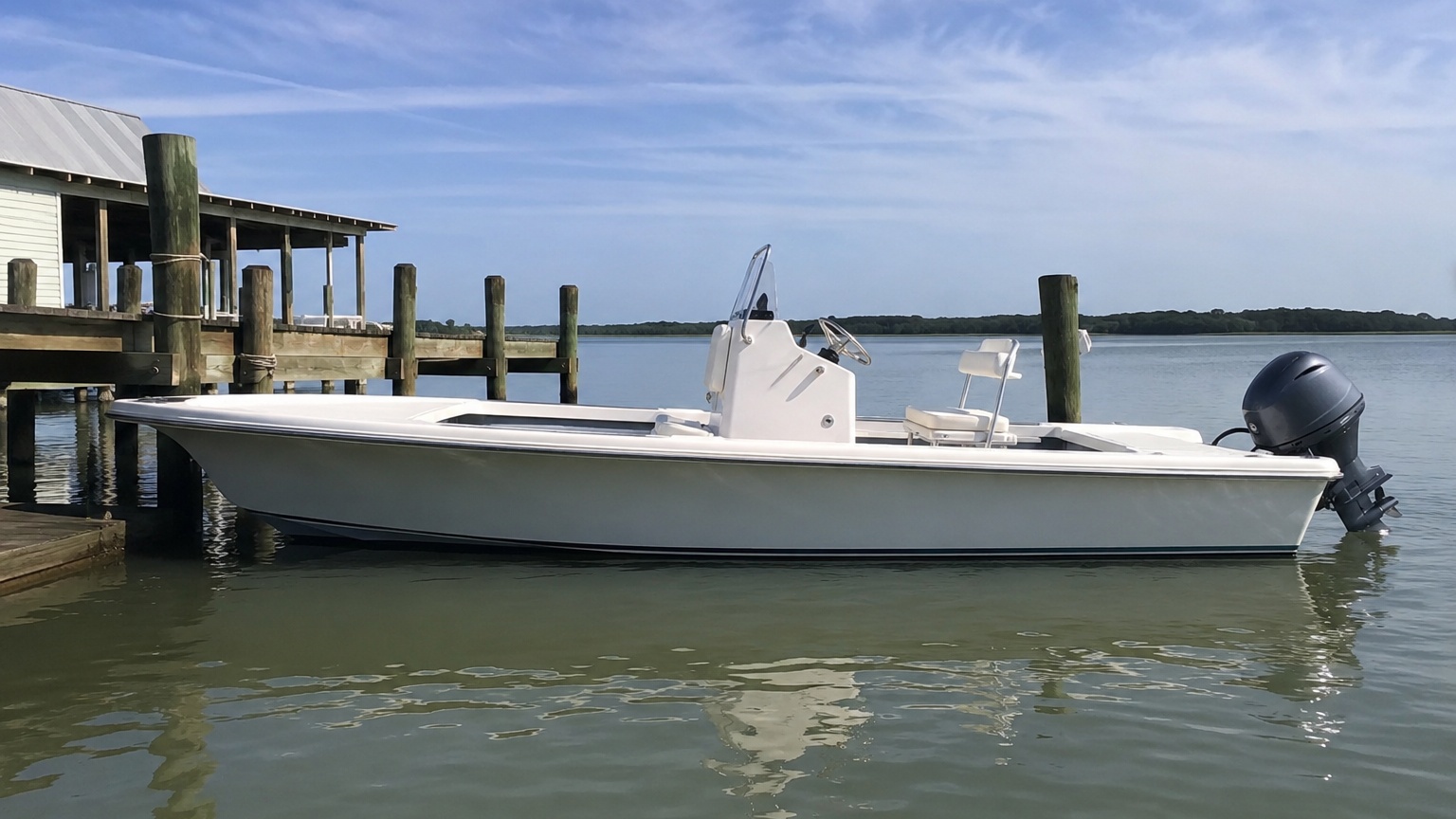
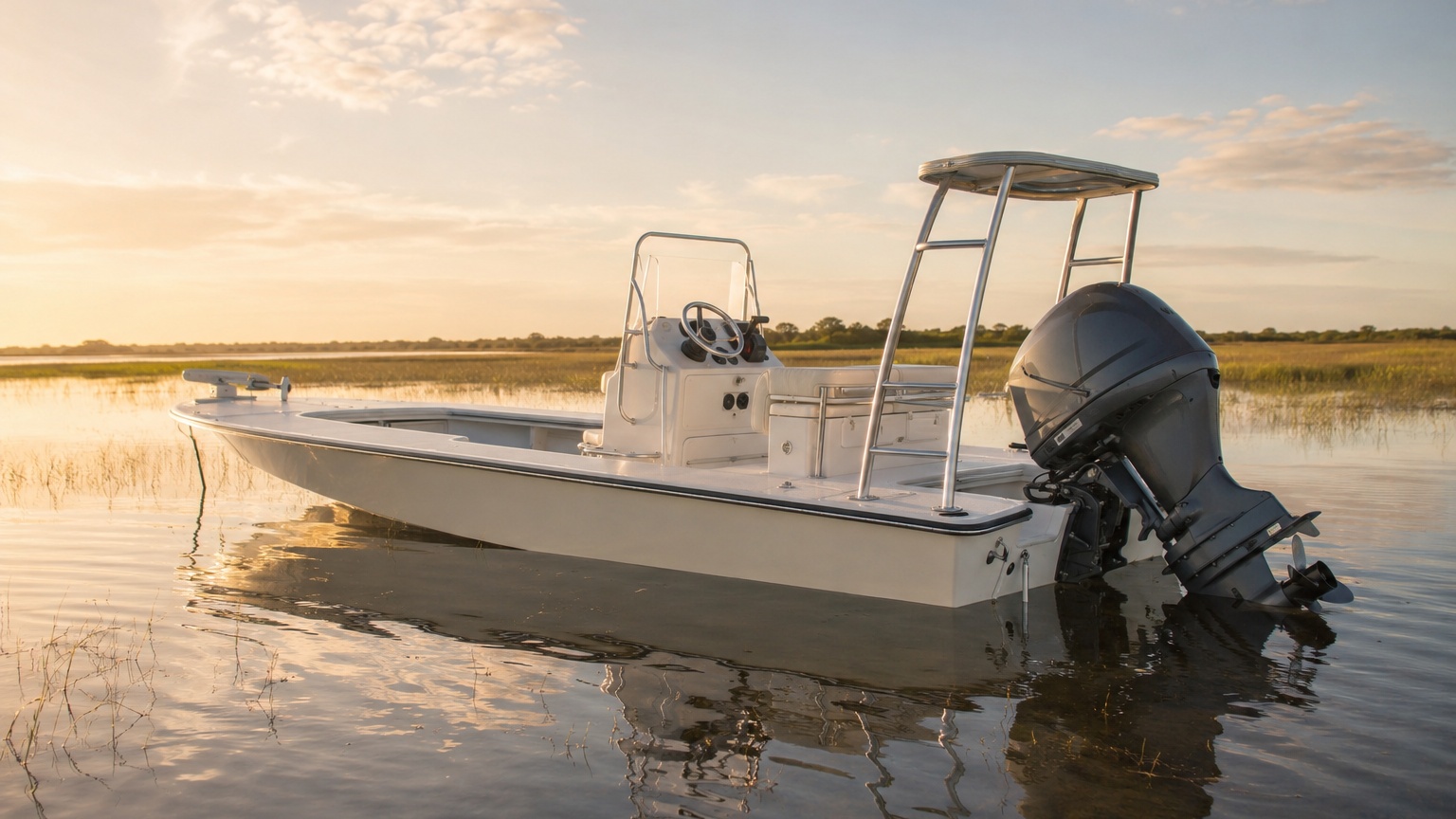
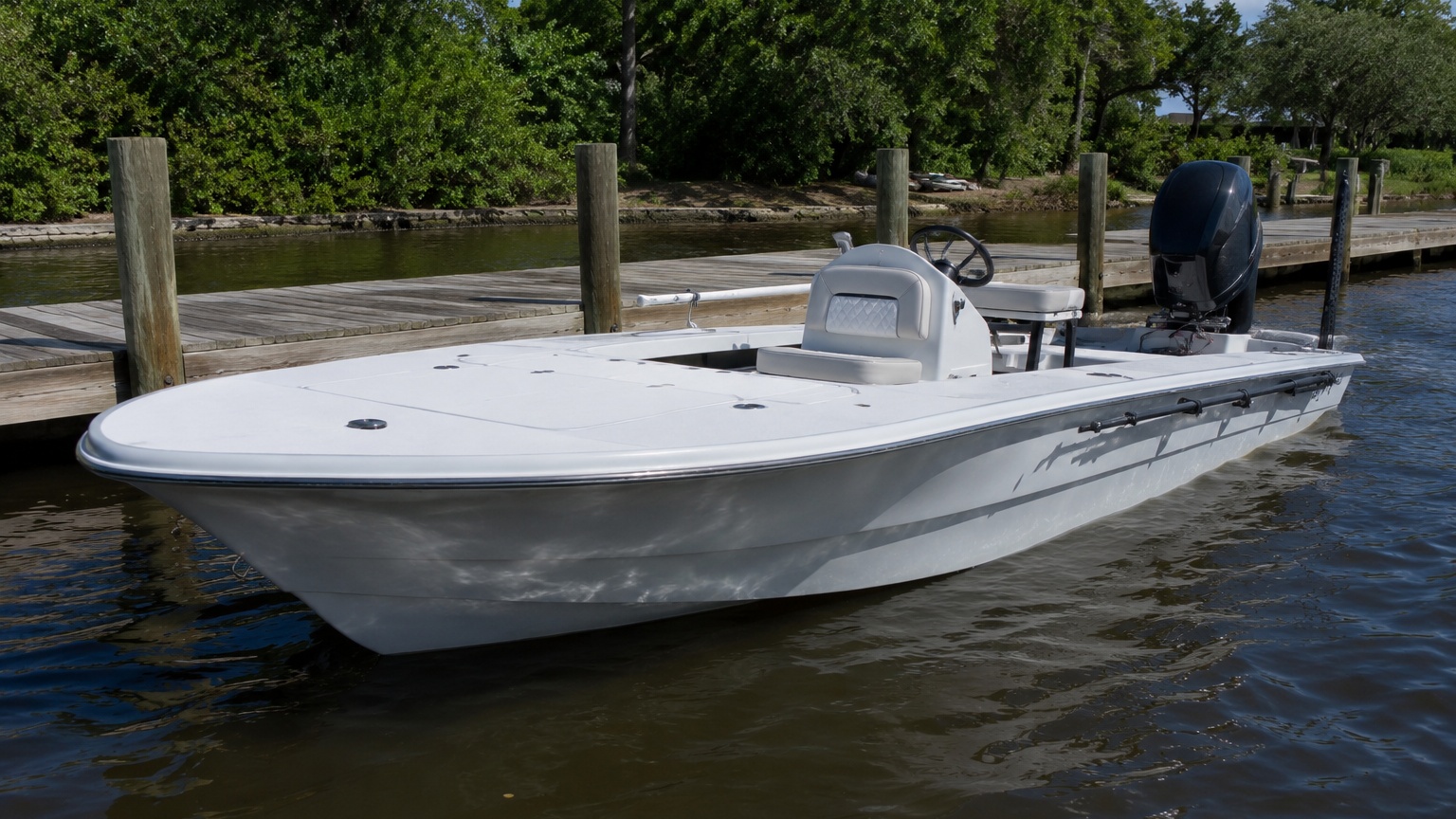
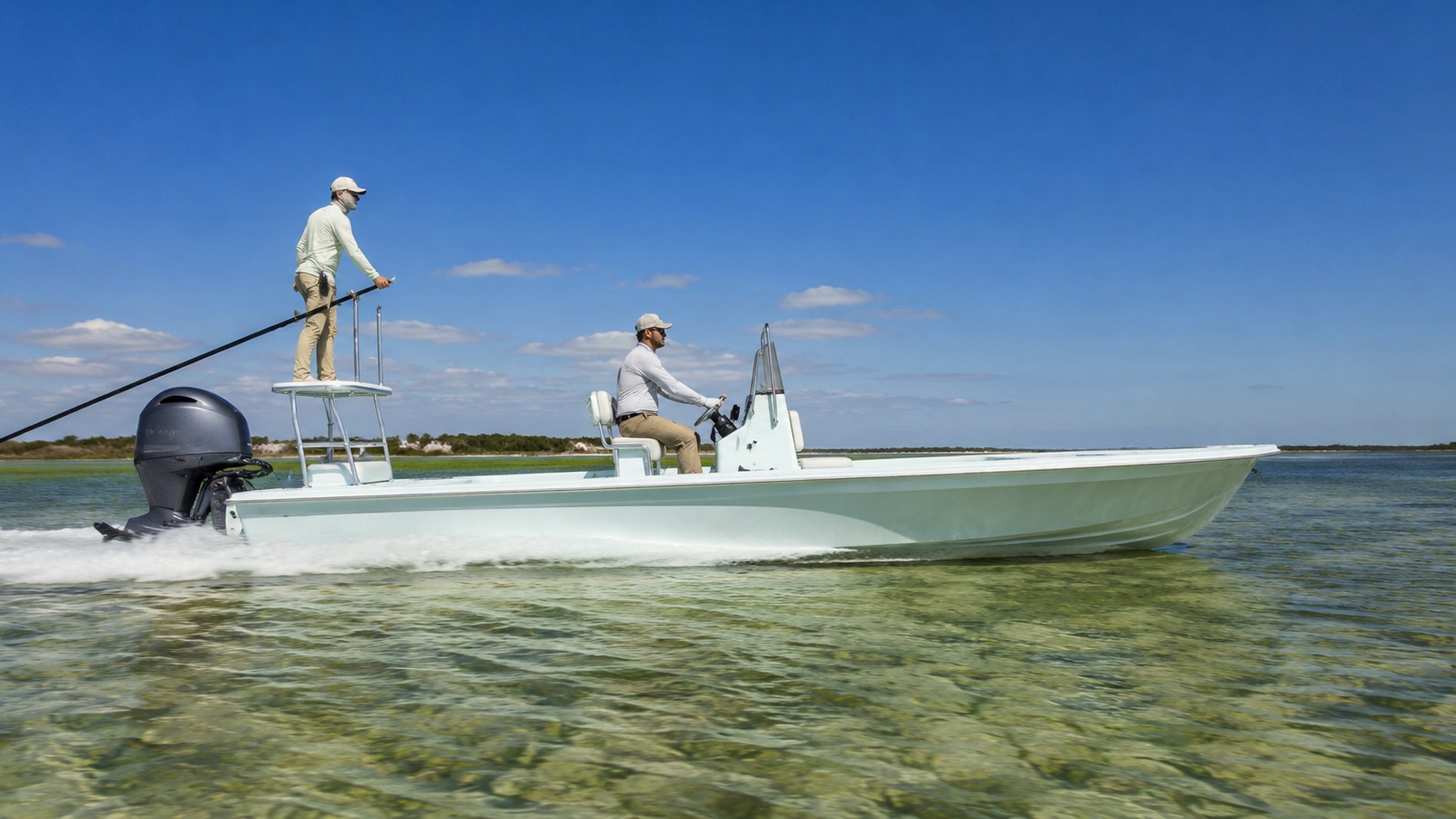
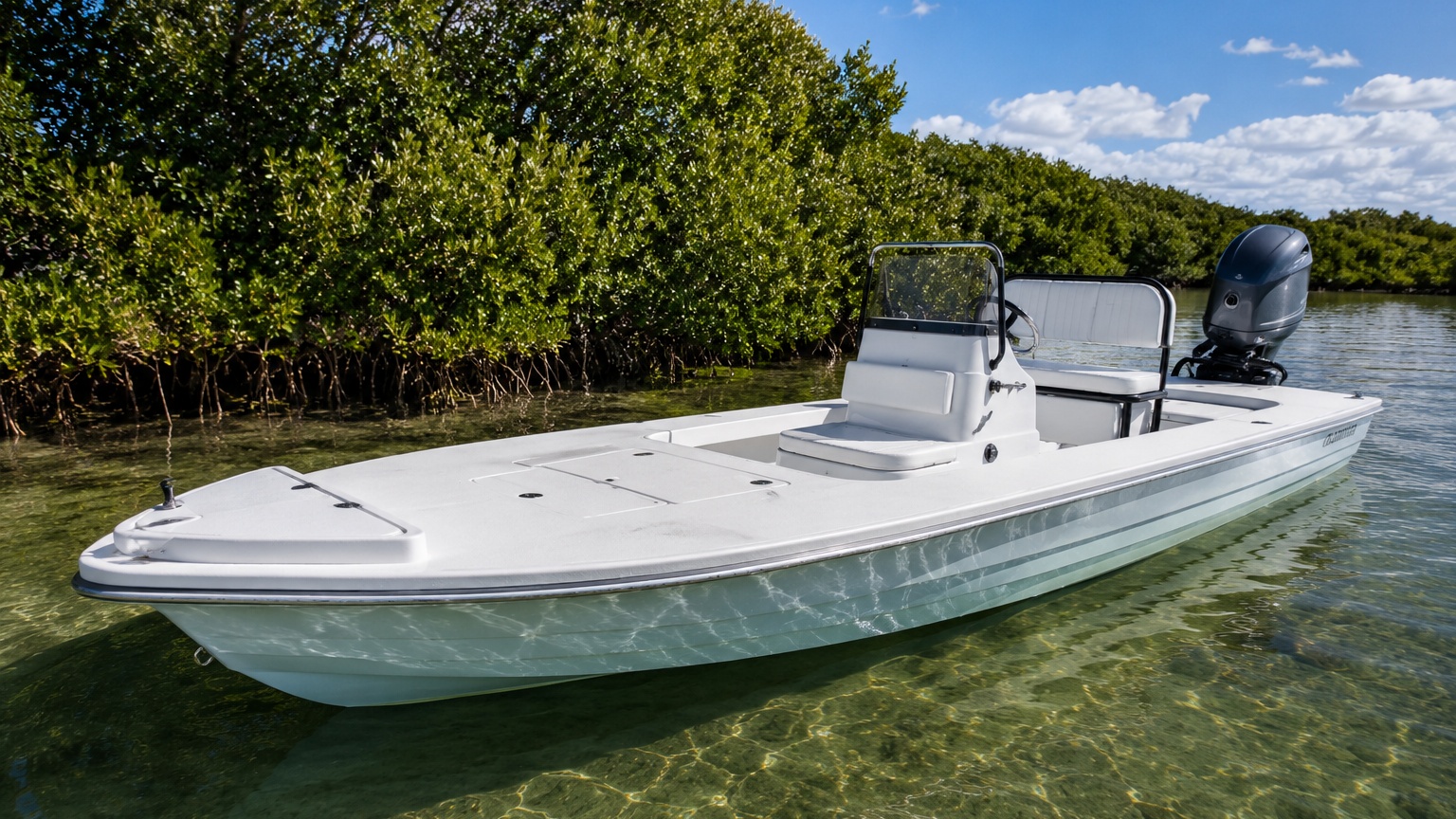
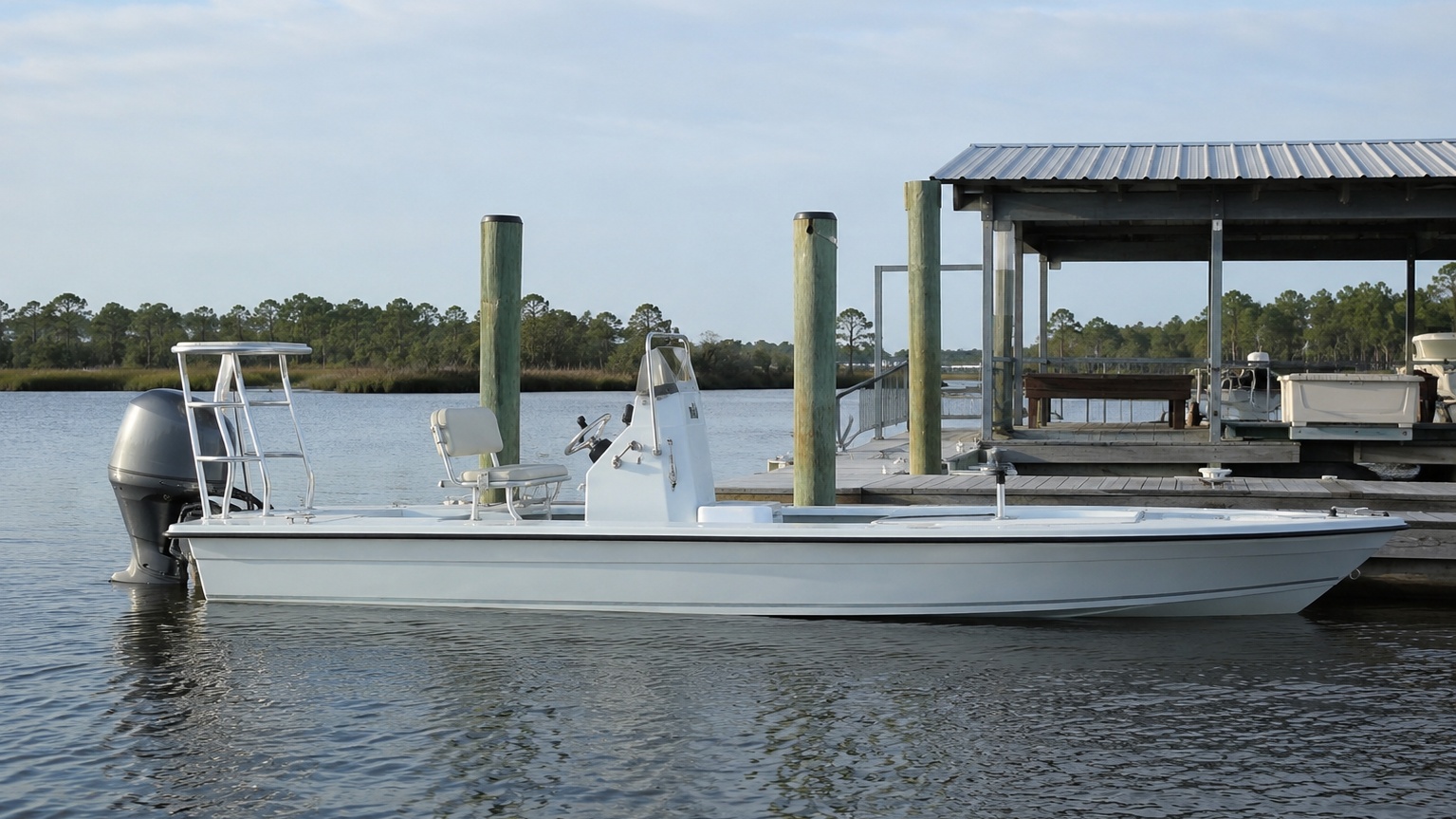
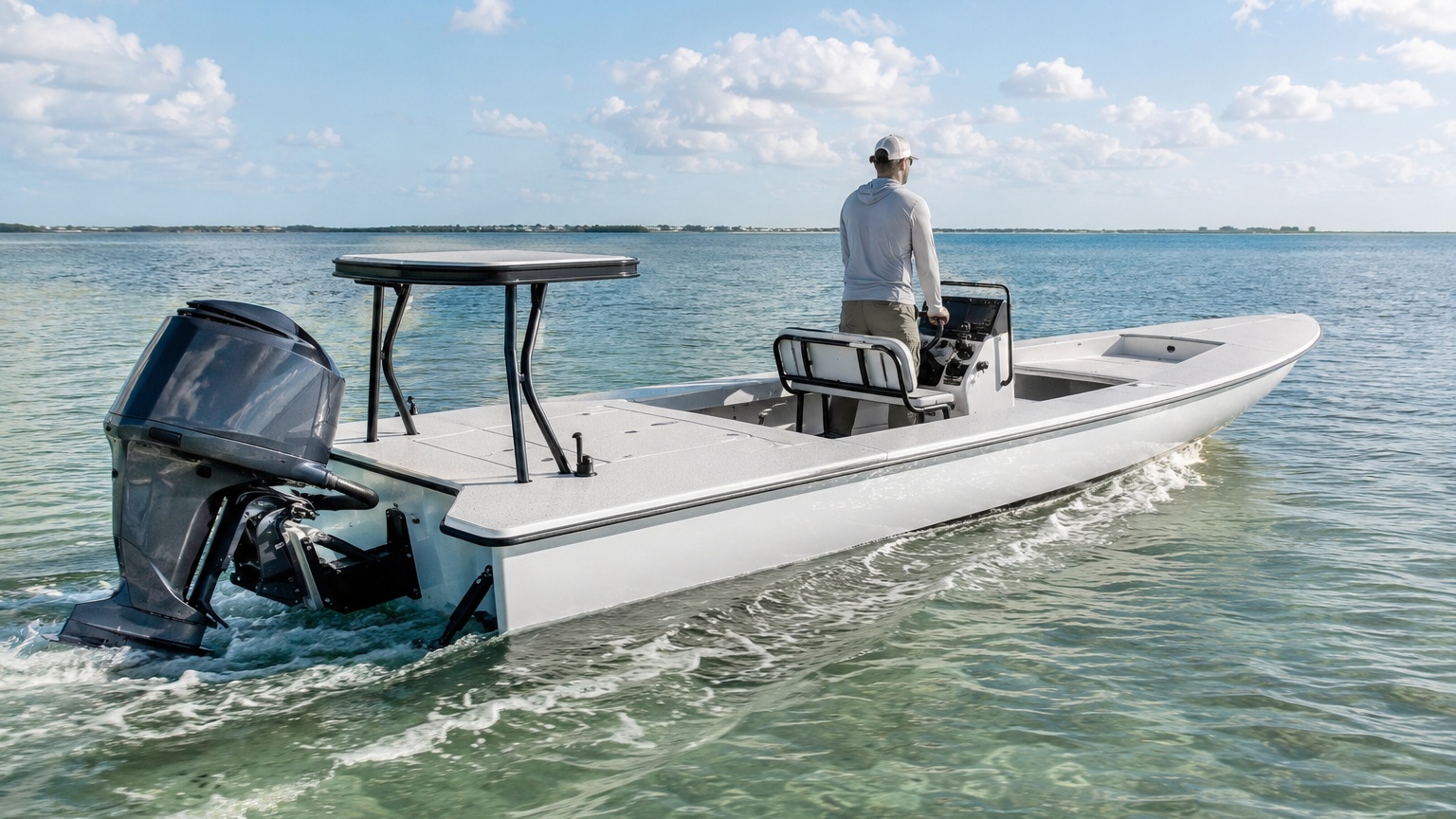
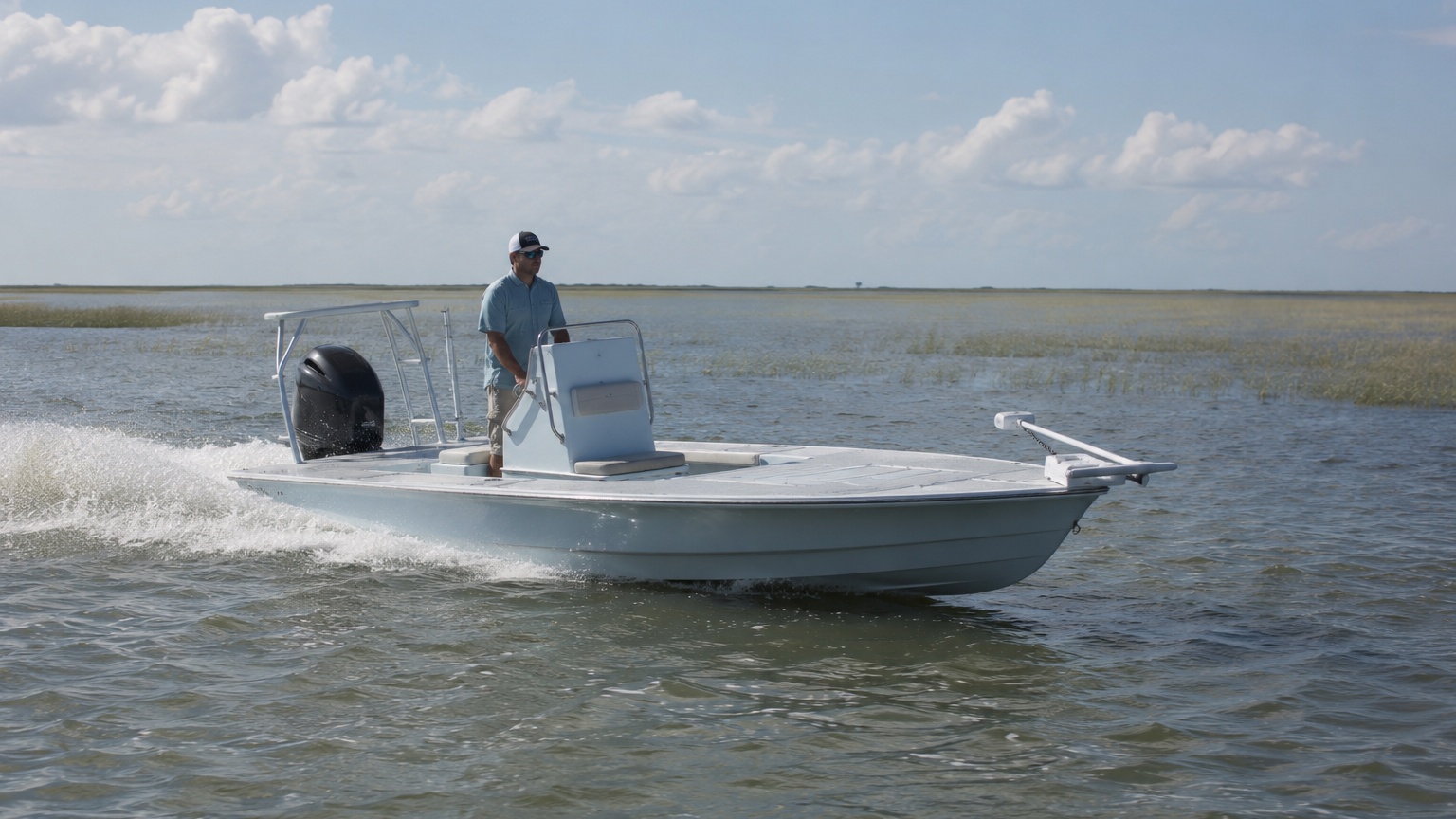
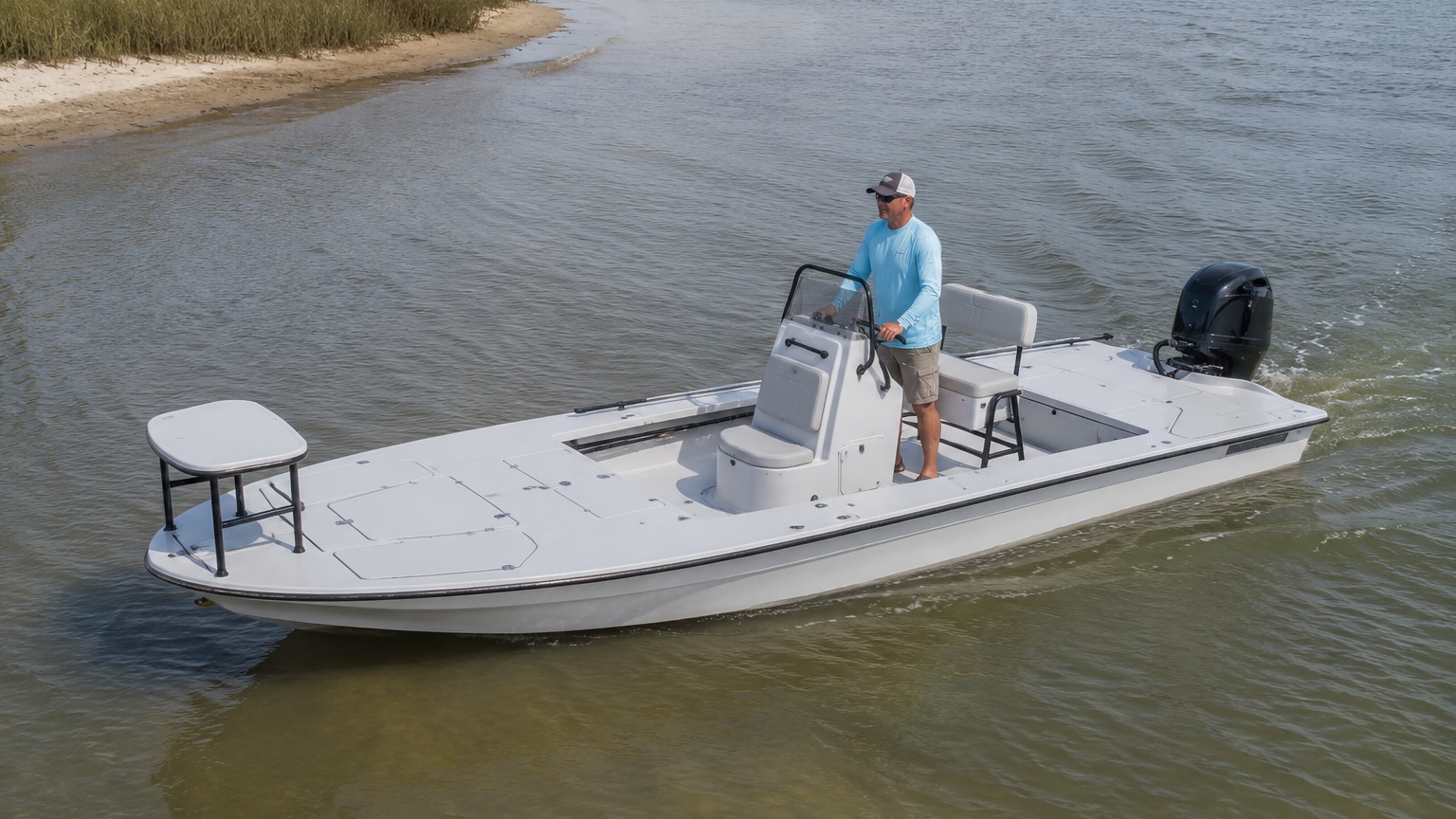
The Hewes Redfisher 21 is the Redfisher flagship for anglers who routinely mix shallow backcountry fishing with inlets, beach runs, tournament pace, larger live bait loads, and more demanding open-water travel.
The Redfisher 21 is not simply a longer 18. It is the current Hewes for buyers who need shallow-water capability and genuine nearshore speed, fuel, bait capacity, and crew room in the same hull. At 21 feet 6 inches with an 8-foot-6-inch beam, 50 gallons of fuel, and a 350-horsepower ceiling, the 21 is built for anglers whose shallow-water day regularly expands into bigger water.
Hewes describes the 21 around a demanding use case: catch bait in one area, run to another, fish hard, and return quickly even when conditions deteriorate. That is much closer to a tournament and nearshore mission than the ownership brief for the Redfisher 16 or 18.
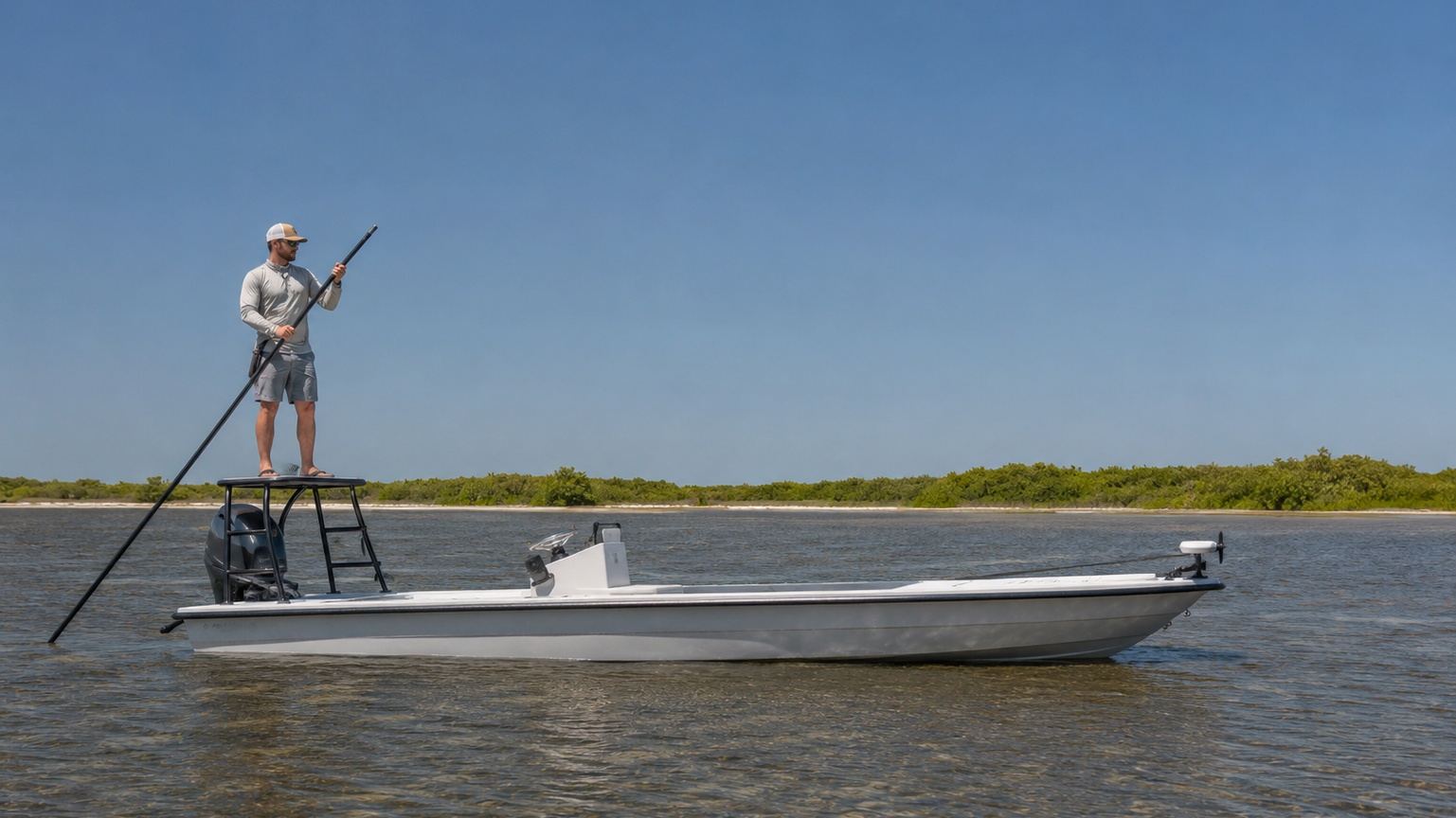
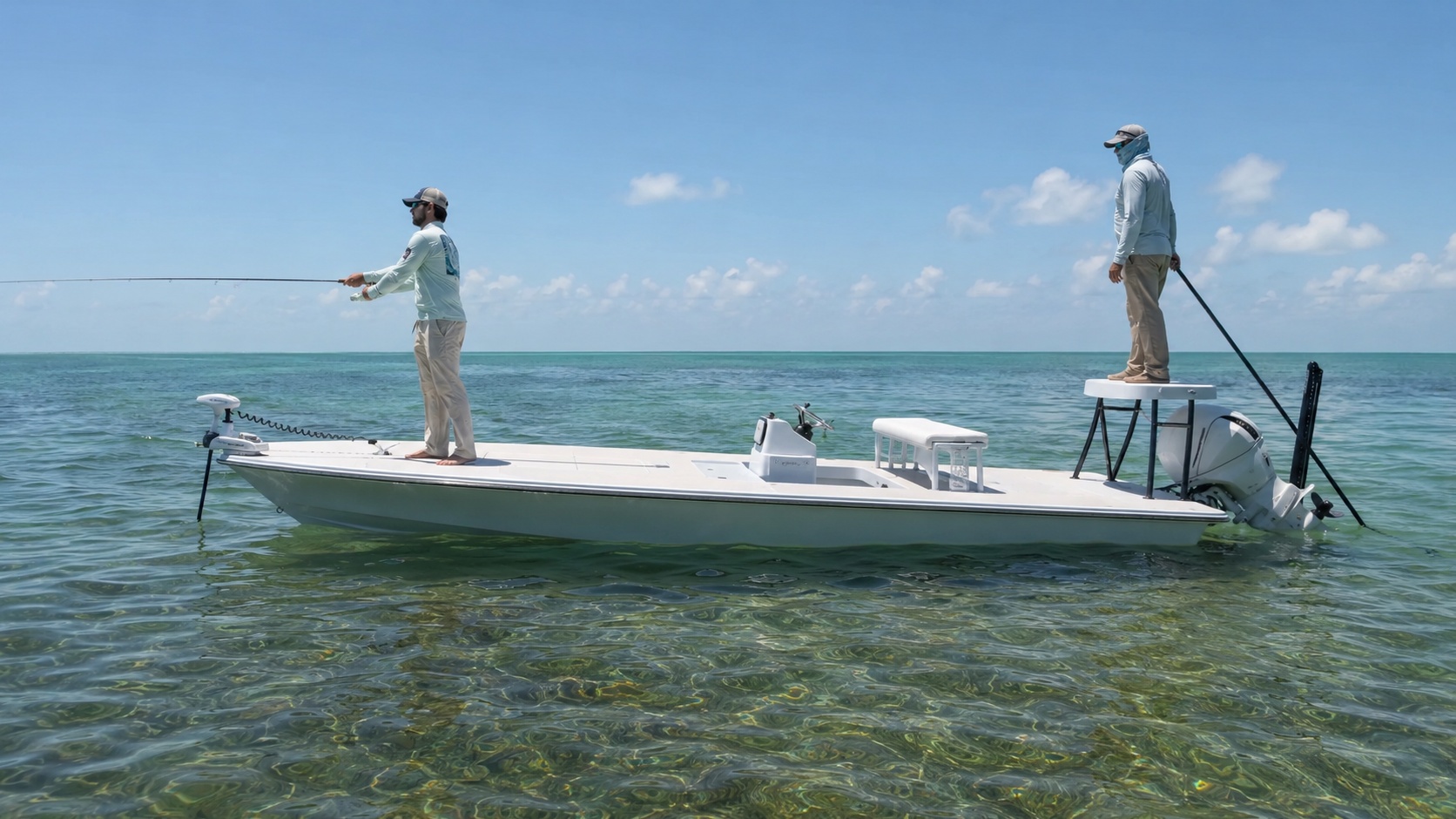
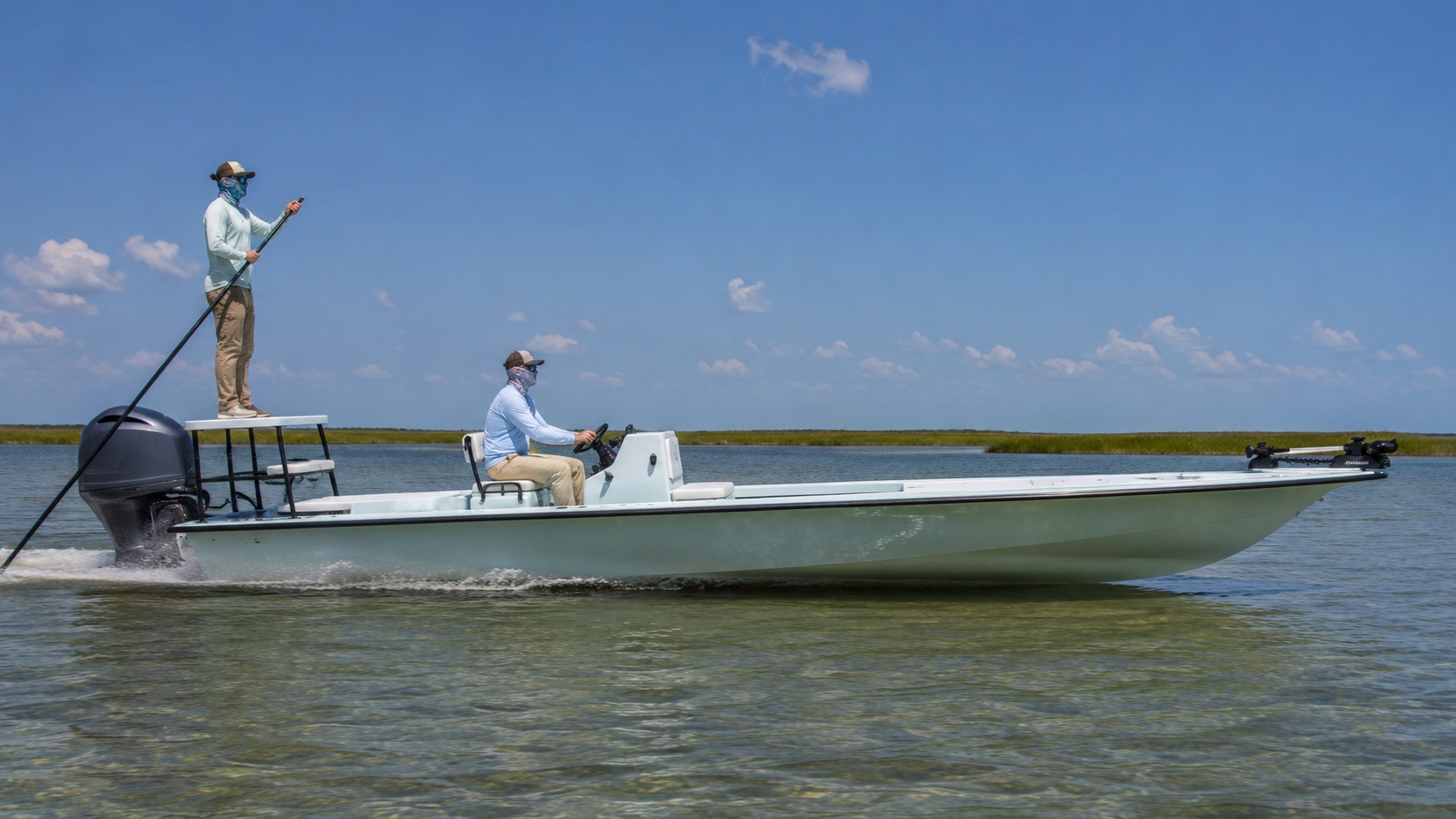
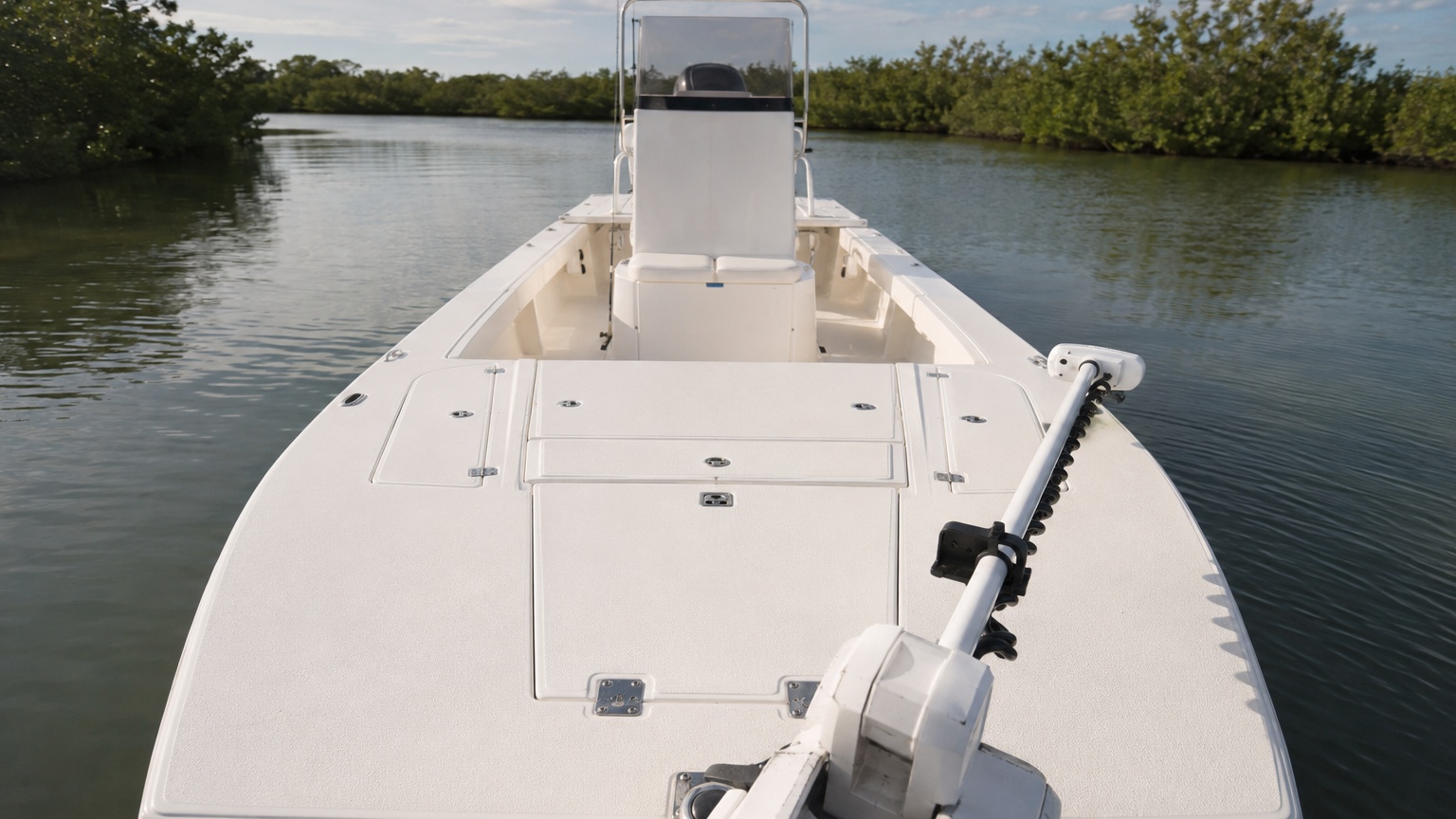
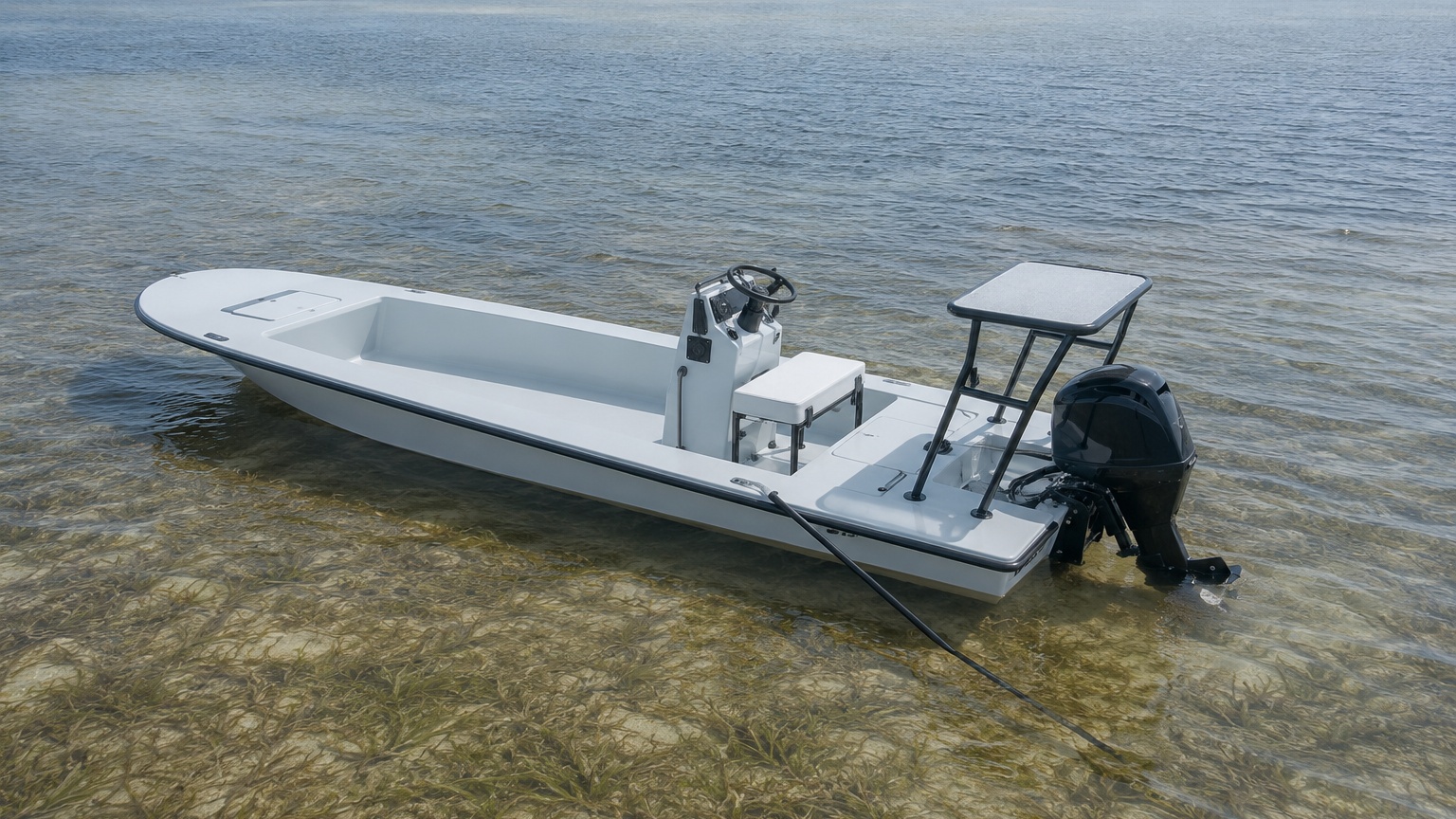
The boat still preserves flats-boat fundamentals. Huge casting decks, walk-around gunwales, a 14-inch published draft, poling-platform capability, a standard jackplate, trolling-motor options, and shallow-water anchors keep it relevant when the day moves back into the mangroves.
The larger livewell is one of the clearest functional differences. Forty-four gallons of aft-center bait capacity can support fishing styles that would overwhelm the smaller Redfishers.
The 21 is also the only current Redfisher that supports 300- and 350-horsepower engine choices and advanced digital steering/control configurations. Those systems bring real performance and real ownership cost.
Compare it with the Redfisher 18 honestly. If the normal day never needs six-person capacity, 50 gallons of fuel, nearshore range, heavy bait, or more than 150 horsepower, the 18 may be the smarter tool.
Published factory figures. Confirm every dimension against the individual boat before you commit.
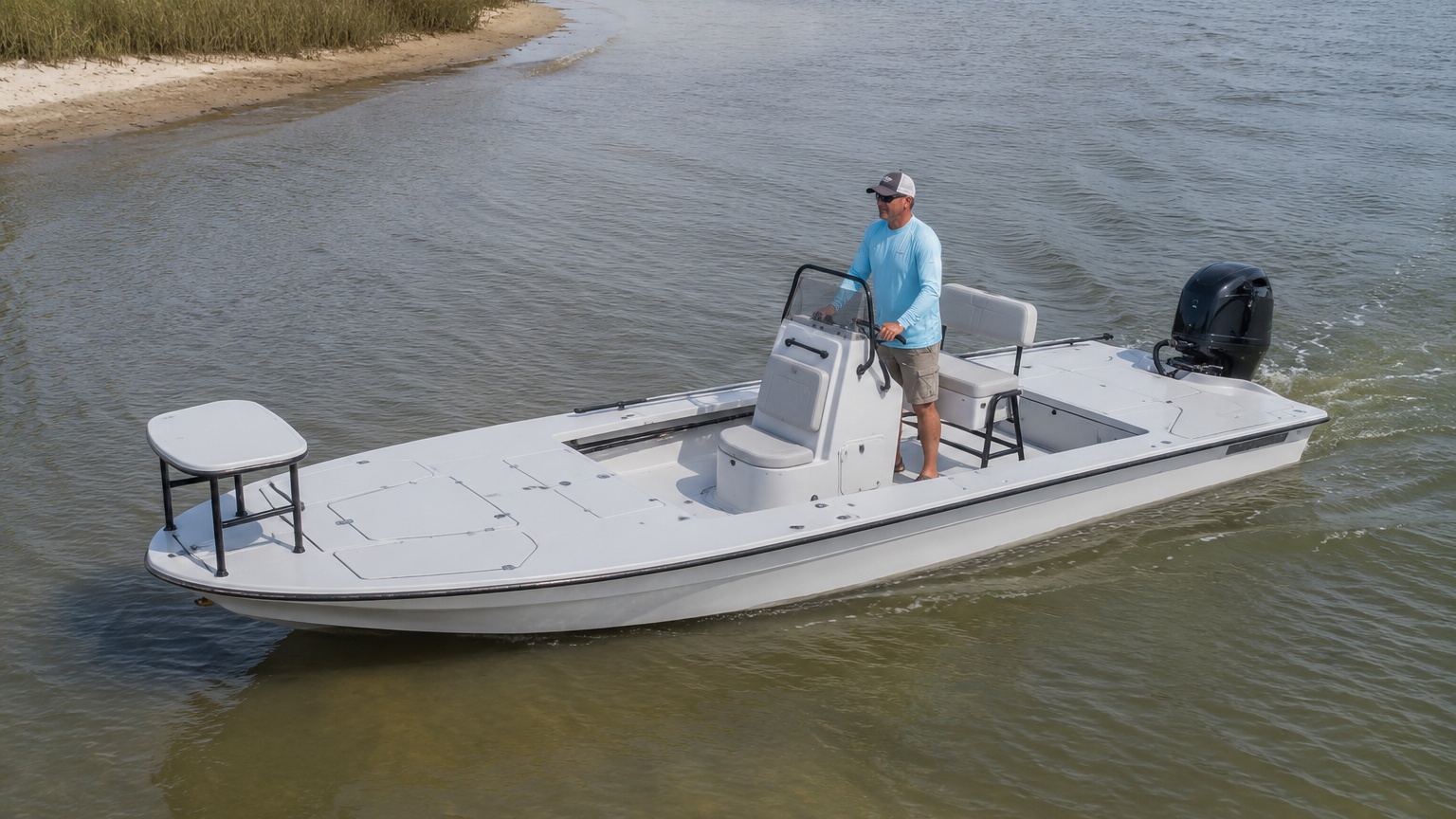
The Redfisher 21 uses a full 8-foot-6-inch beam, the conventional road-width ceiling for routine trailer travel in many jurisdictions. That width gives multiple anglers far more room to move without immediately forcing the owner into oversize-transport territory.
The hull publishes 15 degrees of transom deadrise and a 14-inch draft. It gives up some skinny-water number compared with the 16 and 18 in exchange for more structure, running surface, fuel, and high-output propulsion.
At approximately 2,850 pounds with engine, the 21 is more than a thousand pounds heavier than the 18 before the owner adds fuel, a 36V trolling-motor bank, 44 gallons of live bait, Power-Poles, gear, cooler, and trailer.
VARIS construction helps Hewes control structure and weight, but the buyer should still treat the 21 as a substantial rig. Lift capacity, tow rating, trailer brakes, and storage access need to be calculated around the loaded boat.
Inspect the hull bottom for impact and high-speed wear. A 21 may see inlets, beach water, tournament runs, and heavier chop that smaller Redfishers avoid.
The standard jackplate puts load directly into the transom system. Check mounting, fasteners, hydraulic operation, engine height, and any evidence of movement or repair.
Large casting decks and walk-around gunwales depend on structural stiffness. Hatch fit, platform movement, tower bases, and deck hardware should all feel solid under adult weight.
Engine Choices: Yamaha 250-350 hp options plus available Mercury 300 hp configurations
The Redfisher 21’s power range changes the entire ownership profile. A 250 SHO already gives the hull serious performance. Moving to 300 or 350 horsepower raises acceleration, top-end potential, fuel demand, insurance questions, and the importance of steering and propeller setup.
Hewes also makes more advanced control choices available here, including digital electric steering and Helm Master EX configurations. Those options can improve steering feel and low-speed control but add electronics and calibration that need to be tested on a used boat.
The jackplate is standard, not optional. That means every buyer should understand how engine height affects shallow running, water pressure, propeller grip, steering load, and hole shot.
Inspect the outboard carefully for corrosion, lower-unit impact, propeller damage, trim-system health, steering, mounts, service records, cooling flow, and engine diagnostics. The horsepower and speed of this hull make deferred service more consequential.
Sea-trial the 21 with fuel and people aboard. A 350-horsepower boat that is badly propped or stern-heavy can be less useful than a well-balanced 250 setup.
At cruise, record rpm, speed, trim, engine height, and fuel flow where digital data is available. The 21 should be able to cover distance efficiently rather than forcing the owner to run fast simply because the horsepower is there.
Repower planning needs attention because high-output modern outboards are heavy and expensive. Future engine choice must remain inside the 350-horsepower rating and respect transom weight, steering, controls, and electrical architecture.
Fifty gallons of fuel marks the 21 as a very different Redfisher. It is designed for anglers who may make multiple long runs rather than staying within a few miles of the ramp.
Full fuel adds more than 300 pounds before any live bait is loaded. The 44-gallon livewell can add another large block of weight at the stern, and a 36V trolling-motor bank adds three substantial batteries elsewhere in the boat.
That makes load management a performance issue. Engine height, propeller, trim tabs, and crew position can all feel different with a full livewell and tournament gear.
The 44-gallon bait system should be inspected for fill rate, overflow, drain, livewell light, recirculation if equipped, and whether the pump can maintain bait during a long run.
A 36V trolling motor such as the Garmin Force Kraken or Power-Pole MOVE is appropriate for the boat’s size, but it requires healthy batteries, a charger that matches them, clean high-current wiring, and secure mounting.
Range planning should include a conservative reserve because the 21 is exactly the Redfisher most likely to be used in open water where wind, tide, and sea state can increase fuel consumption on the return leg.
The 21 should feel like a fast flats boat with real offshore margins, not like a heavy bay boat forced into shallow water. Its 15-degree hull and high horsepower are meant to cover distance while preserving enough draft and deck layout for backcountry fishing.
Acceleration should be strong even with bait, fuel, and several anglers aboard. If the boat labors badly onto plane, review engine health, propeller, jackplate height, trim-tab position, and weight distribution before blaming the hull.
Run the boat through inlet-style confused chop during a sea trial if conditions safely allow. The 21’s size should provide a noticeable comfort advantage over the 18, but the operator still needs to trim and throttle a flats hull intelligently.
At high cruise, steering should remain precise. Any wandering, heavy load, hydraulic leak, or inconsistent digital steering feel needs diagnosis before purchase.
Use the jackplate at several speeds. Raising the engine can help shallow operation, but too much height can reduce water pressure or propeller grip. The system should make the boat more versatile, not more unpredictable.
At trolling-motor speed, the 21 should hold position without excessive battery draw or bow oscillation. The heavier platform benefits from 36V power precisely because windage and mass are much greater than on the 16 or 18.
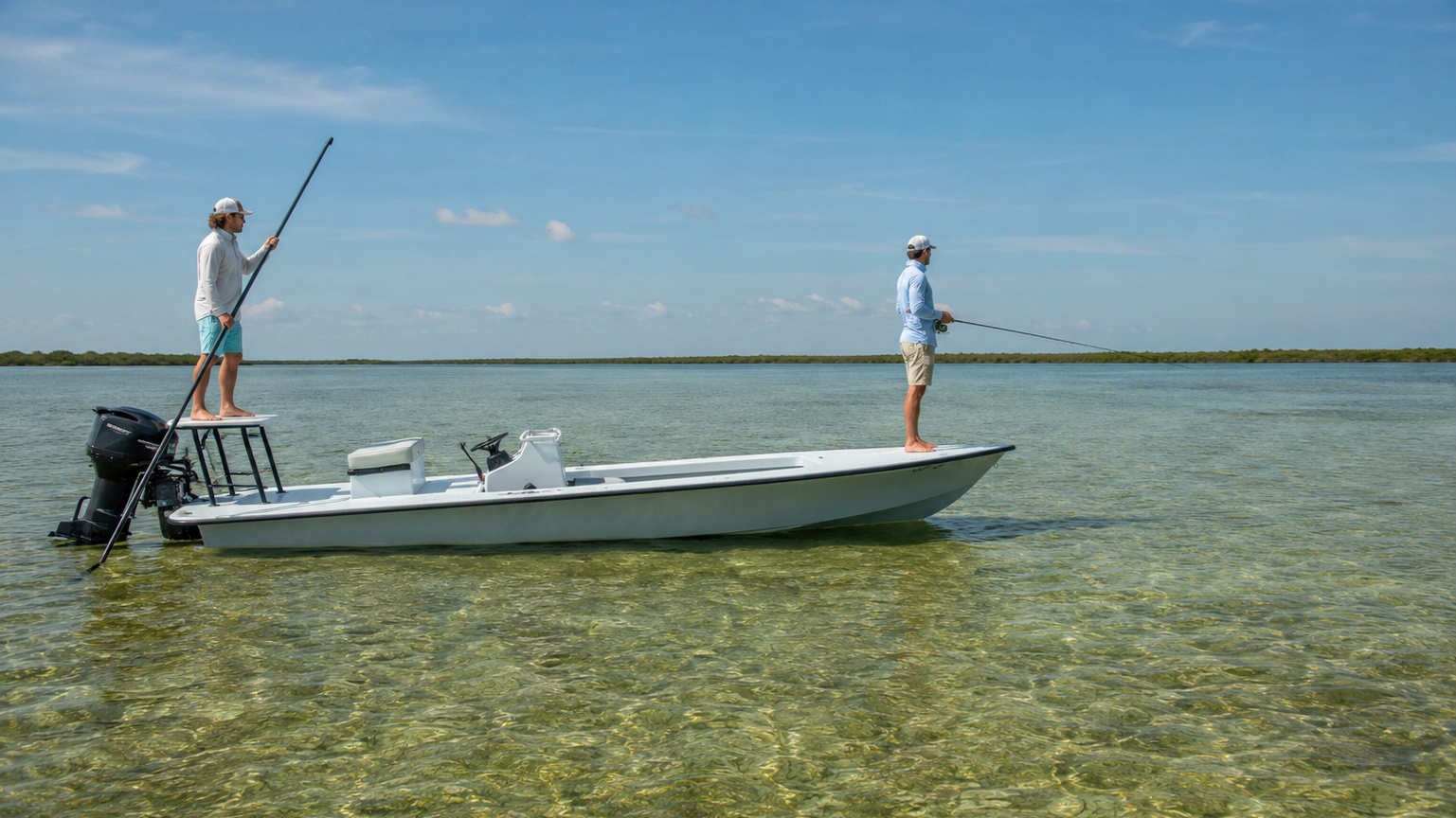
On the pole, the buyer should accept that the 21 will never feel like the compact 16. The question is whether the ability to pole at all is sufficient given the major gains in run, bait, crew, and nearshore capability.
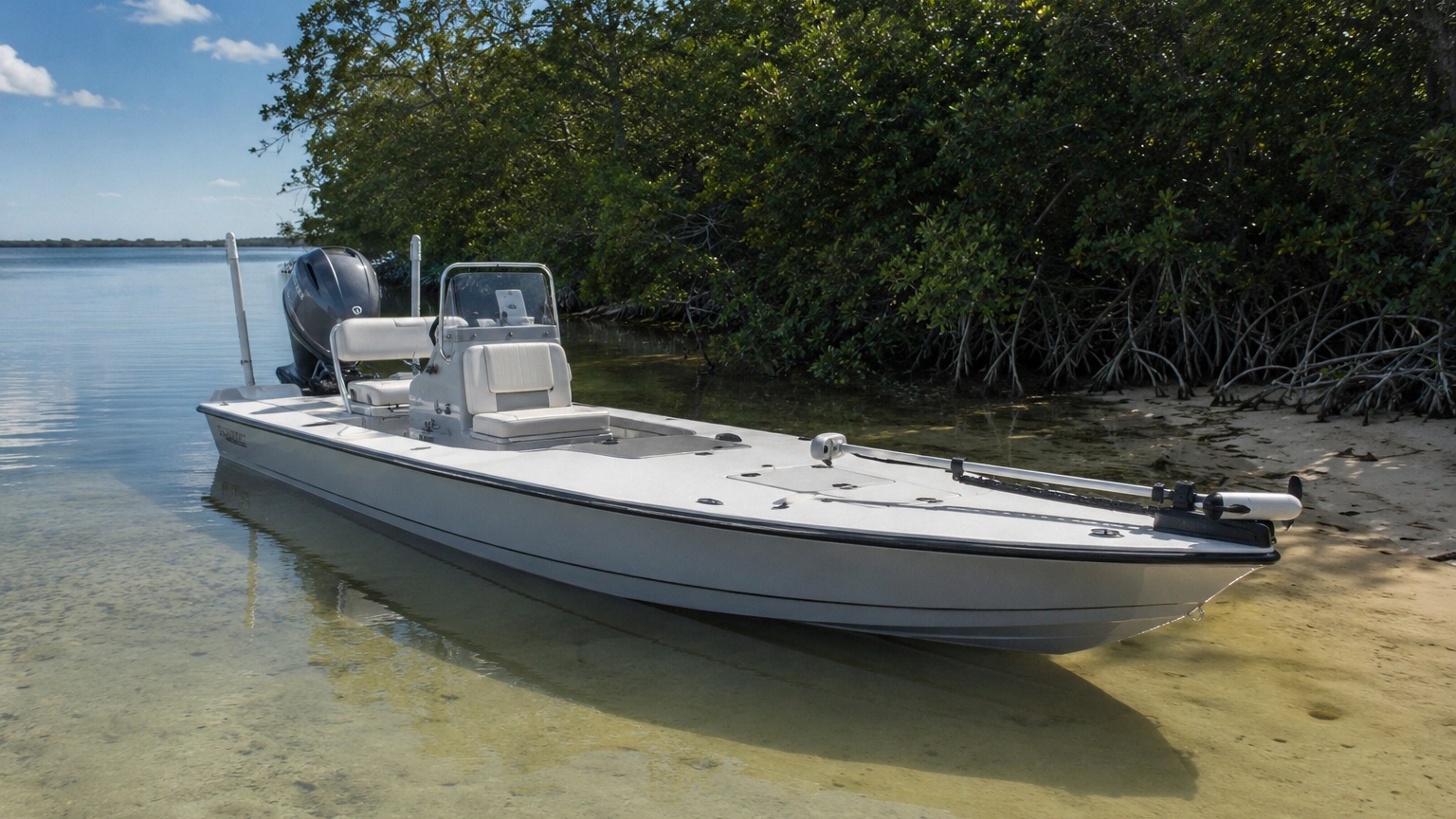
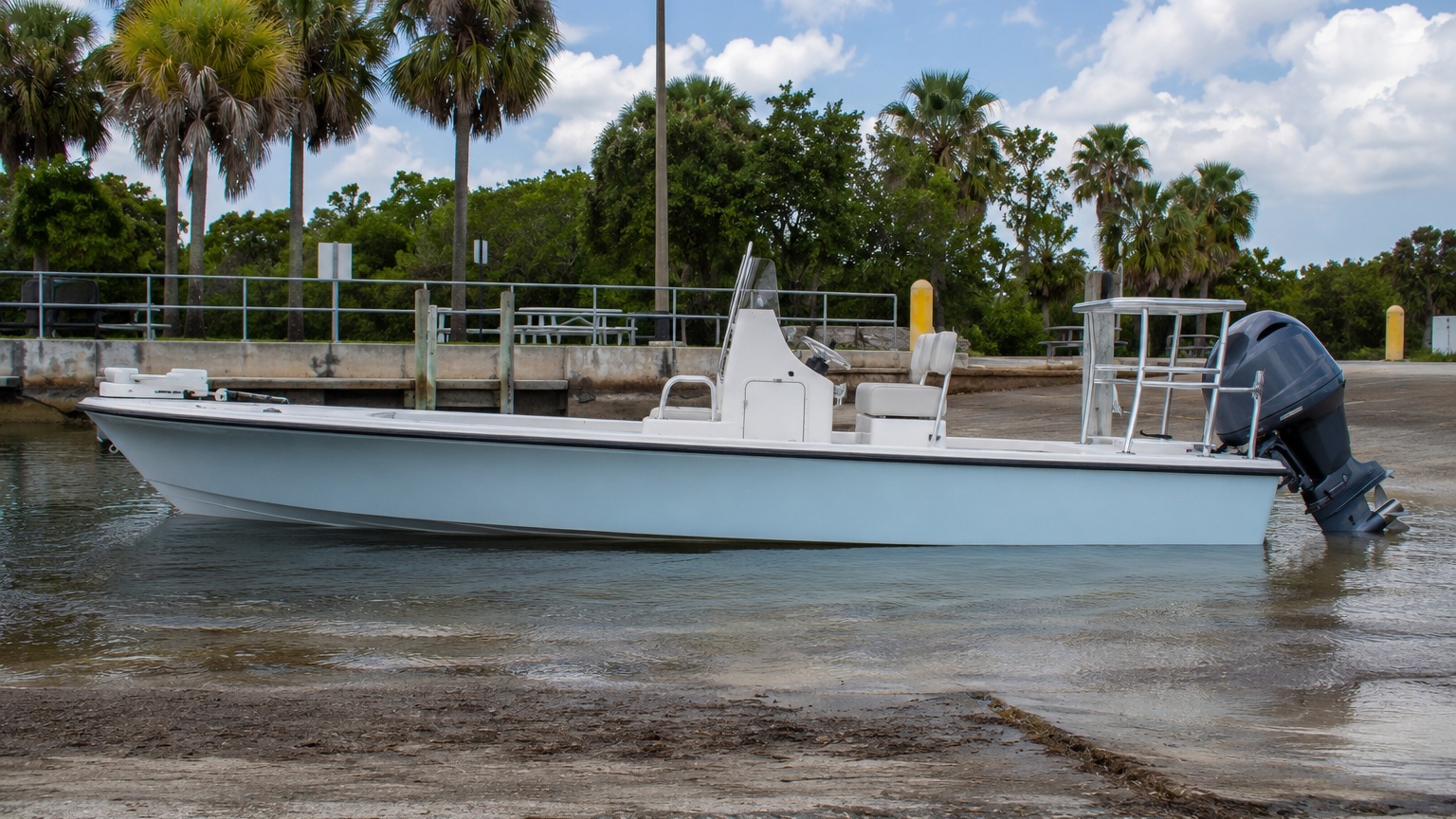
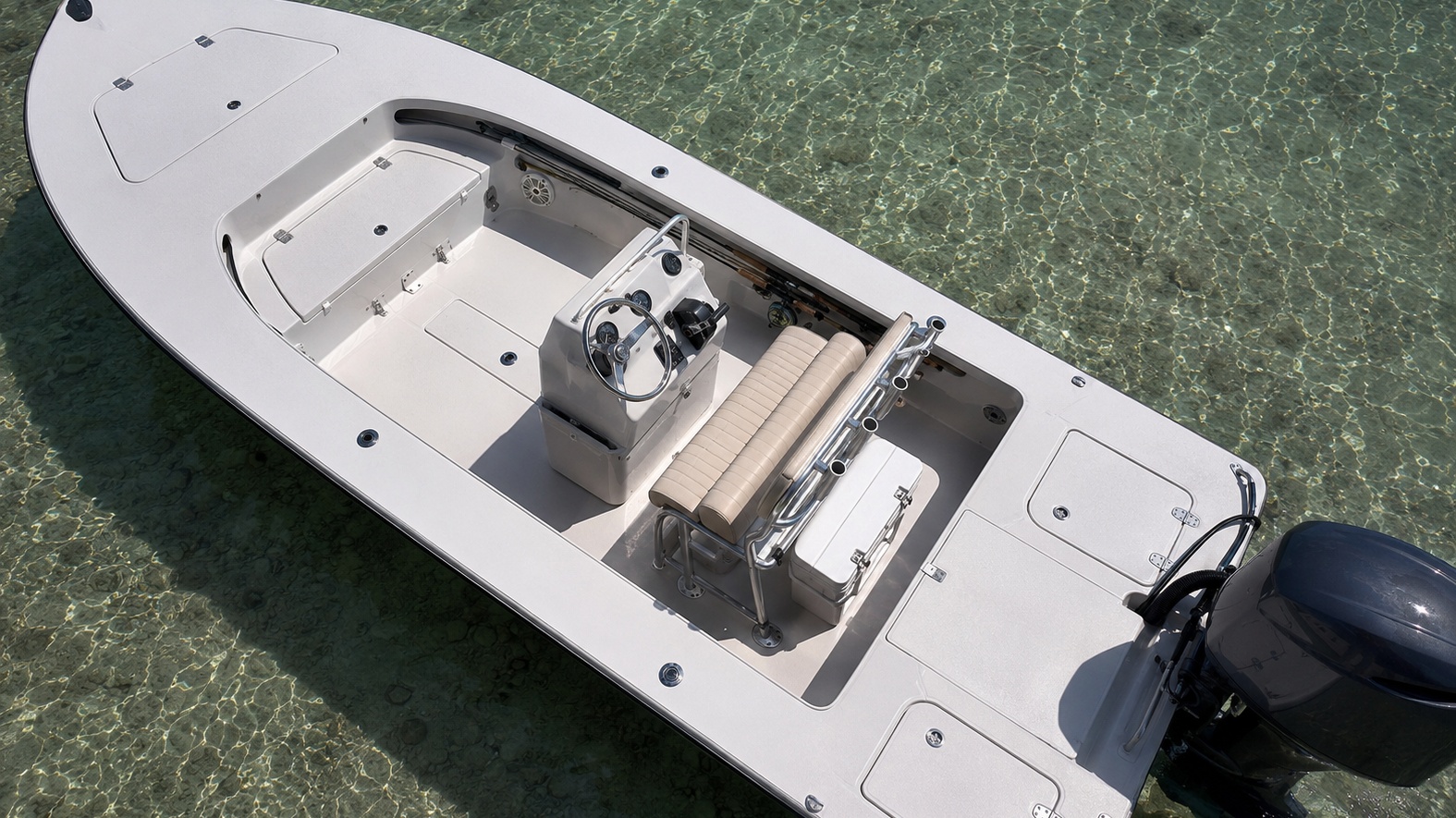
The 21’s huge casting decks and walk-around gunwales are designed so multiple anglers can follow fish without blocking one another. That matters on tournament days, tarpon bites, and live-bait situations where movement becomes fast and chaotic.
The 44-gallon aft-center livewell is a major piece of the deck plan. It supports much more bait than the smaller Redfishers and should remain accessible even with anglers working the stern.
Large lockable dry compartments can swallow cast nets, gear bags, tackle, safety equipment, and rain gear while leaving the casting surfaces clear. Check every latch and gutter because storage volume only helps if the contents stay dry.
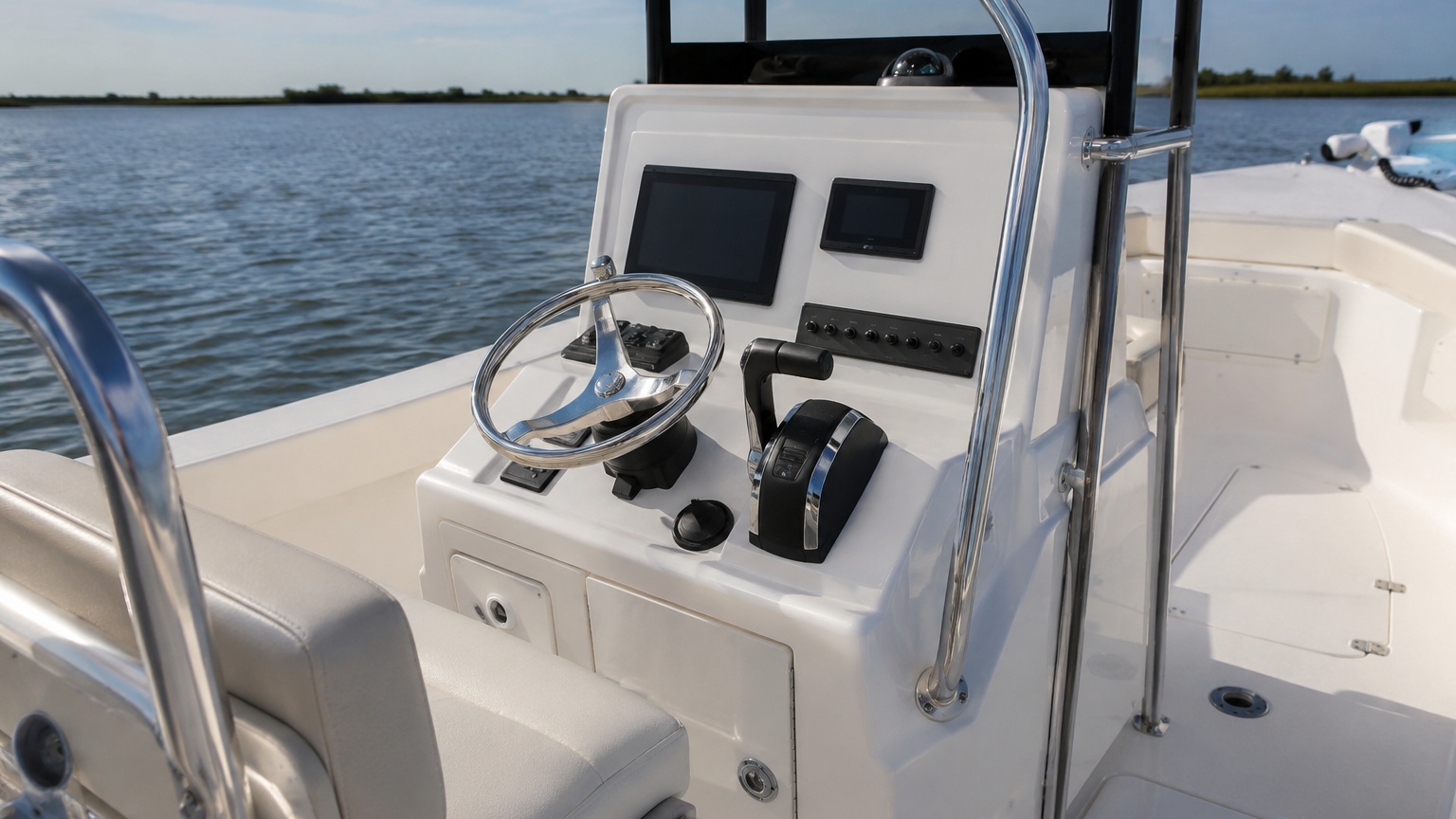
The console has enough space for a 12-inch-class display with room to spare. A serious 21 often carries navigation, sonar, engine data, and digital steering information at the same helm, so layout should be legible at speed.
Undergunnel rod tubes and console rod racks keep long rods protected without narrowing the walkways. Inspect tube interiors for damage that can chew rod tips during rough runs.
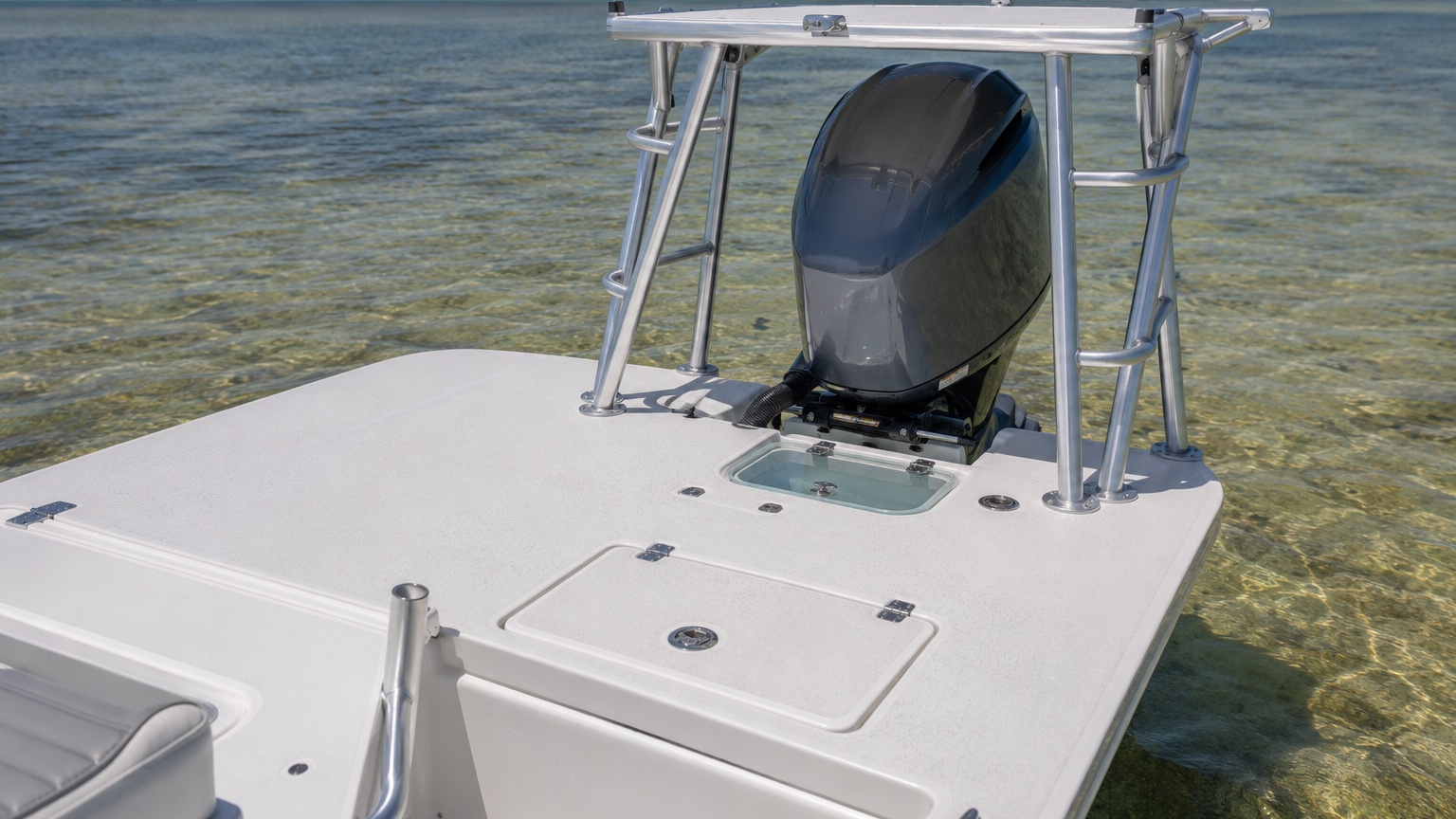
The optional 45-inch poling tower creates a high sightline but also puts more leverage into deck mounts. Climb it and inspect every weld, fastener, and contact point.
A bow casting platform, shallow-water anchors, and 36V trolling motor can make the forward deck extremely capable. The buyer should make sure the accessories do not create cable clutter or block anchor and hatch access.
This is the Redfisher that should be tested with the whole fishing crew. The boat’s value comes partly from letting several serious anglers work at once.
44-gallon aft-center livewell – The largest bait system in the line matches anglers who carry serious live bait or fish tournament days where bait capacity directly affects the plan.
Hewes makes engine-height control part of the base 21 concept because shallow-water setup and high-output propulsion need to coexist.
Cast nets, gear bags, tackle, and safety equipment can be secured without covering the casting decks.
The trailer package reflects the 21's very different loaded weight and length compared with the smaller Redfishers and should be treated as a serious asset in the transaction.
The standard jackplate is the first system to test because it is central to engine height and shallow-water performance. Cycle it fully, watch the gauge or switch behavior, and inspect fasteners, hydraulics, and wiring.
Digital electric steering and Helm Master EX may be fitted on some high-output builds. Verify steering response, fault history, calibration, display communication, and battery voltage before treating those systems as a value add.
A 36V trolling motor creates a larger electrical load than the 24V systems common on the smaller Redfishers. Check the charger, battery ages, cable gauge, breaker, plug, and mounting structure.
Run the 44-gallon livewell and any recirculation equipment for long enough to reveal leaks or weak pumps. Tournament bait systems have to work continuously, not just during a two-minute inspection.
Test trim tabs, cockpit lighting, navigation lights, bilge, battery switch, accessory power, Garmin electronics, engine data, and every switch at the console.
Dual Power-Poles or 10-foot shallow-water anchors can add considerable weight and leverage at the stern. Inspect brackets, hydraulic lines or electrical drives, remotes, and transom mounting.
High-output accessories make battery organization important. Wiring should be supported, fused, labeled where practical, and kept away from sharp hatch edges or wet storage.
A 21 with expensive electronics and controls but poor electrical workmanship should be valued as a project, not as a premium rig.
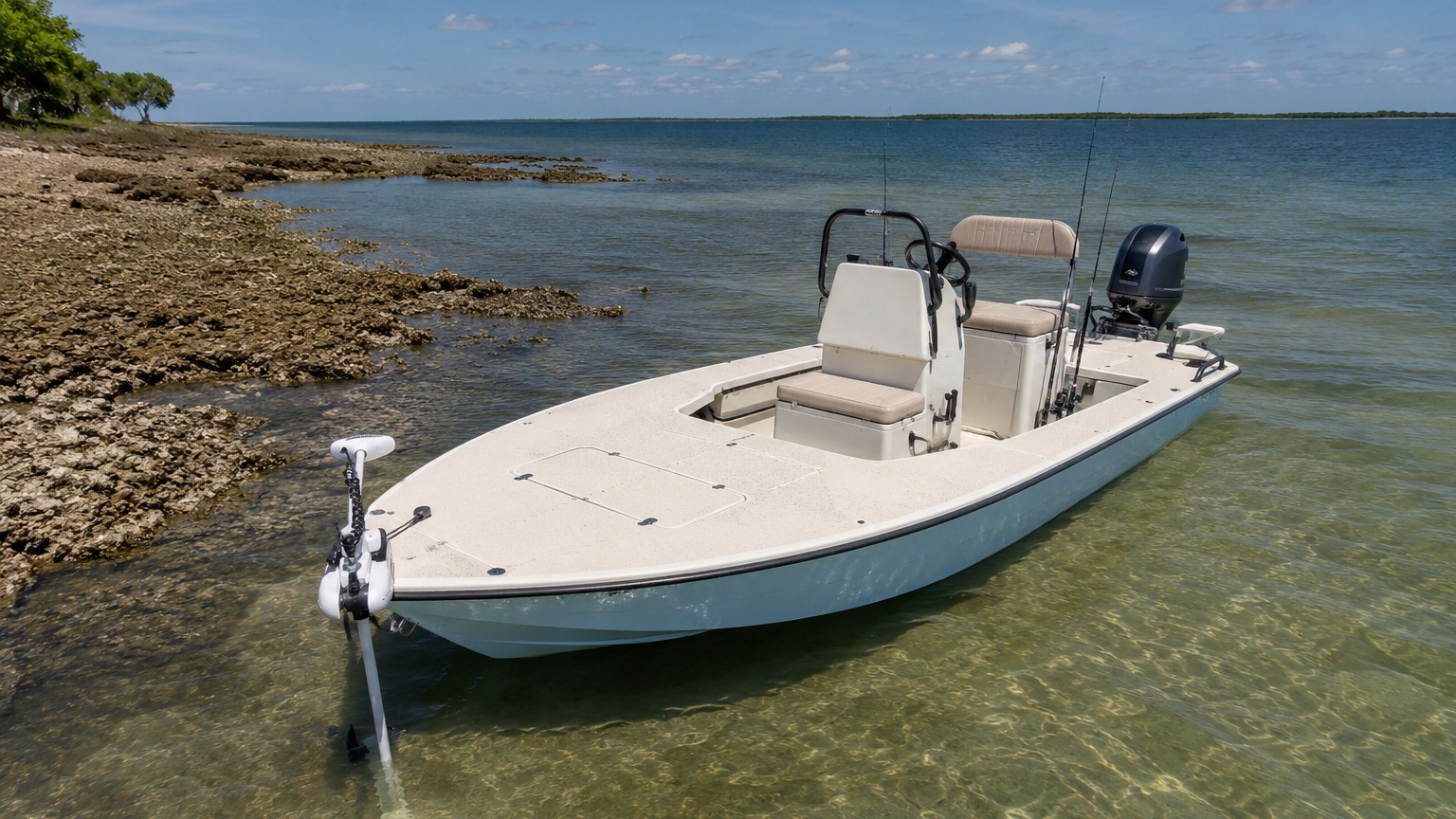
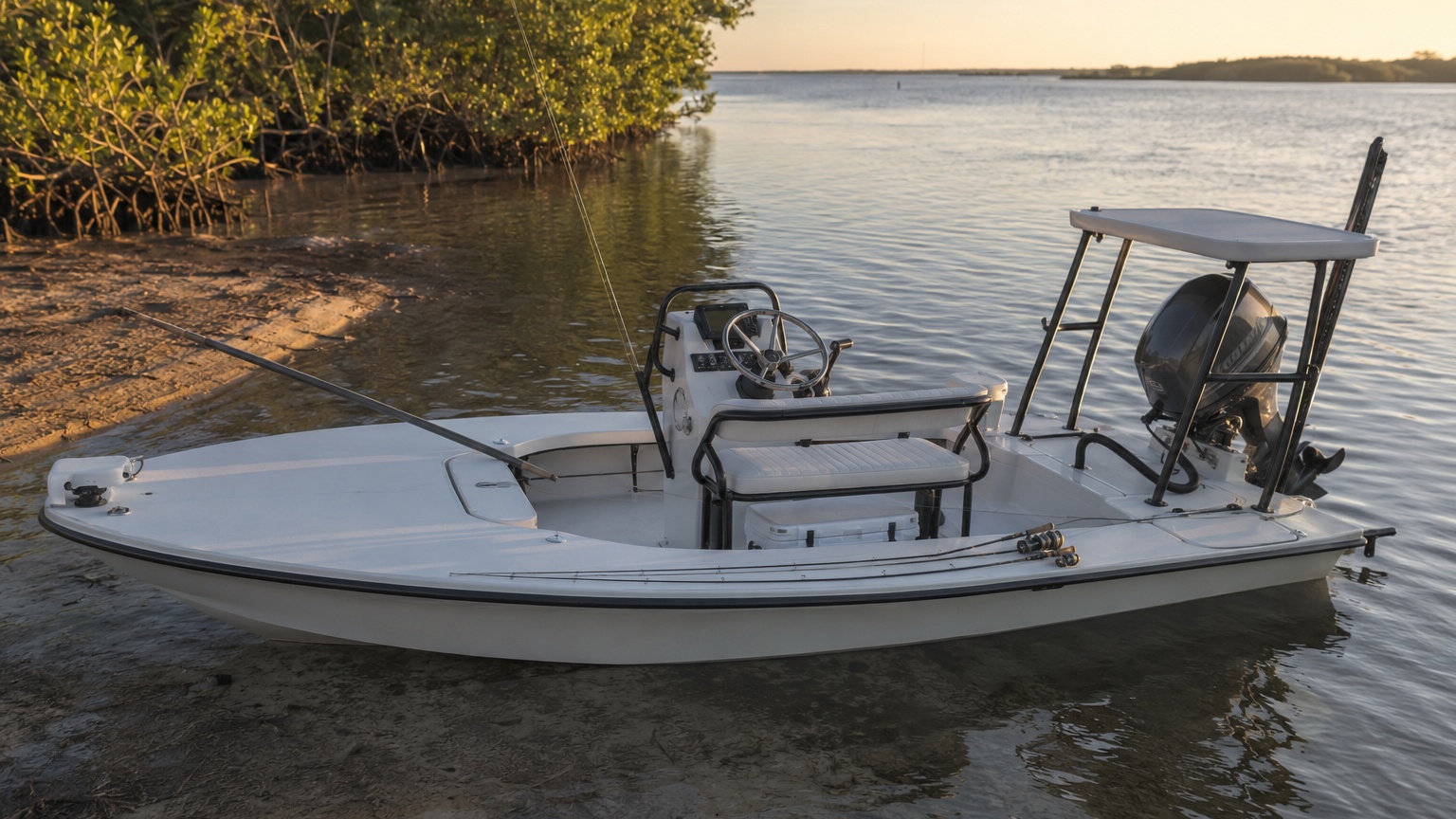
The 8-foot-6-inch beam keeps the Redfisher 21 within conventional road width in many jurisdictions, but width is only one part of the tow equation. The boat is substantially heavier than the 18 before the larger engine, fuel, batteries, live bait, and trailer are added.
The Hewes HD trailer should have enough brake, tire, bearing, and frame capacity for a fully rigged high-horsepower boat. Inspect the entire running gear and confirm the trailer identification plate.
Fifty gallons of fuel, three trolling-motor batteries, a 44-gallon livewell, Power-Poles, poling tower, and 300-plus-horsepower outboard can push the loaded rig far beyond casual midsize-SUV territory.
Lift owners need to calculate the same loaded condition. Bunks must clear jackplate, transducer, trim-tab, and hull geometry while supporting the boat evenly.
Garage storage is possible only in unusually large spaces. The engine, trailer tongue, poling tower, Power-Poles, and 21-foot-6-inch hull make this a very different storage problem from the Redfisher 16.
For many 21 owners, a side yard, dedicated boat barn, or lift becomes the practical solution. That infrastructure should be priced before financing because it changes the total ownership budget materially.
The boat is portable, but it is not light-duty portable. Treat the 21 as a serious trailer rig and it will remain much easier to use.
Engine horsepower, model year, digital controls, trailer, electronics, trolling motor, Power-Poles, poling tower, and condition can create large price gaps.
Engine choice is the biggest single adjustment. A 250-horsepower SHO, 300-horsepower configuration, and 350-horsepower build should not be treated as interchangeable even when hull year and cosmetics match.
Helm Master EX or digital steering can add meaningful value when the systems work correctly and have clean service history. They can also be expensive troubleshooting categories when alarms or communication faults appear.
A high-end 36V trolling motor, modern 12-inch Garmin, dual shallow-water anchors, and upgraded charger may justify a premium to the right angler, but electronics should still be valued for age and condition.
The 44-gallon livewell, jackplate, trim tabs, and poling tower are core fishing systems. Deferred maintenance on those items should reduce the offer even when the outboard runs perfectly.
Trailer value matters because a 21 needs a substantial road-ready package. A neglected HD trailer can create an immediate repair bill and may prevent the boat from being moved safely after purchase.
The best-value 21 is rarely the cheapest listing. It is the one whose engine, electrical rigging, fishing systems, and trailer can handle the exact use the buyer has planned.
Illustration only and not an offer of credit.
Leave room for outboard service, trailer maintenance, insurance, fuel, trolling-motor batteries, livewell pumps, shallow-water anchors, and the electronics that make this fishing platform useful.
Illustration only and not an offer of credit. Your actual rate and term depend on credit profile, vessel age, loan amount and ownership structure.
The Redfisher 21 is 2 feet 8 inches longer, 7 inches wider, about 950 pounds heavier by the published references, carries 19 more gallons of fuel, and supports 200 more horsepower than the 18.
Its 44-gallon livewell is almost twice the size of the 18’s 23.5-gallon system. Capacity rises from four people or 550 pounds on the 18 to six people or 1,200 pounds on the 21.
The 18 wins on shallow draft, towing ease, fuel cost, storage, and poling manageability. It is the better boat when most fishing remains inside protected backcountry water.
The 21 wins when the day includes nearshore runs, tournament pace, heavy bait, more people, high-output trolling motors, and significantly more engine power.
Do not buy the 21 merely because it is the flagship. Buy it because the normal fishing day creates demands the 18 cannot solve efficiently.
Verify model year, hull identification, 21-foot-6-inch LOA, 8-foot-6-inch beam, 50-gallon tank, 350-horsepower ceiling, and capacity plate.
Identify the exact outboard and control system. A 250 SHO with mechanical control, a 300 with digital steering, and a 350 with Helm Master-style systems create different ownership costs.
Pull engine diagnostics where practical and review service history. High-output outboards deserve documentation for oil, gearcase, water pump, cooling, fuel system, spark plugs, and any warranty work.
Inspect the standard jackplate carefully. Then run it under load to confirm smooth movement, correct engine height, water pressure, and propeller grip.
Fill the 44-gallon livewell and operate recirculation equipment. Watch for leaks, weak pumps, poor drainage, or stern attitude that suggests a setup problem.
Deploy the 36V trolling motor and shallow-water anchors. Check batteries, charger, wiring, remotes, mounting, and full steering range.
Climb the poling tower and inspect its 45-inch structure, deck mounts, powder coating, and any rod-holder attachments.
Open all lockable dry storage and inspect gutters, seals, hinges, and latches. Tournament gear has value only when the compartments protect it.
Sea-trial the boat with more than one passenger and a meaningful fuel load. High horsepower can hide setup issues on an empty hull.
Inspect the HD trailer, confirm loaded tow weight, and verify the tow vehicle. The 21 should be treated as a serious rig rather than a scaled-up version of the 18.
Finally, compare the 18. If the buyer cannot name the specific fishing problem solved by the 21’s extra fuel, livewell, power, crew capacity, and nearshore ability, the smaller boat may be the stronger financial decision.
Start your application with the actual Hewes Redfisher 21 details with model year, engine, engine hours where available, trailer, electronics, trolling motor, Power-Pole equipment, poling platform, and asking price.
The current Redfisher 21 is rated to 350 horsepower.
The published fuel capacity is 50 gallons.
Hewes lists a 44-gallon aft-center livewell.
Yes. A jackplate with blinker switch is standard equipment on the current 21.
That is one of its key advantages. Hewes positions it for both backcountry and nearshore use, with far more fuel, horsepower, bait capacity, and deck space than the smaller Redfishers.
The published maximum capacity is 6 persons or 1,200 pounds. The exact capacity plate remains authoritative.
Choose the 18 for shallower draft, easier towing, and backcountry versatility. Choose the 21 for larger crews, 350-horsepower capability, a 44-gallon livewell, nearshore reach, and tournament-scale range.
Potentially. Model year, value, engine, condition, seller type, transaction amount, and borrower qualifications matter. Start your application with the exact details.
Tell us a little bit about yourself and the boat you are looking to finance.