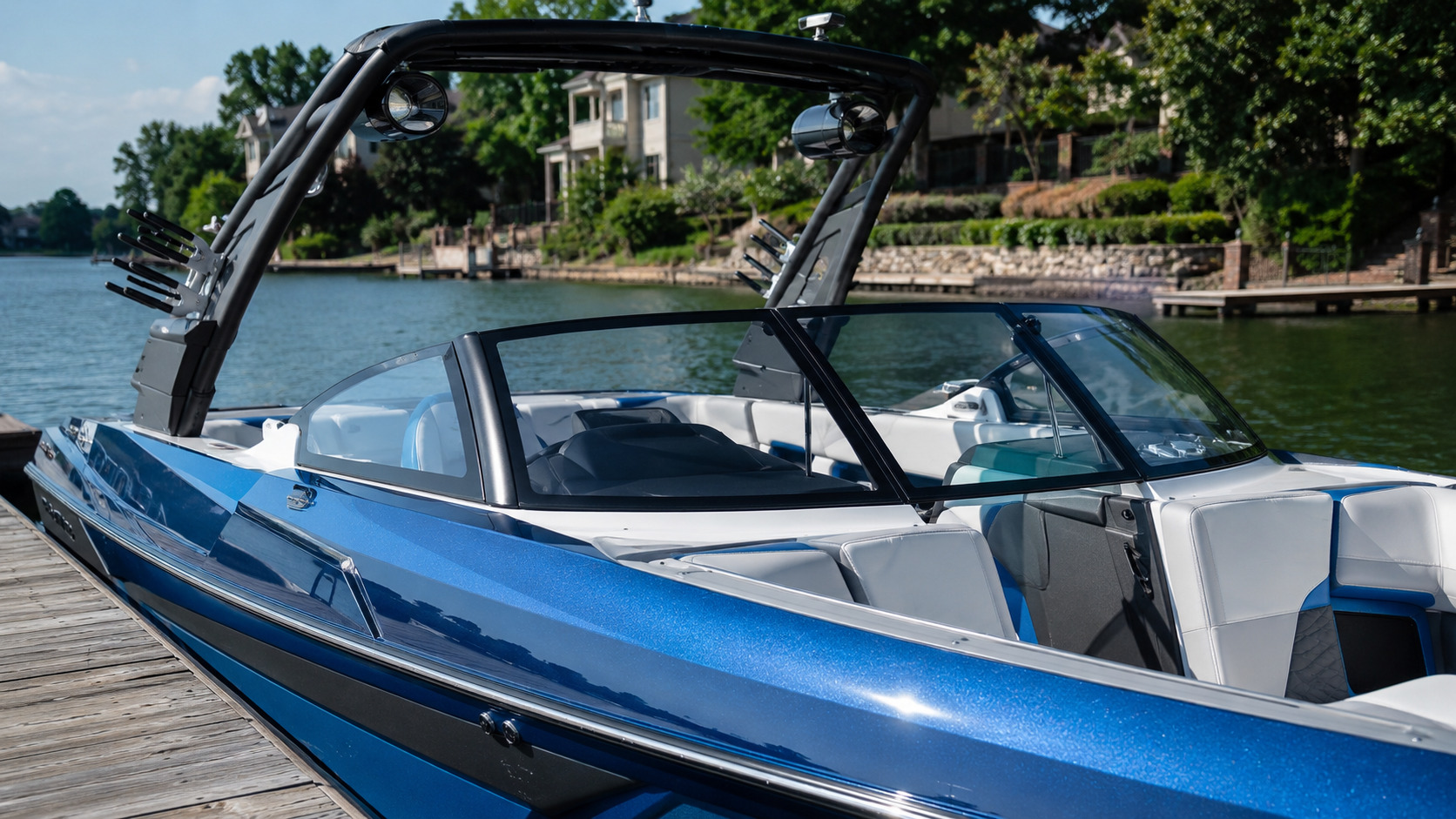
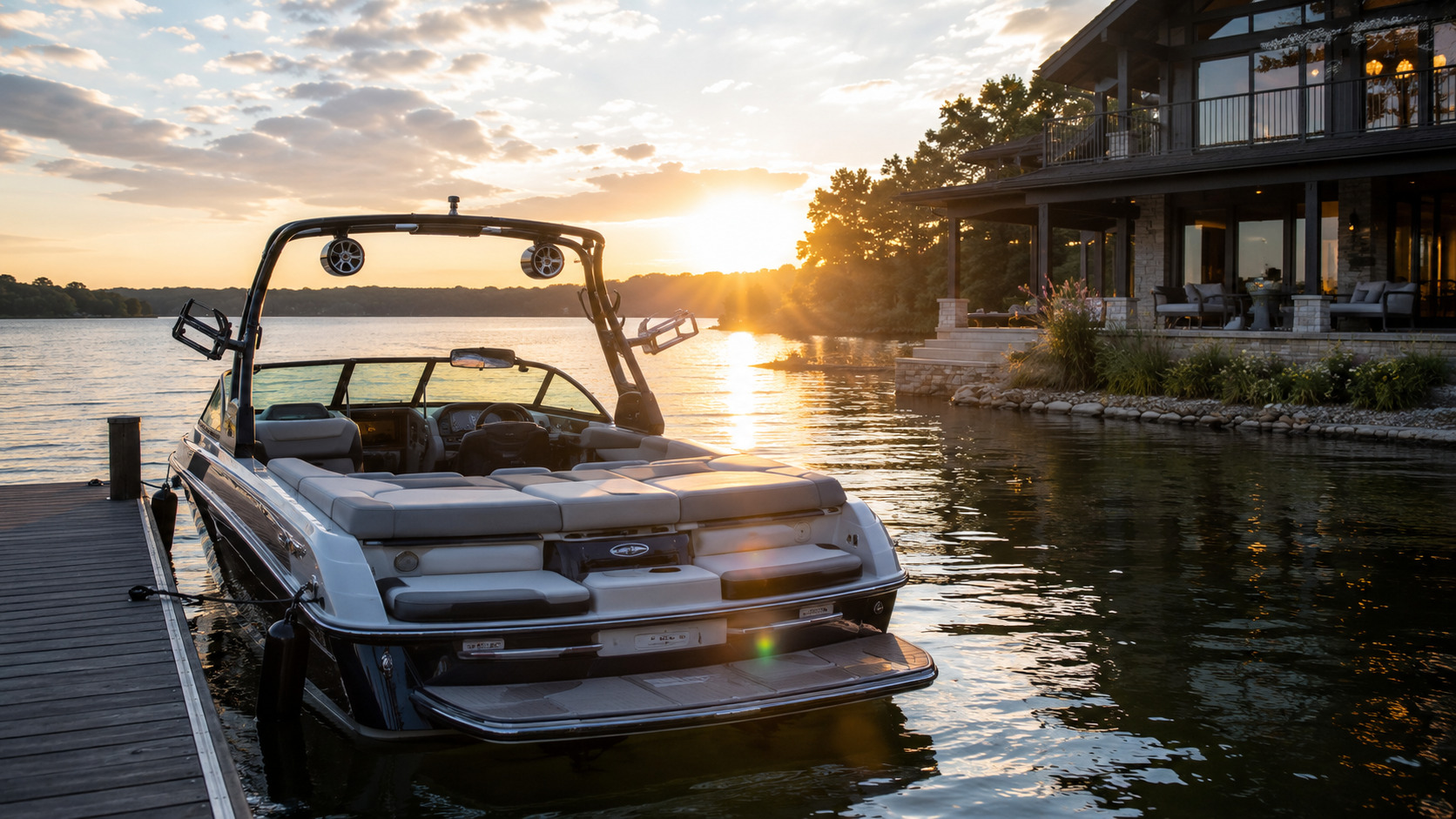
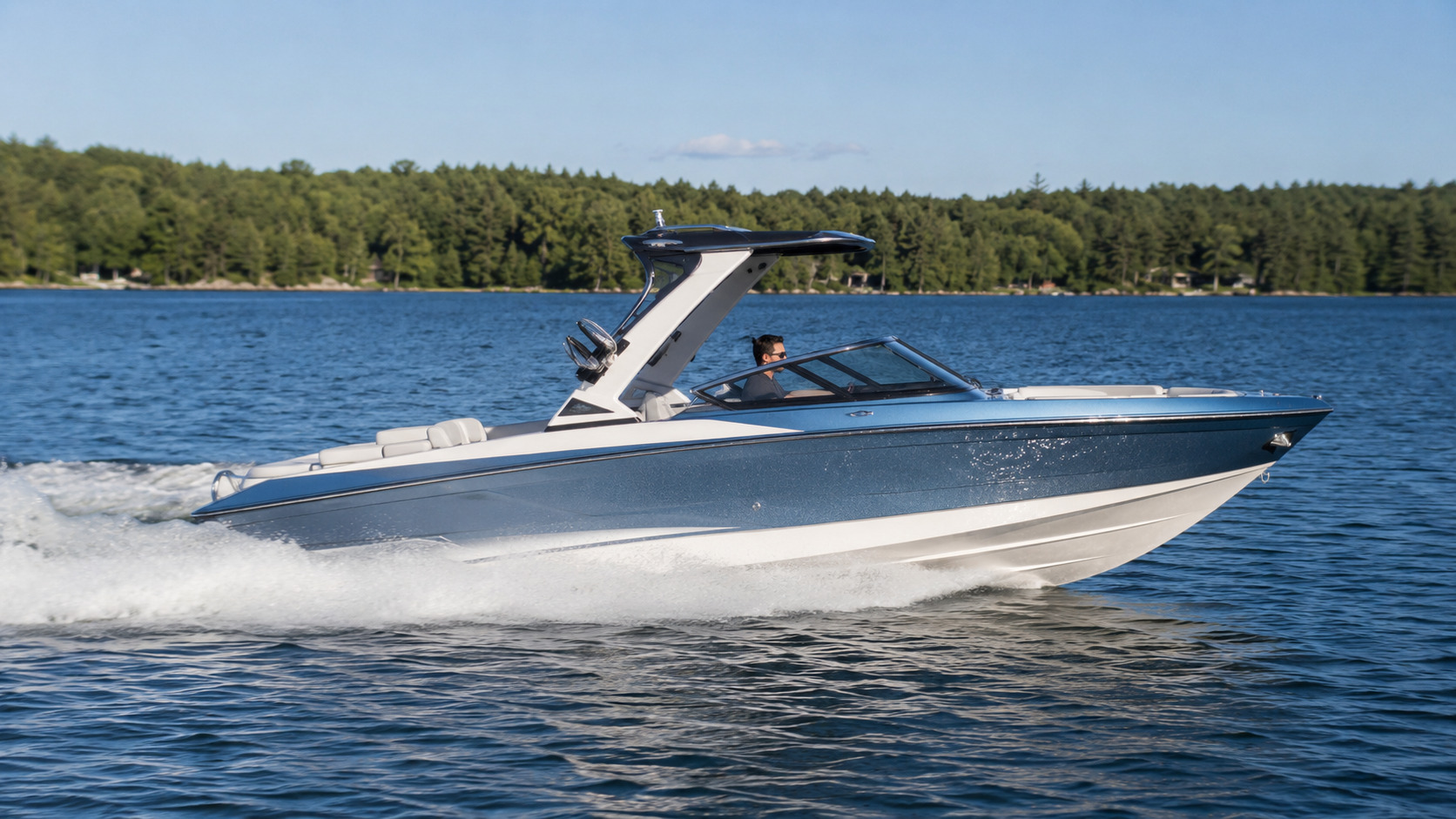
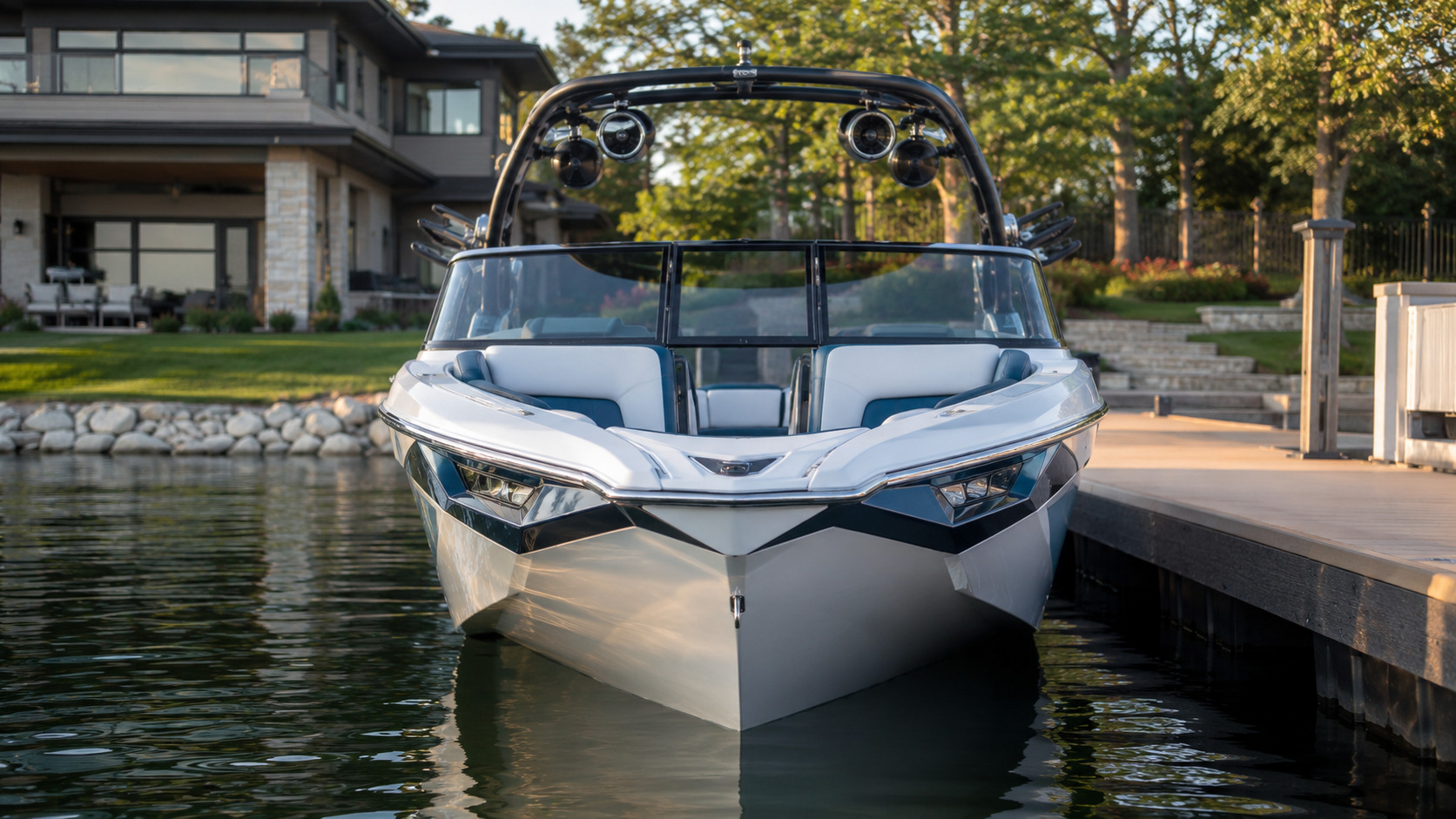
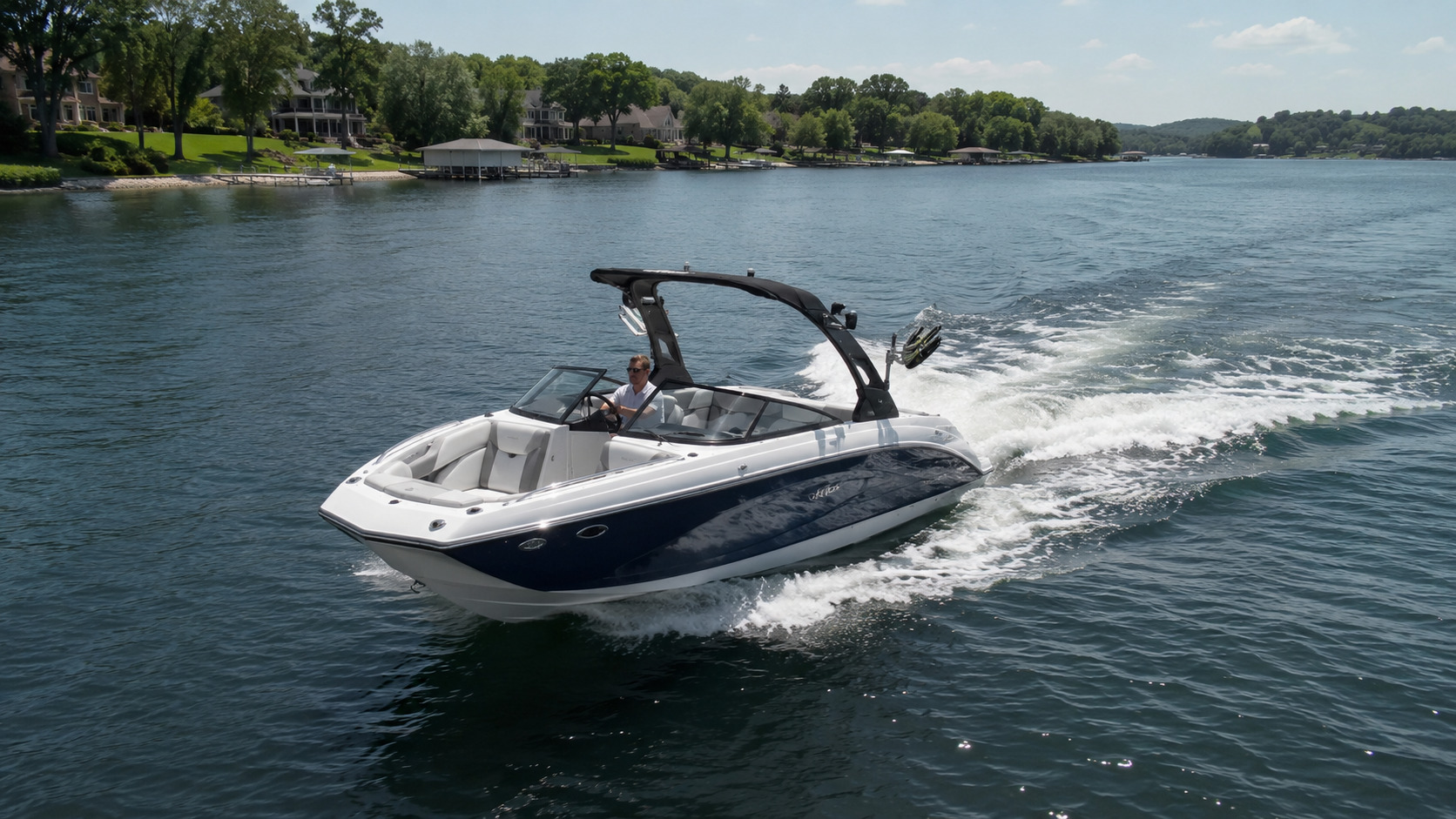
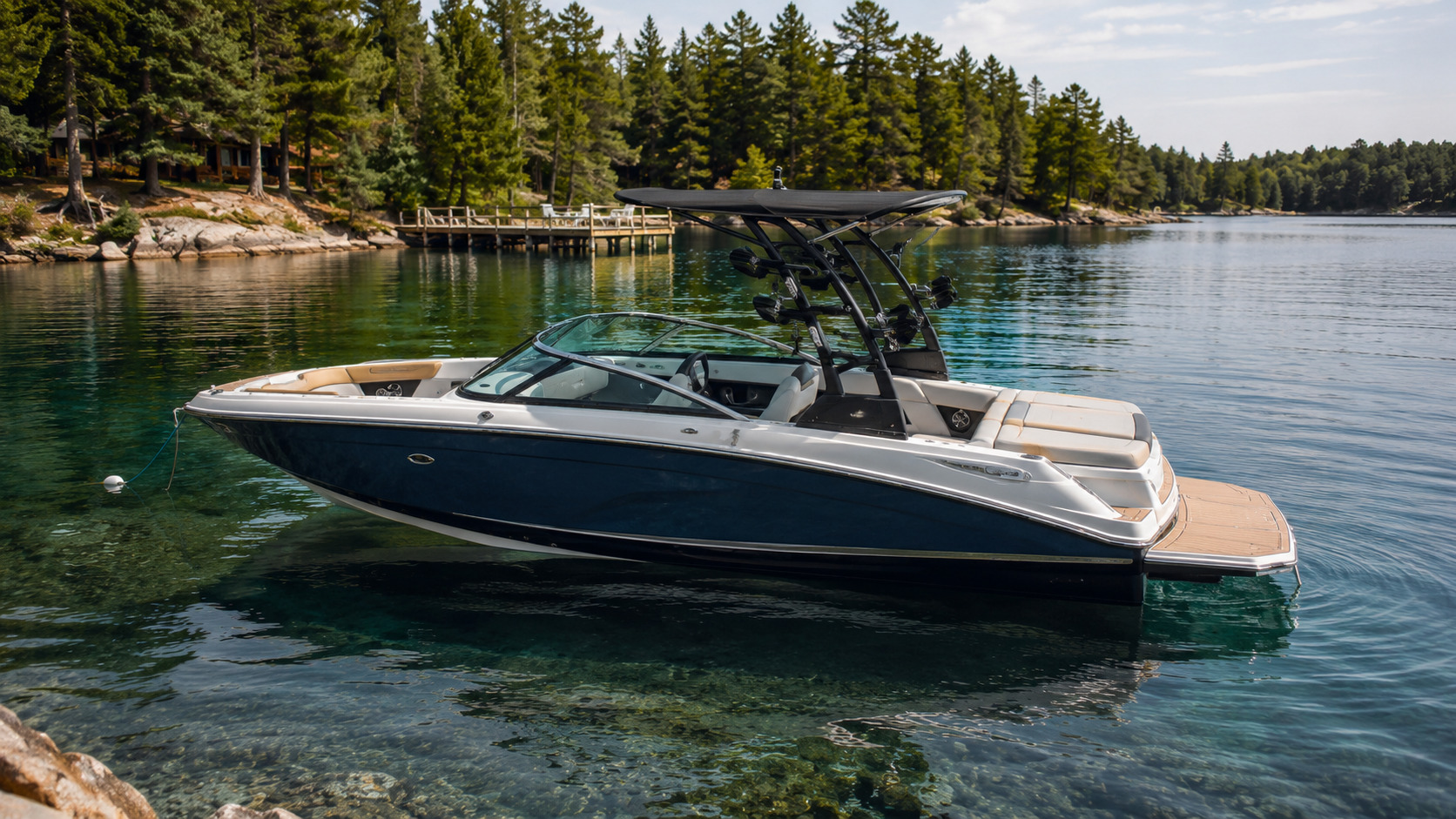
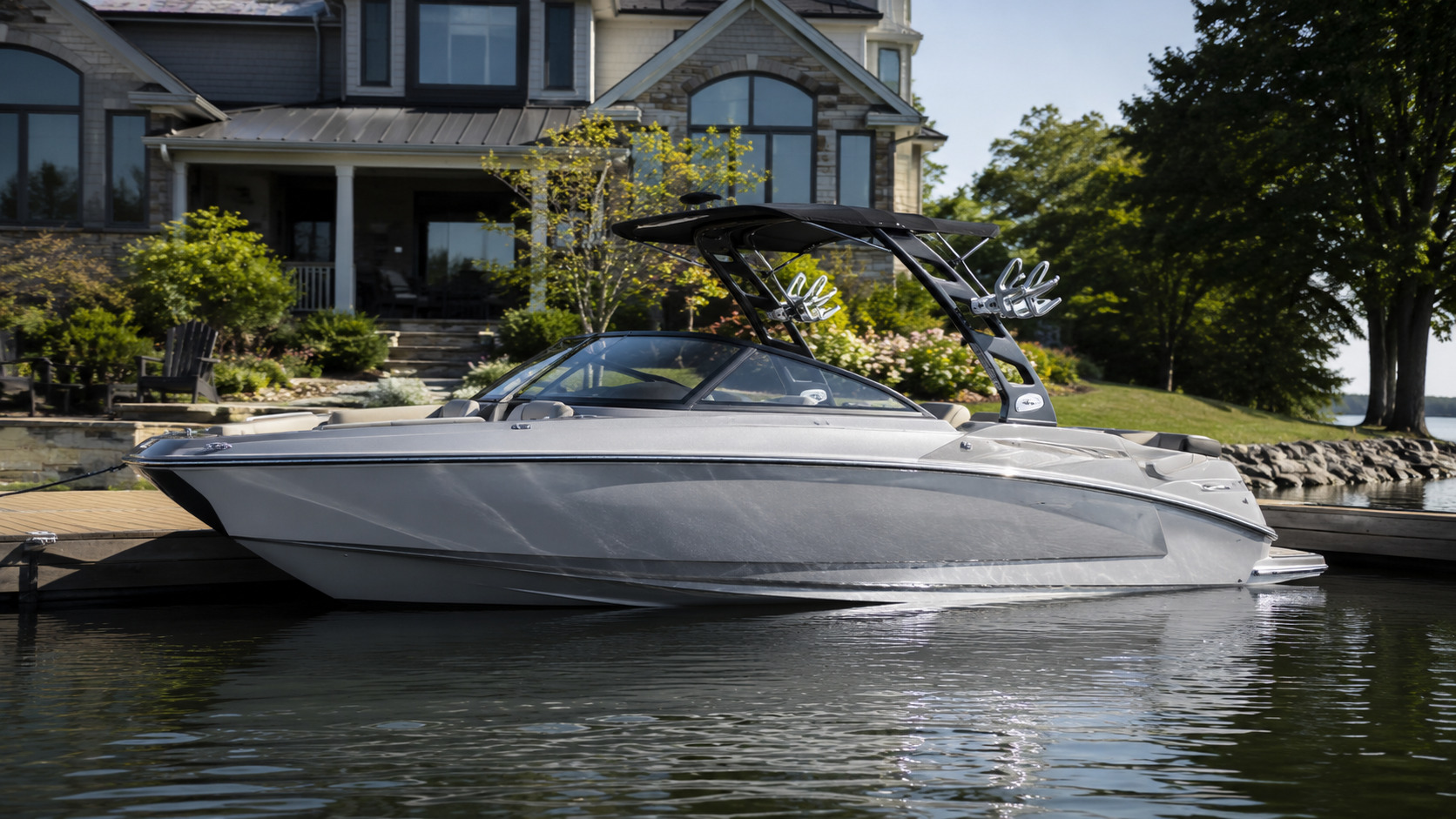
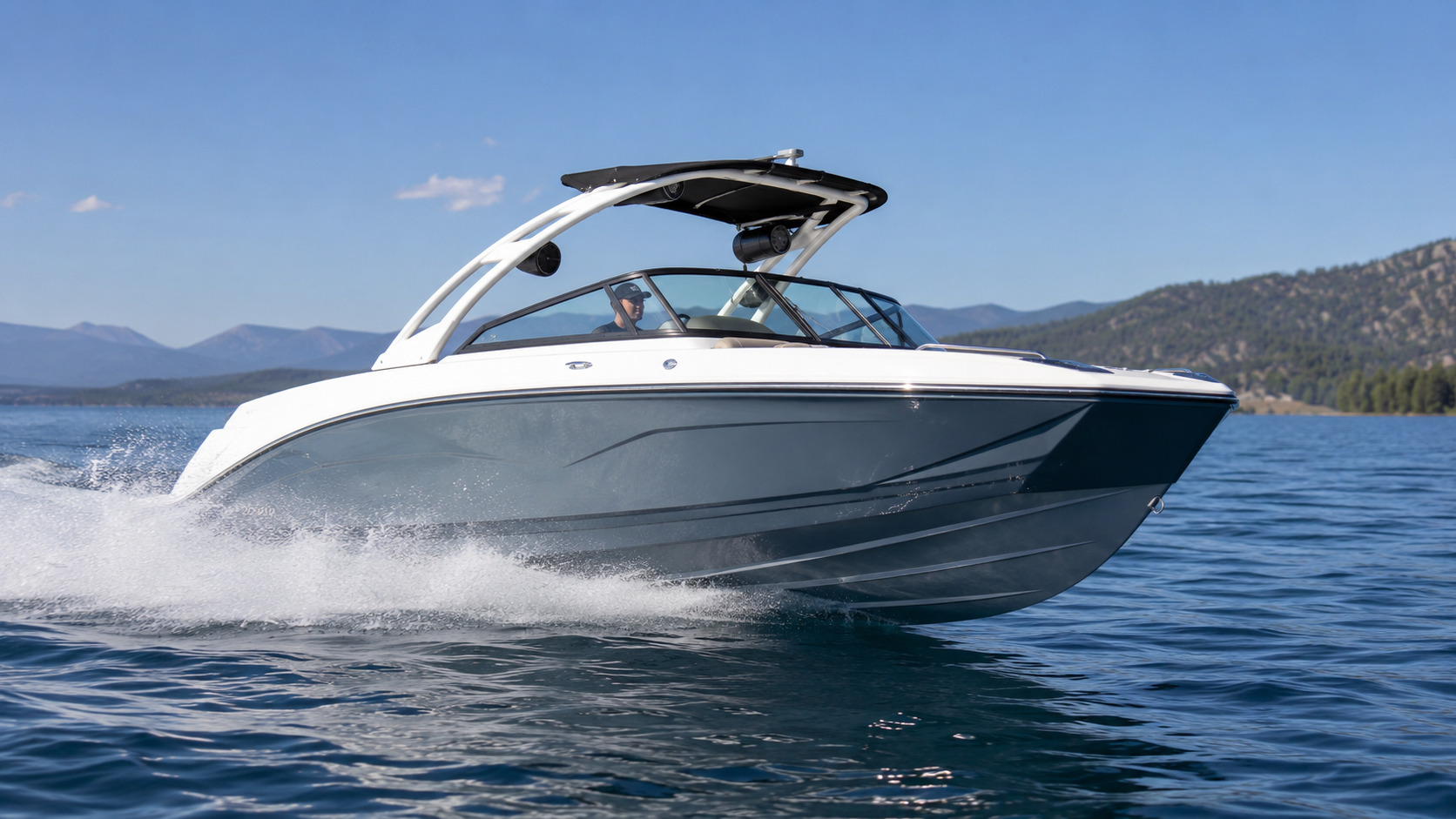
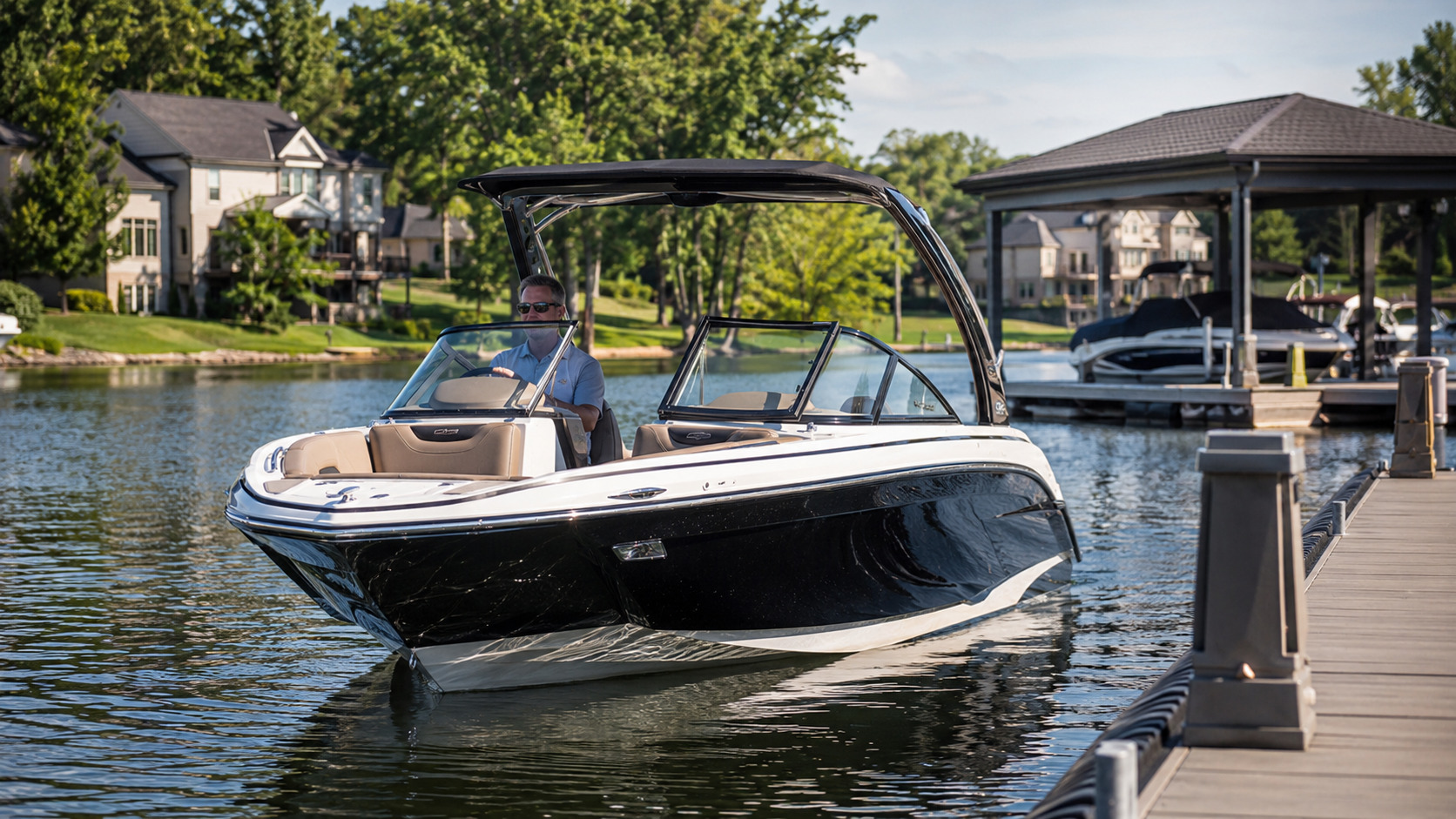
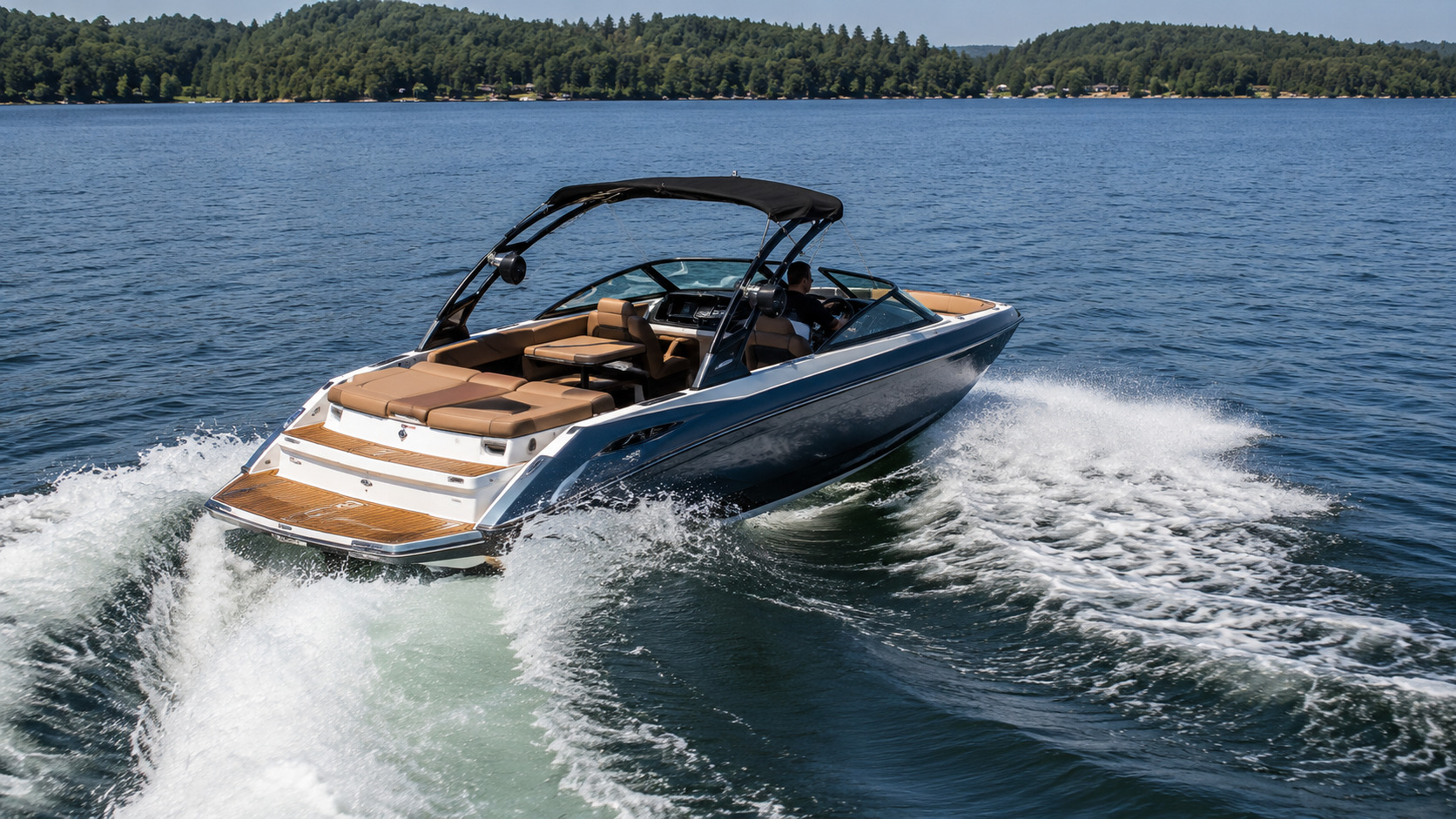
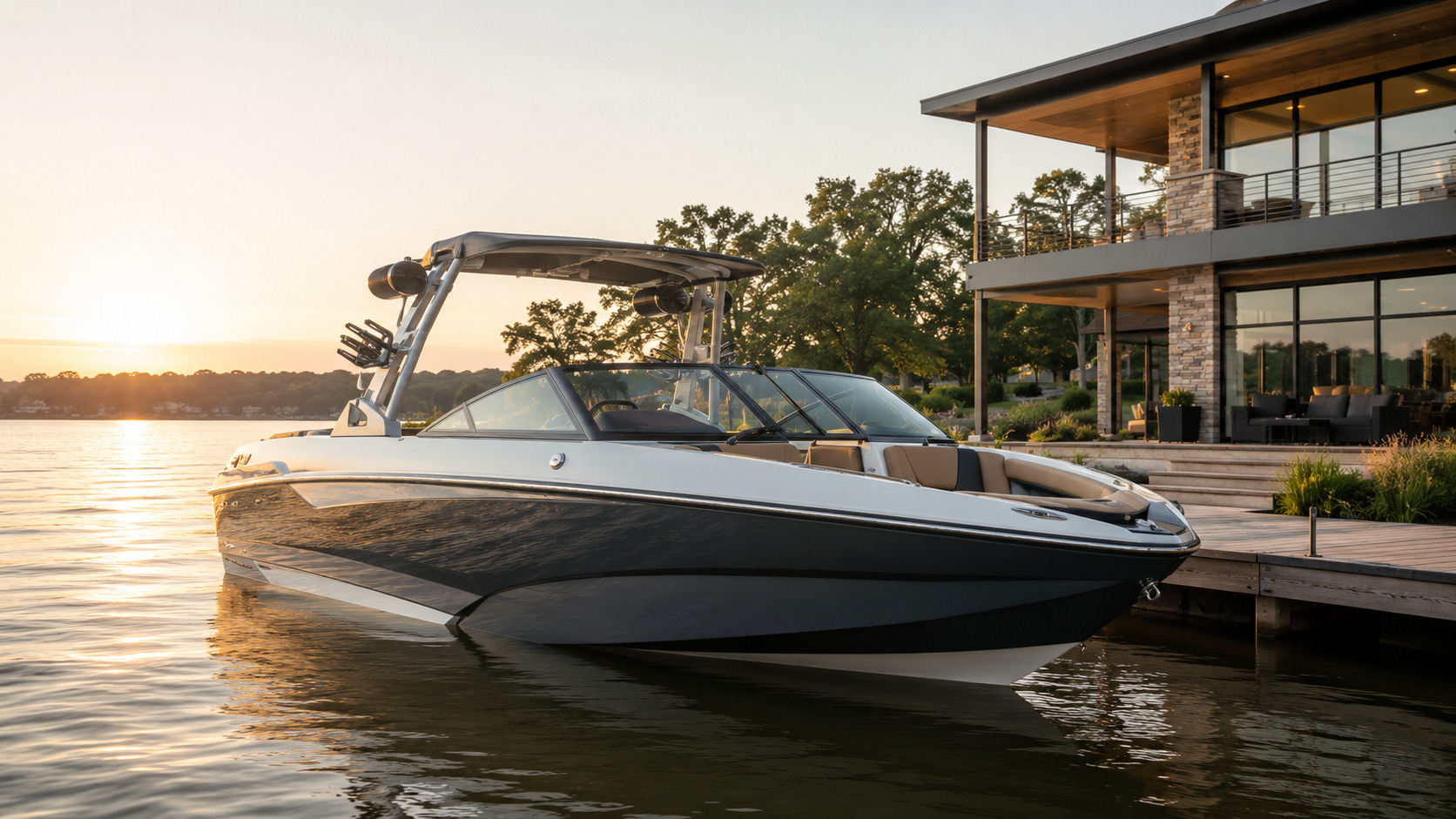
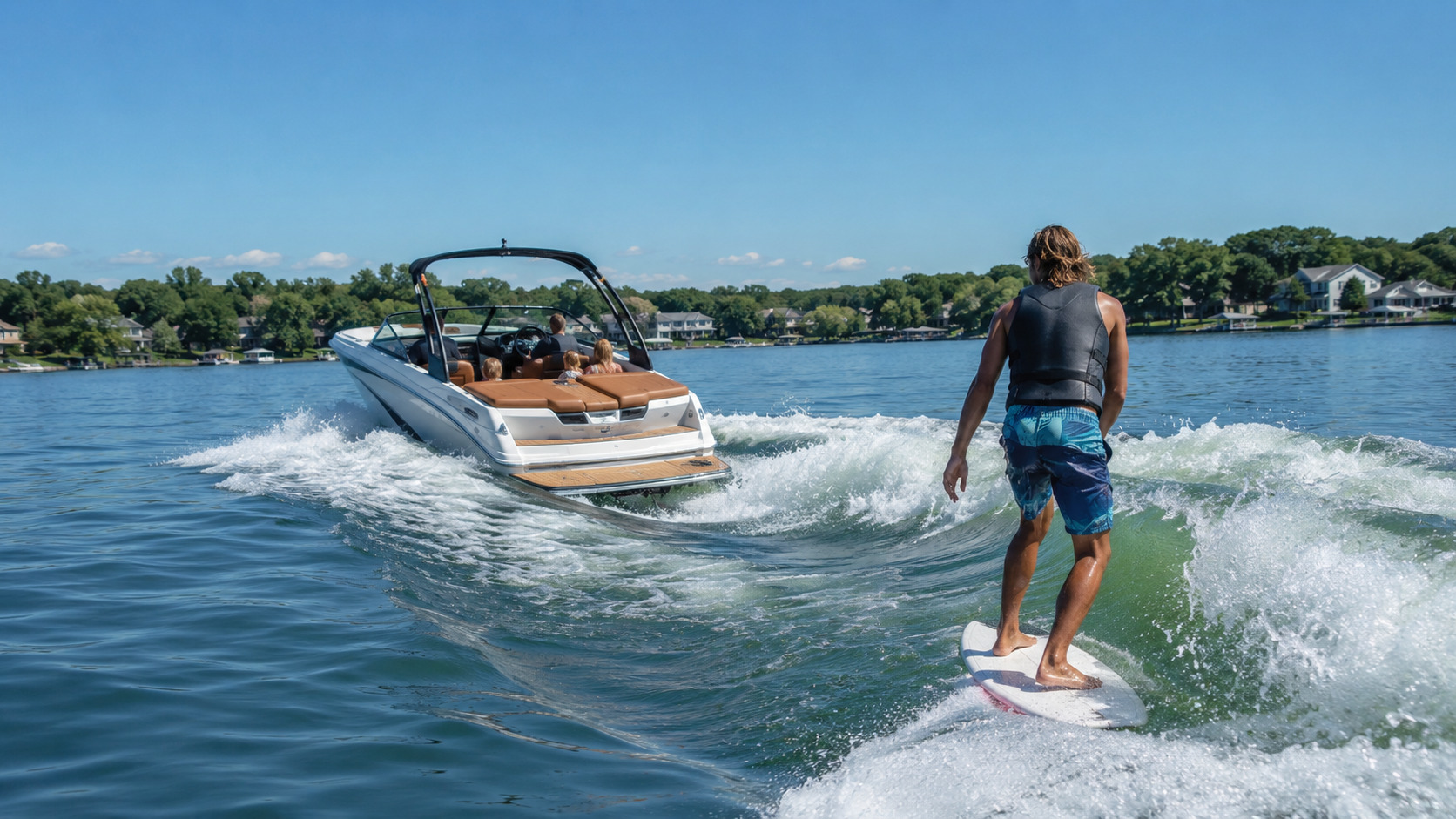
The Malibu M230 is best understood by the job it was built to do. It is a 23-foot flagship platform that uses mass, premium systems and the M-Line hull rather than sheer length to distinguish itself. That makes it a strong fit for buyers who want Malibu’s flagship M-Series interior, controls and surf package in a 23-foot hull. It is a weaker fit for owners who mainly want value per foot and can get the wake performance they need from a 23 LSV or 23 MXZ.
The model-specific reason to keep the M230 on the list is this: The M230 weighs 6,750 pounds dry at only 23 feet, seats 16, carries 74 gallons and uses the M-Line hull with premium transom and control features.
It is shorter than several Malibu models yet heavier and more complex, so the buyer pays for flagship platform density rather than maximum length.
The purchase case for the M230 is strongest when the buyer can name the specific reason this model exists: The M230 weighs 6,750 pounds dry at only 23 feet, seats 16, carries 74 gallons and uses the M-Line hull with premium transom and control features. The nearby M242 is 24′ 2″ long, about 7,500 lb dry, carries 94 gal of fuel and is rated for 17 people. The M230 is 23′, about 6,750 lb dry, carries 74 gal and is rated for 16. For the M230, those numbers turn the cross-shop into an ownership decision rather than a badge decision. If the crew repeatedly prefers the larger M-Series flagship with 17-person capacity, 94 gallons and 7,500-pound dry weight, the M242 deserves the next sea trial. If not, the M230’s own layout and mission are doing real work for the buyer.
The hull story on the M230 starts with M-Line. The M230 weighs 6,750 pounds dry at only 23 feet, seats 16, carries 74 gallons and uses the M-Line hull with premium transom and control features.
At 23′ by 102″, the M230 uses its dimensions for a specific mix of passenger space and running behavior. The published 6,750 lb approximate dry weight helps compare models, but the number excludes the trailer and does not represent the boat with fuel, batteries, rider gear and options aboard.
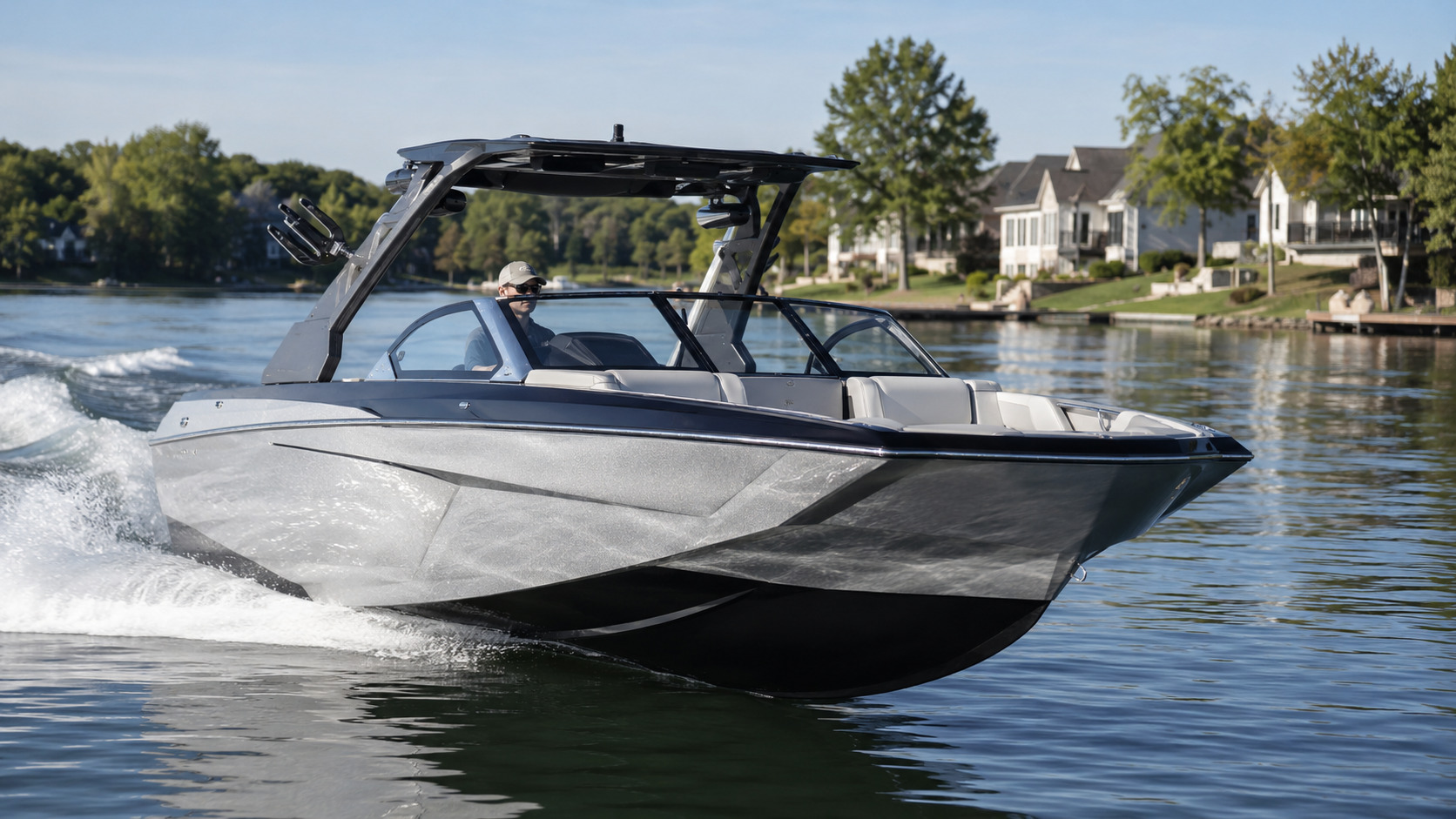
The M230 sits as the smallest model in the current series lineup, and its hull choice is M-Line. At 23′ long, 102″ wide and about 6,750 lb dry, the platform must be judged as a complete package rather than by length alone. The M230 weighs 6,750 pounds dry at only 23 feet, seats 16, carries 74 gallons and uses the M-Line hull with premium transom and control features. If the larger M-Series flagship with 17-person capacity, 94 gallons and 7,500-pound dry weight matters more, the M242 is the more relevant hull to inspect next.
During the sea trial, run the M230 light before loading ballast.
Hull choice is the first specification to lock down on a M230. Malibu lists M-Line for this model, with a 102″ beam, 32″ draft and approximately 6,750 lb dry weight. On the M230, the buyer should connect those figures to the intended water: ramp depth, chop, ski or surf priority, lift geometry and trailer support. The nearby M242 is 24′ 2″ long, about 7,500 lb dry, carries 94 gal of fuel and is rated for 17 people. The M230 is 23′, about 6,750 lb dry, carries 74 gal and is rated for 16. During the M230 hull inspection, a comparison like that is more useful than assuming a foot of length or a shared 102-inch beam means the two boats will feel the same.
The M230 uses a rear-engine V-drive inboard layout with current published power of 430 to 607 HP.
Published power for the M230 is 430 to 607 HP, but the correct engine choice depends on the mass it has to move. The boat is about 6,750 lb dry, can carry 16 people and can add up to 4,105 lb of factory ballast.
Ask for a true cold start on a used M230.
Propeller setup matters because the M230 can carry up to 16 people and as much as 4,105 lb of published factory ballast.
The M230’s published 430 to 607 HP power range should be evaluated against its actual load envelope. Dry weight is about 6,750 lb, passenger capacity is 16, and the boat carries 4,105 lb of maximum factory ballast. On the M230, a sea trial with only the salesperson aboard understates the job the engine will do on a normal riding day. Under normal M230 load, run the boat warm, add representative people and water weight, then watch acceleration, rpm, speed holding and vibration. During the M230 powertrain inspection, that test is especially important before paying for a higher-output engine solely because it is available.
Malibu lists 74 gal of fuel capacity for the current M230.
Maximum factory ballast is published at 4,105 lb. The best fuel test is to record actual engine data on the exact M230 at normal cruise, at wakeboard speed and at the surf settings the family plans to use.
The M230’s 74 gal fuel tank and 4,105 lb maximum factory ballast describe two different kinds of operating weight.
The M230 combines a 74 gal fuel tank with 4,105 lb of published factory ballast. In the M230 fuel plan, those figures matter together because the engine sees the boat at very different operating weights across a day. With the M230’s 74 gal tank, fill-and-drain performance should therefore be part of the fuel and range conversation, not a separate cosmetic feature check. The nearby M242 is 24′ 2″ long, about 7,500 lb dry, carries 94 gal of fuel and is rated for 17 people. The M230 is 23′, about 6,750 lb dry, carries 74 gal and is rated for 16. During the M230 fuel-system check, a buyer who tows often should also decide whether routine full-fuel trailering is necessary or whether fueling near the launch better fits the tow plan.
The M230 should be tested in the state that justifies buying it. The M230 weighs 6,750 pounds dry at only 23 feet, seats 16, carries 74 gallons and uses the M-Line hull with premium transom and control features.
The M230’s performance test should be built around its identity as a 23-foot flagship platform that uses mass, premium systems and the M-Line hull rather than sheer length to distinguish itself. If the tradeoff becomes annoying during that test, it is shorter than several Malibu models yet heavier and more complex, so the buyer pays for flagship platform density rather than maximum length.
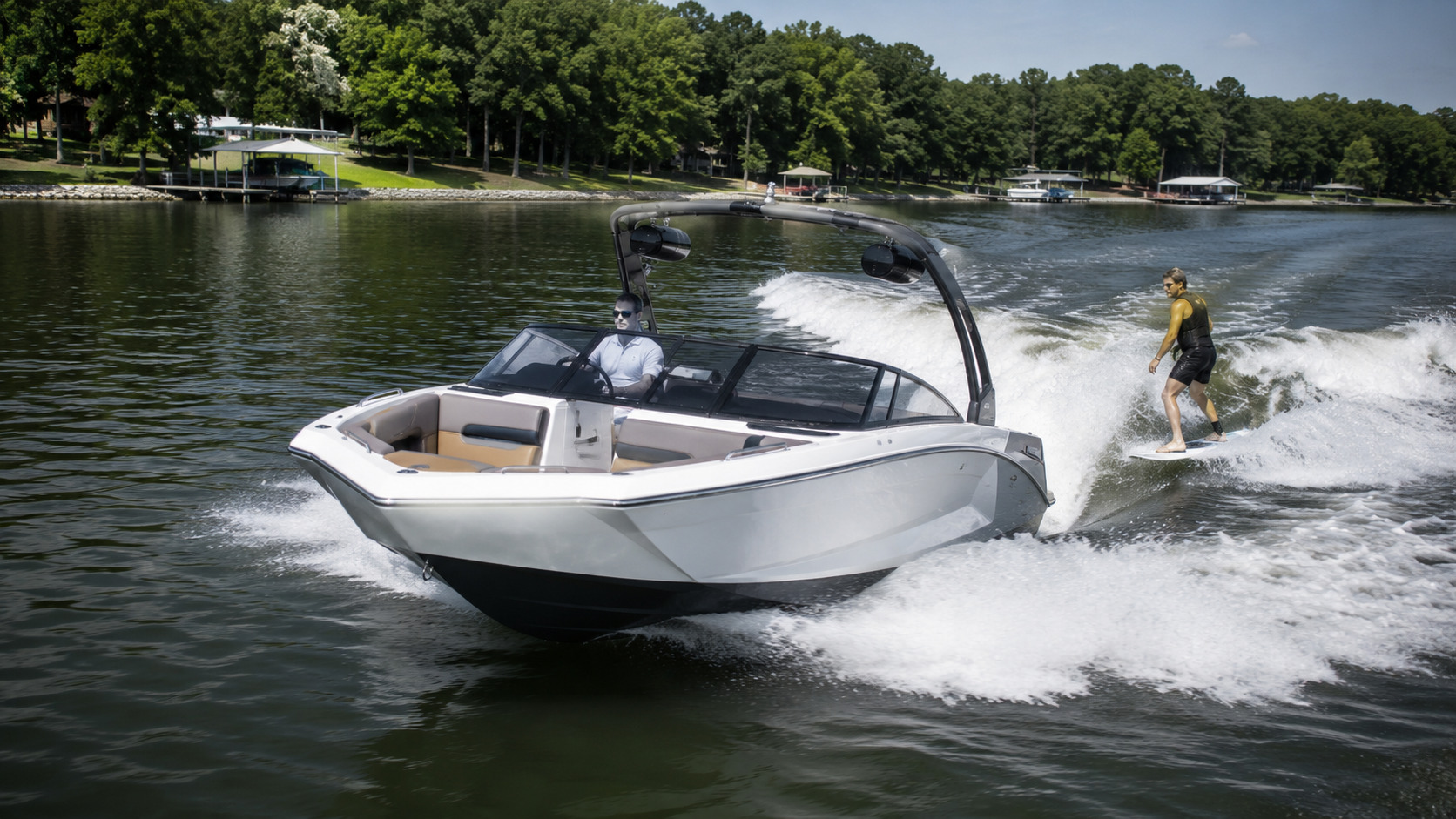
The M230 should prove its identity on the water: it is a 23-foot flagship platform that uses mass, premium systems and the M-Line hull rather than sheer length to distinguish itself. In the M230 sea trial, that means the sea trial should not be reduced to top speed. On the M230’s M-Line platform, test the exact maneuver that justifies the model, then repeat it with realistic passenger and watersports load. For this boat, the critical trade is clear: It is shorter than several Malibu models yet heavier and more complex, so the buyer pays for flagship platform density rather than maximum length. At the helm of the M230, if that compromise shows up only rarely, it is acceptable. In the M230 sea trial, if it appears in every normal outing, the buyer is looking at the wrong Malibu.
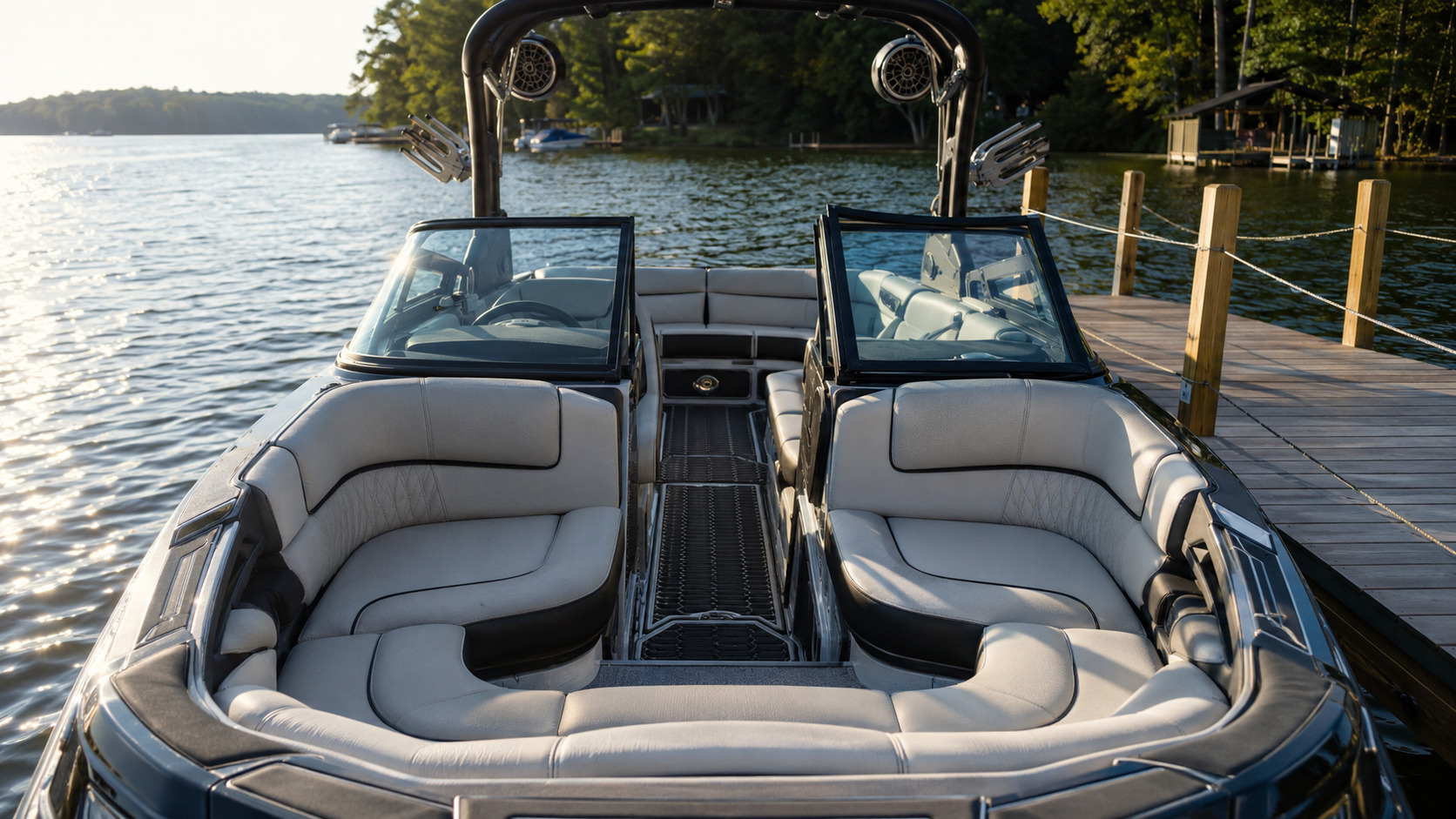
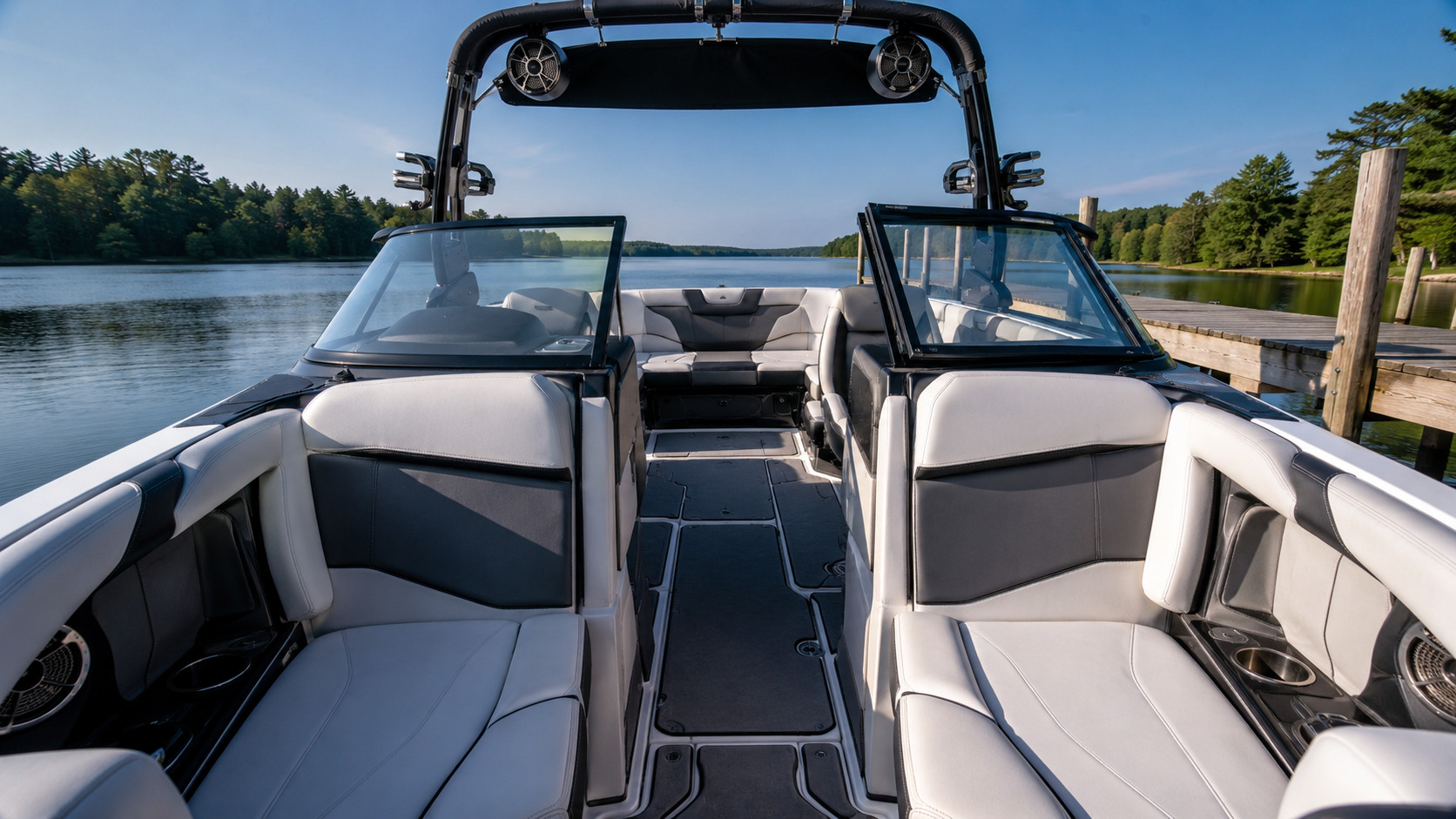
The deck should be evaluated around the M230’s actual mission. The model is best for buyers who want Malibu’s flagship M-Series interior, controls and surf package in a 23-foot hull.
The published capacity is 16 people. That figure is a maximum rating, not a comfort promise for 16 adults plus boards, bags and a full day of food.
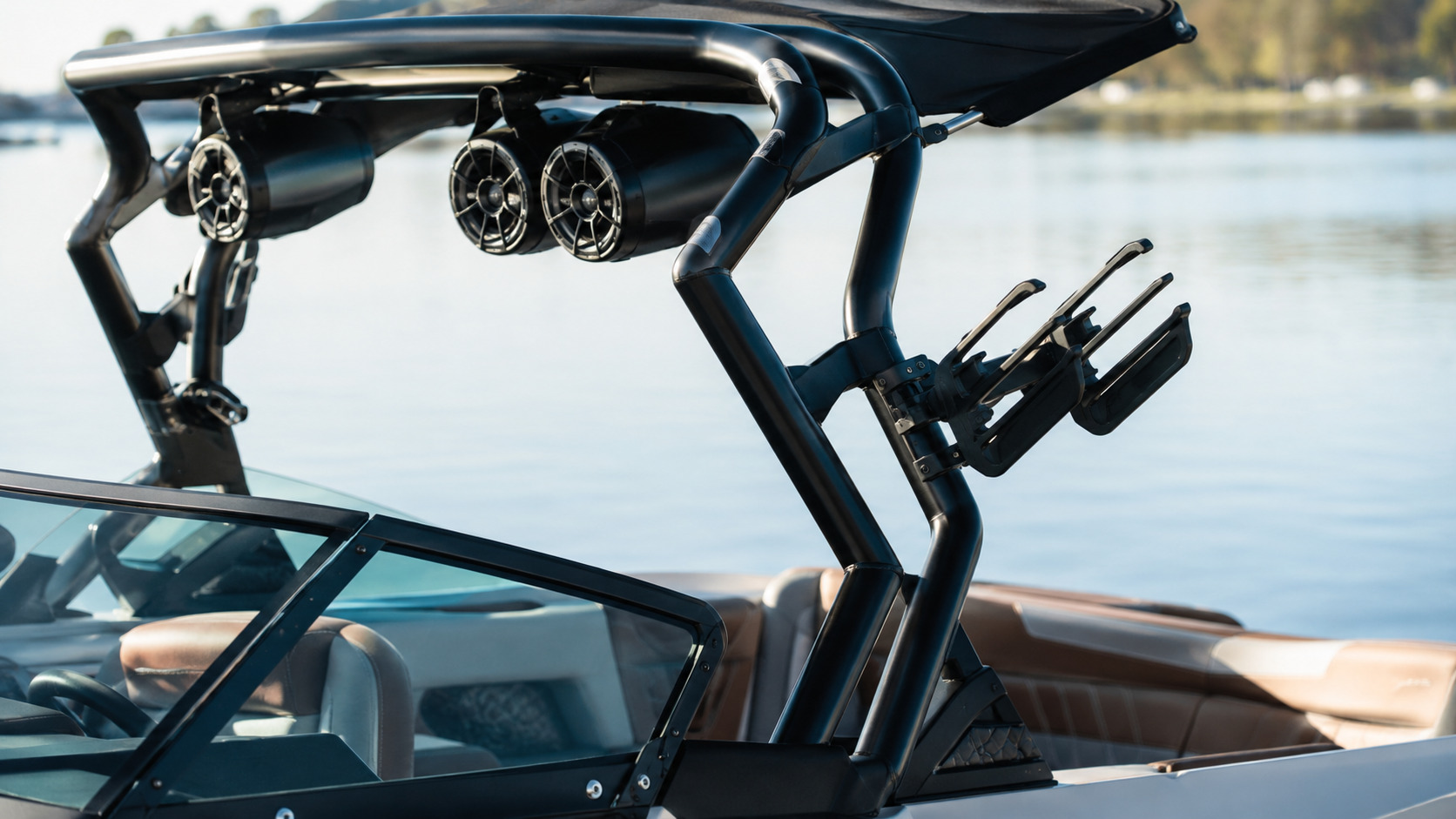
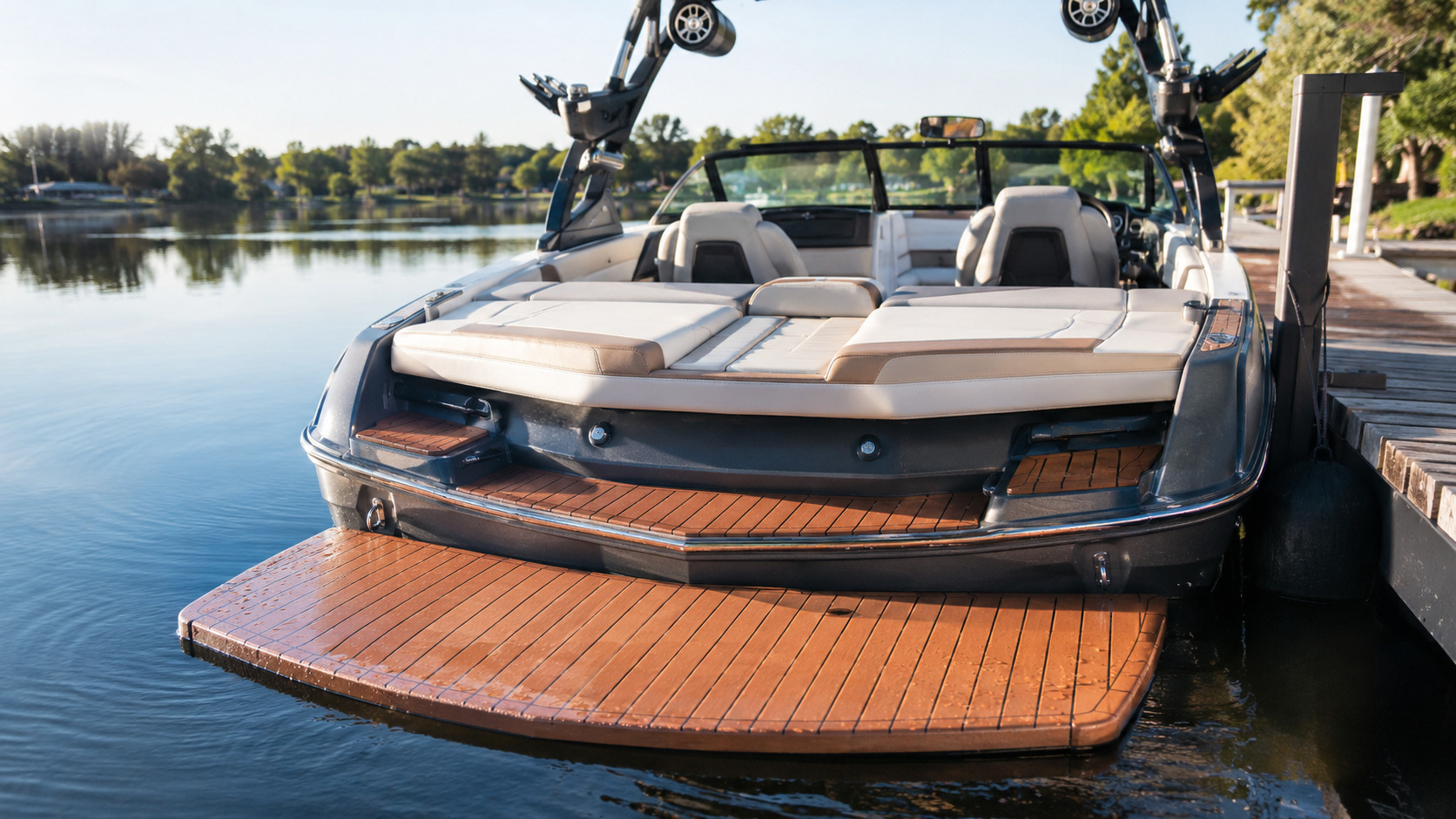
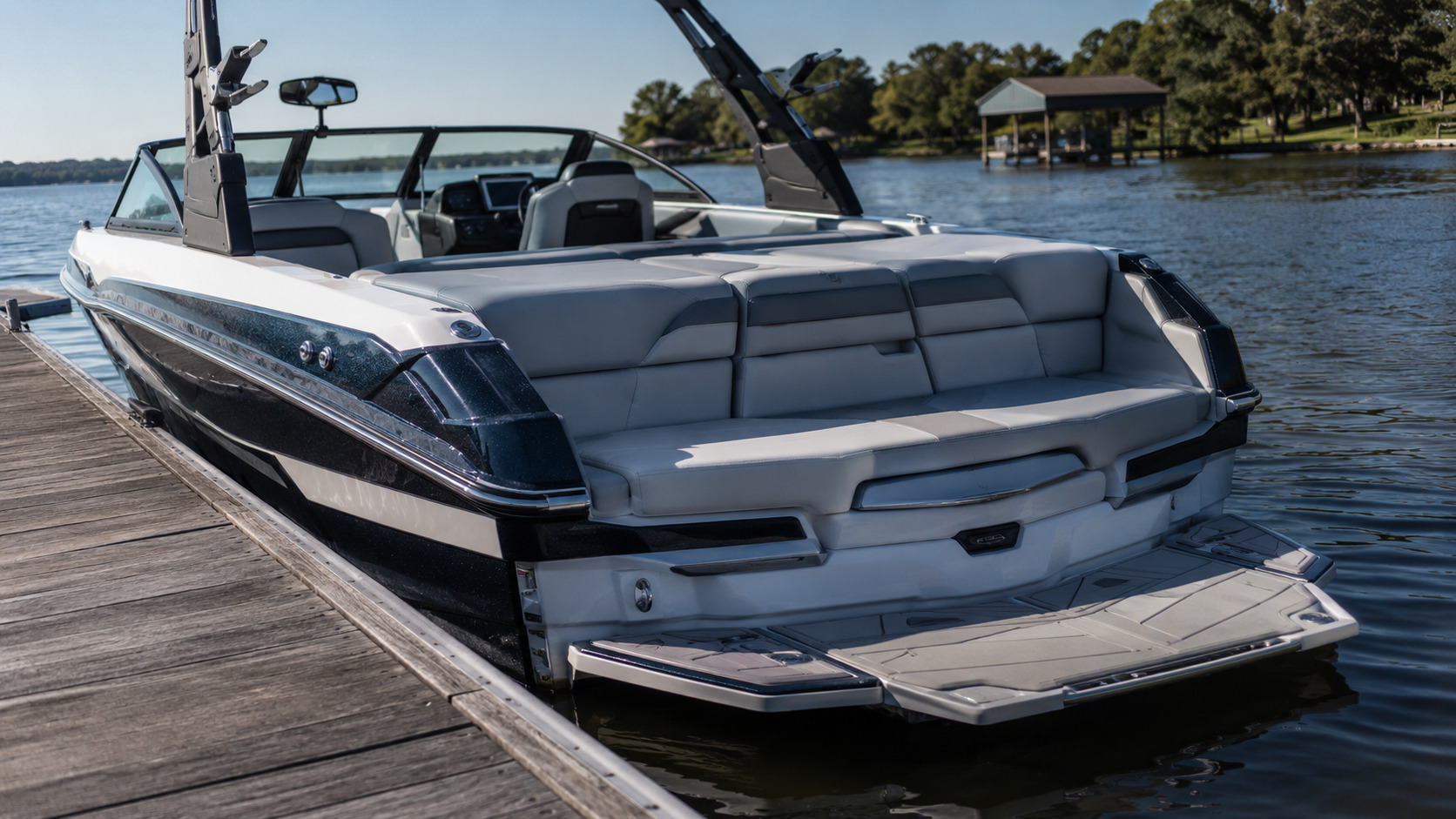
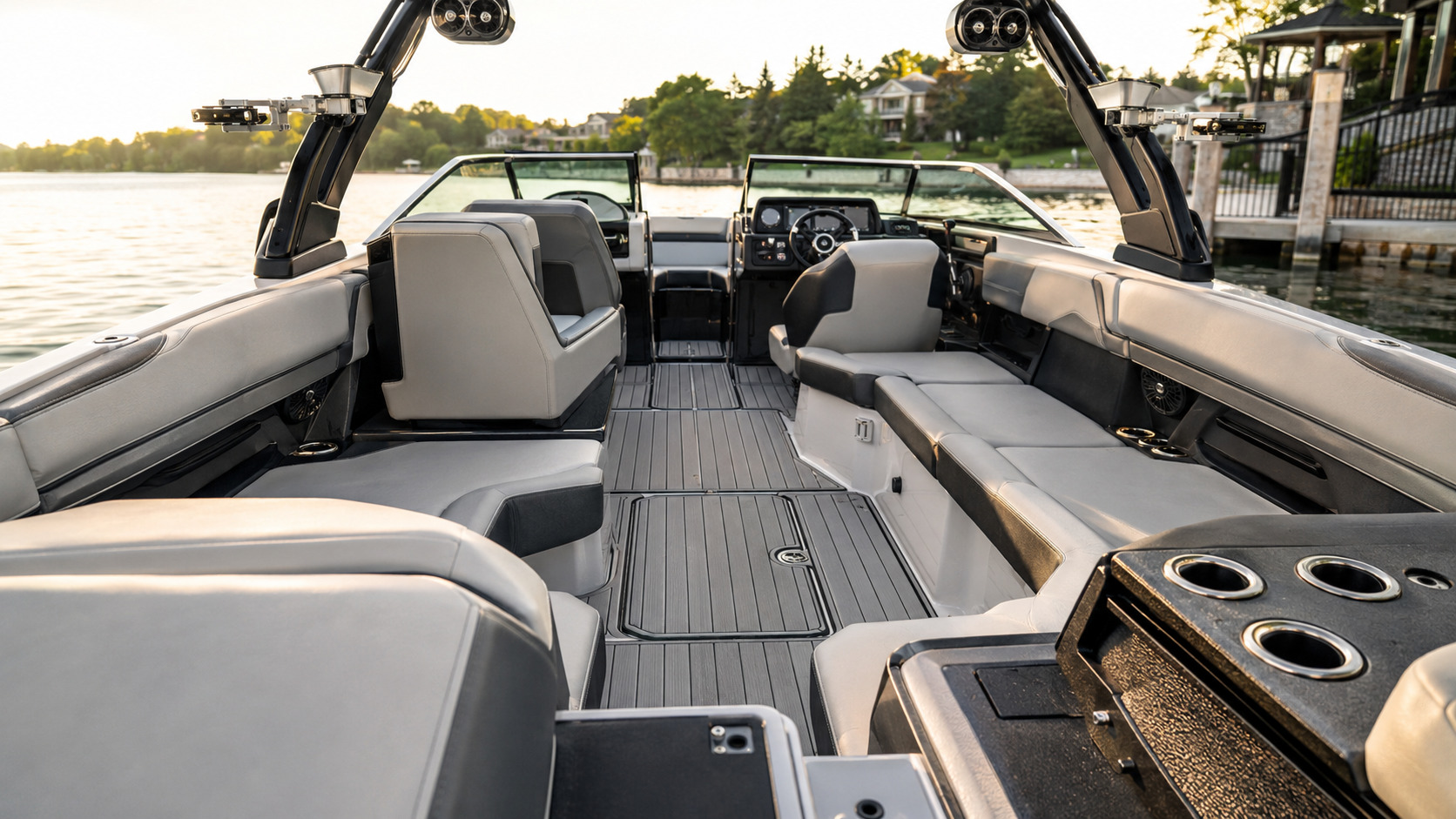
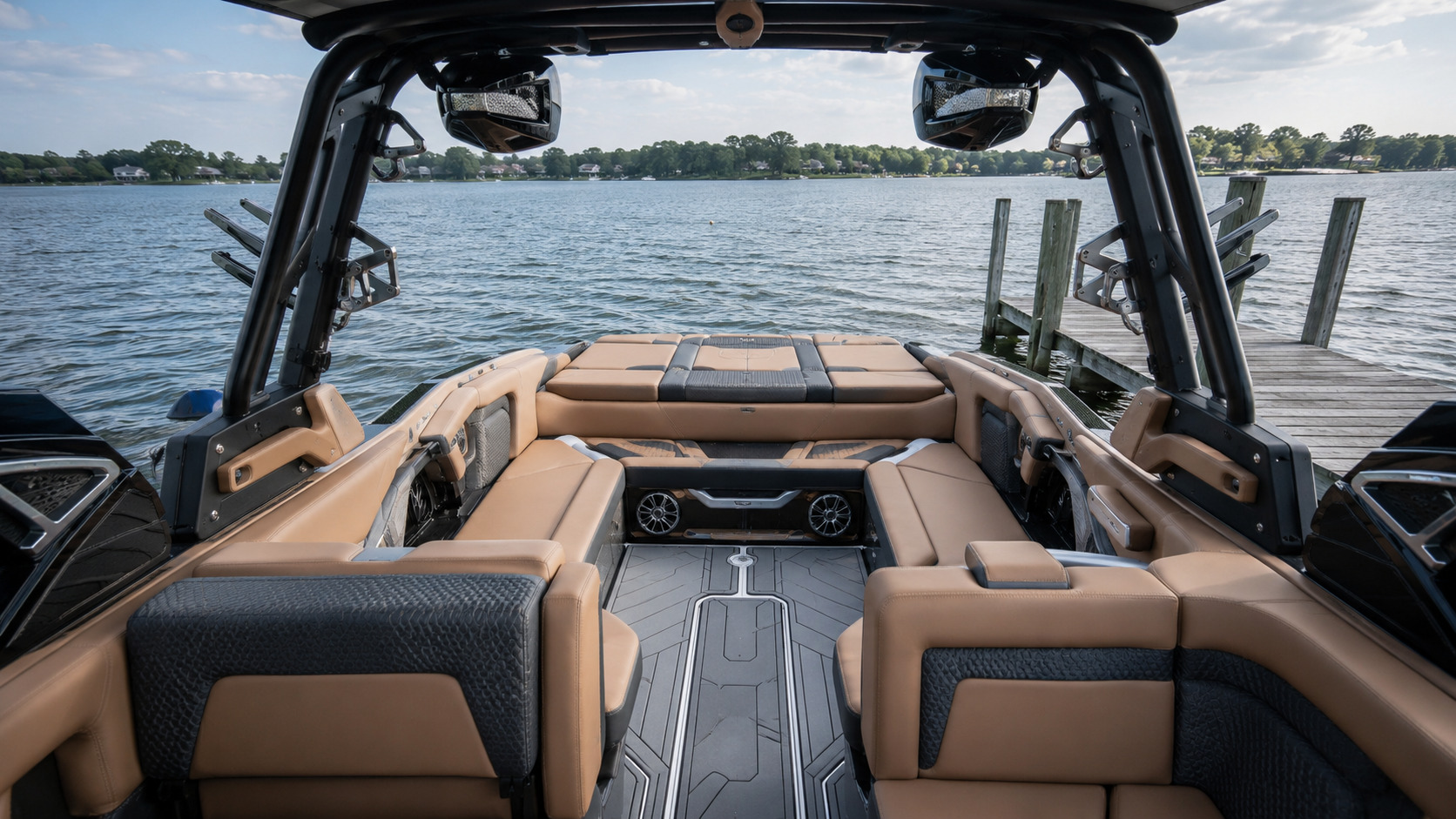
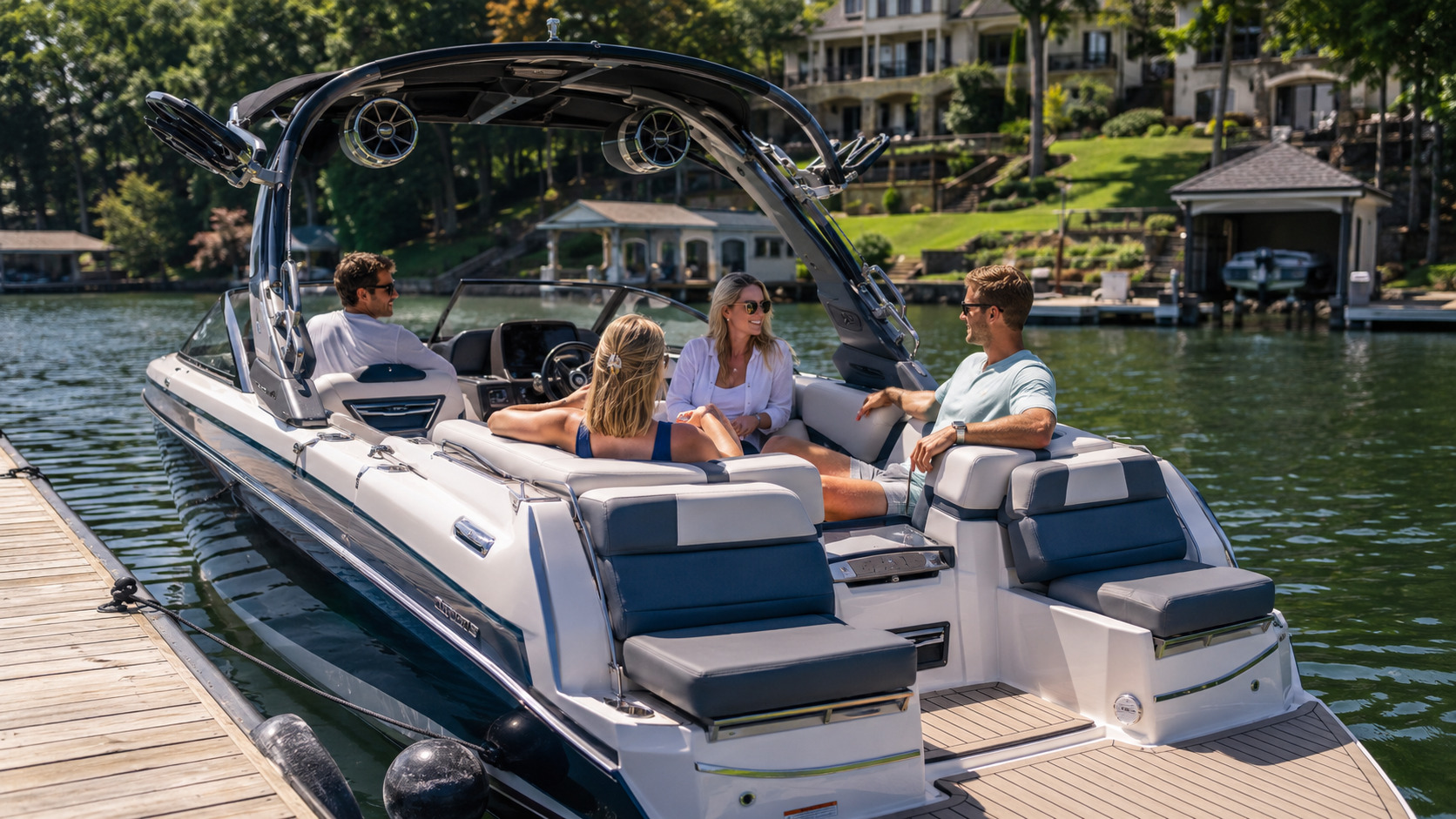
The M230 deck earns its value through features such as Powered swim step, MaxRelax loungers and Ascend Pro tower. Those items should be tested with the 16-person rating in mind, not photographed in an empty boat.
Three details make the M230’s deck test specific rather than generic: Powered swim step, MaxRelax loungers and Ascend Pro tower. Use them during the inspection. Inside the M230, deploy the seat, step, tower, pylon or storage feature as applicable, then put the normal crew in the boat and see what happens to movement through the cockpit. The model is rated for 16 people, but comfort depends on where boards, bags and coolers go when those people are aboard. With a normal M230 crew aboard, the right deck remains functional after the gear arrives.
These eight features are model-specific inspection points for the M230. Equipment can vary by model year and options,
Powered swim step
Push-button deployment reduces boarding effort and is part of the flagship transom experience. Inspect hinges, actuator speed and controls.
MaxRelax loungers
Dedicated transom lounge positions create a separate social space for riders between sets.
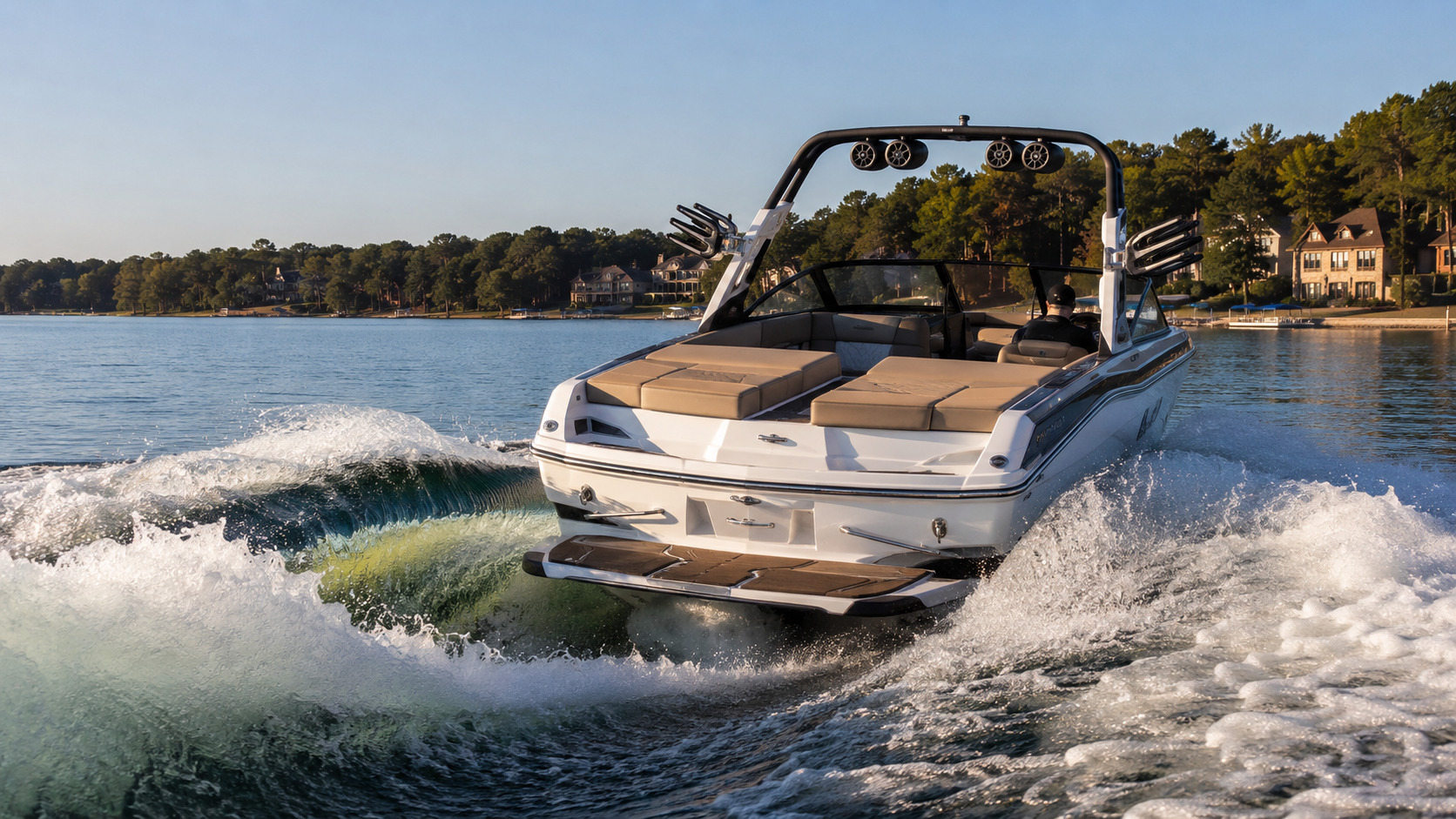
Ascend Pro tower
Premium tower hardware can carry racks, shade, lighting and other options. Verify folding function and storage clearance.
E-Z Stash board locker
Purpose-built board storage protects gear and clears the cockpit on a feature-dense 23-foot hull.
Portside touchscreen
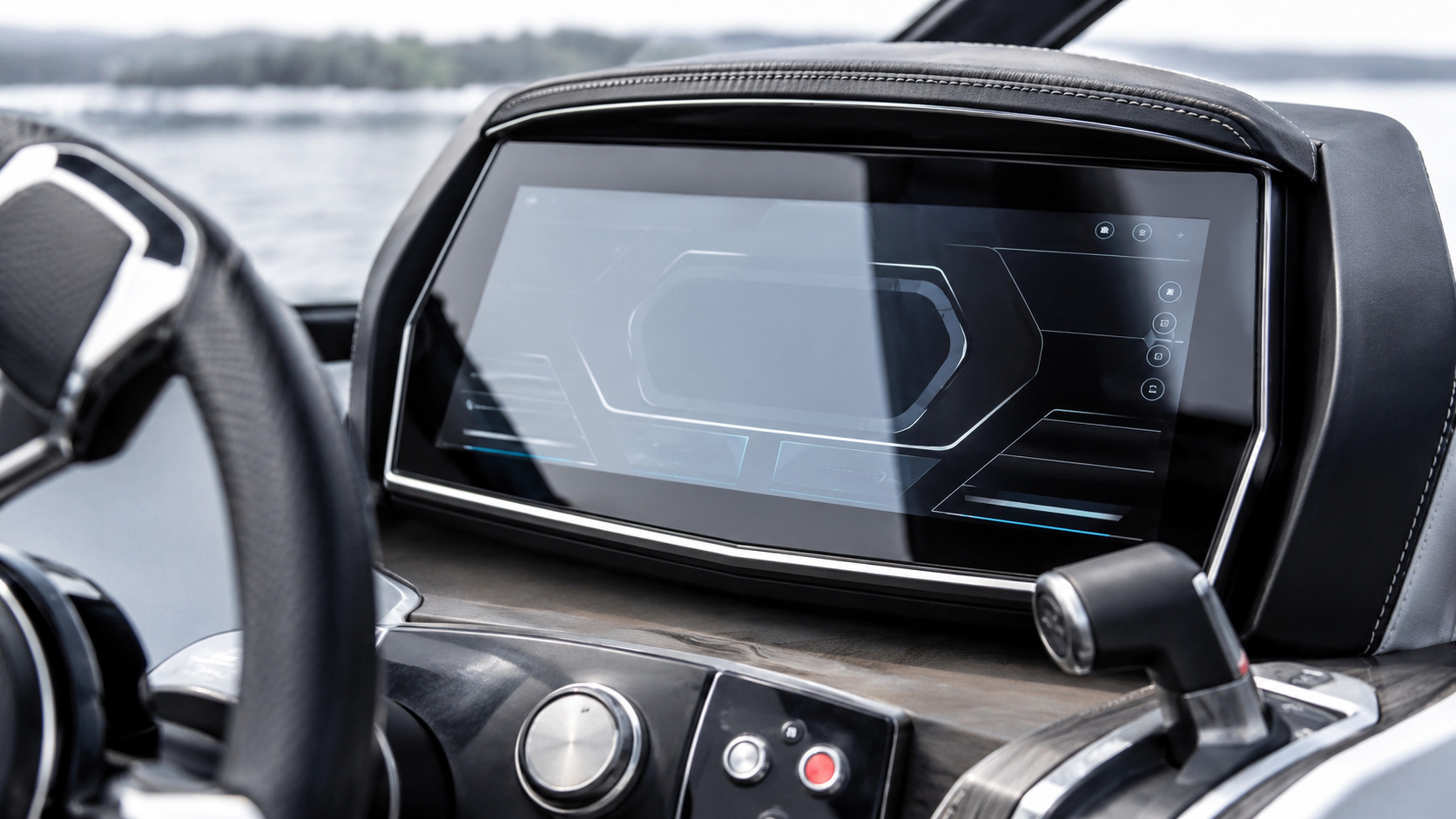
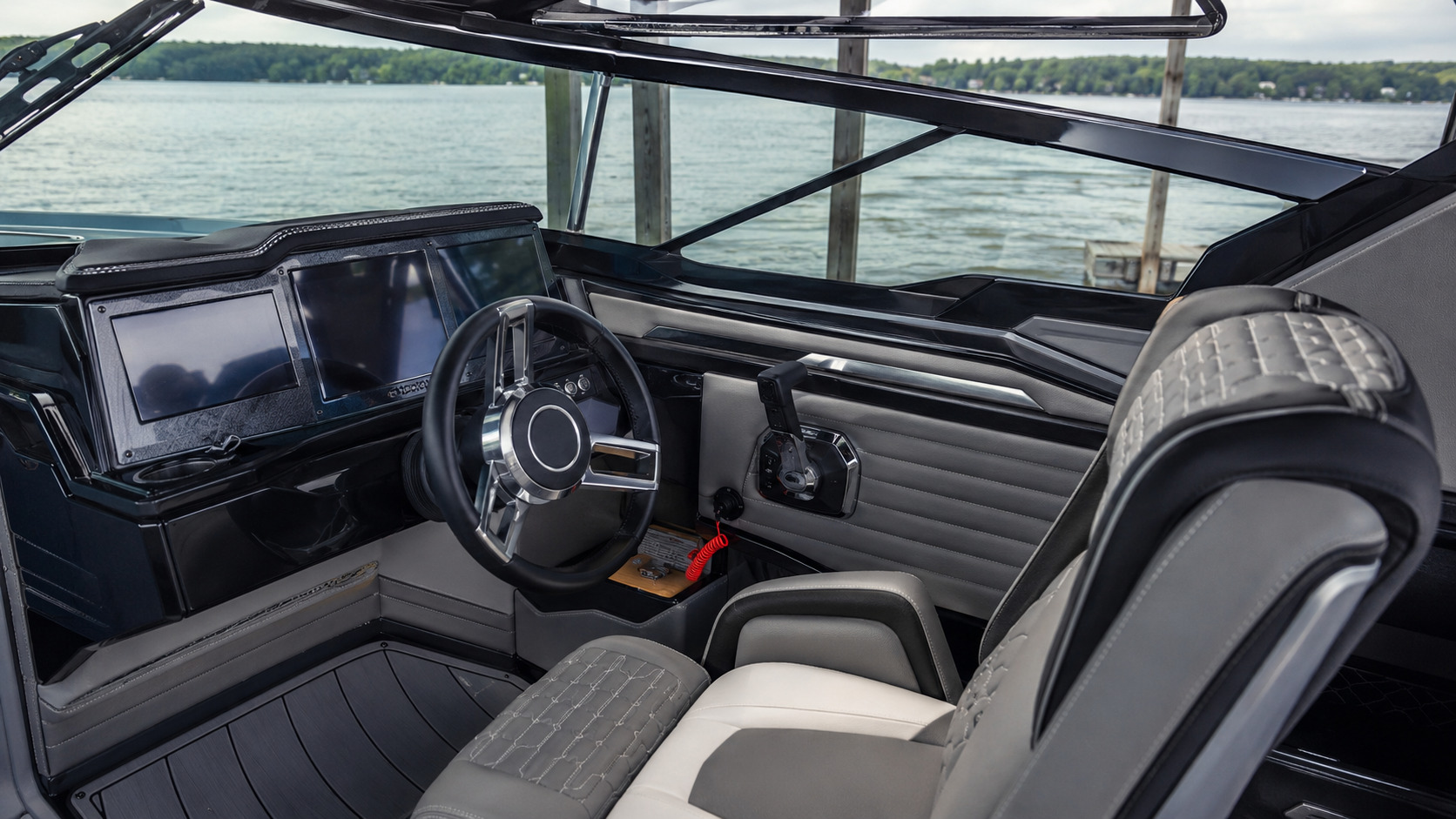
A second control point lets passengers manage selected functions without crowding the helm. Test response and network stability.
Watersports, electrical and helm systems
The M230 systems review should start with the functions that create its watersports value.
Ballast systems should be tested tank by tank when the M230 has factory ballast.
On the M230, the systems most tied to resale value are Powered swim step, Ascend Pro tower, Portside touchscreen and 74-gallon fuel tank.
The systems that deserve extra attention on the M230 are the ones that help justify choosing it over the M242: Powered swim step, Ascend Pro tower, Portside touchscreen and 74-gallon fuel tank. During the M230 systems check, test every installed version through a complete cycle, then repeat the test after the engine and electrical system are warm. On the M230’s installed package, on a used boat, intermittent failures in powered seats, ballast, wake hardware, touchscreens or tower equipment should be priced as repairs. At the M230 helm, an option only adds resale value when it works.
The M230 is a day towboat with no cabin or overnight berth, so the berthing question is where the boat lives between uses.
Approximate dry weight is 6,750 lb.
Storage planning for the M230 starts with 23′ of hull, 102″ of beam and about 6,750 lb dry weight. Its 74 gal fuel capacity also matters when estimating a wet tow or lift load. For M230 storage, because it is the smallest model in the current series lineup, the nearest same-series alternative can change the storage problem materially. A buyer choosing between the M230 and M242 should measure both complete trailer packages before treating the published hull-length difference as trivial.
The M230 storage plan begins with 23′ of hull, a 102″ beam and roughly 6,750 lb before trailer, fuel and gear. The tank alone holds 74 gal, so a lift or tow calculation should not stop at dry weight. The nearby M242 is 24′ 2″ long, about 7,500 lb dry, carries 94 gal of fuel and is rated for 17 people. The M230 is 23′, about 6,750 lb dry, carries 74 gal and is rated for 16. With the M230 on its trailer or lift, if the two boats require different tow vehicles, garage depth or lift capacity, that ownership difference can outweigh a relatively small change in purchase price.
malibu boats m series m230 anchored cove leisure 22
malibu boats m series m230 bow lounge angle 09
malibu boats m series m230 bow to cockpit interior 23
malibu boats m series m230 cockpit social seating 10
malibu boats m series m230 cockpit to stern view 19
malibu boats m series m230 command center touchscreen 08
malibu boats m series m230 dockside luxury profile 04
malibu boats m series m230 family lake day 20
malibu boats m series m230 front quarter surf running 02
malibu boats m series m230 helm detail 07
malibu boats m series m230 hero underway 01
malibu boats m series m230 low waterline running 16
malibu boats m series m230 marina arrival 21
malibu boats m series m230 performance turn 24
malibu boats m series m230 premium exterior hero 25
malibu boats m series m230 private dock bow on 17
malibu boats m series m230 rear quarter surf wake 03
malibu boats m series m230 side profile underway 15
malibu boats m series m230 stern lounge surf gate 11
malibu boats m series m230 sunset premium leisure 14
malibu boats m series m230 swim platform angle 12
malibu boats m series m230 tower rack detail 18
malibu boats m series m230 tower windshield angle 06
malibu boats m series m230 wake surf lifestyle 13
Typical Malibu M230 pricing
The current specification baseline is 23′ by 102″, 6,750 lb approximate dry weight, 74 gal fuel capacity, 4,105 lb maximum factory ballast and 430 to 607 HP published power.
The M230 should be valued around the equipment that makes this particular model different. The M230 weighs 6,750 pounds dry at only 23 feet, seats 16, carries 74 gallons and uses the M-Line hull with premium transom and control features. The most meaningful cross-check is the M242, because a buyer who prefers the larger M-Series flagship with 17-person capacity, 94 gallons and 7,500-pound dry weight may rationally pay more for that different platform rather than discounting the wrong M230.
The correct purchase price leaves room to maintain the M230 rather than deferring service to keep the payment comfortable.
Market value on a M230 should follow the equipment that defines this model. The hull is M-Line, published power is 430 to 607 HP, and the current specification includes 4,105 lb of maximum factory ballast. When valuing the M230, do not pay an option premium for hardware that is missing, disabled or untested. In the M230 market, compare the complete, working configuration before comparing asking prices.
Market price band
Pricing on request
Estimated monthly
Ask us for a payment
Illustration only and not an offer of credit.
Estimate a Malibu M230 payment
For the M230, a payment estimate is not a credit offer or approval. On this M230, final financing depends on borrower qualifications, collateral, value, condition, transaction type, rate, term, down payment, taxes and fees.
Illustration only and not an offer of credit. Your actual rate and term depend on credit profile, vessel age, loan amount and ownership structure.
Compare the M230 with nearby Malibus
The M230’s core reason to exist is that it is a 23-foot flagship platform that uses mass, premium systems and the M-Line hull rather than sheer length to distinguish itself.
A new M230 should be delivered as the exact configuration that was priced.
On a used M230, start with ownership history and a cold engine.
The final pre-purchase test for a M230 should reproduce its intended use: buyers who want Malibu’s flagship M-Series interior, controls and surf package in a 23-foot hull. Load the crew, operate Powered swim step and Ascend Pro tower where applicable, fill the watersports system the way the owner plans to use it and run long enough to reach full operating temperature. If not, inspect the M242 before negotiating.
A serious M230 inspection should reproduce the reason the boat is on the shortlist. The intended buyer is buyers who want Malibu’s flagship M-Series interior, controls and surf package in a 23-foot hull. Bring the normal crew, use powered swim step and ascend pro tower where applicable, and run the rear-engine V-drive inboard long enough to reach full temperature. During the M230 inspection, after the ride, reopen the bilge and inspect the propeller, shaft, rudder and any ballast or powered hardware that was used. If the M230 cannot demonstrate its defining advantage, inspect the M242 before negotiating.
The right time to apply for a M230 is after the boat has passed the fit and condition tests. For the M230, float Finance focuses on marine financing, and eligible transactions can include dealer, brokerage and private-party purchases. On this M230, the application should identify the actual boat, purchase price and transaction type so the financing review is tied to the collateral being purchased.
The M230 is strongest for buyers who want Malibu’s flagship M-Series interior, controls and surf package in a 23-foot hull. Its 23′ length, 102″ beam, 16-person capacity and M-Line hull support that use. It is a weaker fit for owners who mainly want value per foot and can get the wake performance they need from a 23 LSV or 23 MXZ. If the weaker-fit description sounds like the buyer’s normal weekend, compare the M242 before letting price or monthly payment make the decision.
Current published specifications list 23′ hull length, 102″ beam, 32″ draft, 6,750 lb approximate dry weight, 16 maximum capacity, 74 gal fuel capacity, 4,105 lb maximum factory ballast and 430 to 607 HP power.