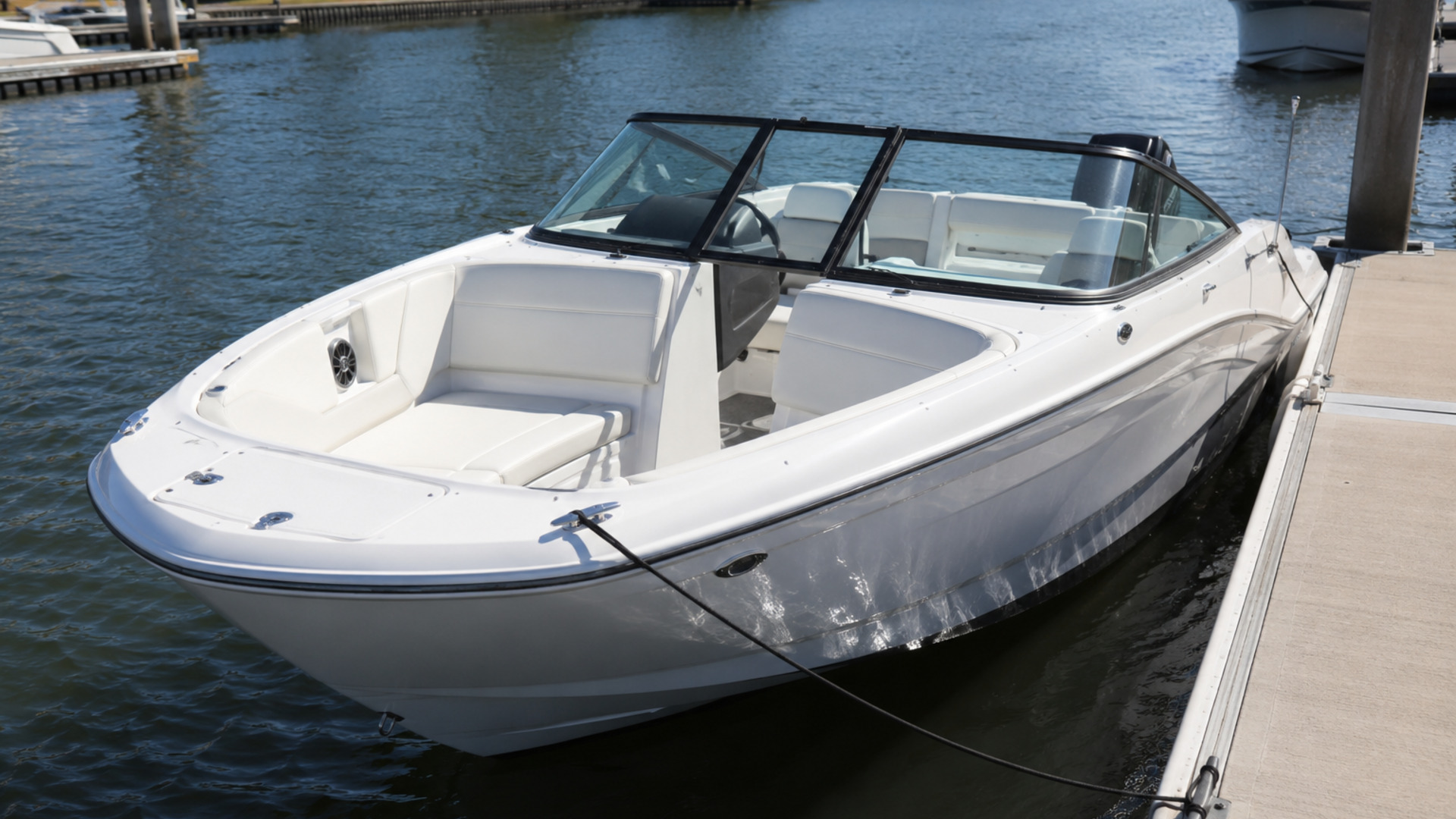
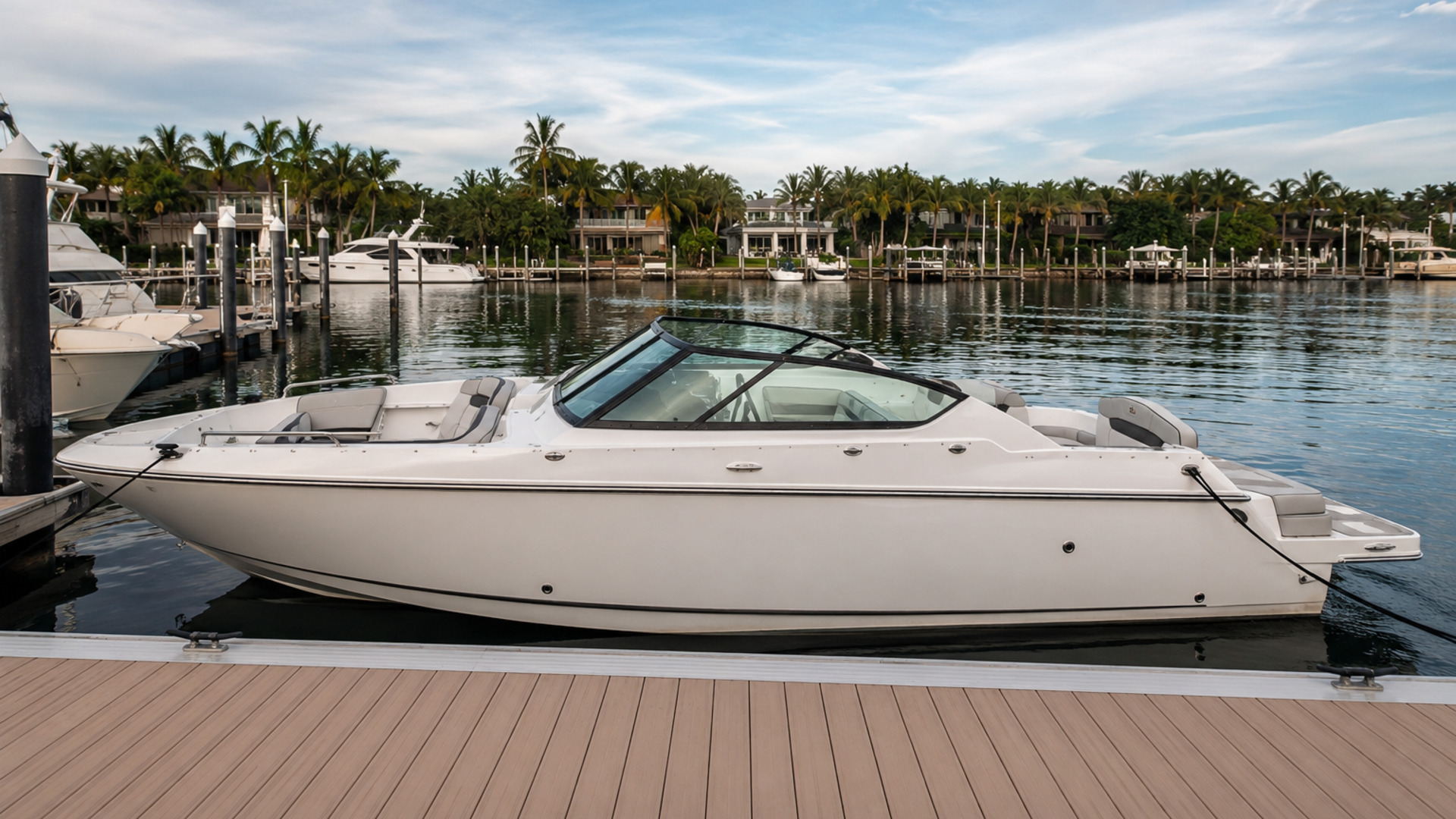
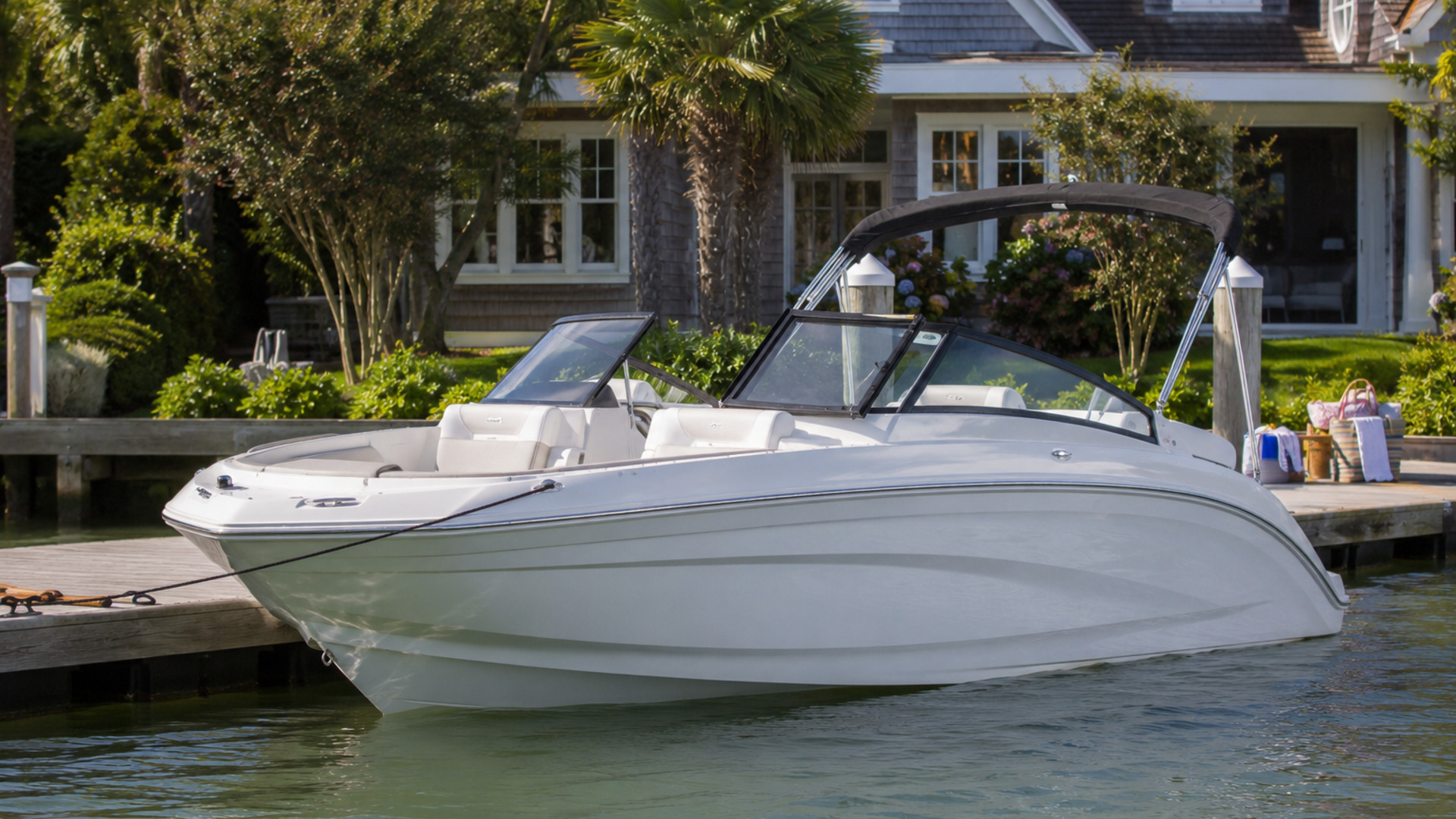
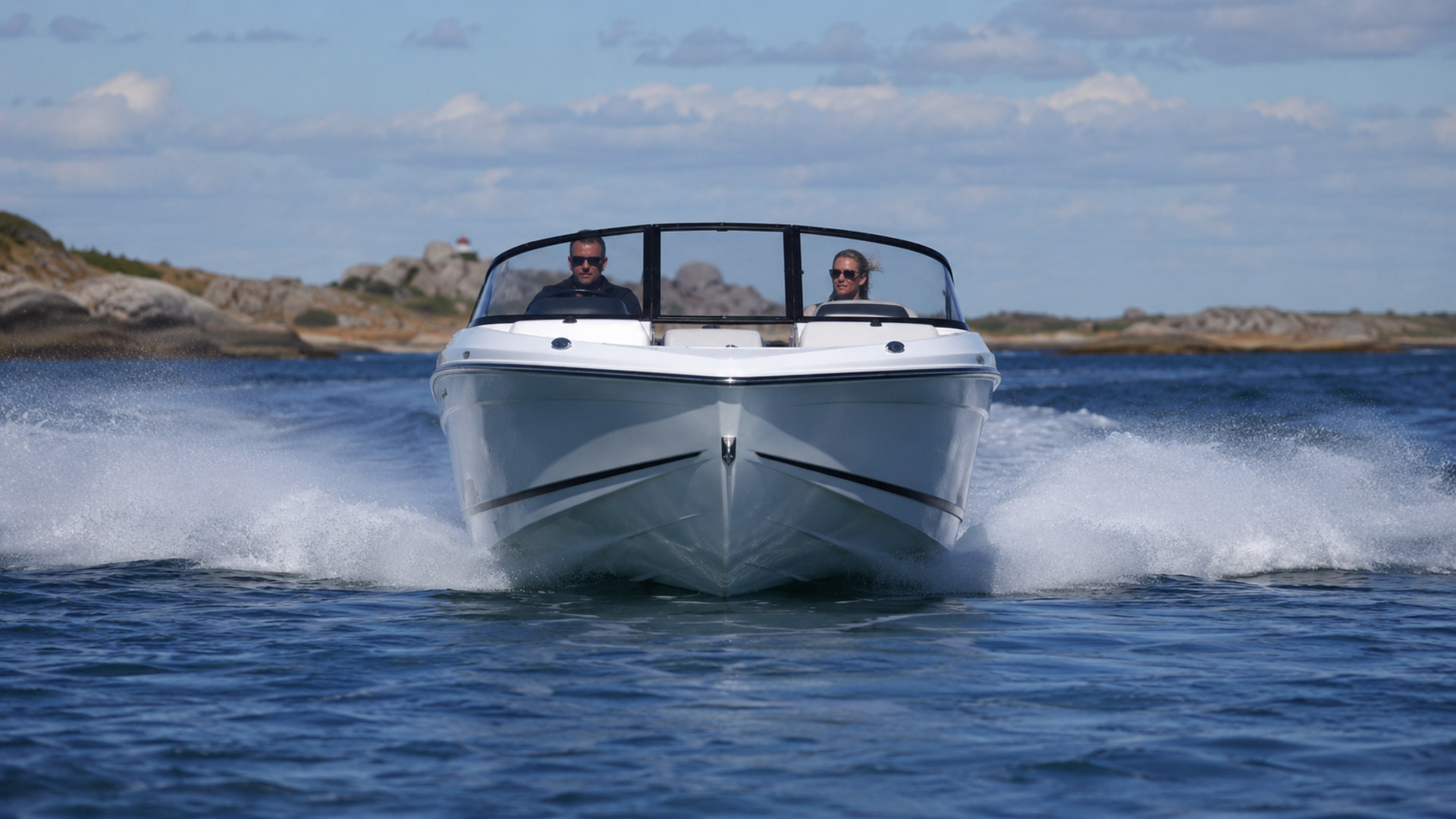
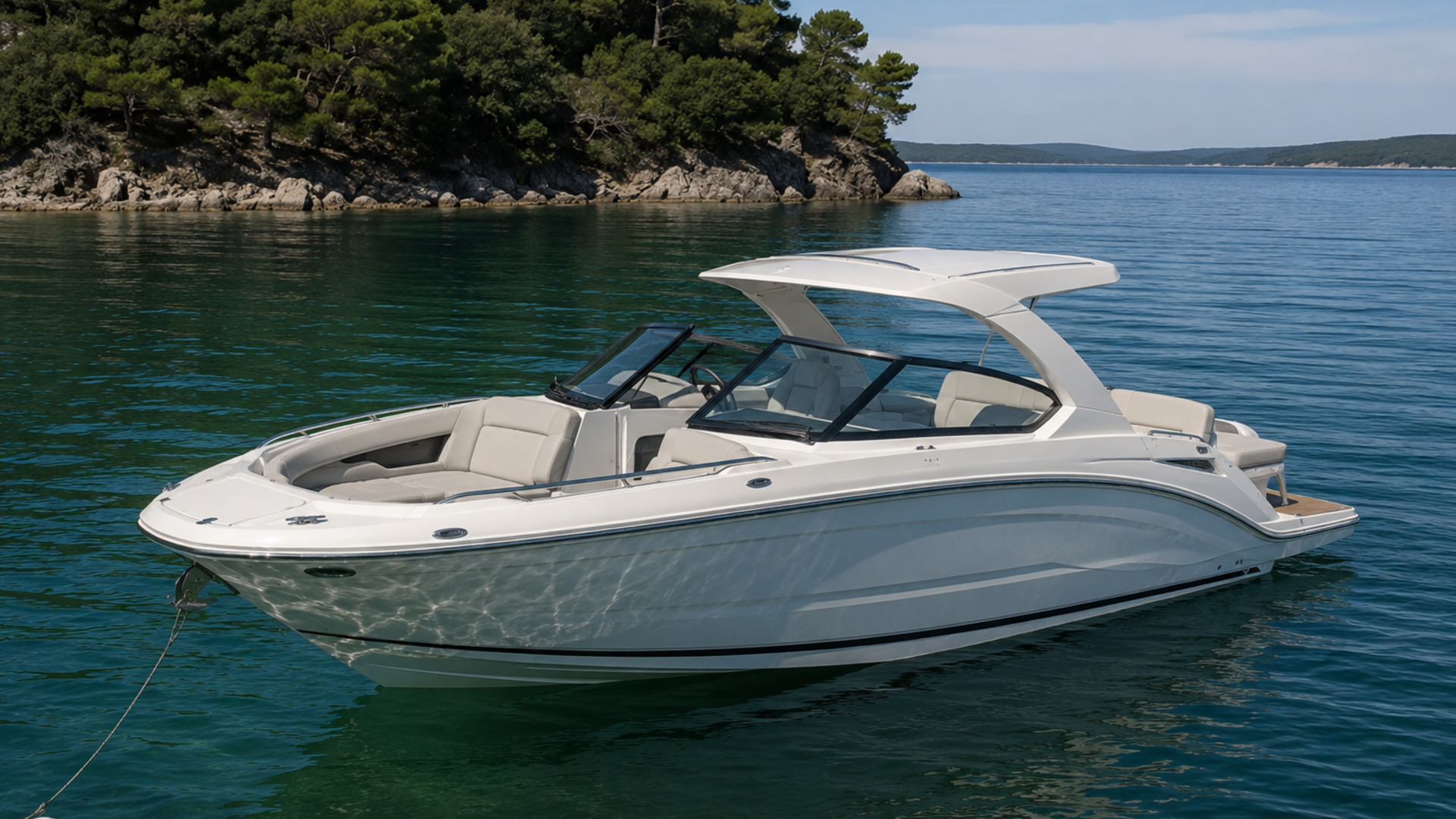
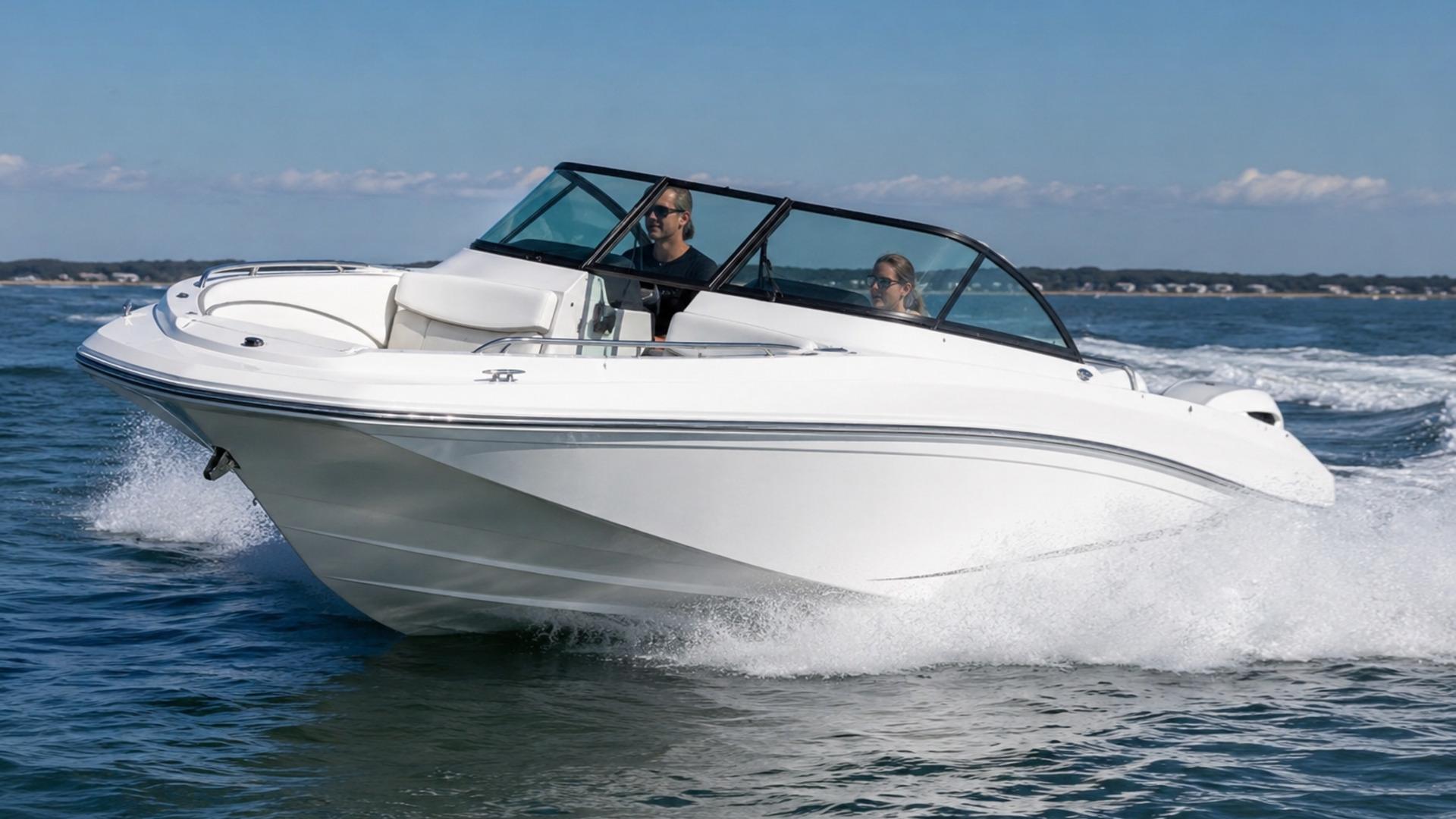
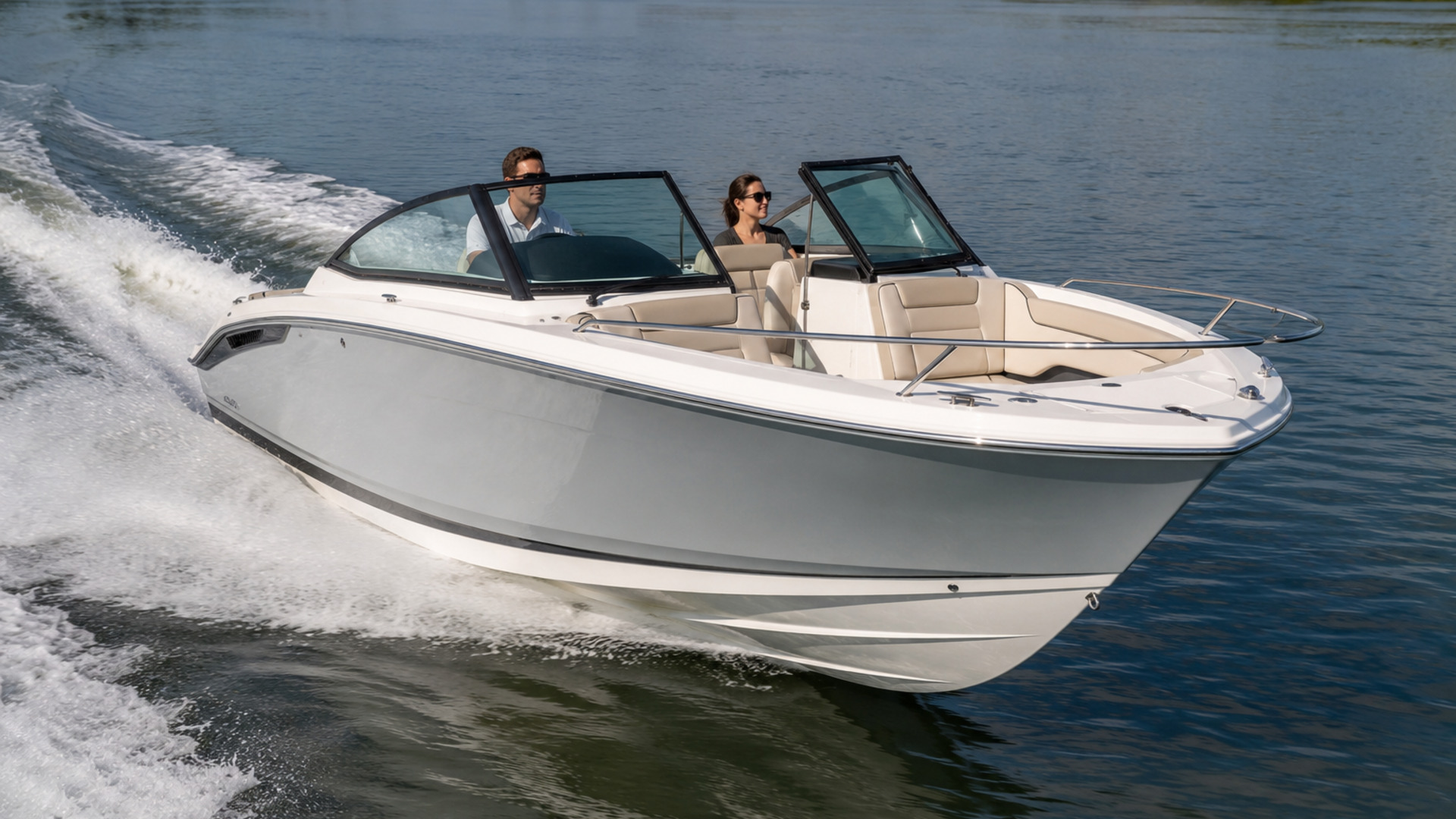
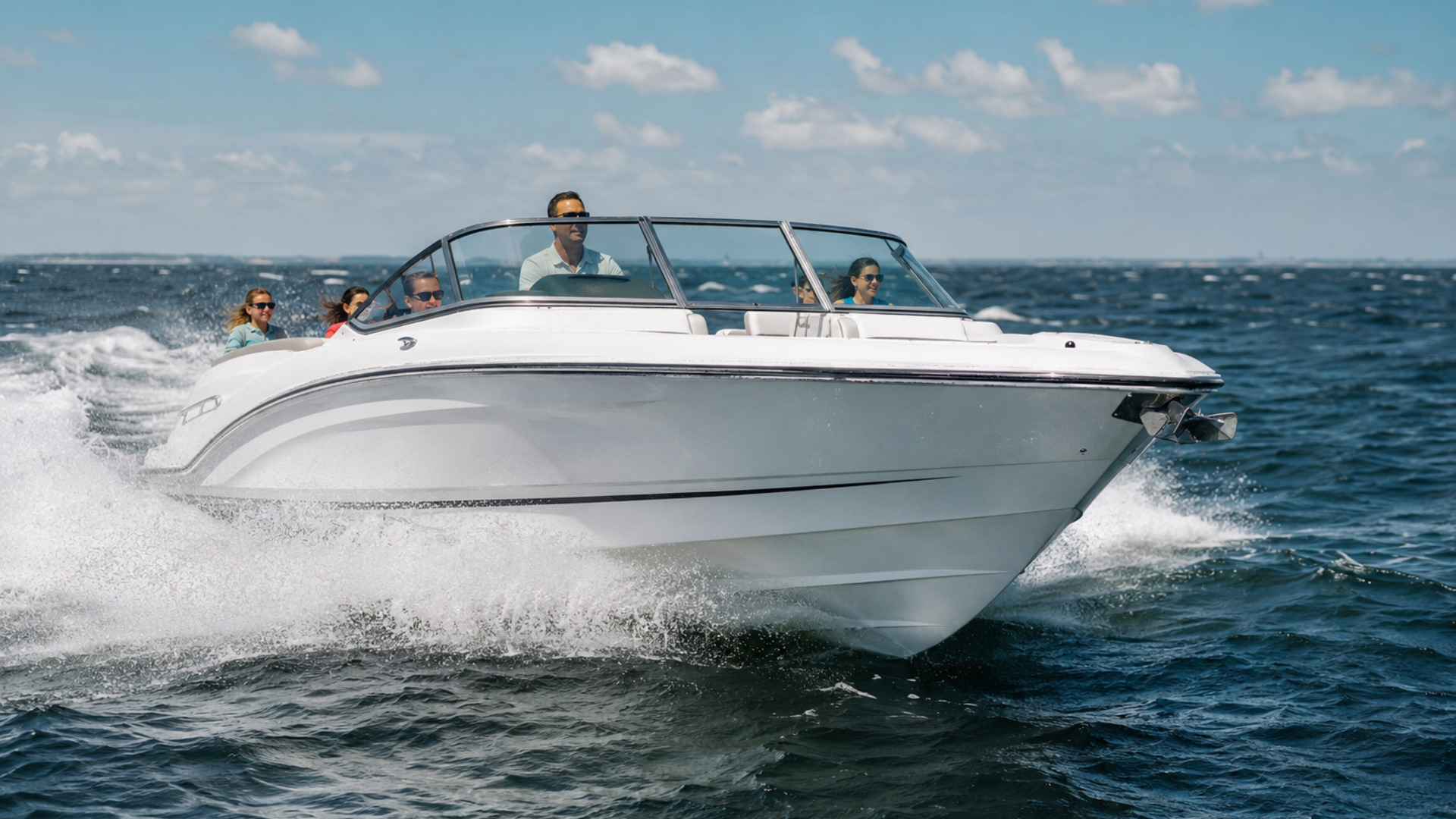
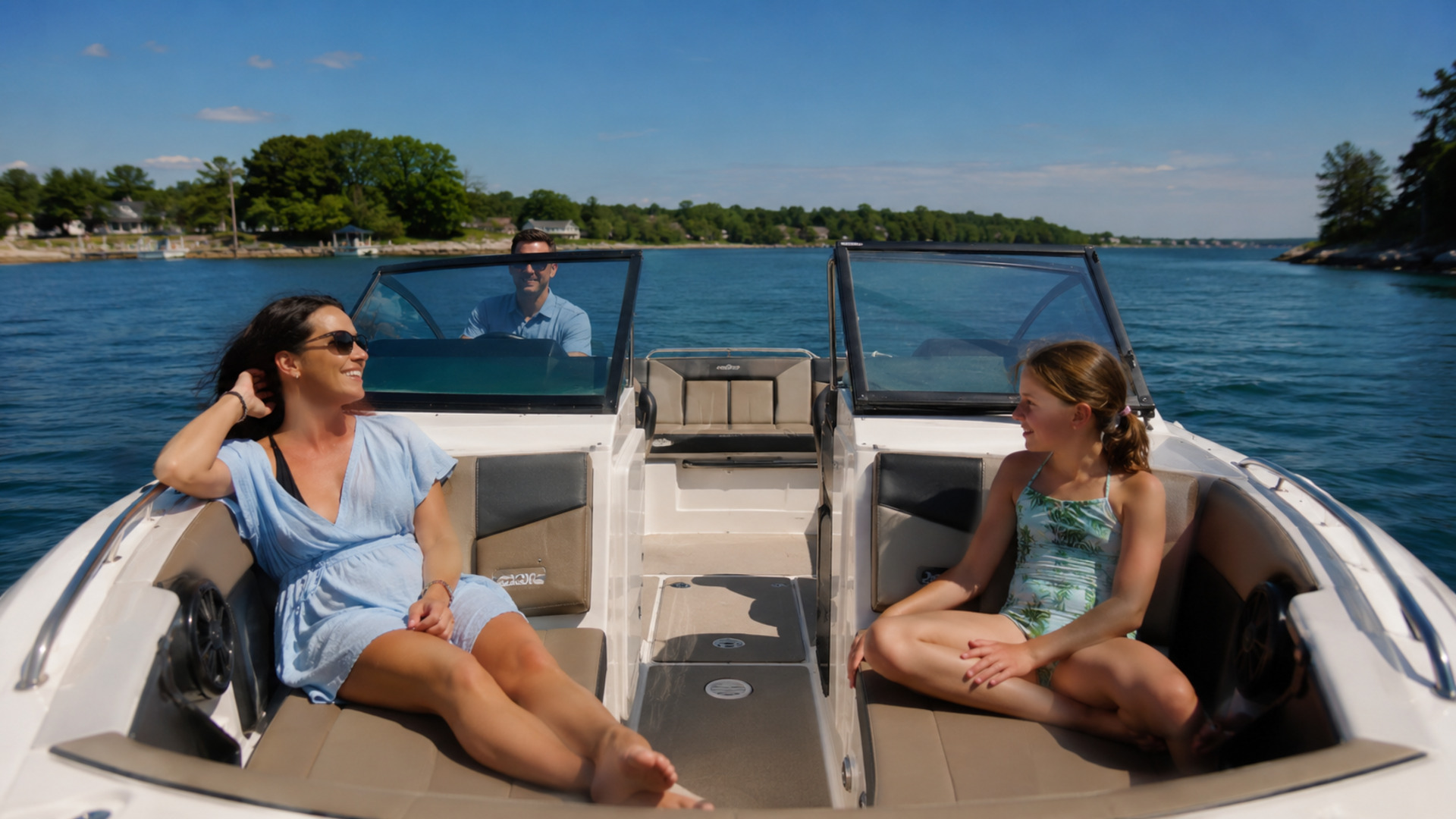
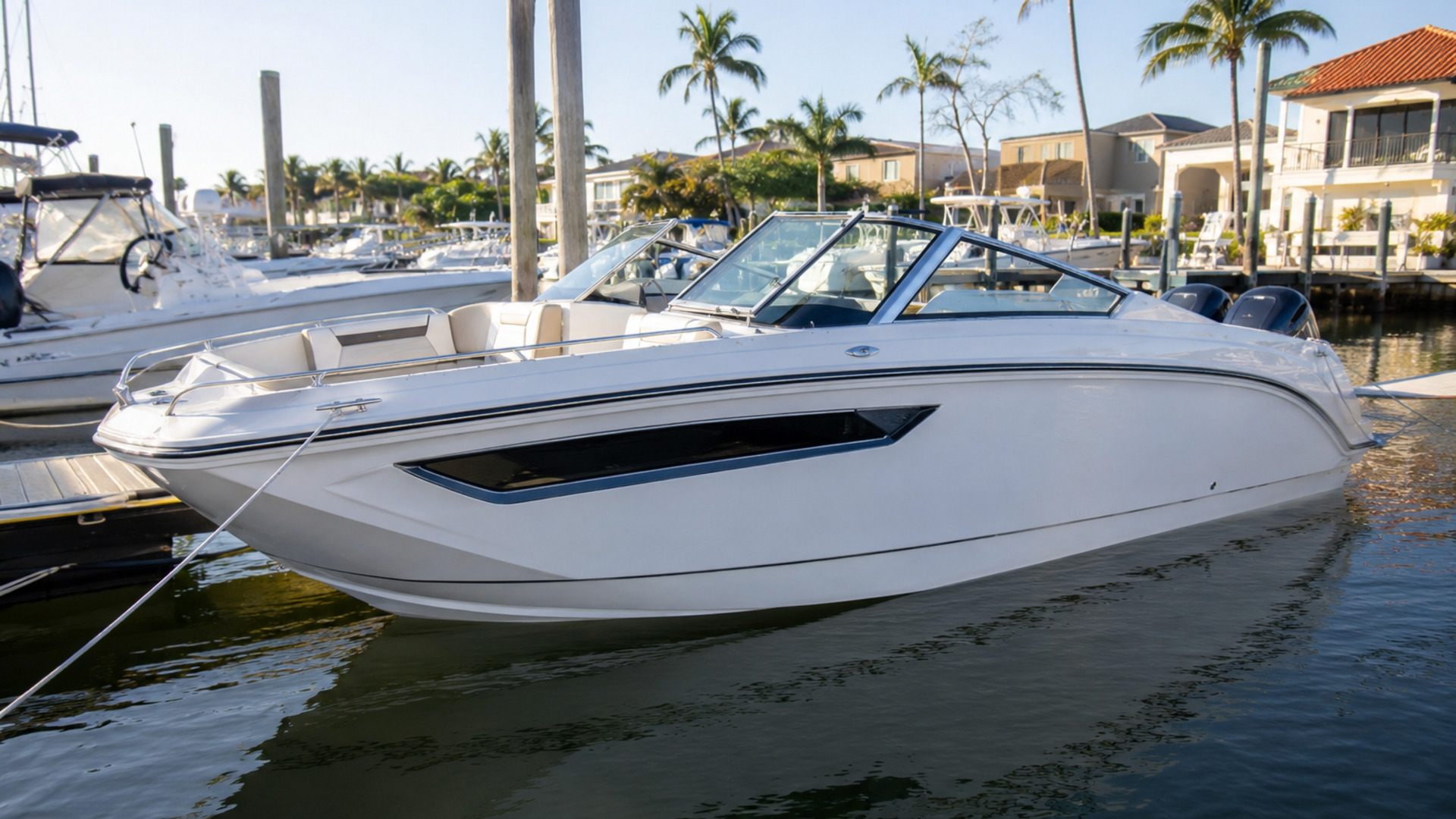
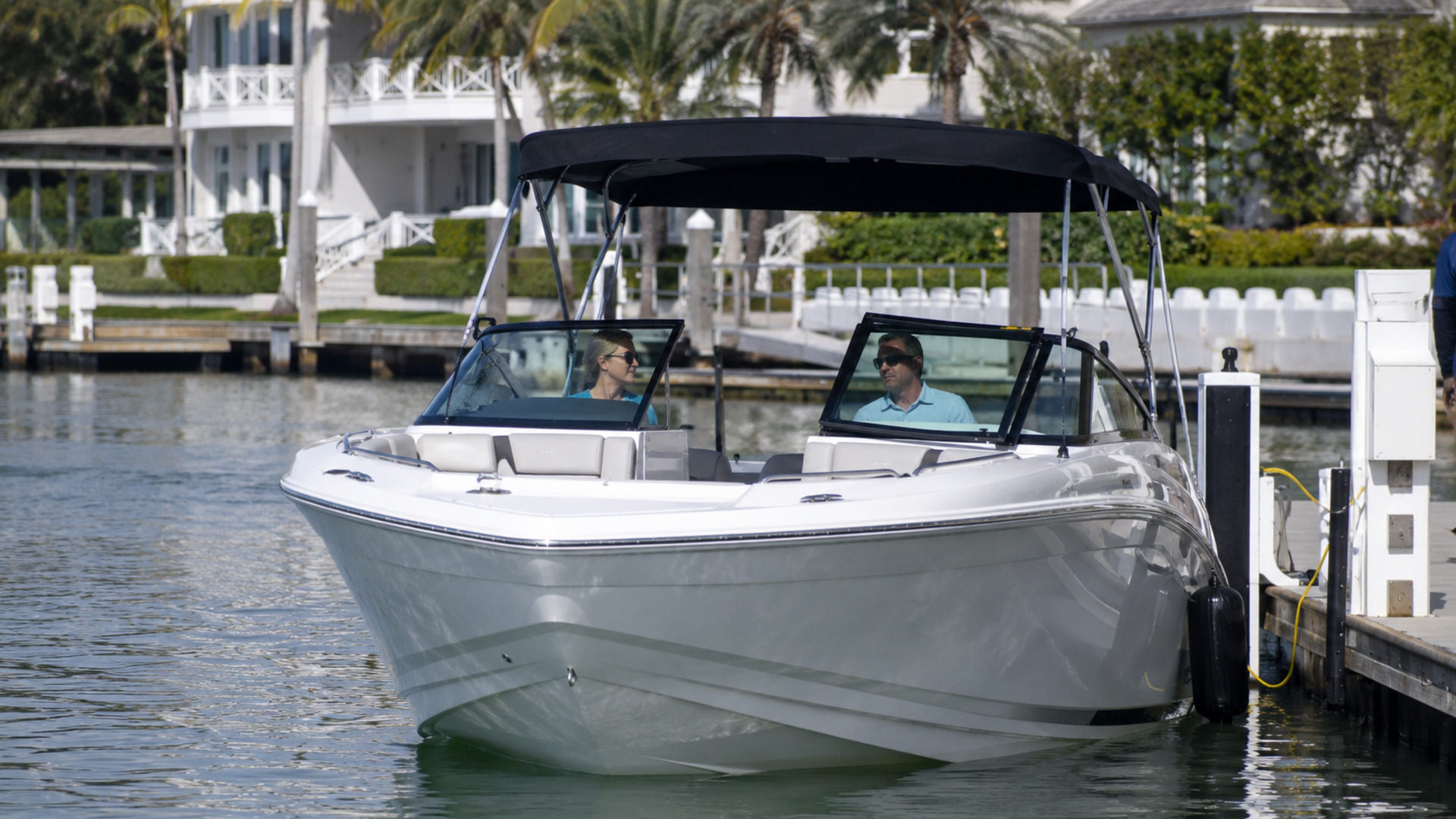
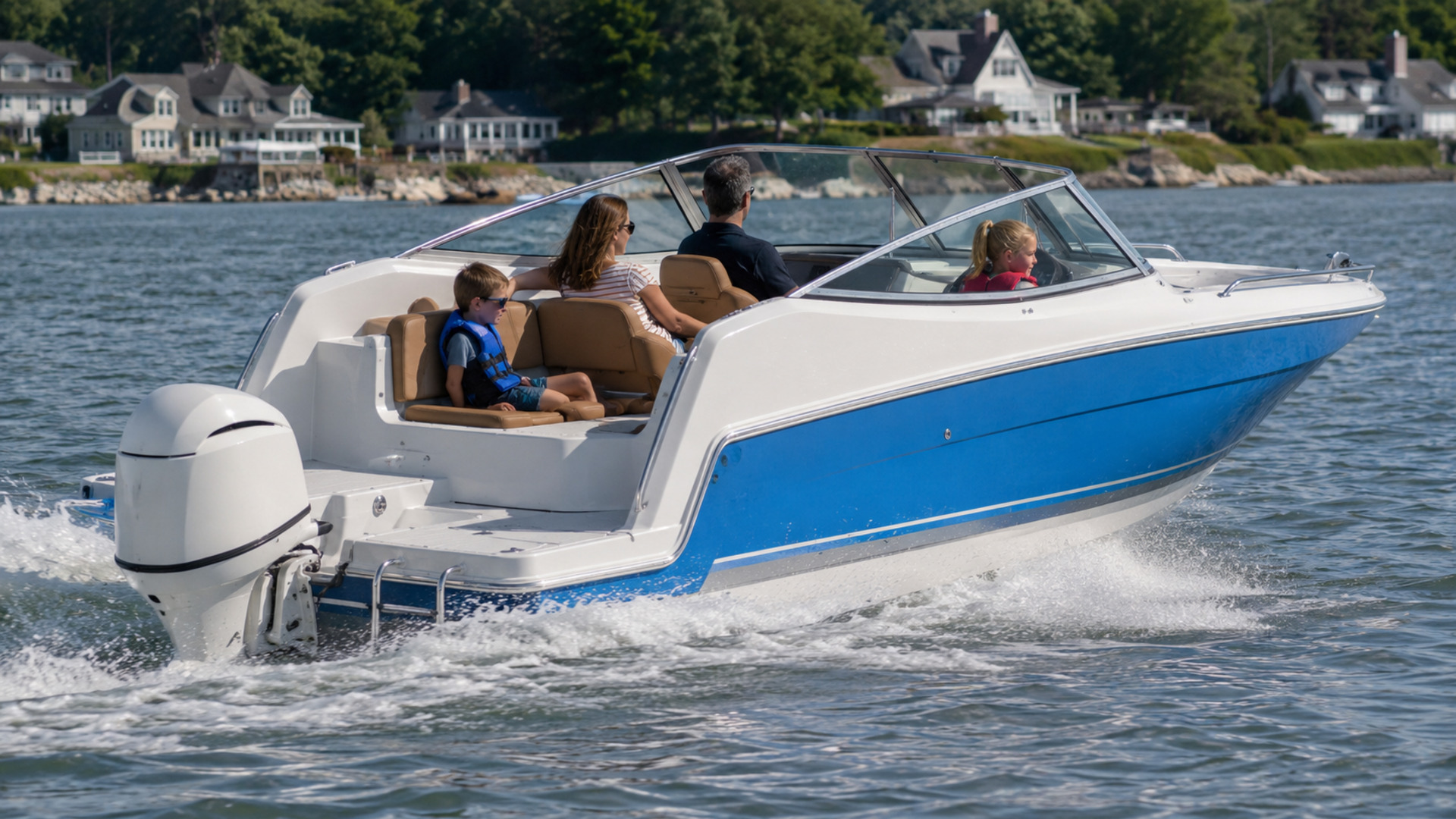
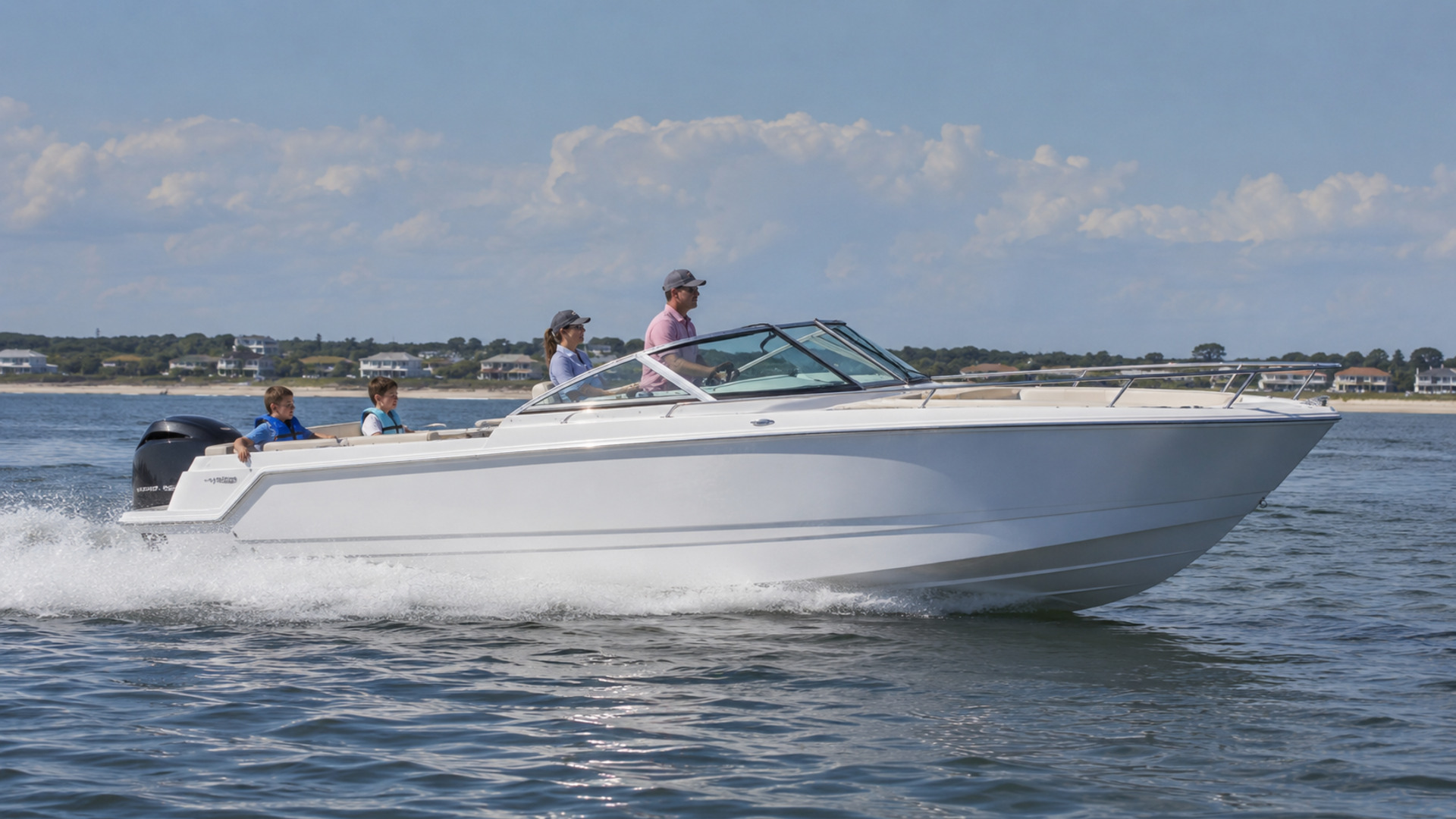
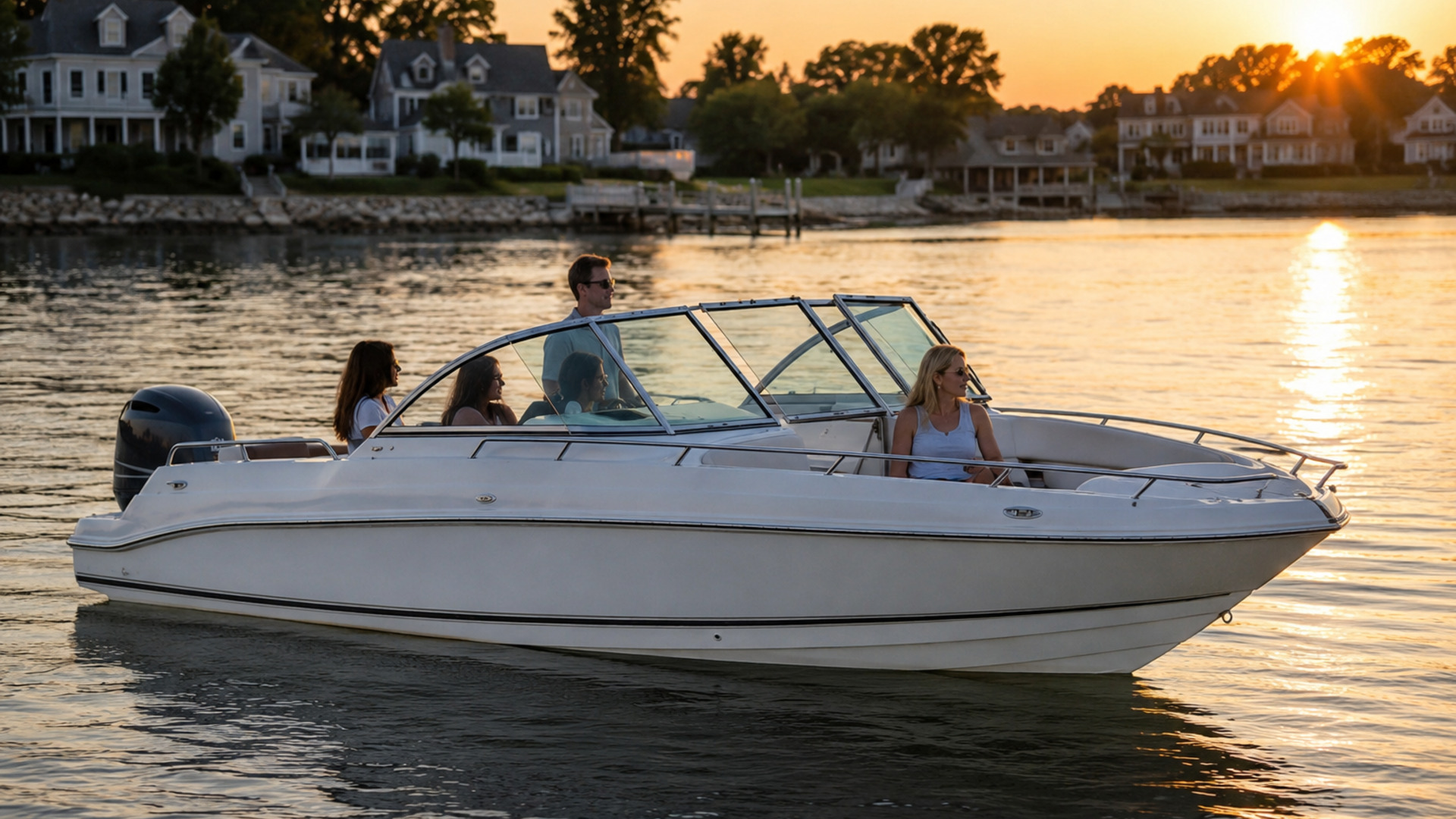
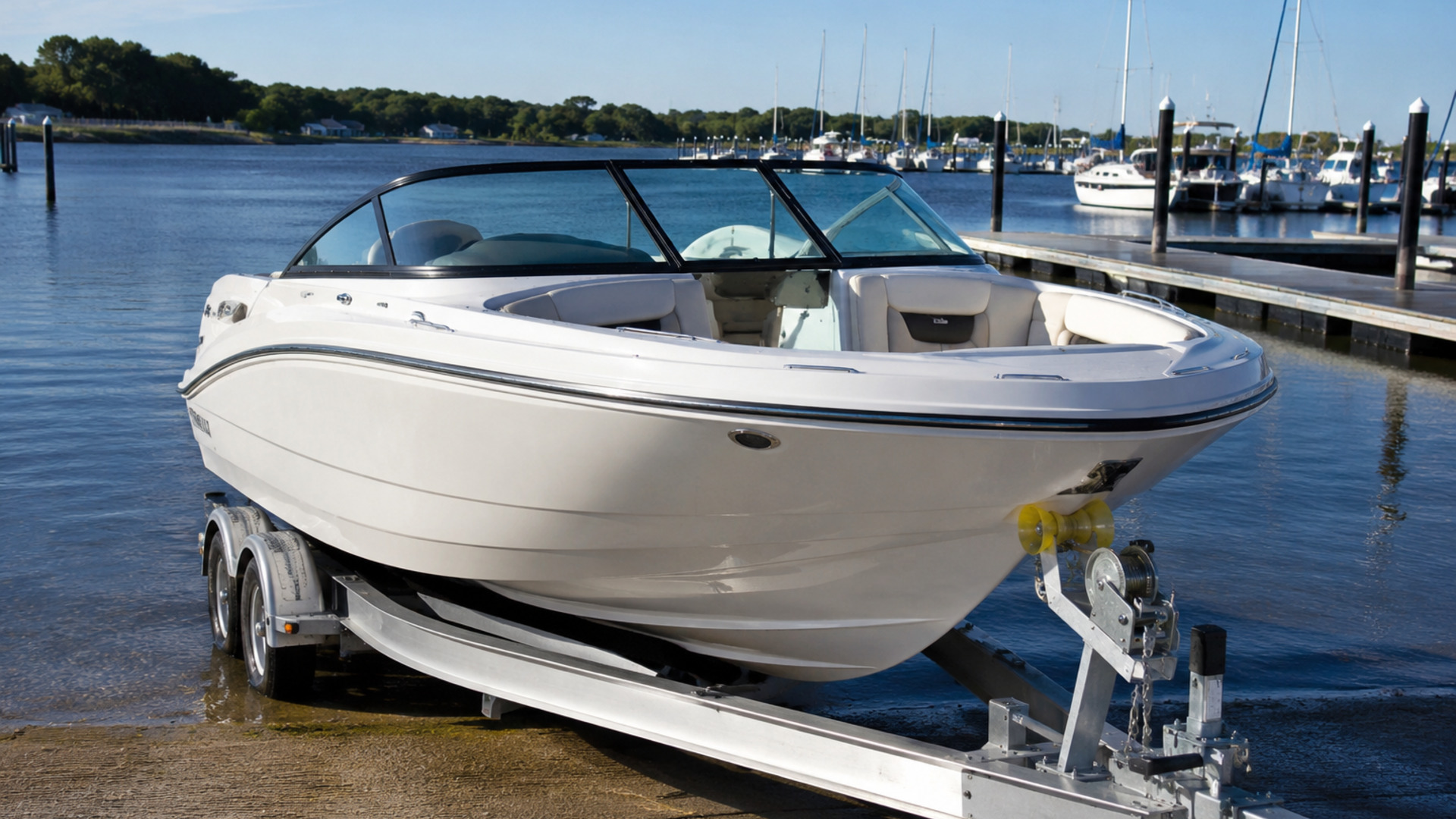
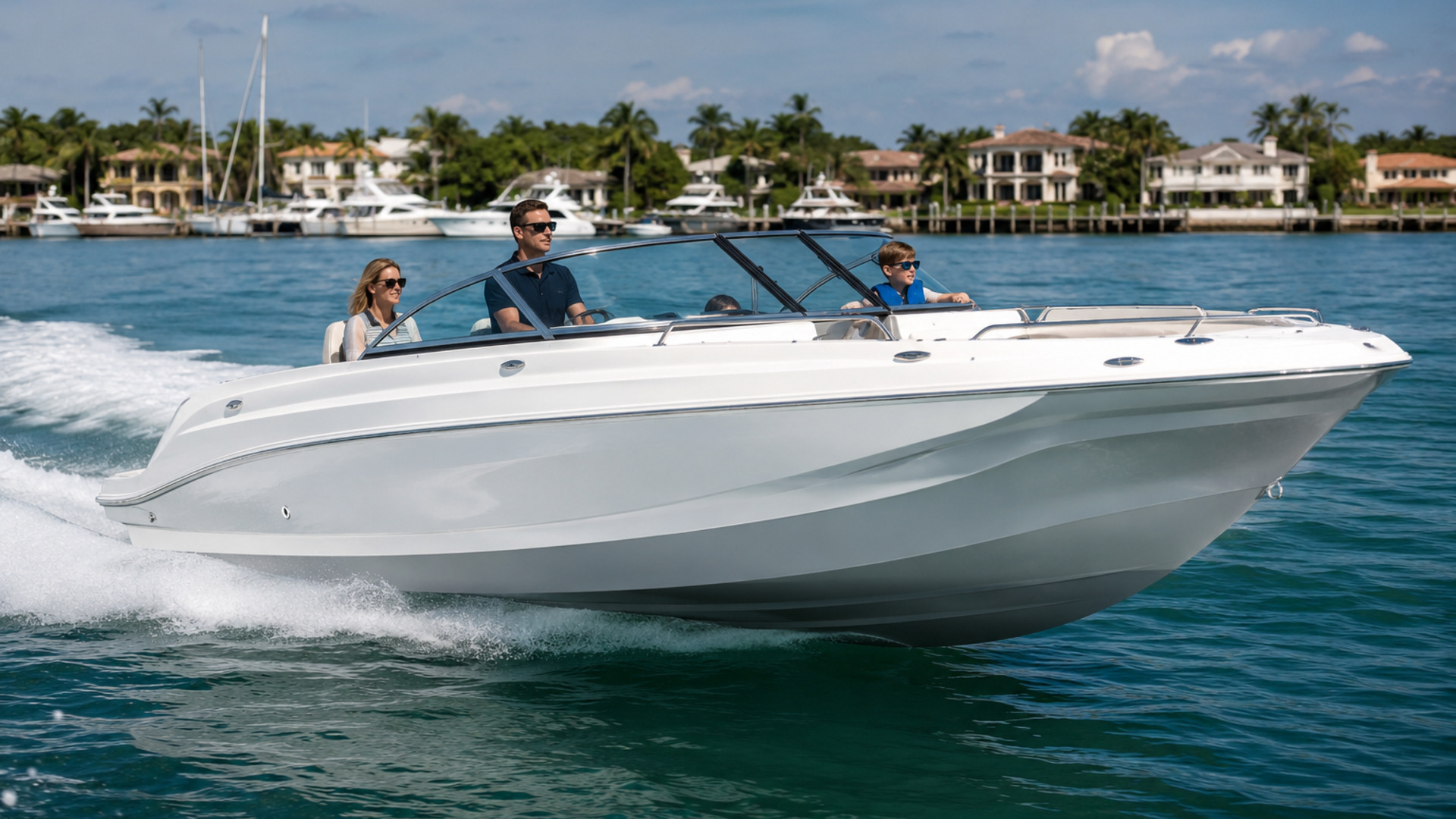
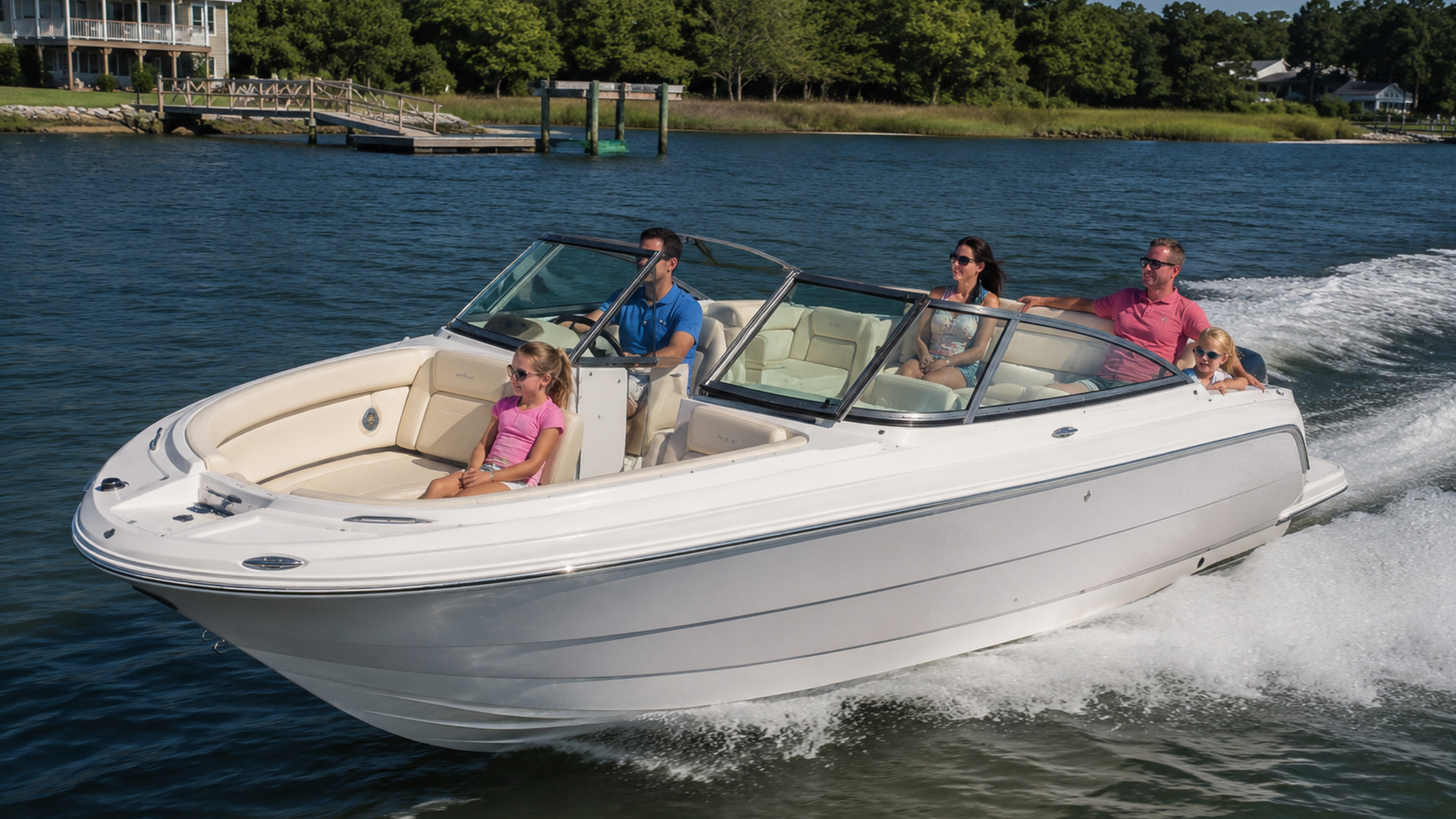
The Pursuit DC 246 makes the most sense when the buyer starts with the day on the water rather than the model number. It is the smallest dual-console in this set, built around easy day-boating, weather protection and simple single-outboard ownership, and its clearest audience is families moving up from a smaller runabout who want a real windshield, usable bow seating, fishing capability and a manageable 25-foot package. On paper, the DC 246 measures 25′ 8″ overall with a 8′ 6″ beam, weighs about 6,138 lb dry and carries 118 gal of fuel. It is the smallest model in this group. The more important point is that Its single-engine layout, 8-foot-6-inch beam and convertible family seating keep the boat approachable without stripping away fishing basics. There is a real compromise. The DC 246 is easier to dock, store and power than the larger dual consoles, but it gives up the beam, enclosed amenities and offshore mass that make the 286 and 306 feel more substantial in open water. The closest alternative is the DC 286 when the buyer wants more beam, twin engines and a more protected offshore-ready package. The S 248 deserves attention when the buyer wants a center-console layout with more 360-degree fishing access. The DC 306 becomes relevant when the buyer wants a larger dual console with more cockpit systems and family space.
The DC 246 is one of the easier Pursuits to understand because the ownership case is as important as the layout. A single F350 means one engine to service, one gearcase to monitor and one propeller to repair. The 8-foot-6-inch beam is also friendly to owners coming from smaller boats. What the buyer gives up is the redundancy and extra offshore mass of the twins. For lake, bay and fair-weather coastal use, that can be a sensible exchange rather than a limitation.
Pursuit lists the DC 246 at 21° of transom deadrise, with a 8′ 6″ beam and draft of 1′ 9″ with the engines up and 2′ 11″ with them down. The published dry weight is about 6,138 lb. Add 118 gal of fuel when full, freshwater where equipped, batteries, safety gear, fishing equipment, food and options. On this DC 246, look down the chines and strakes for repairs, inspect the keel and transom for impact marks, and pay attention to side-door openings and through-hulls. The DC 286 is the useful hull comparison because it offers more beam, twin engines and a more protected offshore-ready package.
At this size, the 21-degree transom and 6,138-pound dry figure should be judged with the 246’s mission in mind. It is not trying to imitate the feel of a 12-foot-wide DC 365. The narrower boat should be easier around a ramp, small dock or storage property, but the sea trial should include the chop the owner actually encounters. If the family regularly crosses an exposed inlet, the jump to a 286 deserves more weight than it would for protected water.
The reference power package for the DC 246 is single Yamaha F350, with up to 350 hp. That means the owner is servicing one outboard engine, and engine count belongs in the ownership discussion before horsepower does.
The single F350 simplifies the transom and leaves the service picture unusually clear for a premium Pursuit. That simplicity also removes engine redundancy, so maintenance quality matters. A buyer should know the age of the battery, water-pump service, fuel-filter history and prop condition, then confirm that the boat planes cleanly with the normal crew. If the 246 feels heavily loaded with five or six people and full day gear, engine health and prop selection deserve a closer look.
Fuel capacity, cruise planning and operating range
The DC 246 carries 118 gal of fuel. Ownership math changes once the DC 246 is loaded. The dry figure is about 6,138 lb, and a full 118 gal fuel load adds substantial mass before freshwater, people and gear. That wet condition is the one a lift, haul-out yard or transport plan needs to support. Buyers moving up from a smaller boat should confirm those limits before assuming their current infrastructure will carry the DC 246.
For the DC 246, range should be estimated from the trips the family actually makes. Start with the 118 gal tank, record fuel flow at a comfortable cruise and include the slower running that happens around inlets, sandbars and fishing spots. A DC 246 family day often mixes cruising, no-wake running, fishing and short repositioning rather than one steady out-and-back cruise. Planning from the exact boat’s display gives the buyer a better answer than applying one published consumption number to the whole day.
Performance on the DC 246 is best measured by comfort and control at the speeds the owner will actually use. The 21° transom is part of the ride, but beam, weight and trim matter just as much. If the DC 286 is also on the list because more beam, twin engines and a more protected offshore-ready package, run it in similar conditions.
Build the DC 246 sea trial around the way a dual-console crew actually rides. Put passengers behind the windshield and in the bow, then run the 21° hull at the cruise speed the family will use most. Watch how much tab is needed as people move around and whether spray reaches the protected seating. The model should make its case through Its single-engine layout, 8-foot-6-inch beam and convertible family seating keep the boat approachable without stripping away fishing basics. If that advantage does not feel meaningful underway, compare the DC 286 before deciding.
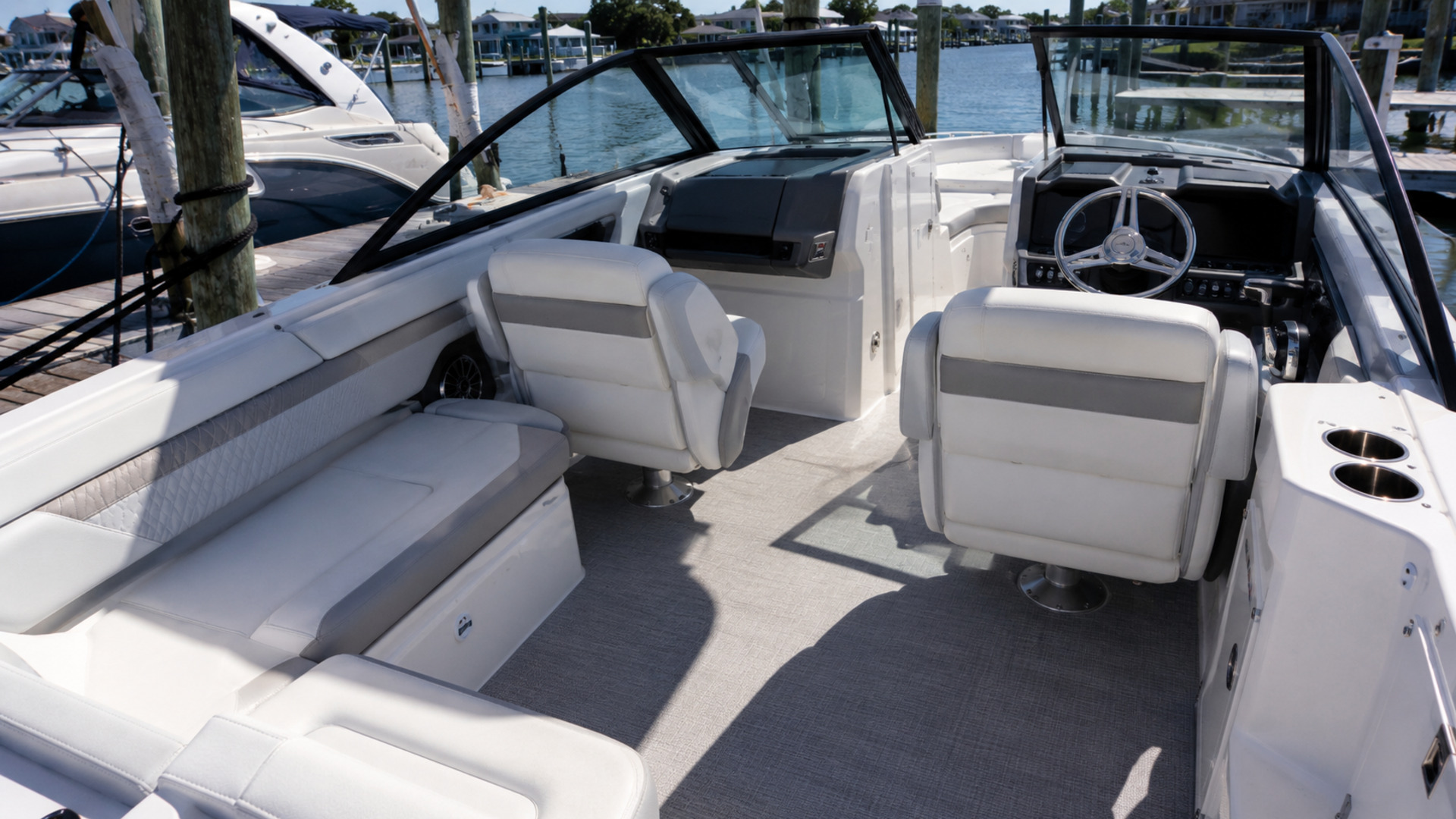
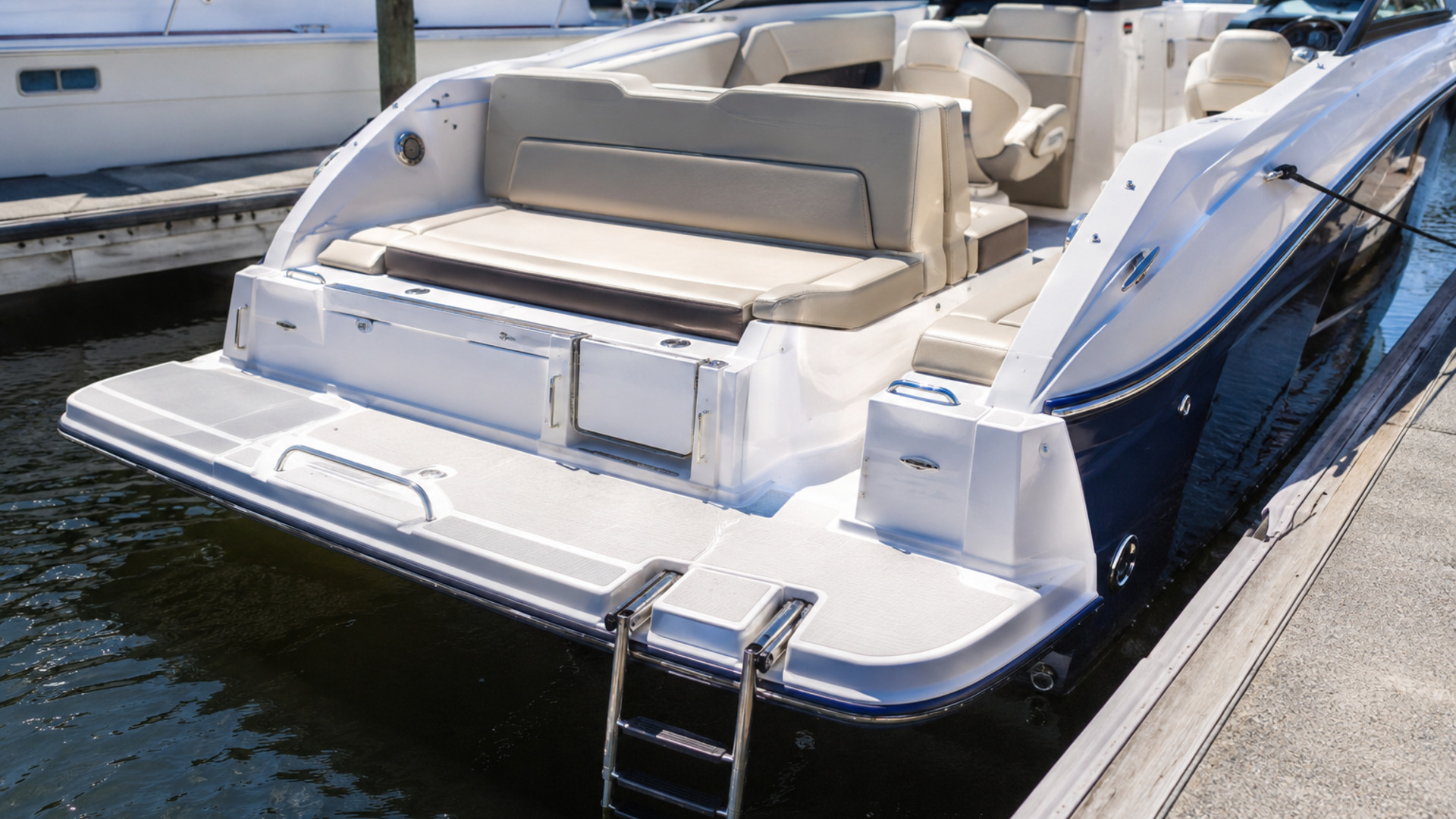
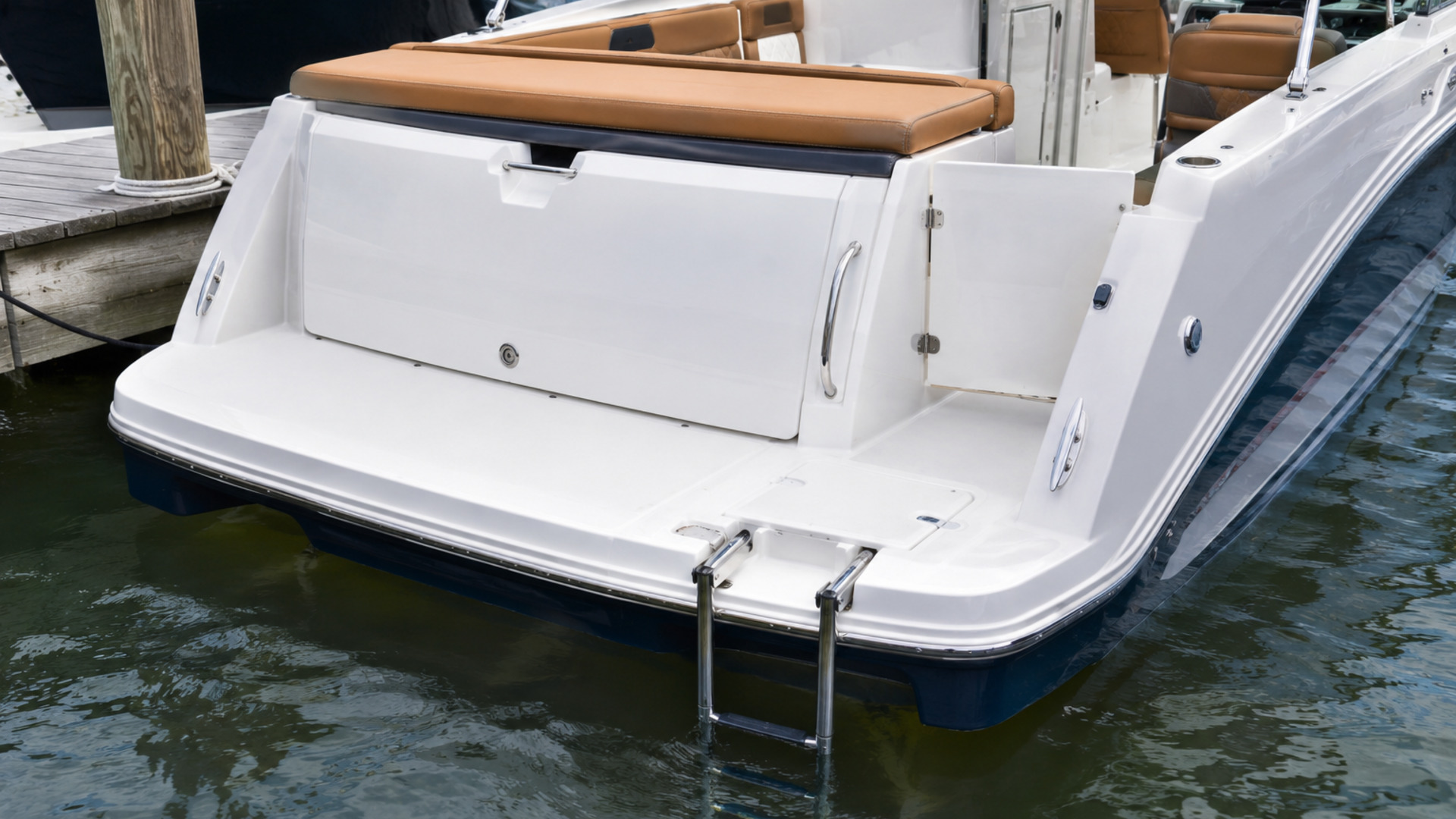
The DC 246 deck should be tested with real gear aboard. Three features reveal the model’s priorities: Back-to-back port lounger, Folding transom seat and Optional bow beach boarding ladder.
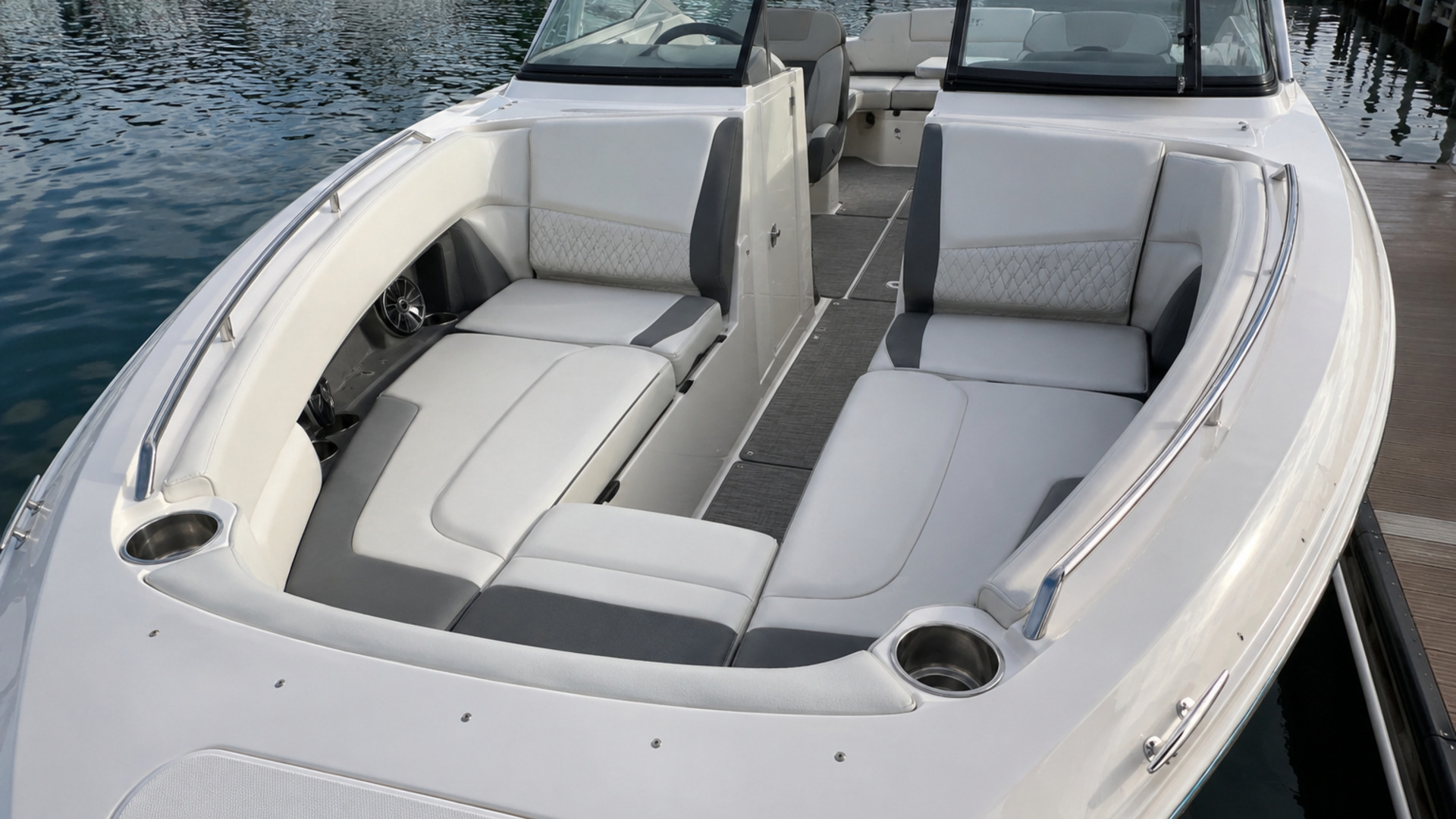
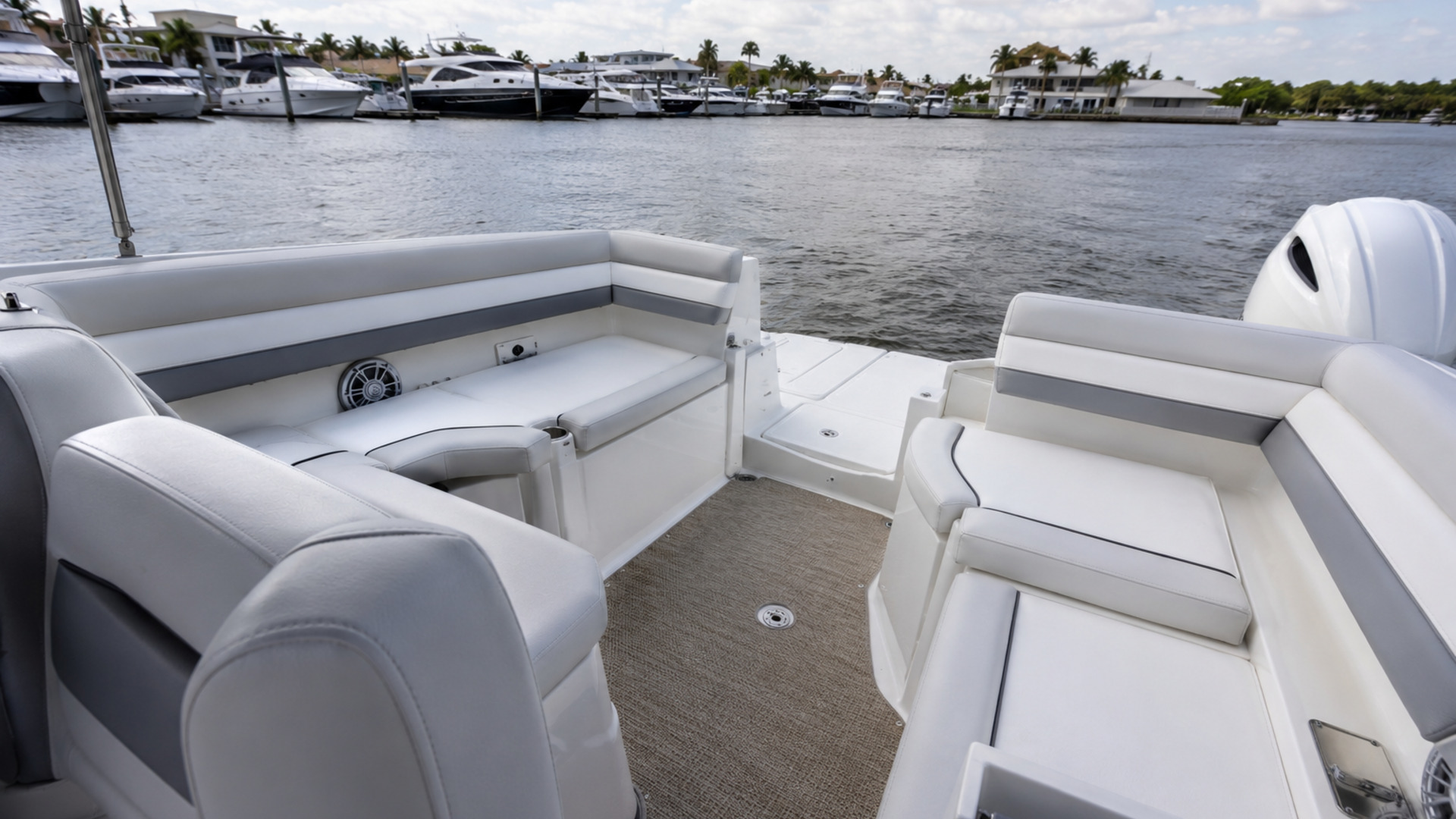
The port back-to-back lounger is more than a comfort feature on a 25-footer because it creates two seating modes without permanently filling the cockpit. Pair that with the folding stern bench and the boat can move from cruising to fishing quickly. The practical test is whether that transition still works with a cooler, rods and family bags aboard.
Smaller multi-use boats succeed or fail on clutter management, and the 246 should be judged with the actual day’s gear in place.
The port companion seat extends into a lounge, giving the small cockpit a second social position without forcing a permanent bench into the fishing space.
Folding transom seat
The stern bench disappears when anglers need working room, which is exactly the kind of flexibility a 25-foot dual console needs.
Optional bow beach boarding ladder
For sandbar and beach use, the bow boarding setup can make shallow-water stops easier than climbing over the stern.
Optional electric freshwater head
The head option changes the DC 246 from a basic day boat into a much easier all-day family platform, especially with children aboard.
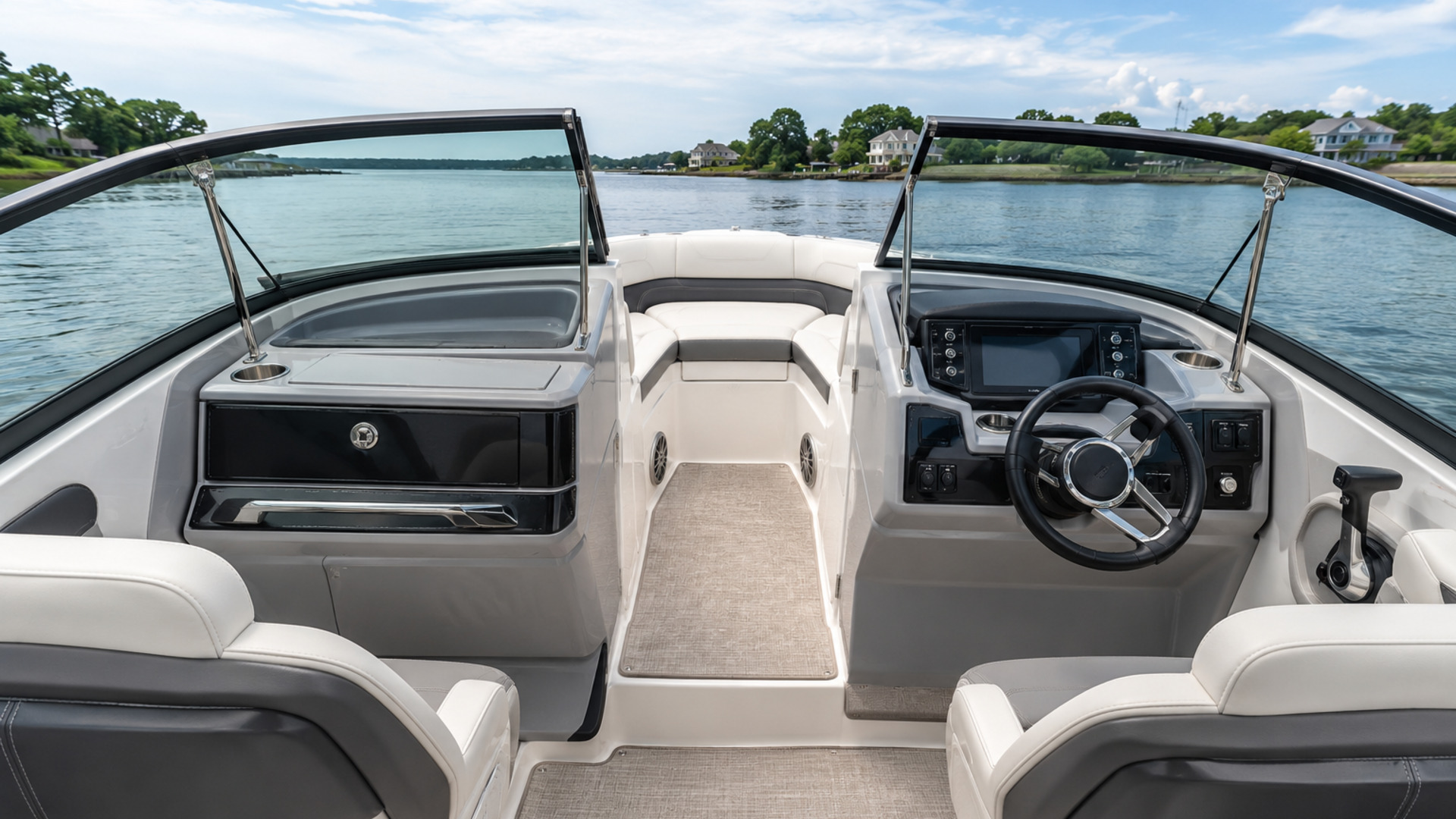
Premium helm chair
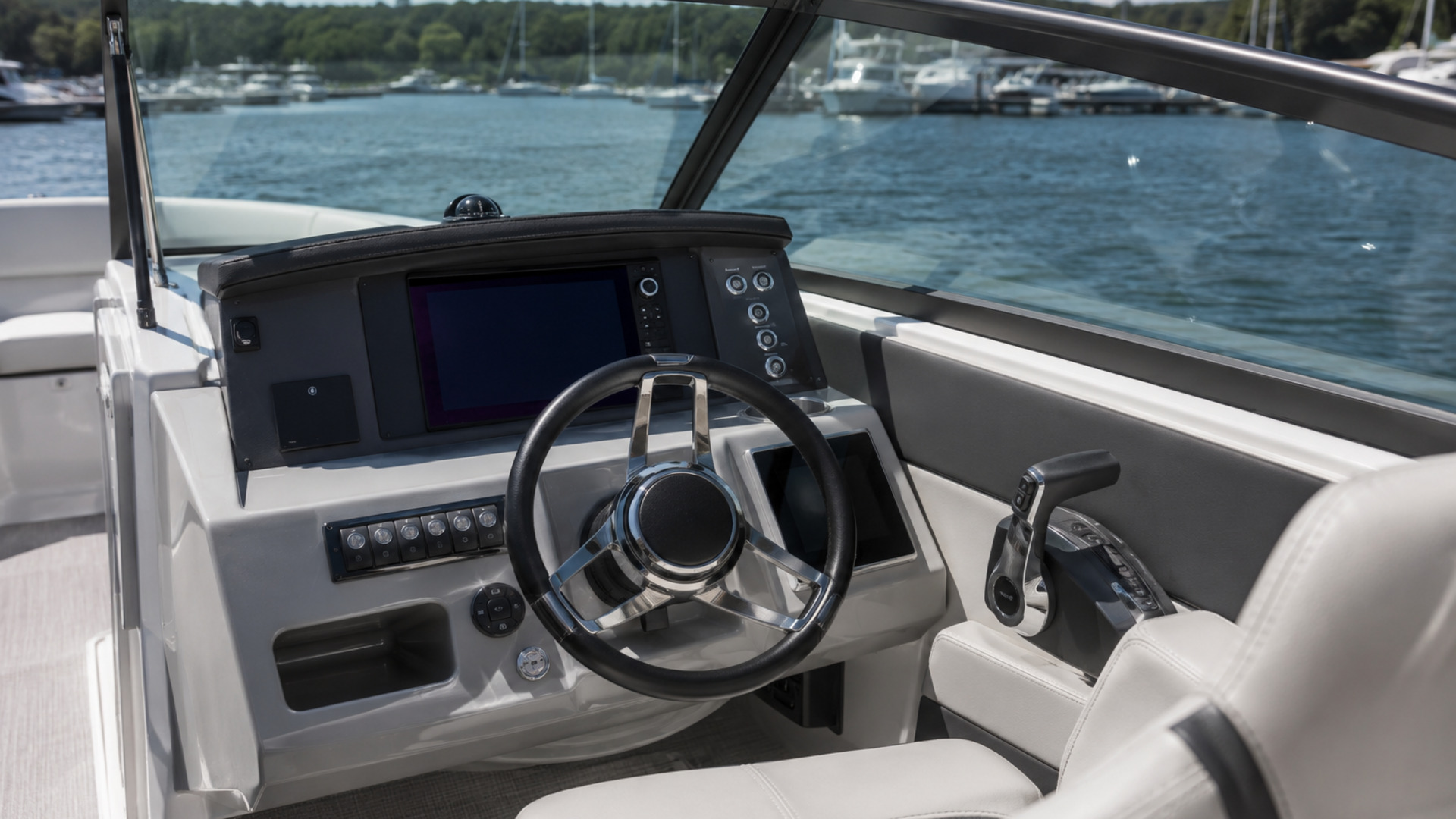
Fore-and-aft, vertical and swivel adjustment help the driver find a comfortable sightline through the windshield.
Insulated bow storage
Bow seat bases do more than hold cushions; they provide practical storage for drinks, lines and day gear.
Available cockpit wet bar
A sink, cup holders and cooler position turn the port side into a useful food-and-drink station when the boat is used socially.
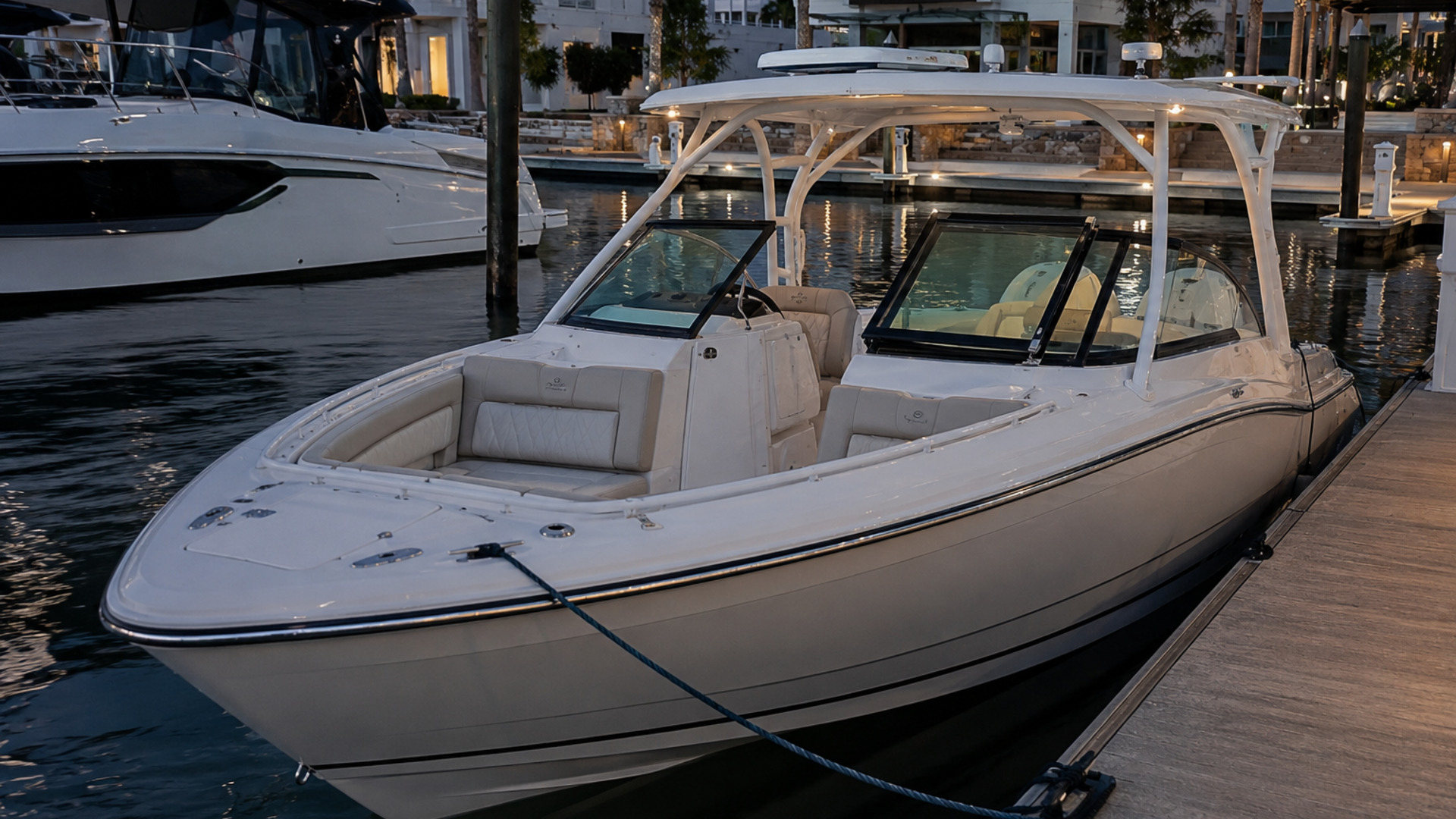
Full-height windshield and hardtop option
Weather protection is one of the strongest reasons to choose the DC layout instead of the similarly sized S 248.
Electronics, pumps and onboard systems
The DC 246 systems check should focus on the equipment that makes this particular model valuable: Back-to-back port lounger, Optional electric freshwater head, Insulated bow storage and Full-height windshield and hardtop option. Begin with the electrical foundation.
A 246 buyer can avoid a lot of unnecessary complexity by choosing options carefully. The electric head, wet bar, hardtop, beach ladder and joystick can each be useful, but they also add pumps, wiring, plumbing or actuators. Check the exact equipment on the boat rather than pricing it as though every option is present. On a lightly optioned 246, the relative simplicity is part of the value; on a loaded one, condition of the added systems becomes part of the purchase decision.
The DC 246 should be planned as a day boat, not bought with the expectation that an occasional sheltered space will turn it into a cruiser. Its storage problem is still substantial: 25′ 8″ overall, 8′ 6″ of beam and about 6,138 lb dry before fuel or gear. Account for the outboard engines behind the transom, boarding room, hardtop height and the wet weight created by 118 gal of fuel.
The 246 is the model in this group most likely to fit an ownership plan built around a smaller dock, lift or trailer.
That does not make transport automatic. The hardtop, engine-up length, fuel load and trailer still have to be measured, and the complete package can be substantial. Owners who plan to tow frequently should confirm real trailer weight and vehicle payload rather than assuming a 25-foot model will fit any half-ton truck.
pursuit boats dc 246 windshield console perspective 09
pursuit boats dc 246 aft cockpit entertaining 17
pursuit boats dc 246 anchored cove relaxing 18
pursuit boats dc 246 bow lounge angle 06
pursuit boats dc 246 bow on approach 16
pursuit boats dc 246 coastal home dock 15
pursuit boats dc 246 cockpit social seating 07
pursuit boats dc 246 dockside luxury profile 04
pursuit boats dc 246 elevated wide exterior 05
pursuit boats dc 246 family cruising lifestyle 11
Typical Pursuit DC 246 pricing
On a DC 246, a functioning joystick, current electronics package, healthy refrigeration or documented gyro service can justify real money.
Used 246 values can separate quickly based on hardtop, head, electronics and trailer condition because those options change how the boat can be used. A clean single-engine boat with current electronics and a sound trailer may be more useful than a cheaper hull that needs a major electronics refresh and trailer work. The inspection should identify what the first season will actually cost, not merely whether the asking price looks low beside a newer boat.
Market price band
Pricing on request
Estimated monthly
Ask us for a payment
Illustration only and not an offer of credit.
Estimate a Pursuit DC 246 payment
Final rate, term, down payment and eligibility depend on the borrower, the DC 246 being purchased and the transaction structure.
Illustration only and not an offer of credit. Your actual rate and term depend on credit profile, vessel age, loan amount and ownership structure.
Compare the DC 246 with nearby Pursuit models
The DC 286 is the first comparison when the buyer wants more beam, twin engines and a more protected offshore-ready package. Against the DC 246, those differences change more than performance; they change crew space, service burden and where the boat fits physically. Look at the S 248 when the buyer wants a center-console layout with more 360-degree fishing access. The DC 306 belongs on the list when the buyer wants a larger dual console with more cockpit systems and family space. The DC 246 should remain the choice only when its own case stays clear after those comparisons: Its single-engine layout, 8-foot-6-inch beam and convertible family seating keep the boat approachable without stripping away fishing basics.
The size comparison with the DC 286 is worth putting on paper. The DC 246 is 25′ 8″ long with 8′ 6″ of beam, while the DC 286 is 30′ 0″ with a 9′ 6″ beam. Fuel capacity is 118 gal versus 217 gal. Those differences can affect dockage and operating cost just as much as they affect cockpit space.
Start a DC 246 purchase by confirming what the boat actually is. The DC 246 is affordable when the buyer can purchase it and still maintain the systems that made it desirable.
The strongest DC 246 purchase is one where the buyer is deliberately choosing manageable scale. If the sea trial confirms that one F350 is enough, the cockpit converts easily and the windshield protection solves the family’s comfort needs, there is little reason to buy more boat for its own sake. If the buyer keeps wishing for twins, more beam or a larger head compartment during the test, that is a signal to move up before financing the 246.
The specifications on this guide describe the current or reference DC 246 configuration used for comparison. Pursuit equipment can change by model year, and engines or options may differ on an individual boat. Before closing, verify the hull identification, the installed single Yamaha F350 package and every high-value option that influenced the price.