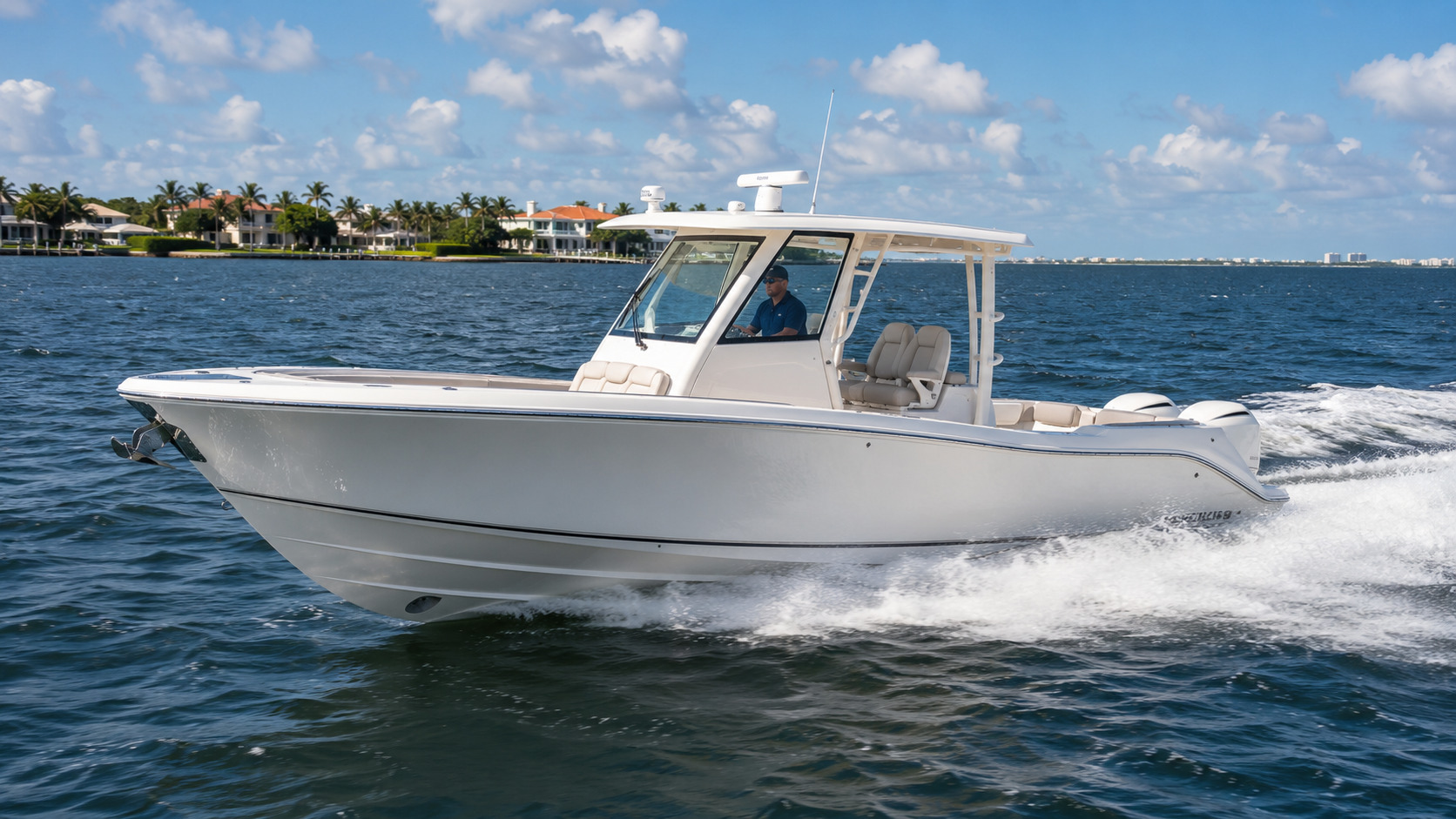
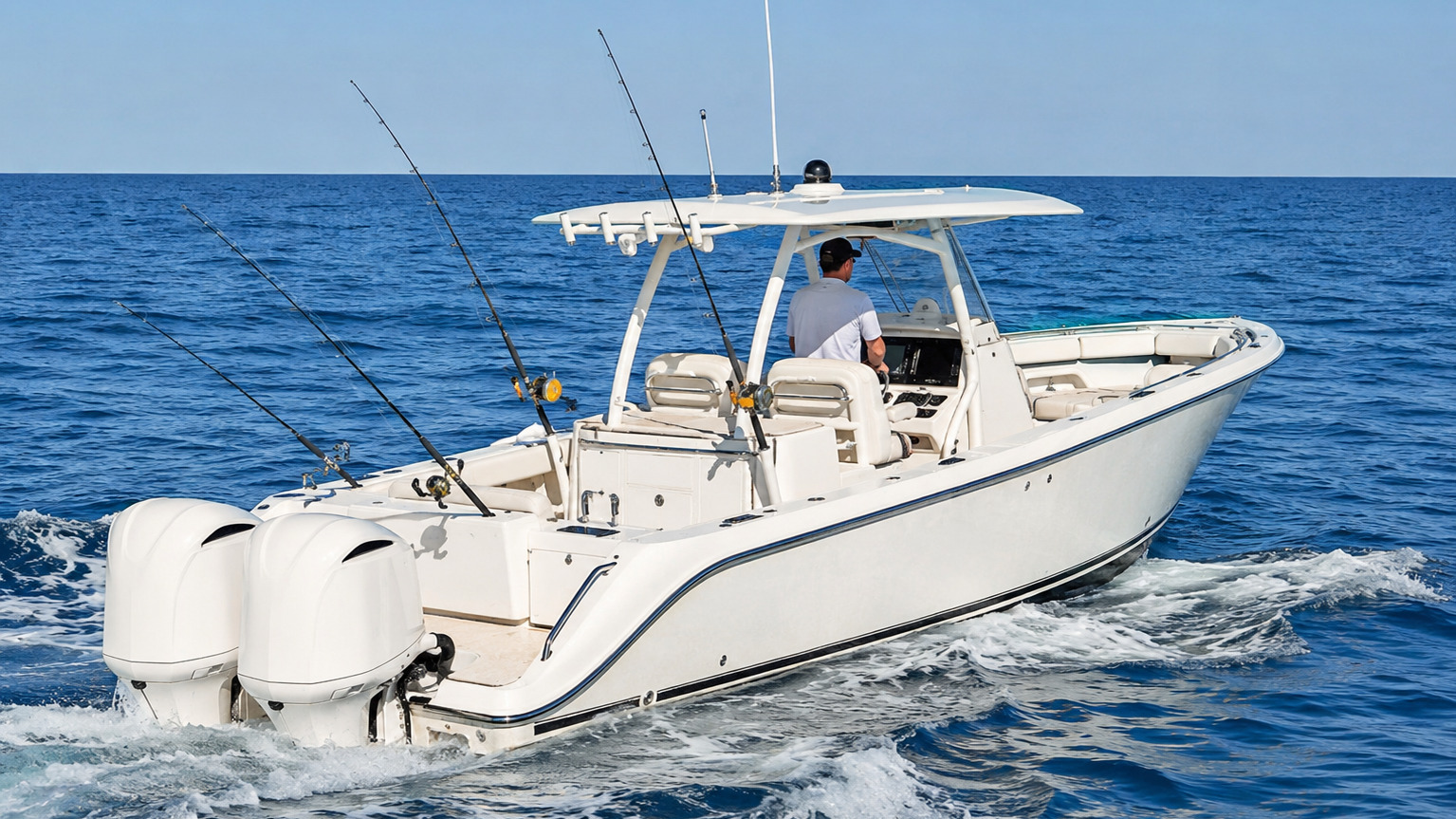
The Pursuit S 288 is the deep-V 30-footer in Pursuit’s Sport range, built around a notably large cockpit, 24-degree transom deadrise and twin-300 offshore power.
Buyers tend to notice the finish and layout first on a Pursuit S 288, but the better place to begin is mission. This boat is the deep-V 30-footer in Pursuit’s Sport range, built around a notably large cockpit, 24-degree transom deadrise and twin-300 offshore power. It works best for owners who want a serious 30-foot fishing platform but still expect family seating, easy side boarding and a finished enclosed head. At 30′ 0″ overall and 9′ 8″ of beam, with about 10,049 lb of dry weight, the S 288 has enough physical presence to demand a realistic storage and service plan. It carries 217 gal of fuel and accepts up to 600 hp. More important than the raw numbers is the reason they are packaged this way: Its 24-degree deadrise is the sharpest in this Pursuit set, and the redesigned cockpit, 180-degree side door and optional trolling-motor integration make it especially compelling for active fishing. The S 288 is heavier and more demanding than the 268, while buyers who need overnight space will have to step to the S 328 or an Offshore model. Use the S 268 as the first check when the buyer wants a lighter twin-engine boat with easier ownership. The S 328 belongs in the conversation when the buyer wants a larger Sport model with a true cabin and more fuel. Consider the DC 286 when the buyer wants more weather protection and lounge-style seating at the expense of center-console circulation.
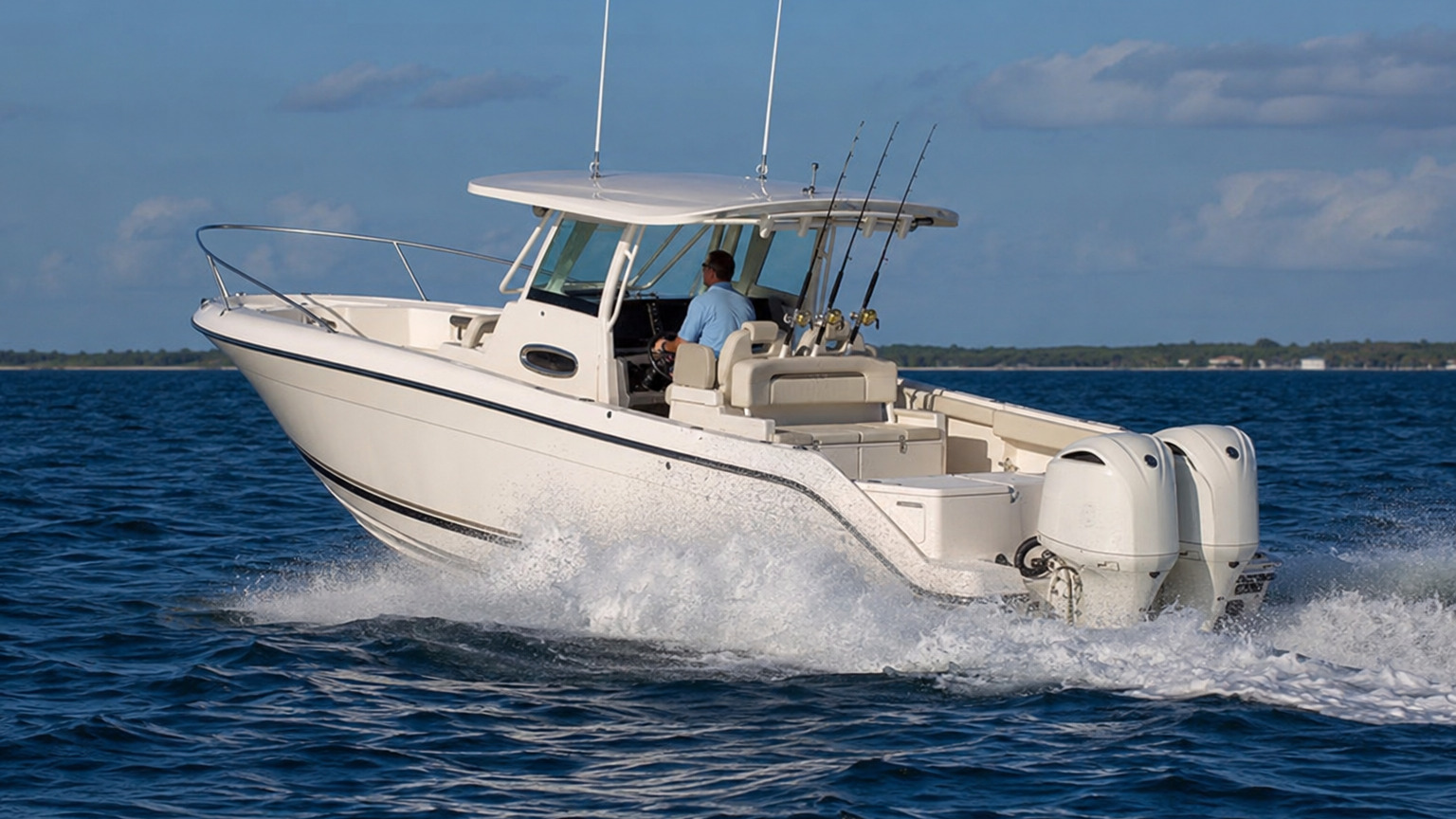
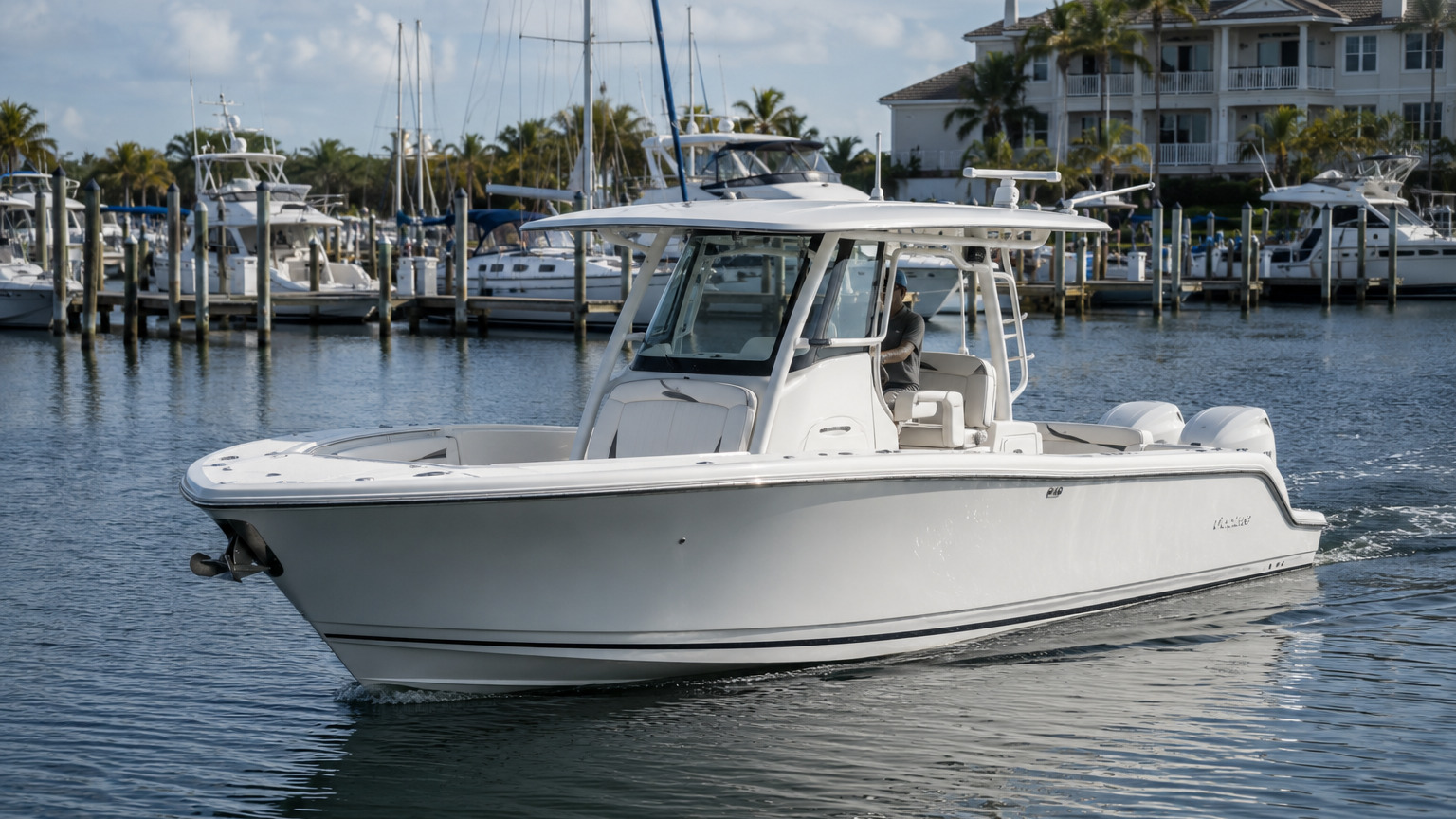
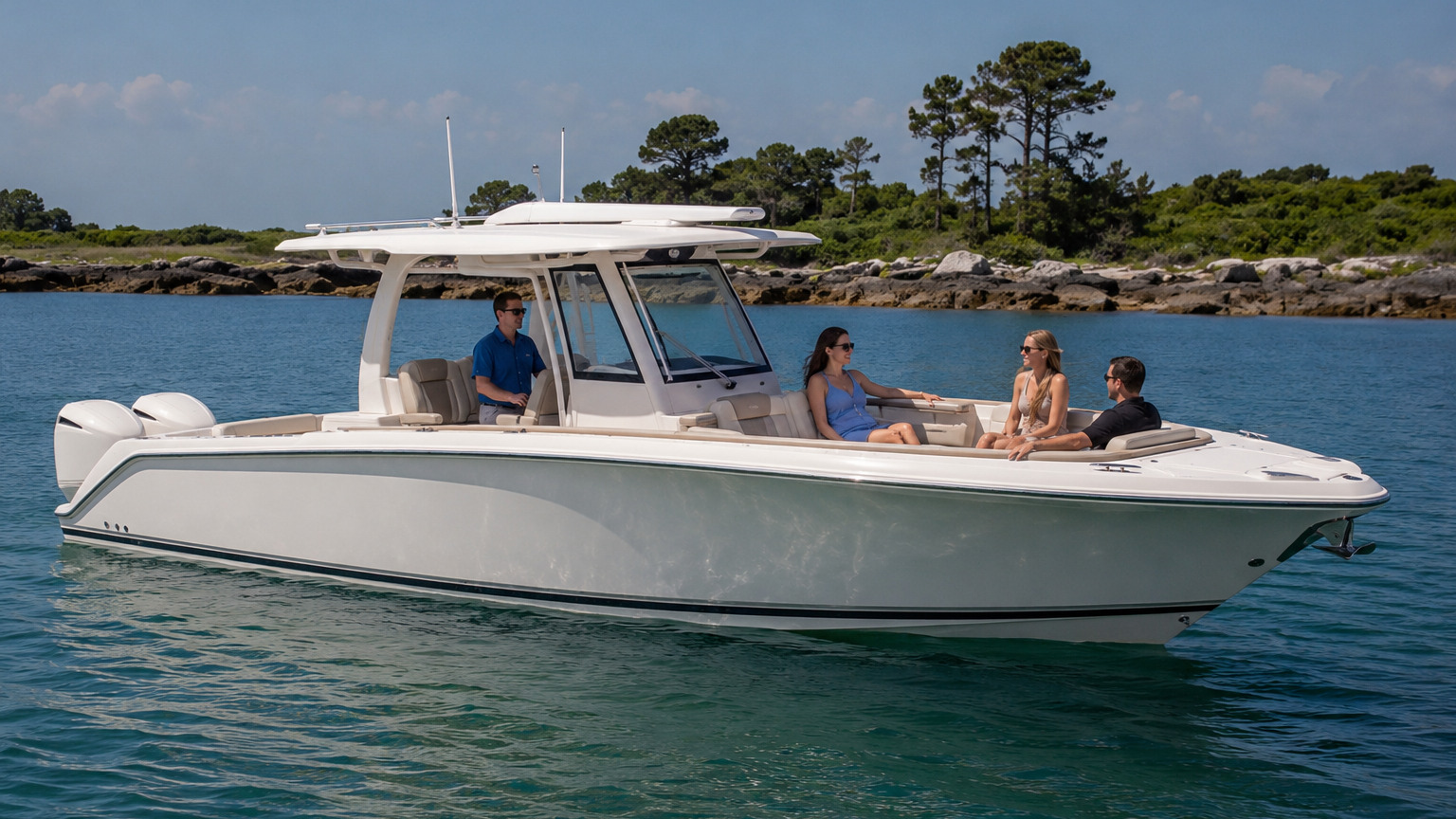
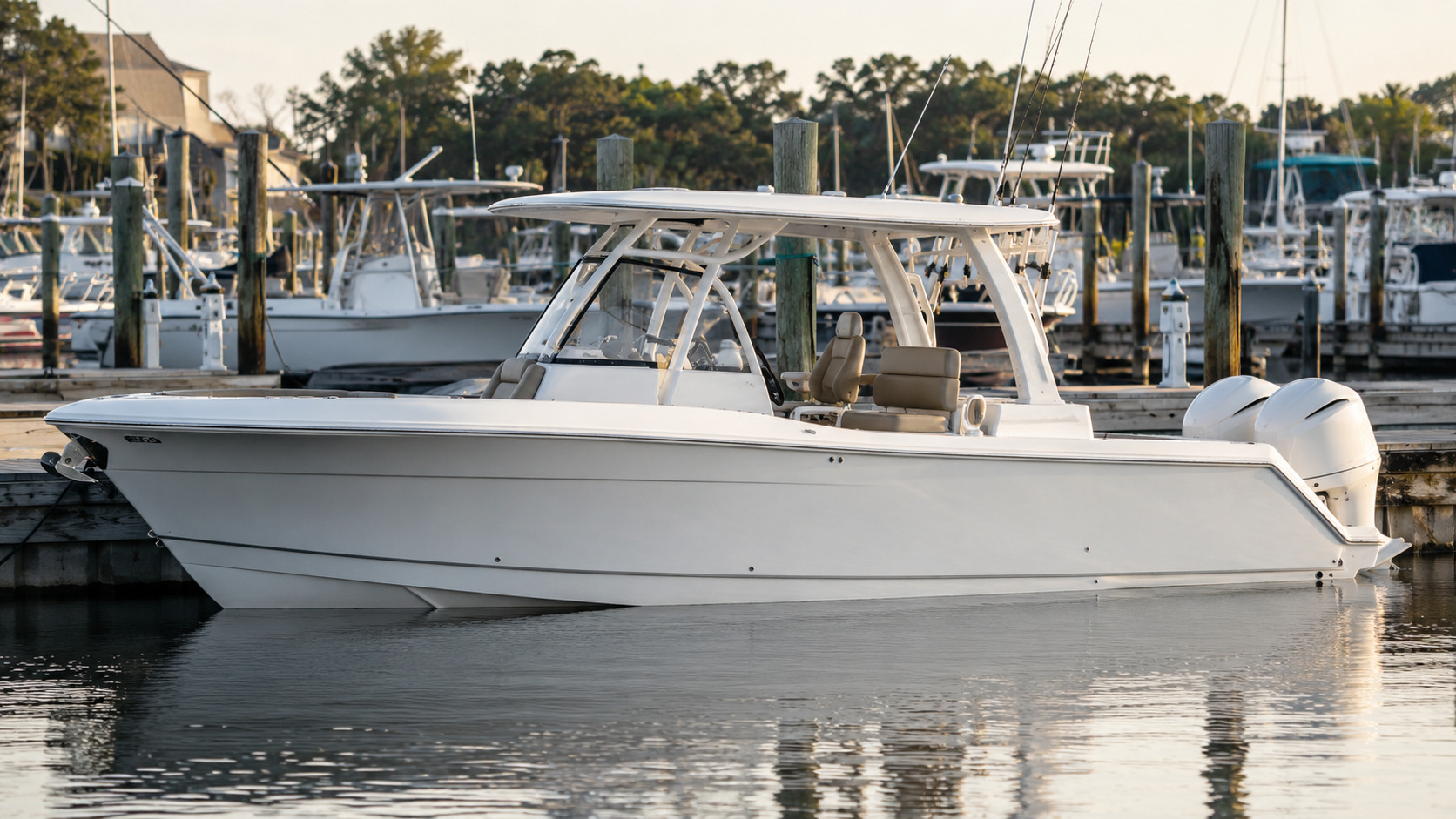
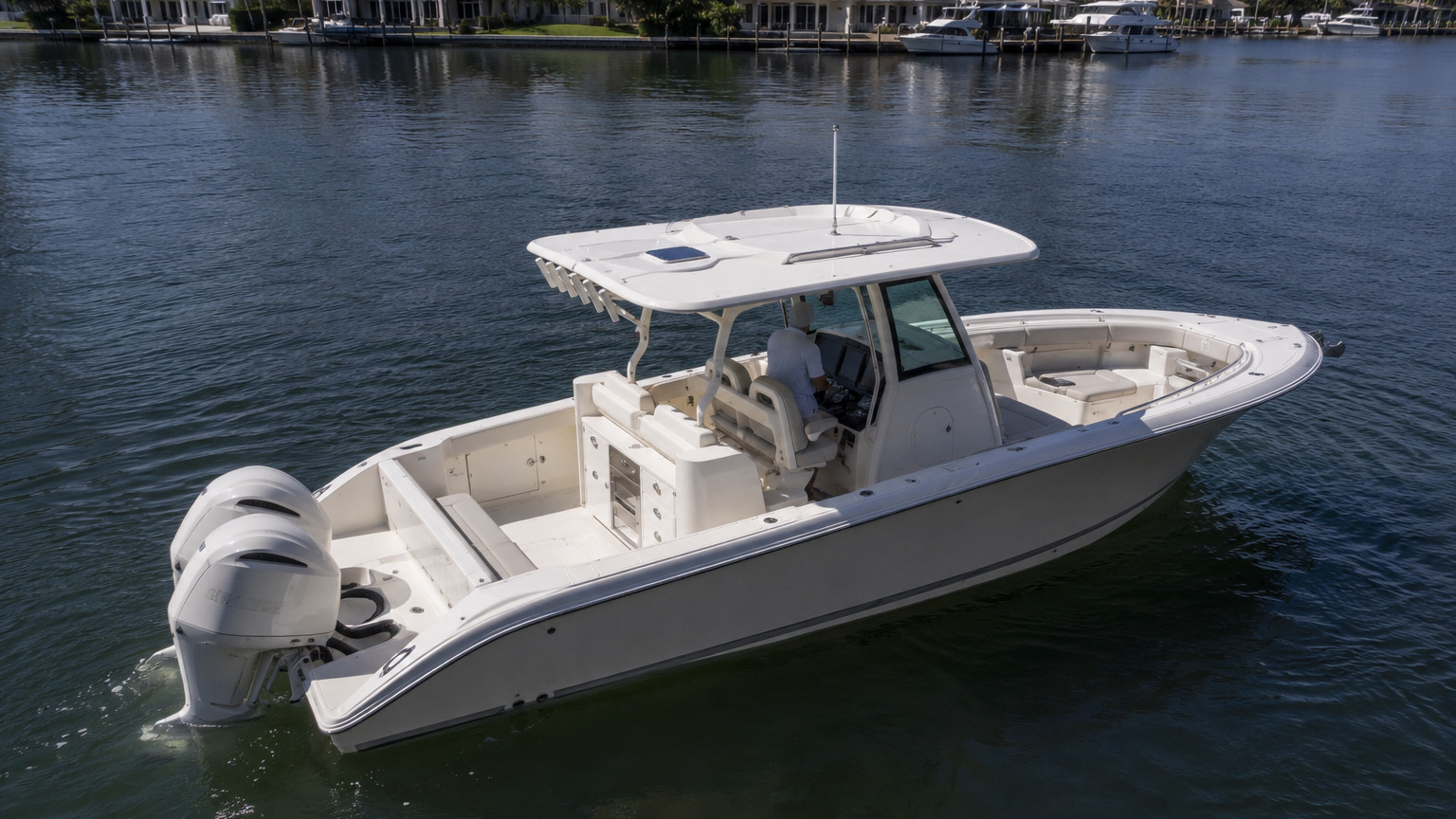
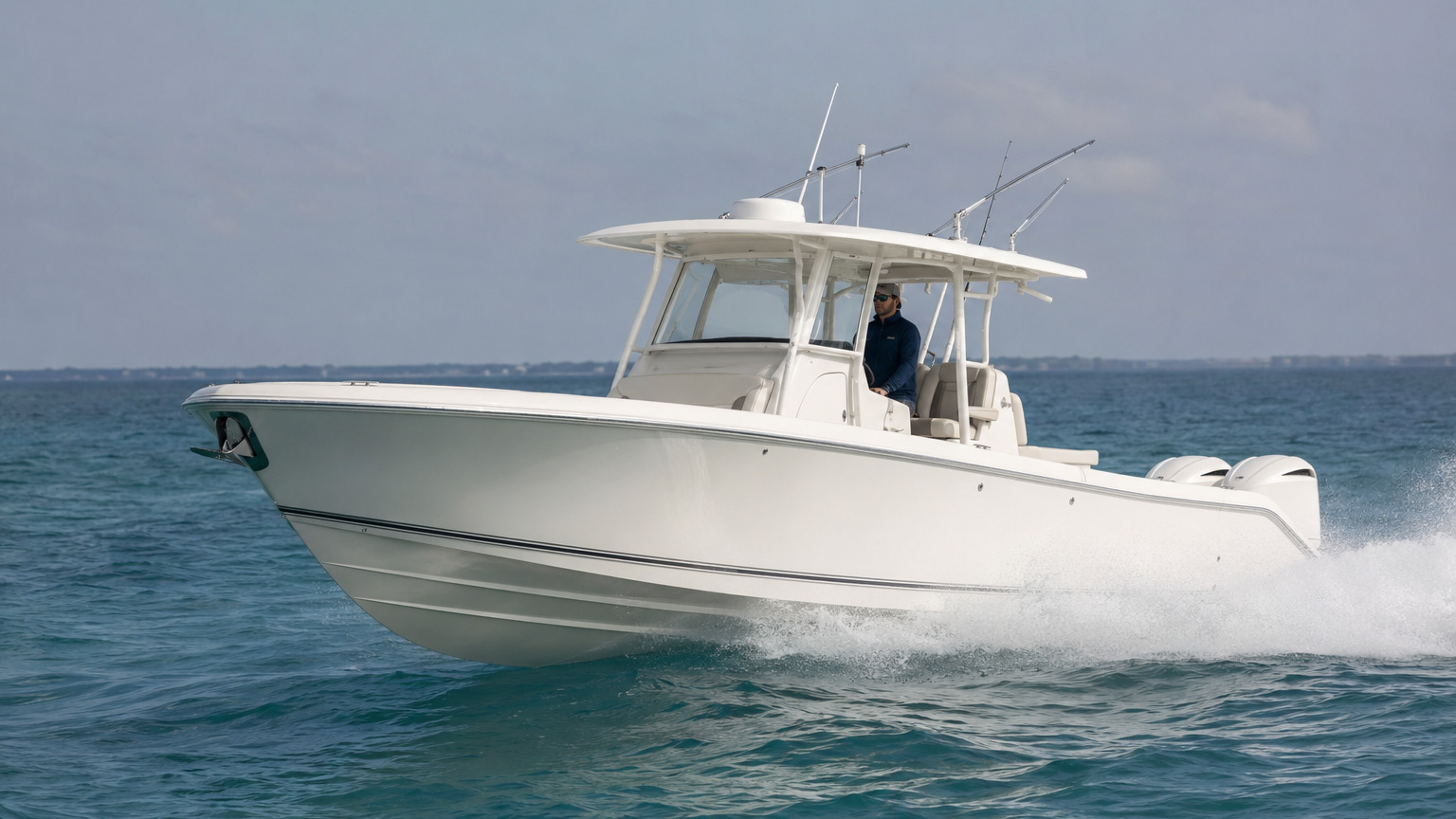
The current S 288 is unusually easy to distinguish from the boats around it. Its 24-degree transom deadrise, large cockpit, 180-degree side door and optional integrated trolling-motor setup make the design openly fishing-first.
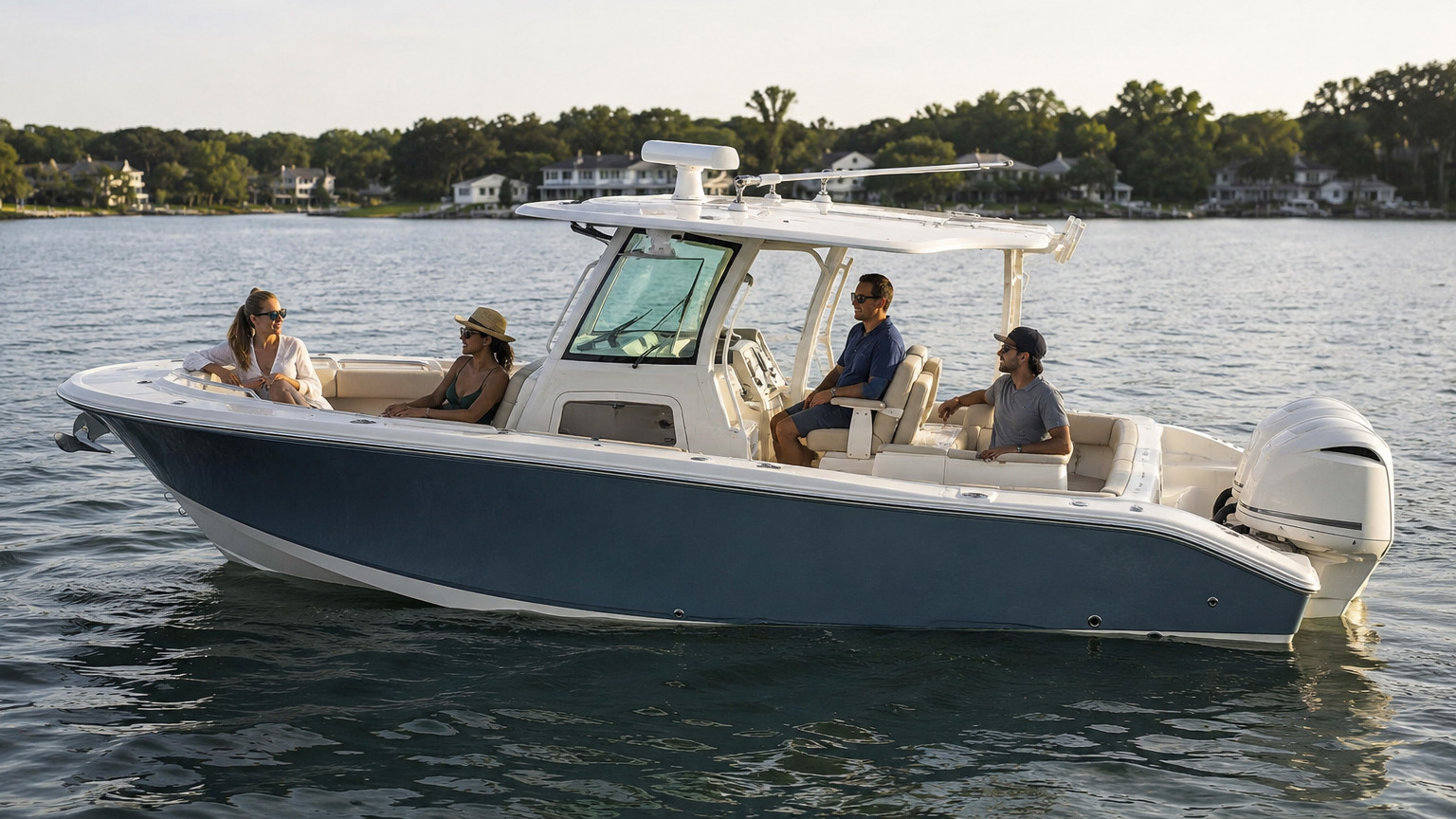
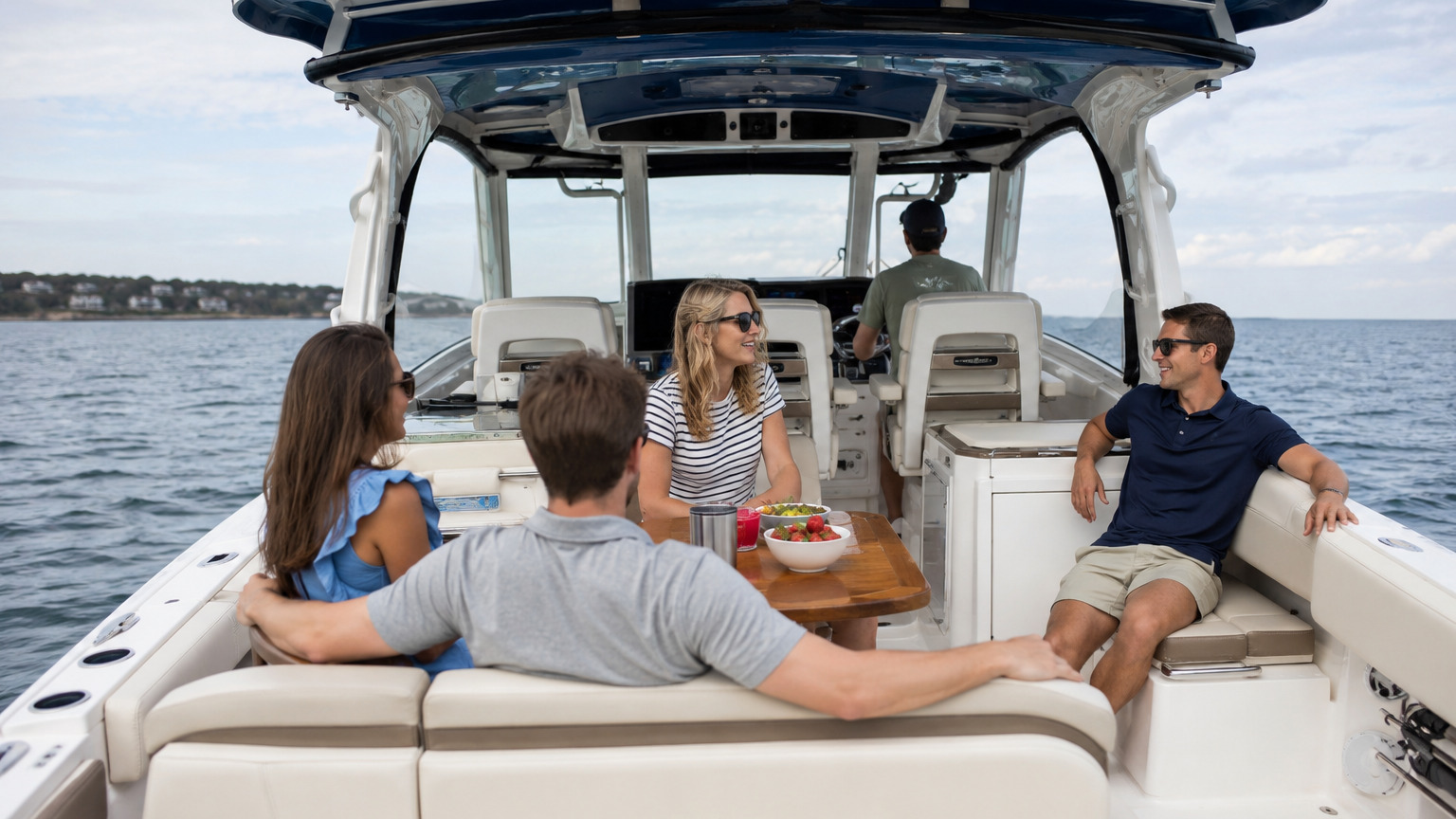
Family seating is still present, but the reason to buy this 30-footer is the working deck and offshore hull rather than a cabin or elaborate entertainment package.
The running surface on the S 288 finishes at 24° of transom deadrise. Beam is 9′ 8″, while published draft ranges from 2′ 2″ engines-up to 3′ 0″ engines-down. At about 10,049 lb dry, this hull should not be evaluated as though that figure represents the boat in the water. The 217 gal fuel tank, freshwater, passengers and equipment all add load. The nearest comparison is the S 268. Put the two boats in the same conditions if possible, because a lighter twin-engine boat with easier ownership may matter more than a small difference in asking price.
Twenty-four degrees at the transom is the sharpest deadrise in this Pursuit set. That does not guarantee a perfect ride, but it gives the S 288 a different brief from the 20- to 22-degree boats nearby. Run it across a real chop and watch how much tab it needs at cruise. Also pay attention at rest, because more deadrise can trade some initial stability for softer entry.
With twin Yamaha F300 and a maximum of 600 hp, the S 288 has an engine package chosen for a substantial offshore hull.
Twin F300s are a straightforward match for a 10,049-pound dry hull and 217-gallon tank. The key test is loaded acceleration. Put several people aboard, carry normal fishing gear and see whether the boat reaches cruise without needing excessive rpm. The pair should also remain closely synchronized. A 30-foot fishing boat with healthy twins should feel willing rather than heavy.
Fuel capacity, cruise planning and operating range
With 217 gal of fuel capacity, the S 288 can support substantial time away from the dock. Tankage also affects displacement.
Ownership math changes once the S 288 is loaded. The dry figure is about 10,049 lb, and a full 217 gal fuel load adds substantial mass before freshwater, people and gear. That wet condition is the one a lift, haul-out yard or transport plan needs to support. Buyers moving up from a smaller boat should confirm those limits before assuming their current infrastructure will carry the S 288.
Fishing use can make the S 288’s 217 gal tank behave differently from a cruising-only boat. A day may combine a fast run offshore, hours of trolling or repositioning, and a run home in rougher afternoon water. Track those modes separately during ownership planning. The result is a more realistic fuel budget and a safer reserve than assuming the entire day happens at the most efficient cruise rpm.
The S 288 needs to prove two things underway: that the hull is comfortable in the owner’s water and that the driver can manage it without unnecessary effort. Test both. The 24° transom deadrise should be evaluated as part of the complete hull, not used as a marketing score. If the buyer is also considering the S 268 for a lighter twin-engine boat with easier ownership, compare visibility, noise and low-speed control as carefully as speed.
For the S 288, performance has to include the fishing day as well as the run offshore. Test the 24° hull with people and gear aboard, then slow down and see how the boat behaves while trolling, drifting or positioning near a spot. The helm should remain predictable as weight moves around the cockpit. Because Its 24-degree deadrise is the sharpest in this Pursuit set, and the redesigned cockpit, 180-degree side door and optional trolling-motor integration make it especially compelling for active fishing, the benefit should be visible in normal use rather than only in a short high-speed run. If the S 268 better matches the owner’s priorities, compare it in the same water.
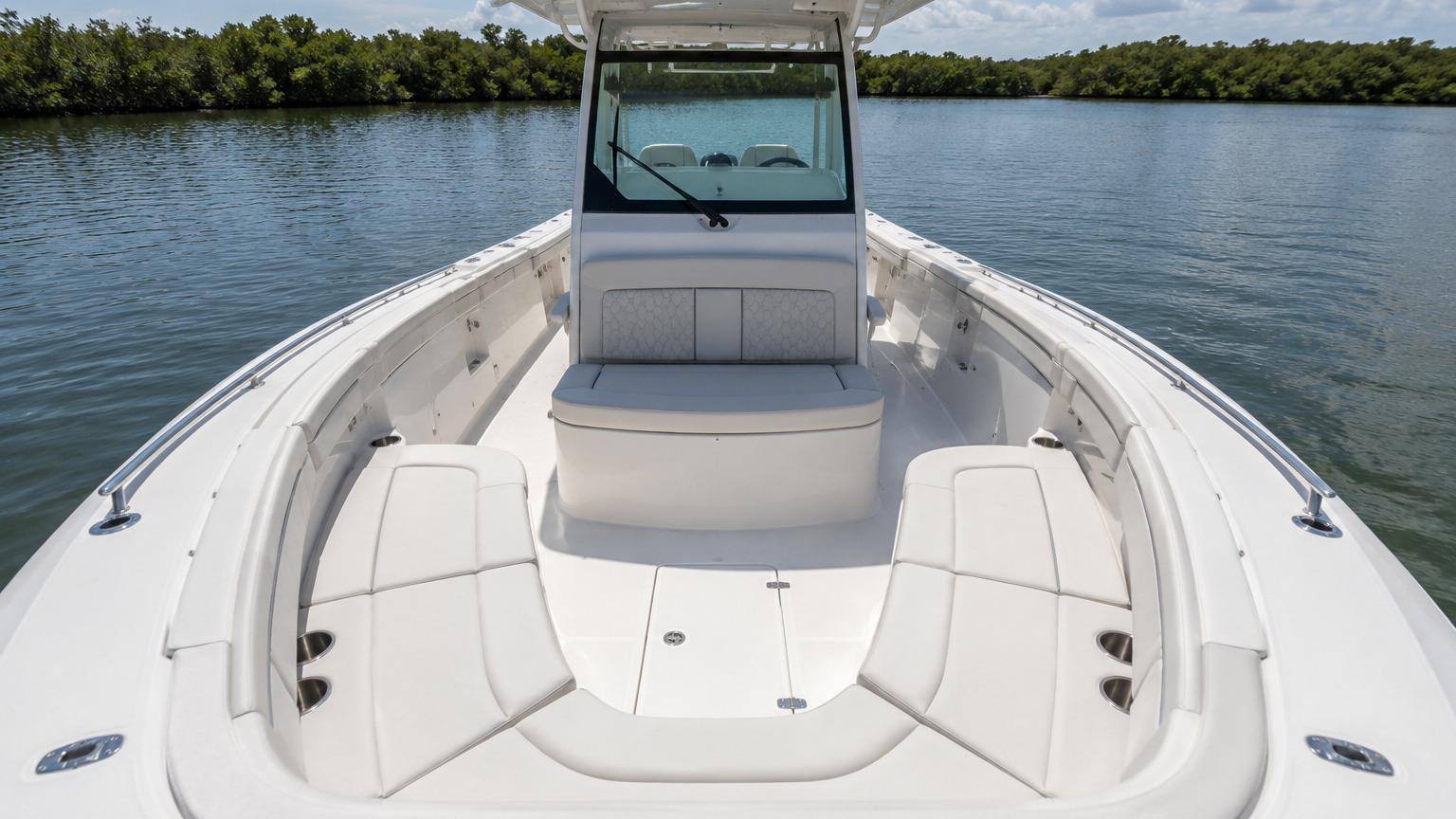
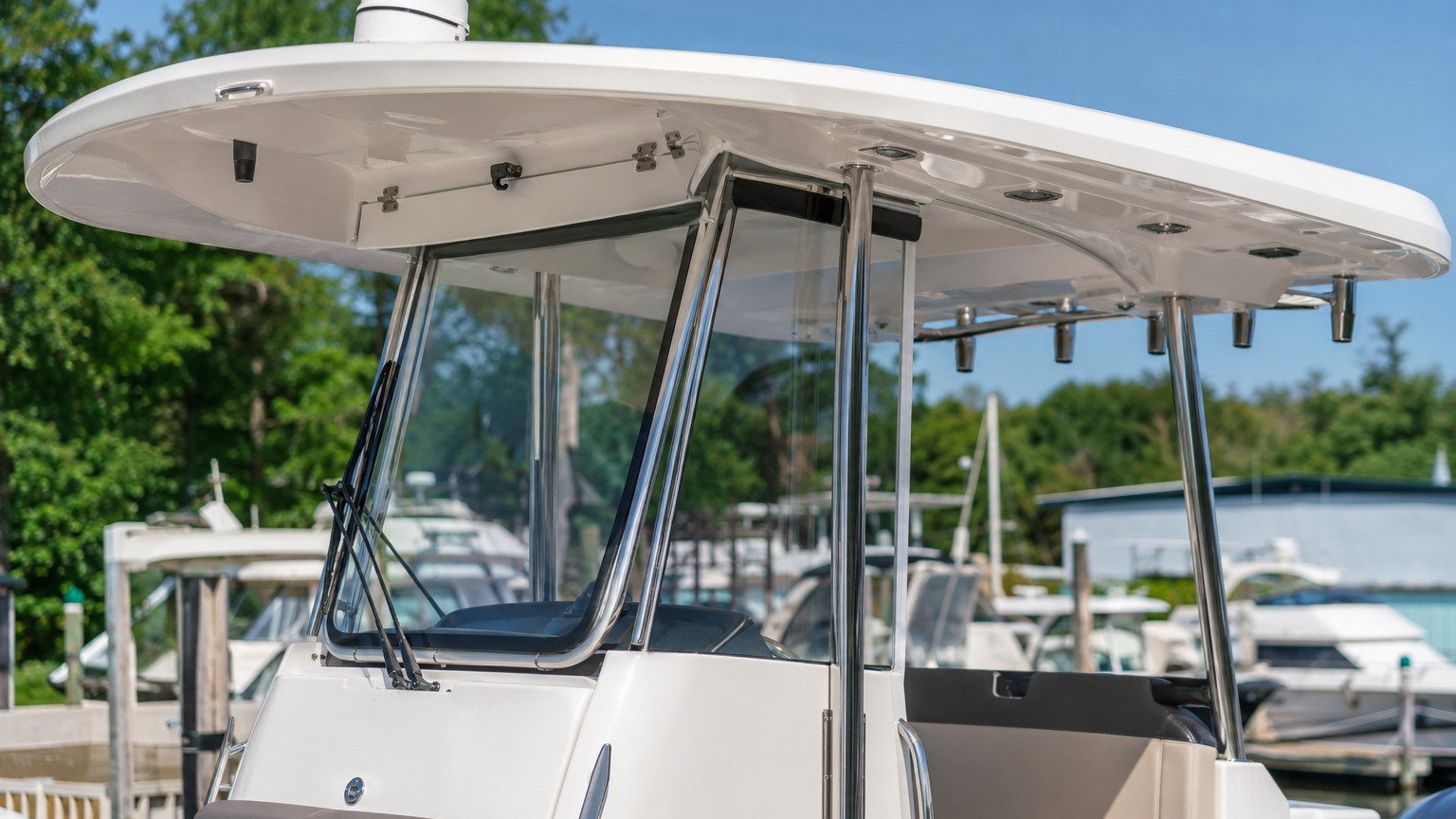
Use the S 288 deck the way the owner will use it on Saturday, not the way it is staged for photography. The details that distinguish this model include 24-degree deep-V transom, Large open cockpit and 180-degree hull-side entry door. Each should feel deliberate.
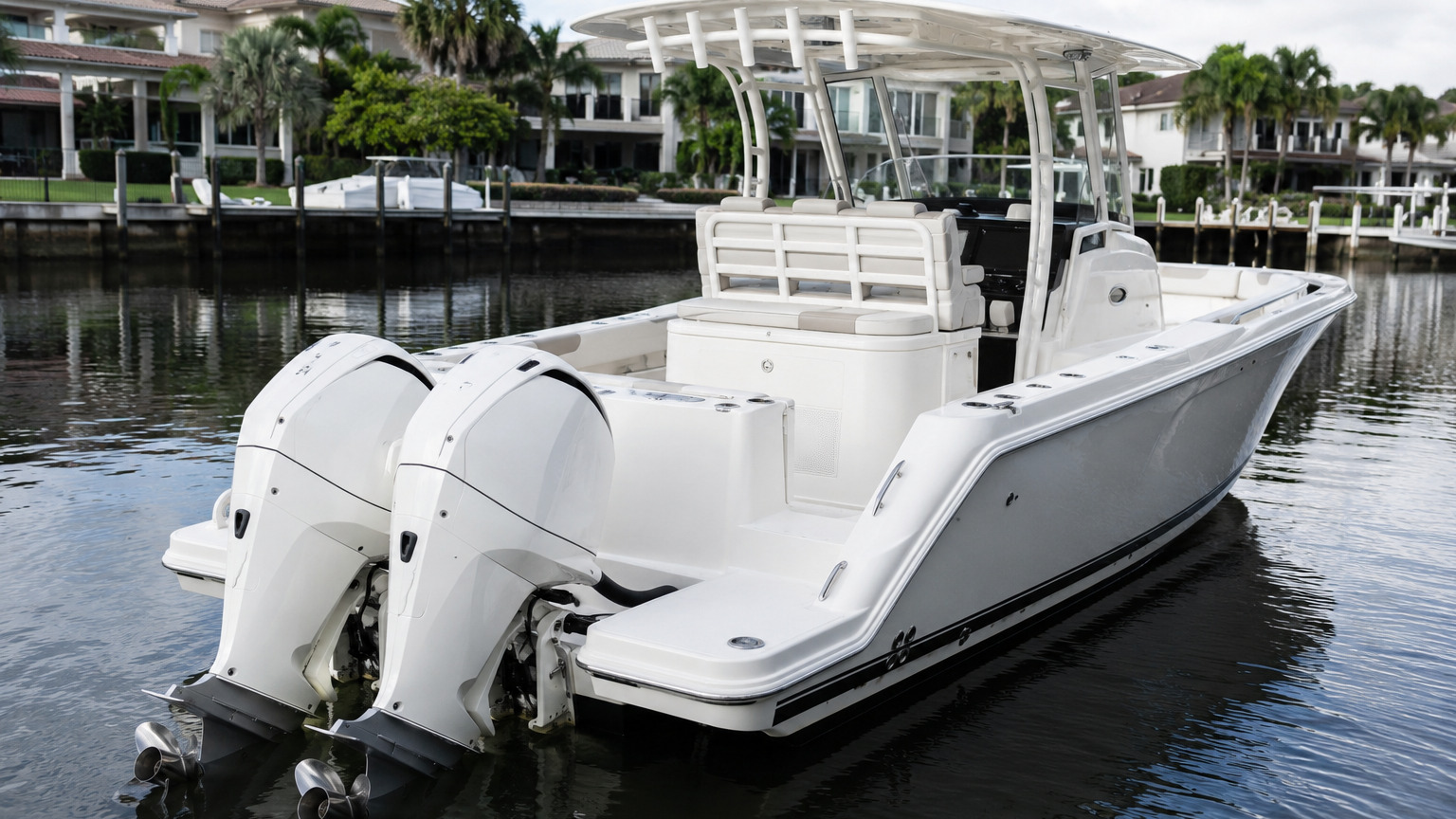
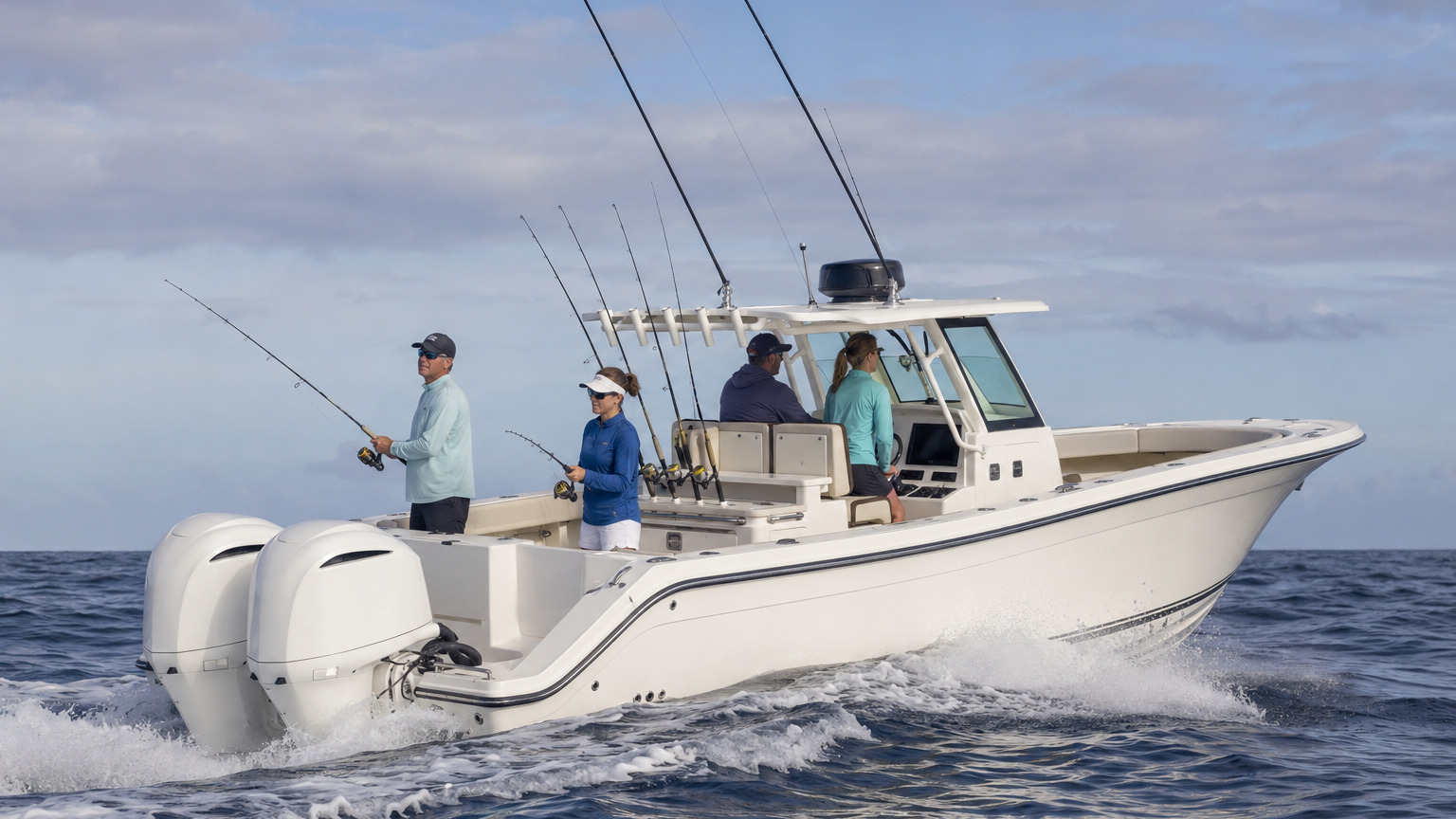
The S 288’s cockpit deserves more time than its cabinless status. Open the twin 30-gallon fish boxes, use the 25-gallon livewell, deploy the side boarding door and inspect the front-entry head. If a Garmin Force Kraken trolling motor is installed, check mount rigidity, power supply and bow clearance. This is a model where fishing hardware should look integrated, not bolted on later.
24-degree deep-V transom – The sharper deadrise is central to the S 288’s offshore-running character.
Large open cockpit
The current design prioritizes working room behind the helm rather than filling the stern with permanent furniture.
Twin 30-gallon fish boxes
Sixty gallons of pumped fish storage supports offshore angling and keeps ice and catch below deck.
Front-entry head
Access from the front of the console makes the compartment more usable than a tight side-door arrangement.
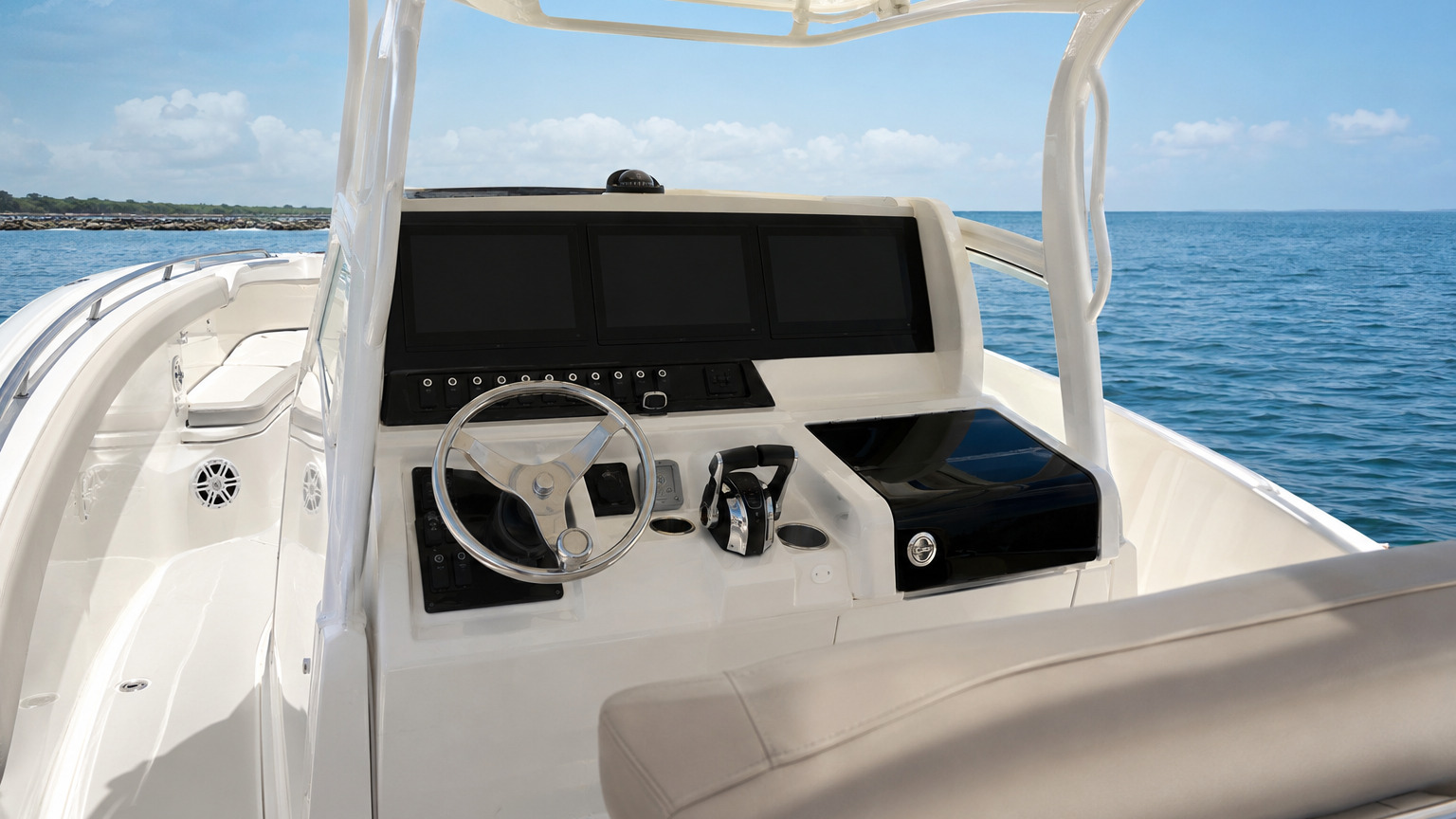
Dual 12-inch Garmin displays standard
The helm is built around modern chart, sonar and engine information, with larger displays available.
Electronics, pumps and onboard systems
On the S 288, systems worth more attention than a quick switch test include 24-degree deep-V transom, 180-degree hull-side entry door, Front-entry head and Dual 12-inch Garmin displays standard.
The standard dual 12-inch Garmin displays or larger optional screens are the center of the helm, but the inspection should extend to the trolling-motor circuit, pumps, side-door hardware and head systems. A fishing-first boat can accumulate owner-installed equipment quickly. Look for clean battery protection, proper breakers and sealed deck penetrations before assigning value to a long accessory list.
The S 288 should be planned as a day boat, not bought with the expectation that an occasional sheltered space will turn it into a cruiser. Its storage problem is still substantial: 30′ 0″ overall, 9′ 8″ of beam and about 10,049 lb dry before fuel or gear. Account for the outboard engines behind the transom, boarding room, hardtop height and the wet weight created by 217 gal of fuel.
The S 288 is a day boat with a finished head, not a weekend cruiser. That distinction keeps the deck open and the interior systems relatively contained. Buyers who need shelter for a child or a private head may find it sufficient.
Buyers imagining regular nights aboard should move to the S 328 or OS 325 rather than trying to turn the 288’s console into living space.
pursuit boats s 288 front quarter offshore running 02
pursuit boats s 288 hardtop console detail 18
pursuit boats s 288 helm detail 09
pursuit boats s 288 hero exterior underway 01
pursuit boats s 288 offshore fishing lifestyle 14
pursuit boats s 288 open water lifestyle 12
pursuit boats s 288 premium marina arrival 11
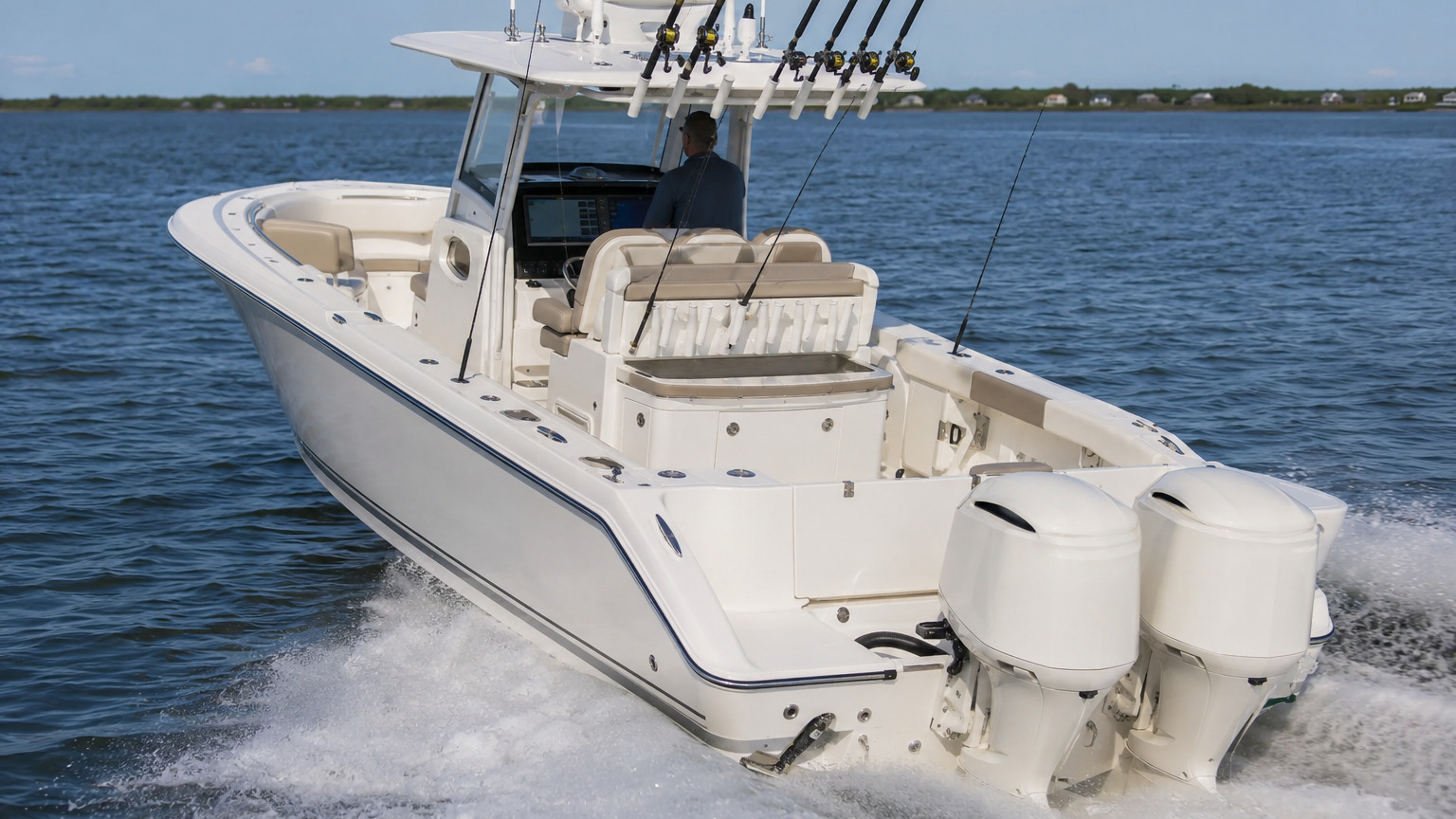
pursuit boats s 288 rear quarter running 03
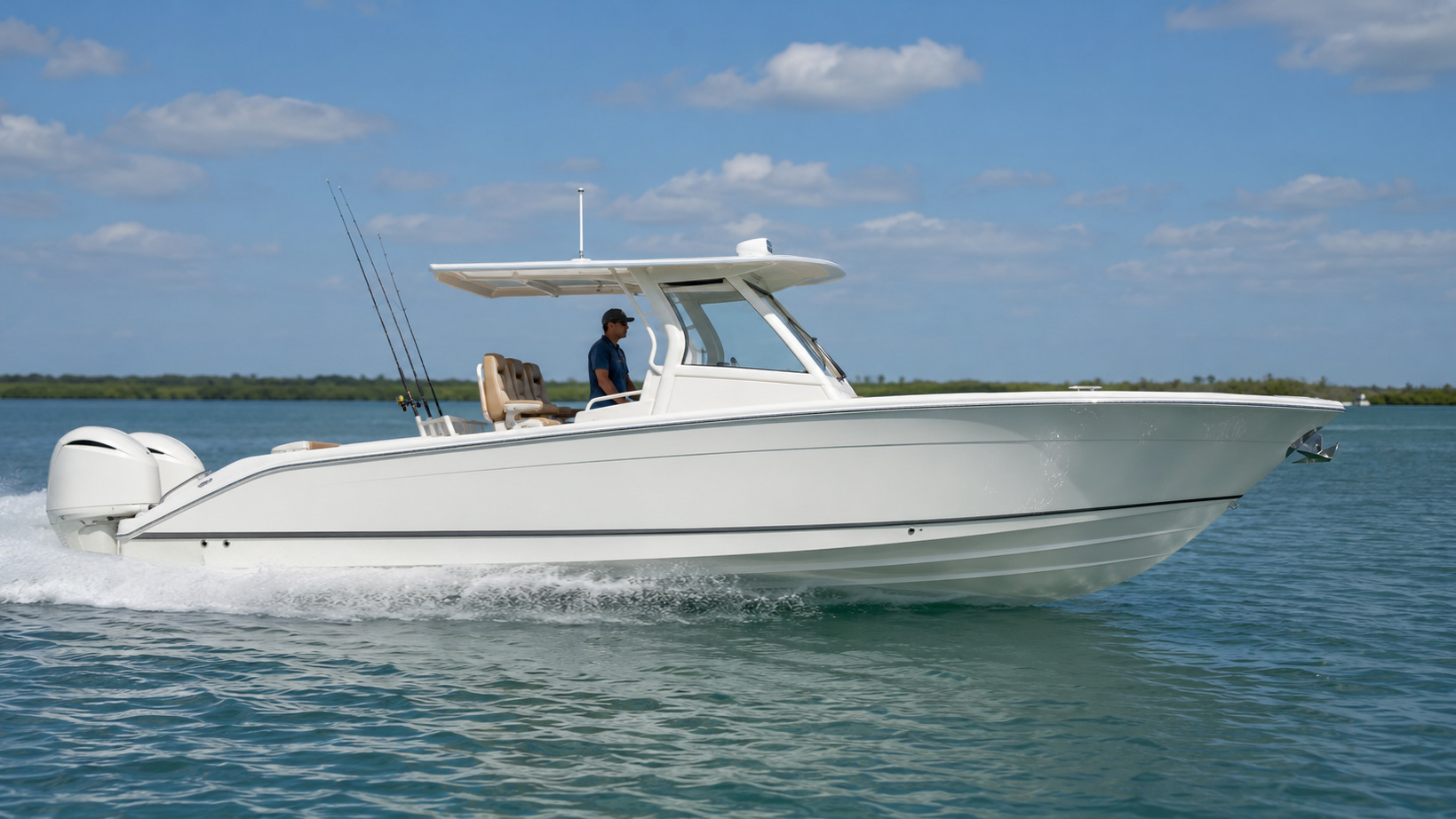
pursuit boats s 288 side profile underway 10
pursuit boats s 288 stern cockpit angle 07
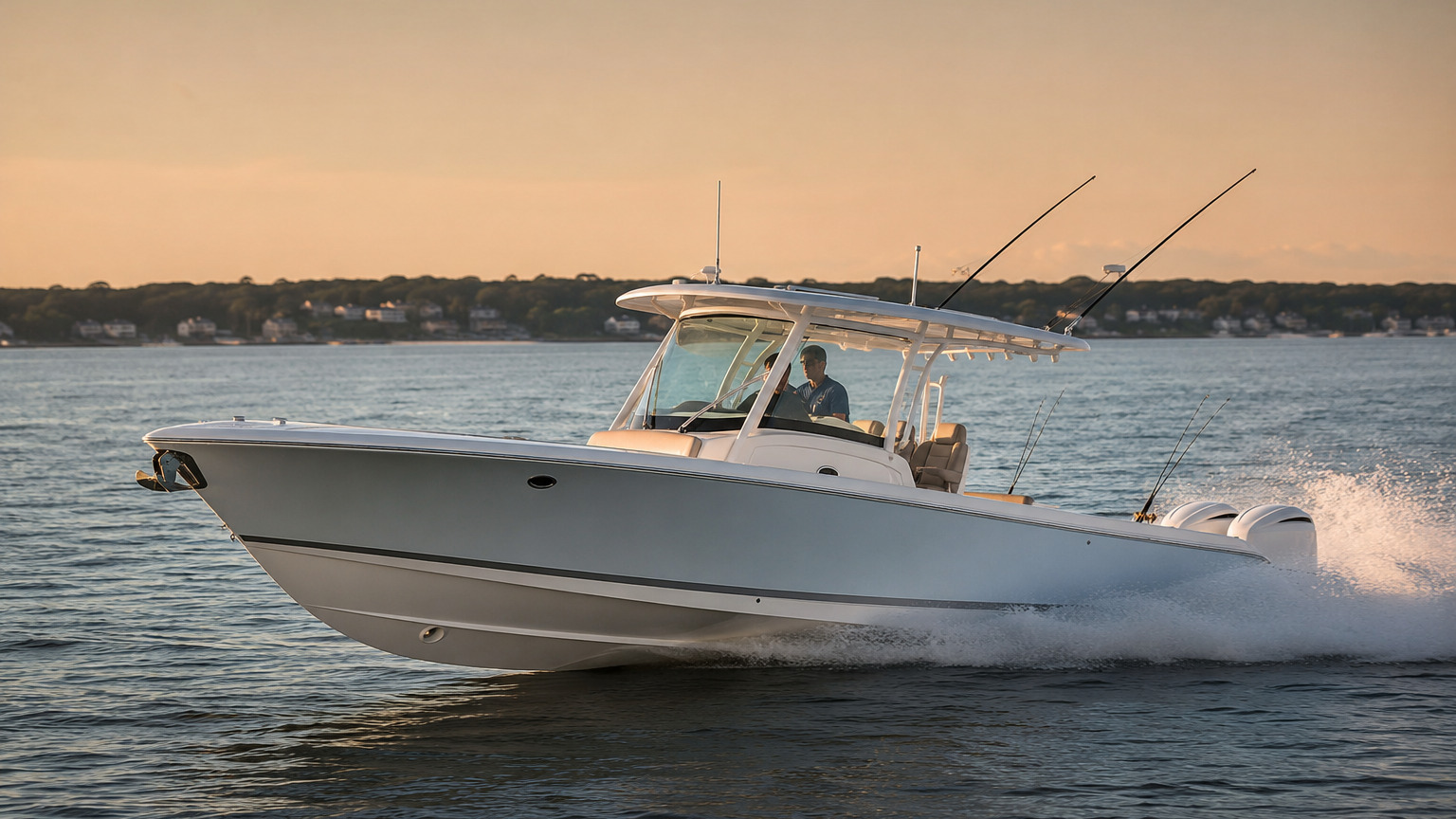
pursuit boats s 288 sunset running hero 17
pursuit boats s 288 transom engine angle 08
pursuit boats s 288 trolling setup 15
Typical Pursuit S 288 pricing
The 2026 redesign makes configuration and model year especially important on an S 288 search. A current boat with the 24-degree hull and new deck layout should not be valued from older S 288 assumptions. On any example, price the condition of twin F300s, Garmin electronics, side-door hardware and trolling-motor equipment separately from cosmetics.
Market price band
Pricing on request
Estimated monthly
Ask us for a payment
Illustration only and not an offer of credit.
Estimate a Pursuit S 288 payment
Final rate, term, down payment and eligibility depend on the borrower, the S 288 being purchased and the transaction structure.
Illustration only and not an offer of credit. Your actual rate and term depend on credit profile, vessel age, loan amount and ownership structure.
Compare the S 288 with nearby Pursuit models
The S 268 is the first comparison when the buyer wants a lighter twin-engine boat with easier ownership. Against the S 288, those differences change more than performance; they change crew space, service burden and where the boat fits physically. Look at the S 328 when the buyer wants a larger Sport model with a true cabin and more fuel. The DC 286 belongs on the list when the buyer wants more weather protection and lounge-style seating at the expense of center-console circulation. The S 288 should remain the choice only when its own case stays clear after those comparisons: Its 24-degree deadrise is the sharpest in this Pursuit set, and the redesigned cockpit, 180-degree side door and optional trolling-motor integration make it especially compelling for active fishing.
The size comparison with the S 268 is worth putting on paper. The S 288 is 30′ 0″ long with 9′ 8″ of beam, while the S 268 is 27′ 4″ with a 8′ 9″ beam. Fuel capacity is 217 gal versus 139 gal. Those differences can affect dockage and operating cost just as much as they affect cockpit space.
Start an S 288 purchase by confirming what the boat actually is. The S 288 is affordable when the buyer can purchase it and still maintain the systems that made it desirable.
The S 288 should be chosen because the owner wants a serious fishing deck in a 30-foot premium center console. If the cockpit, deep-V ride and side access matter more than a berth, it is a coherent package. If the buyer keeps asking where to sleep or store overnight bags, the S 328 is already answering the more important question.
The specifications on this guide describe the current or reference S 288 configuration used for comparison. Pursuit equipment can change by model year, and engines or options may differ on an individual boat. Before closing, verify the hull identification, the installed twin Yamaha F300 package and every high-value option that influenced the price.