Call Us : 207-994-5109
Mon – Fri: 8 am to 9 pm & Sat – Sun: 10 am to 8 pm
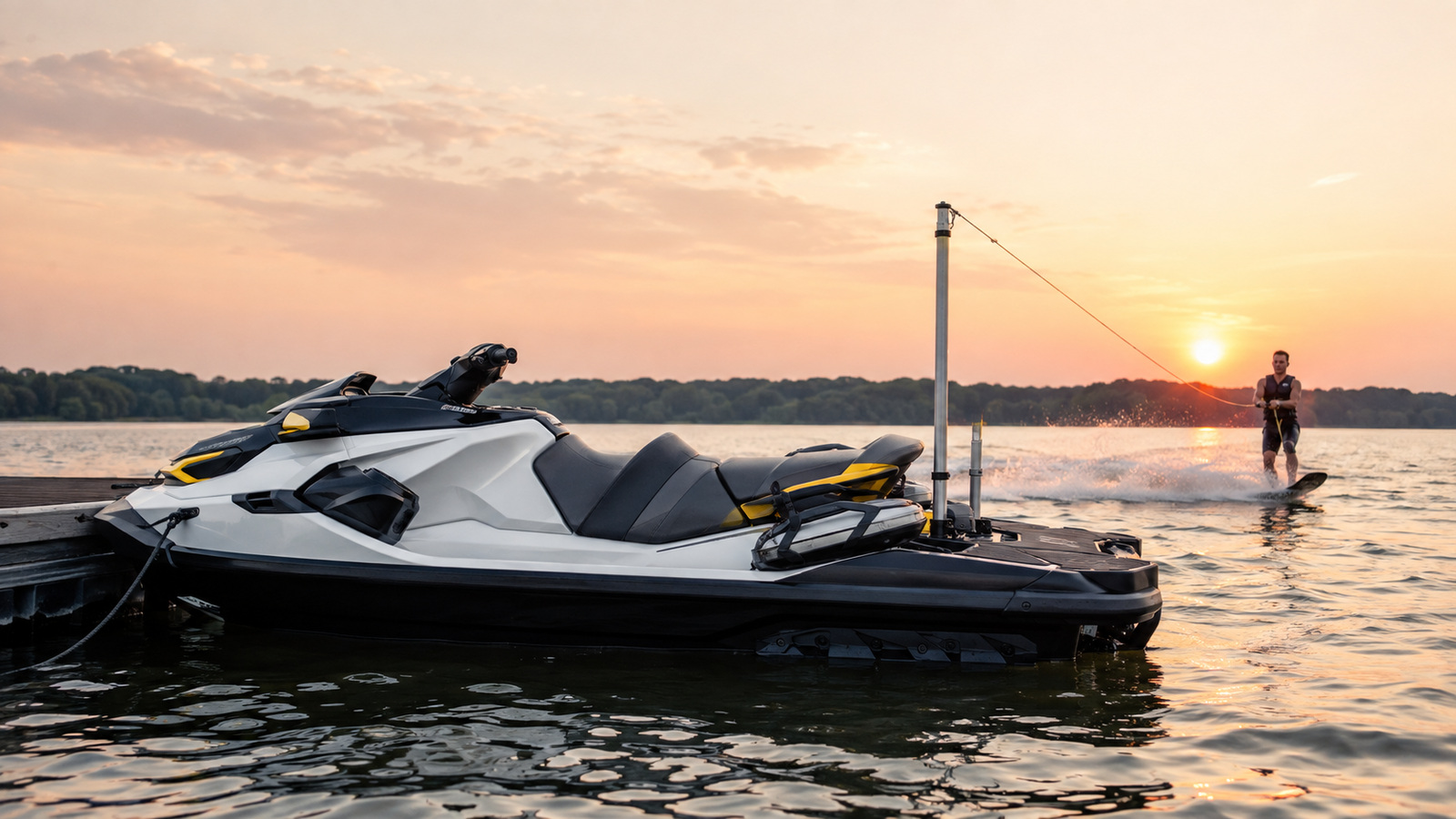
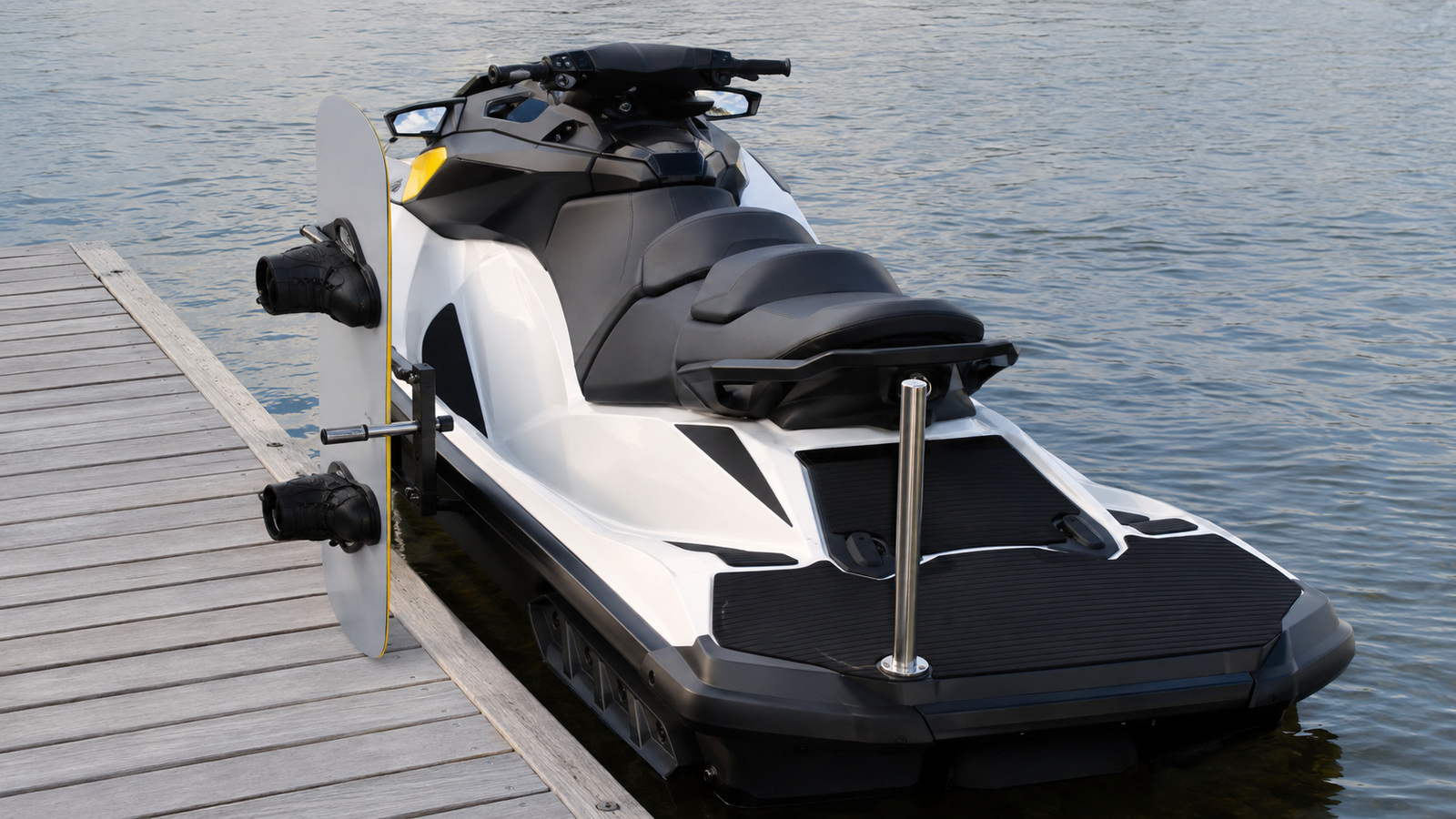
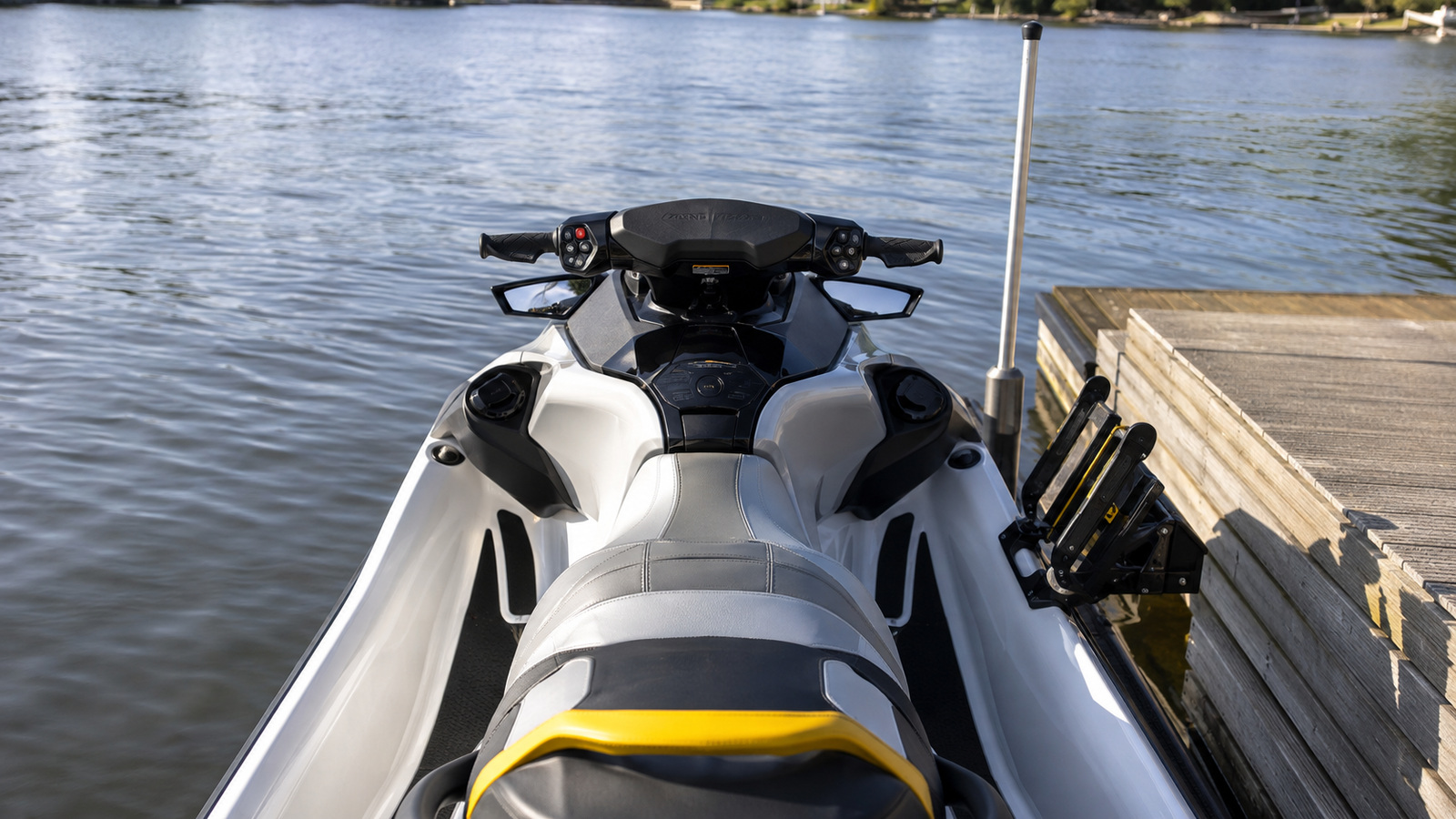
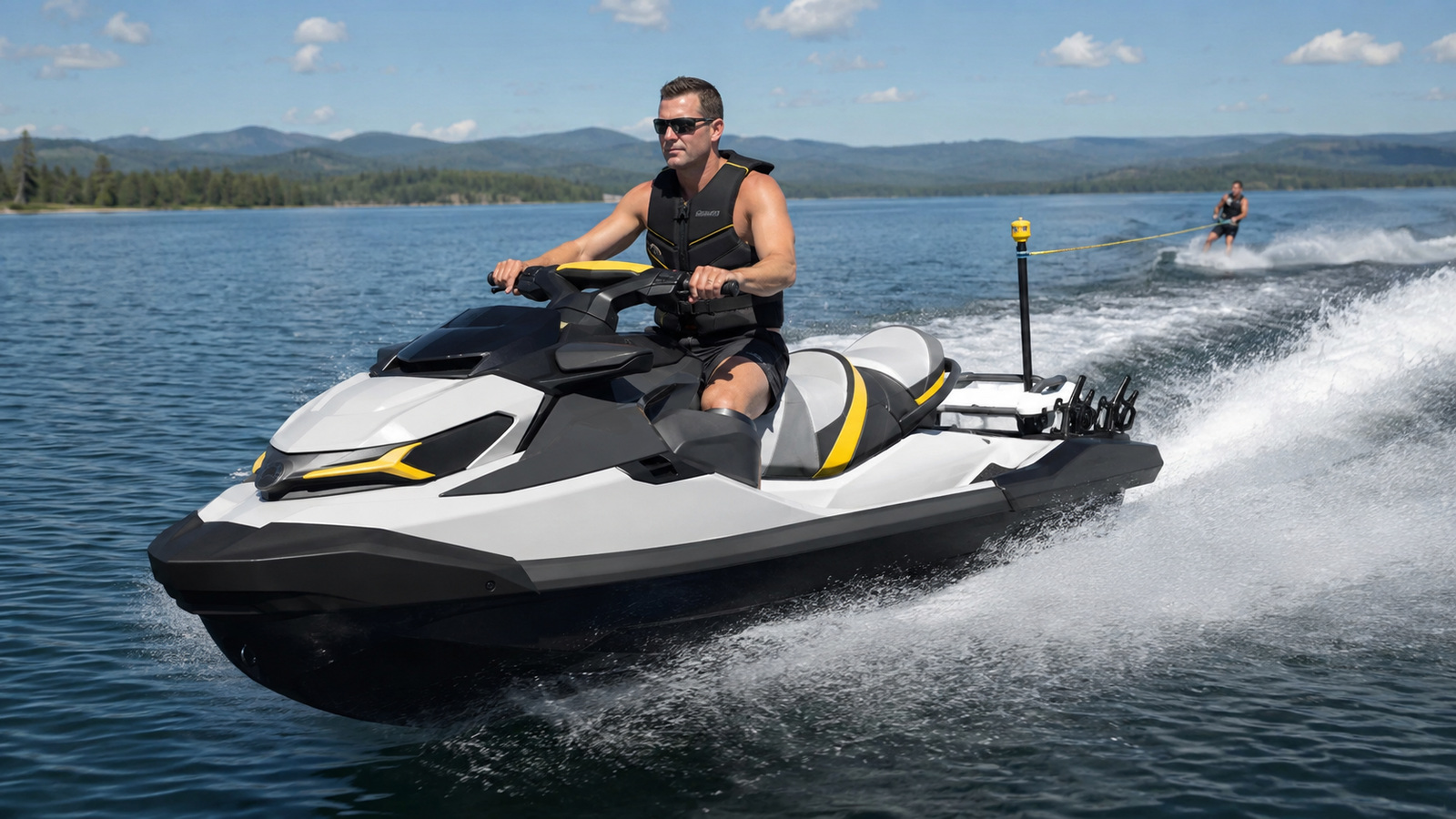
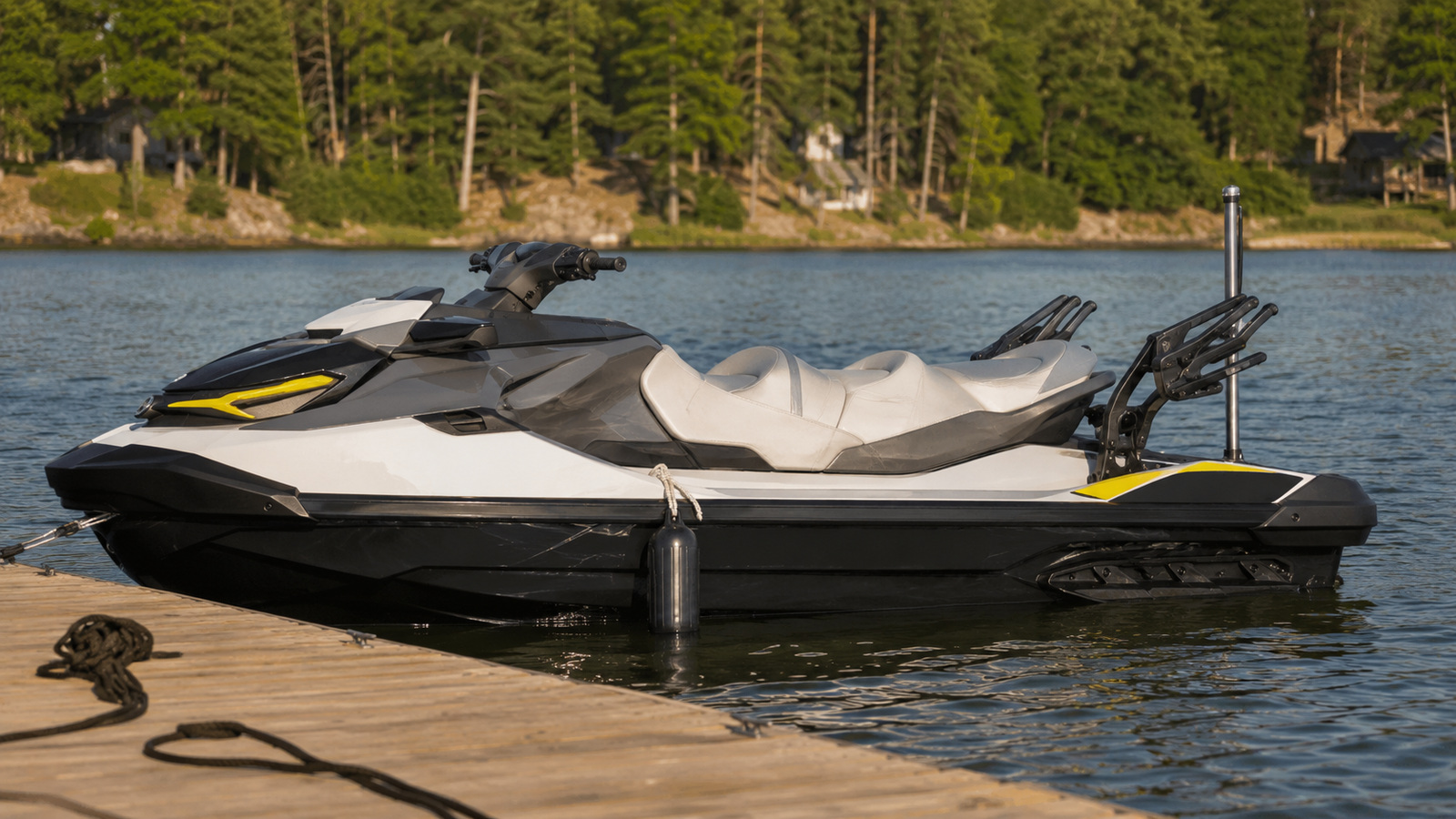
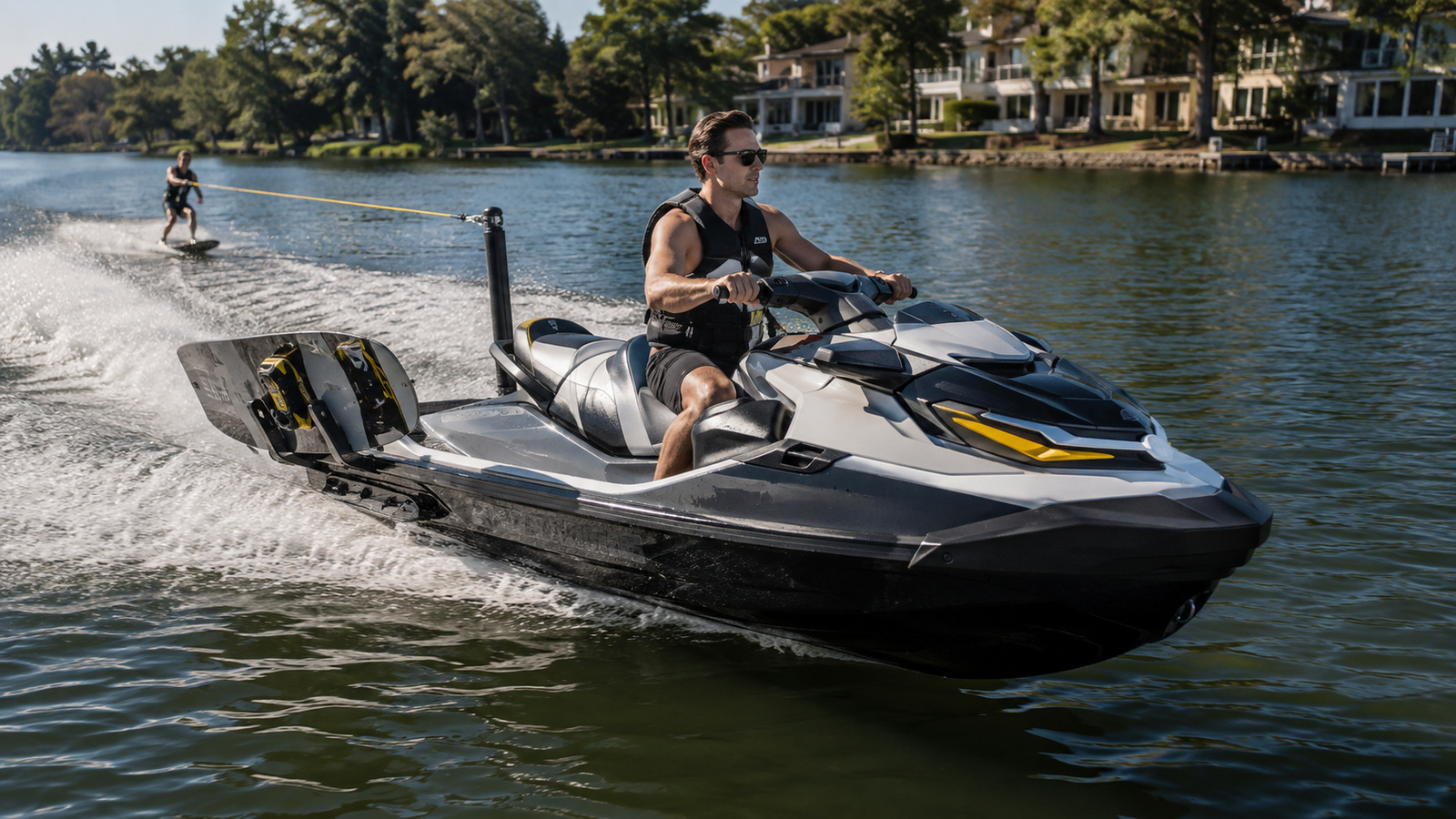
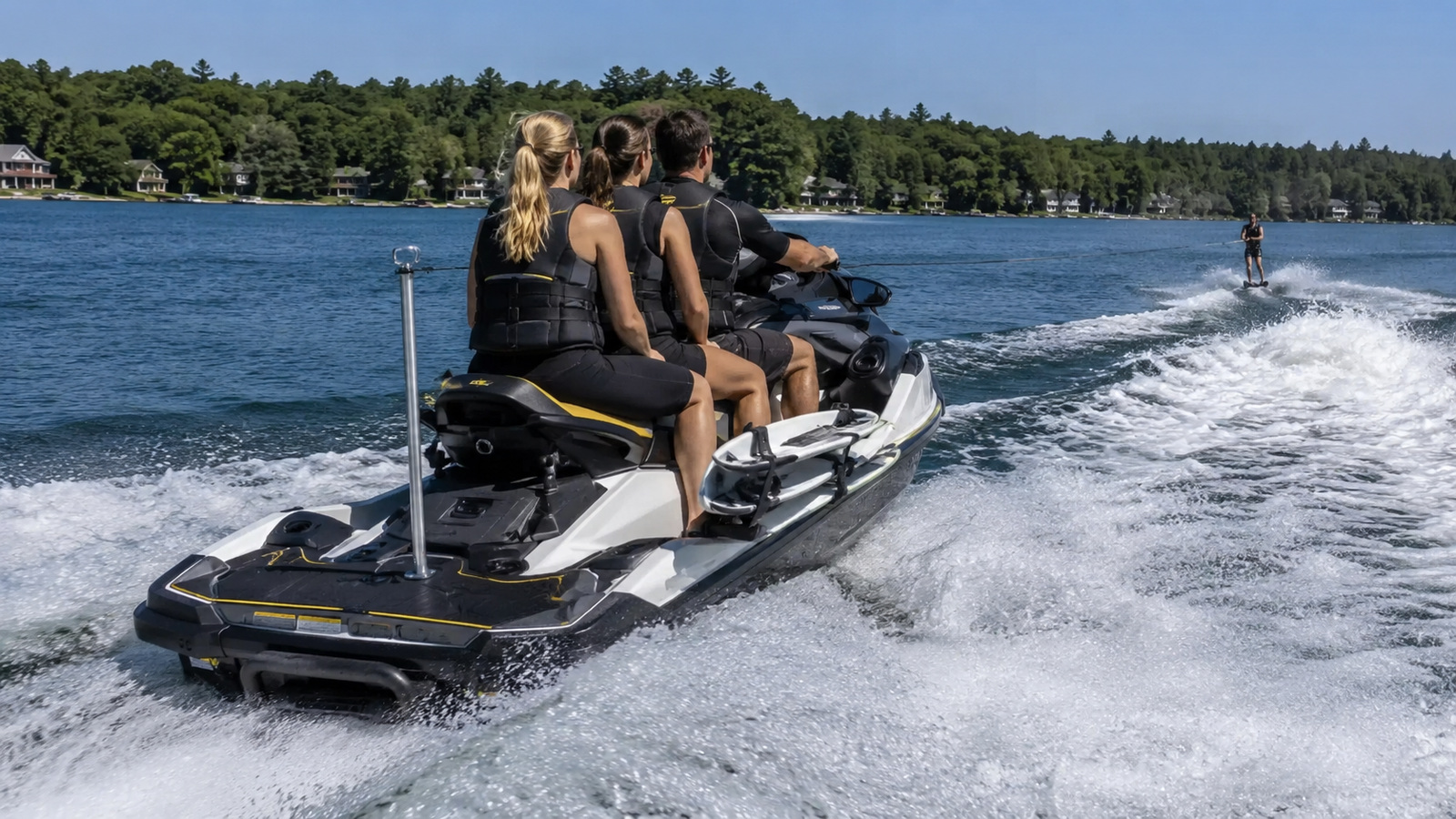
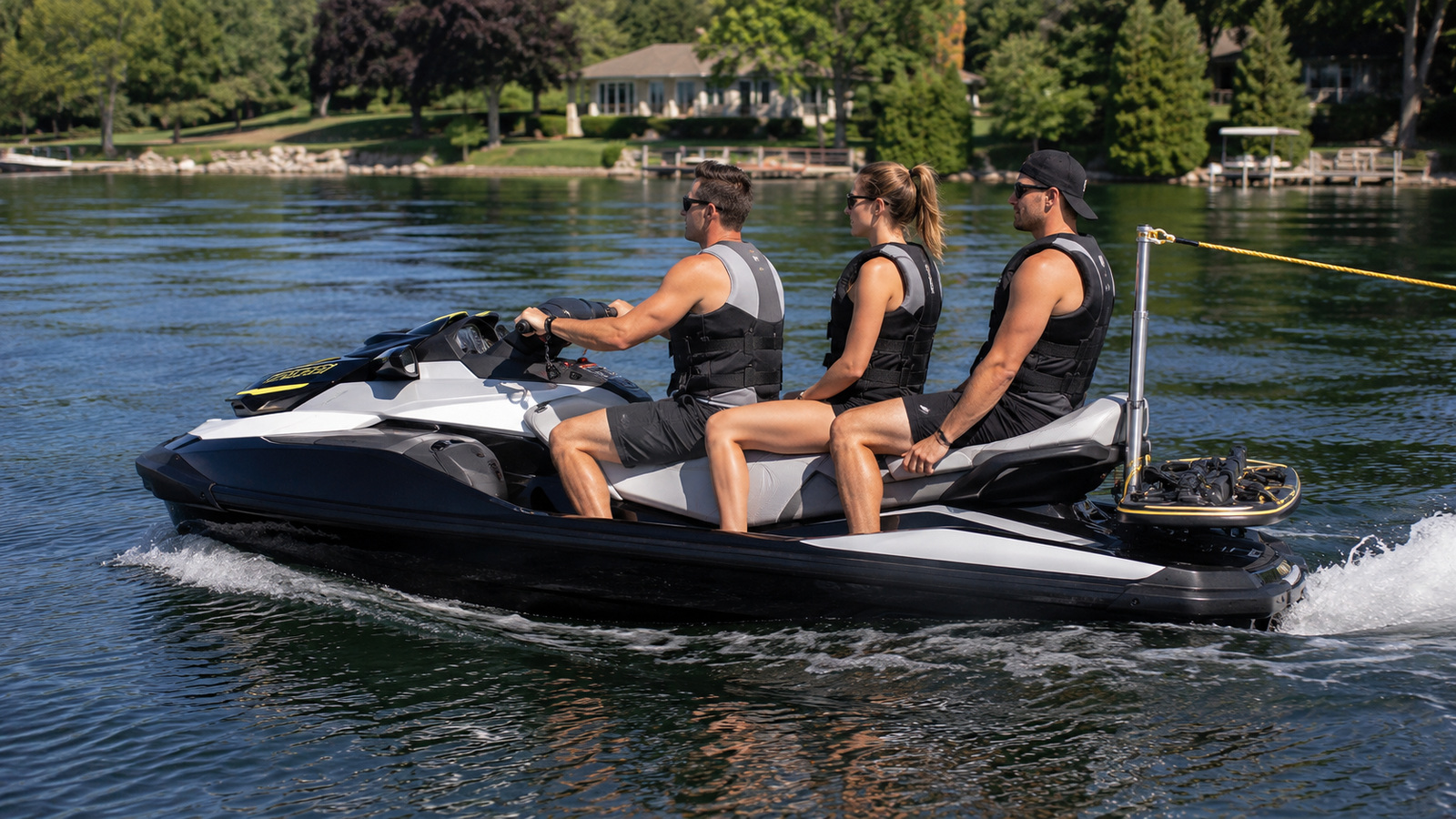
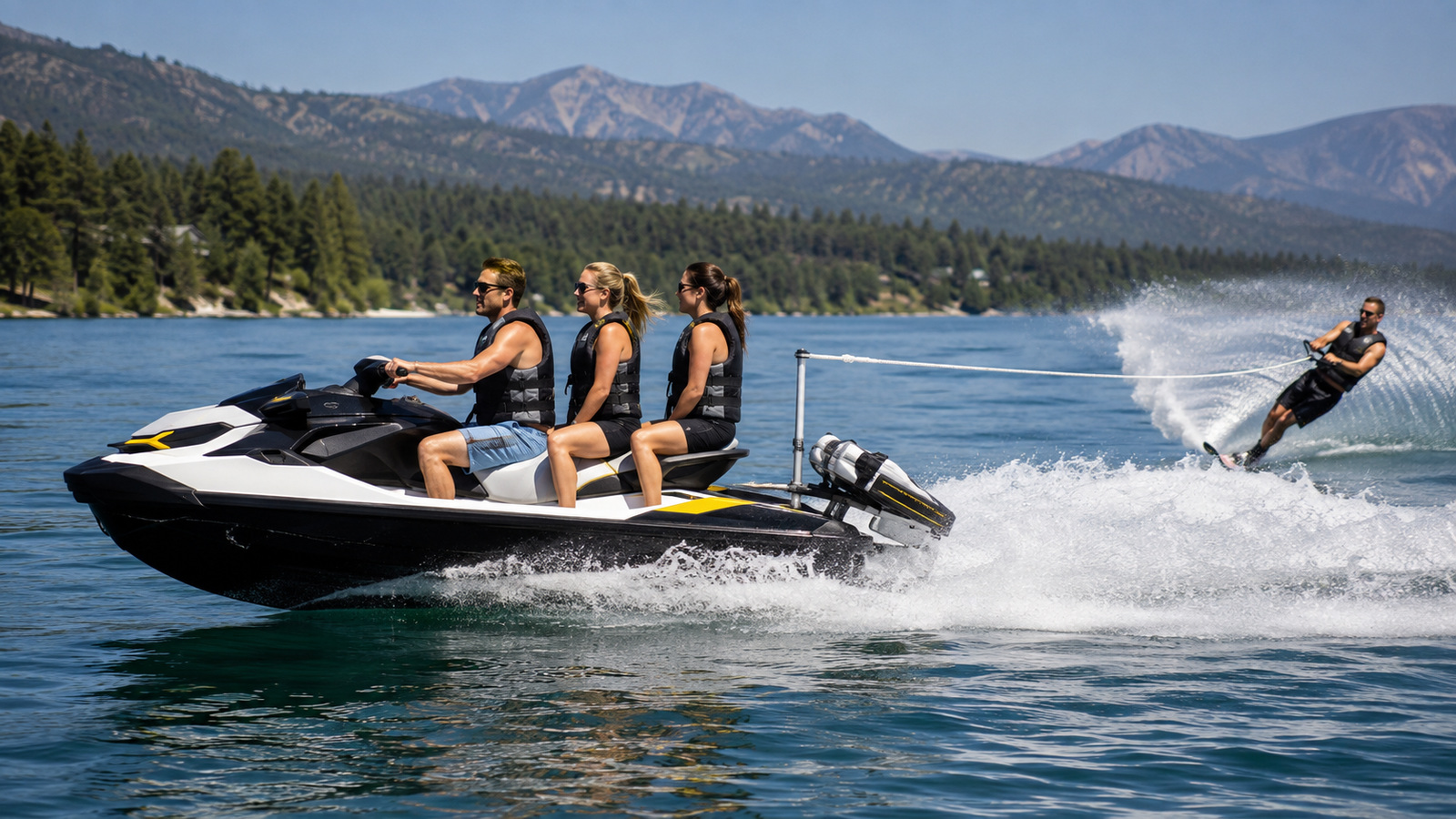
The larger, more planted tow-sports model, combining the ST3 hull and 230 hp with dedicated ski hardware, board storage, premium audio and a larger touchscreen.
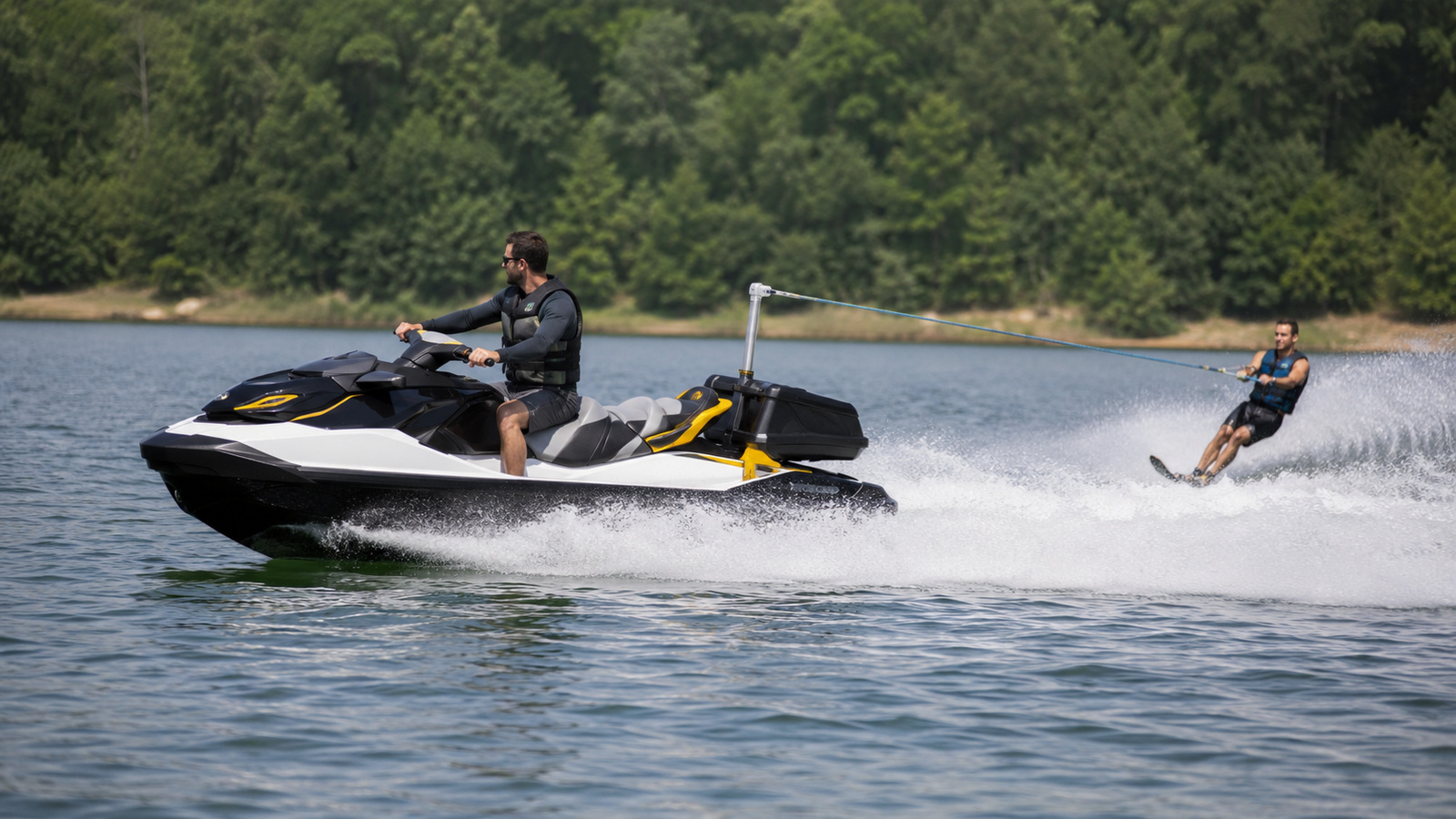
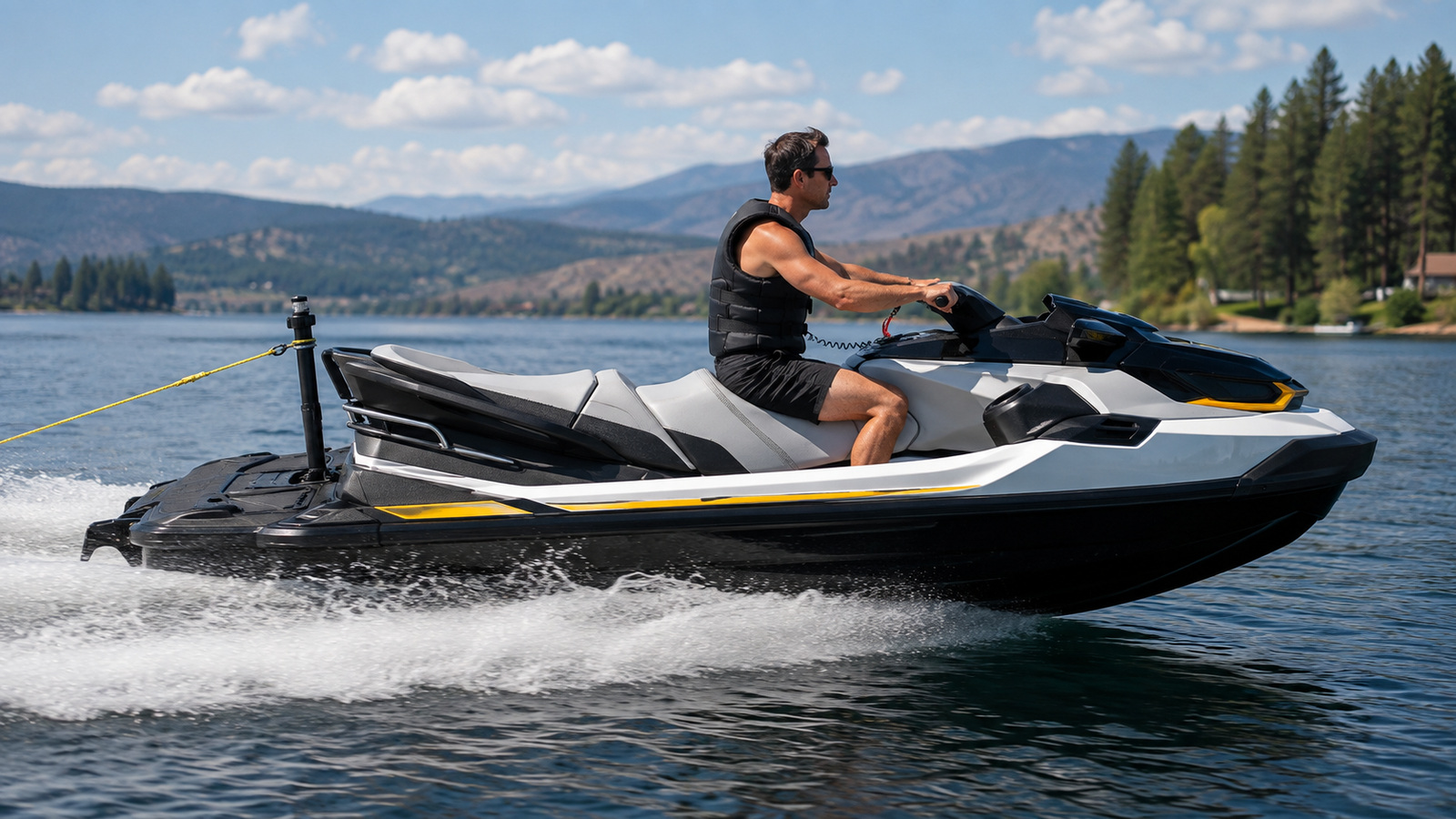
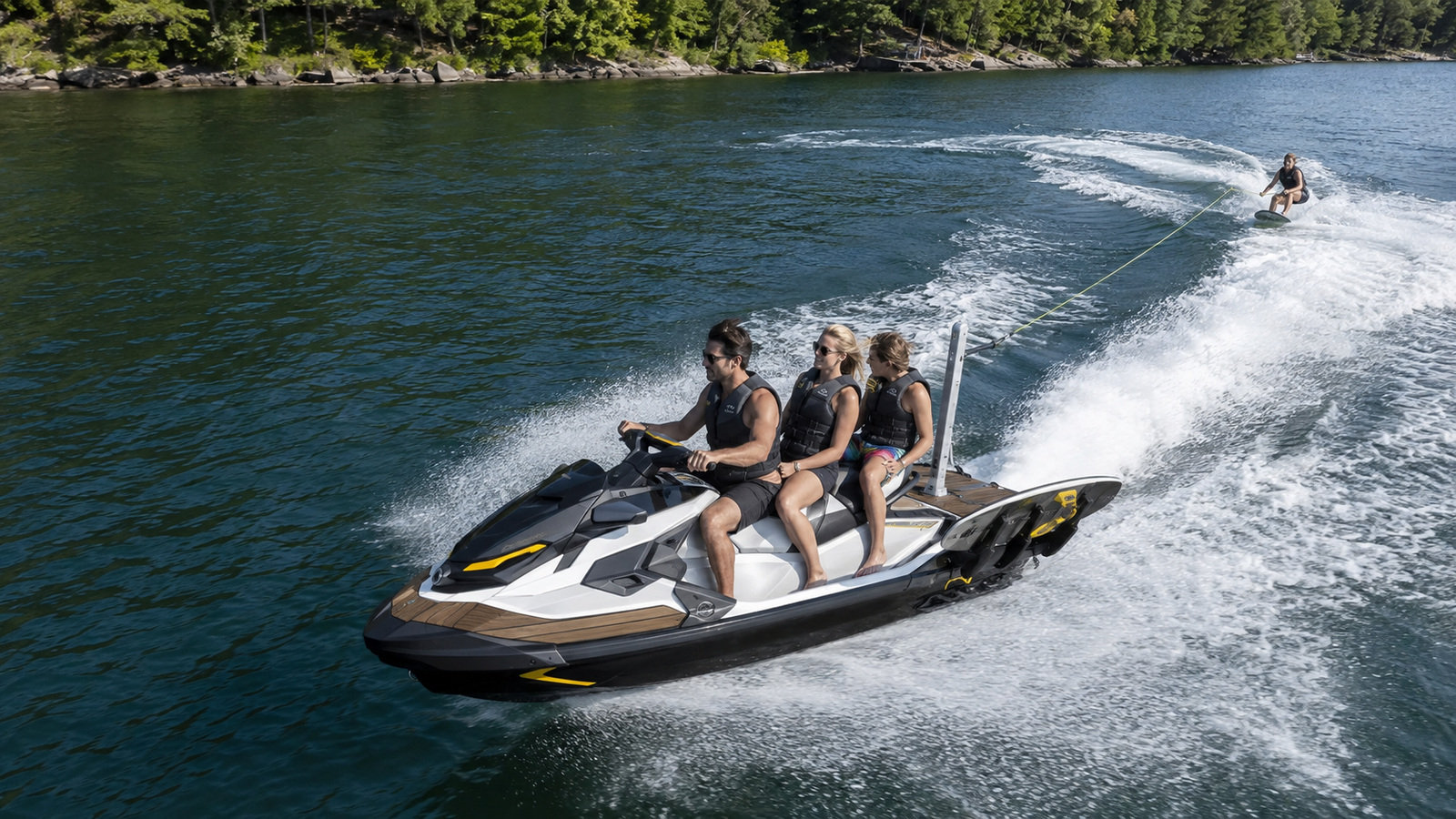
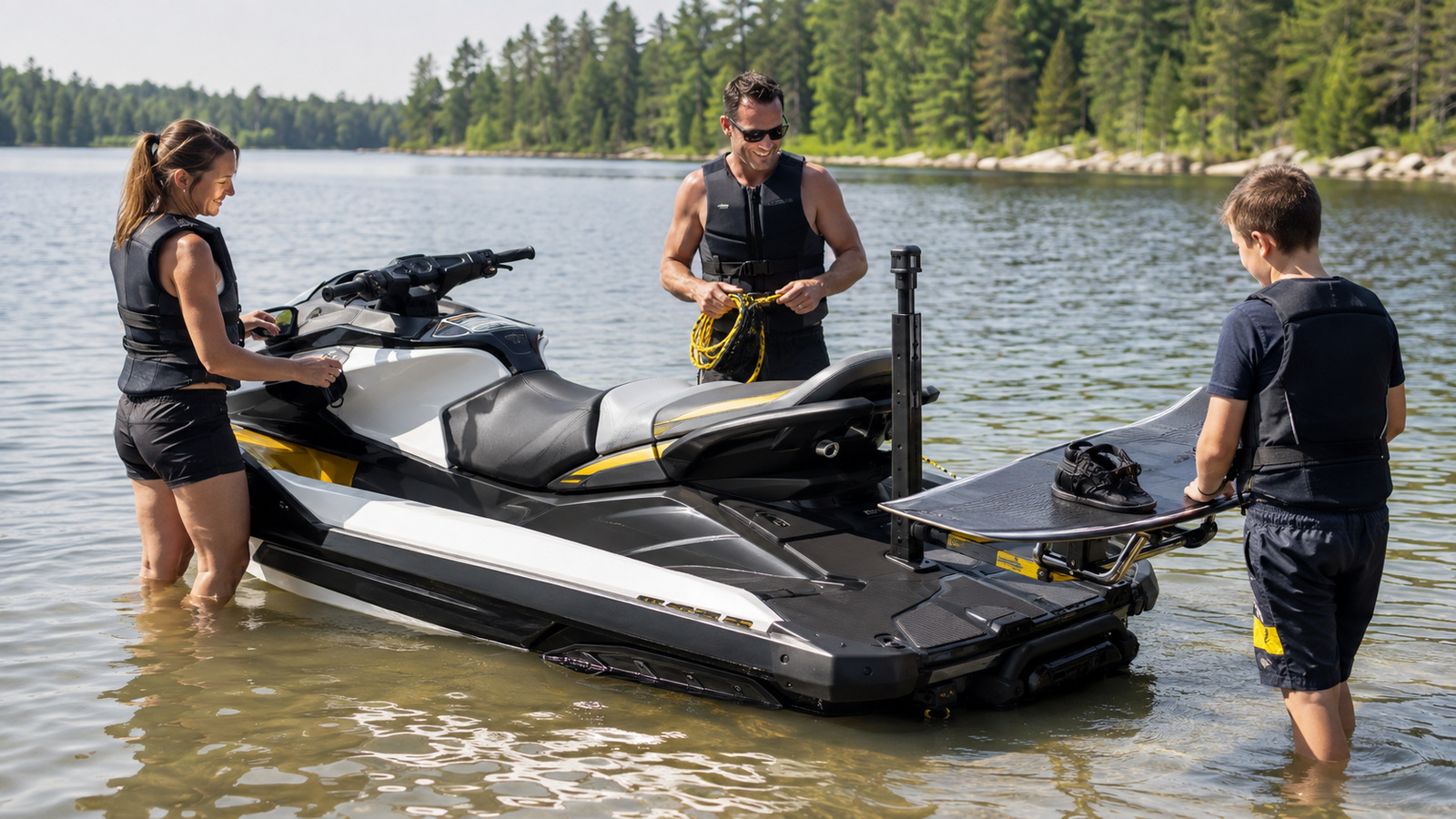
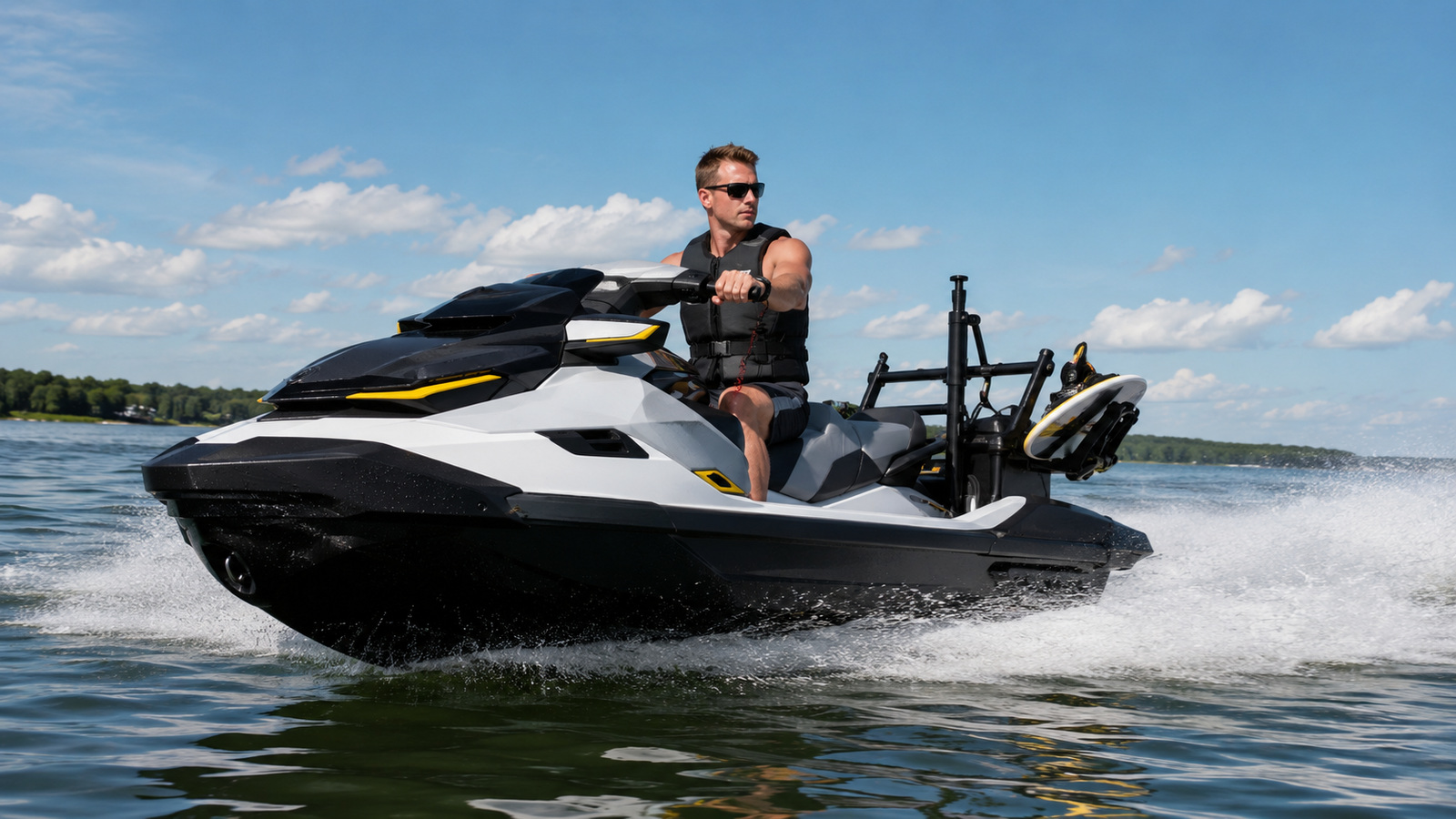
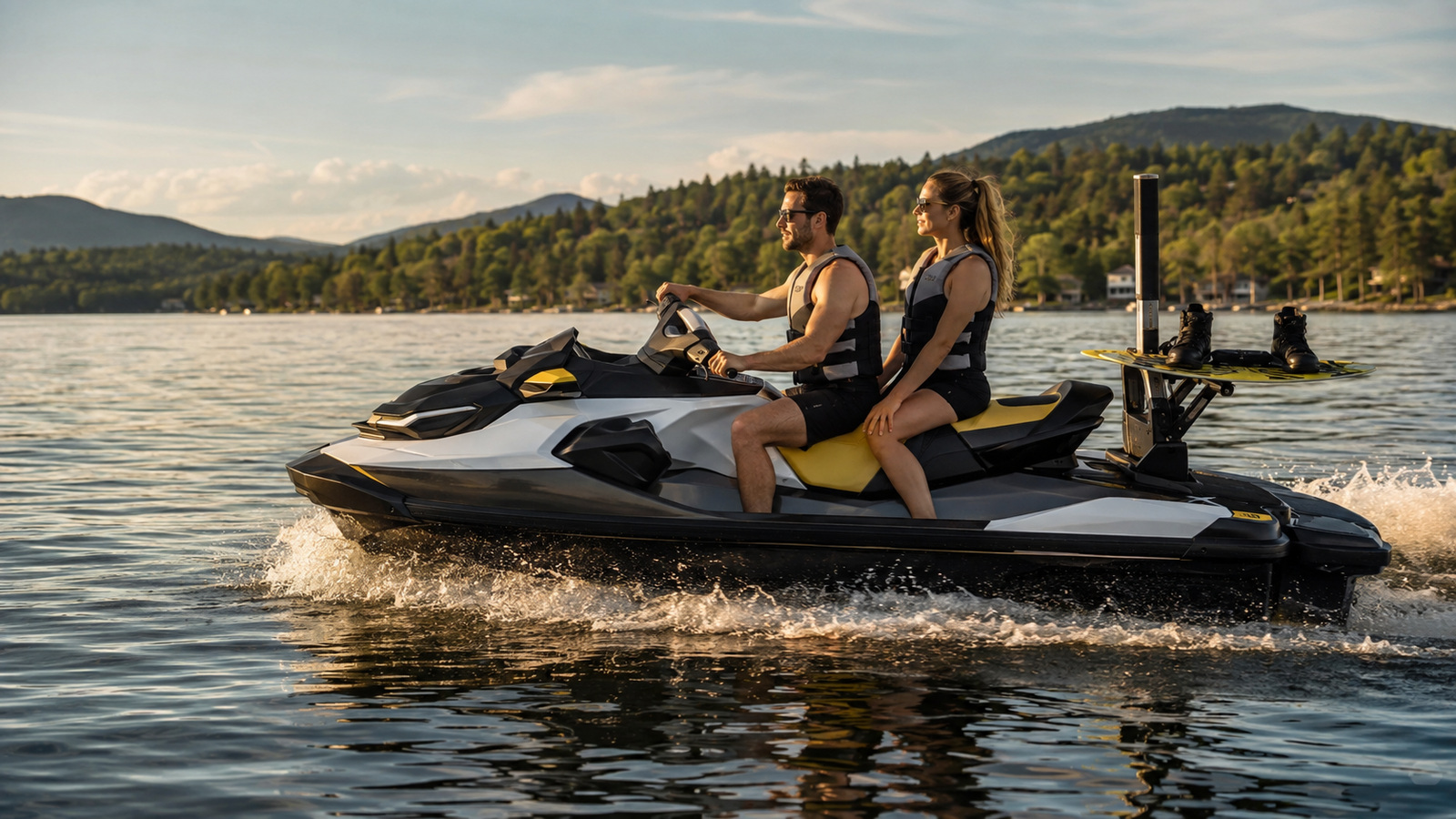
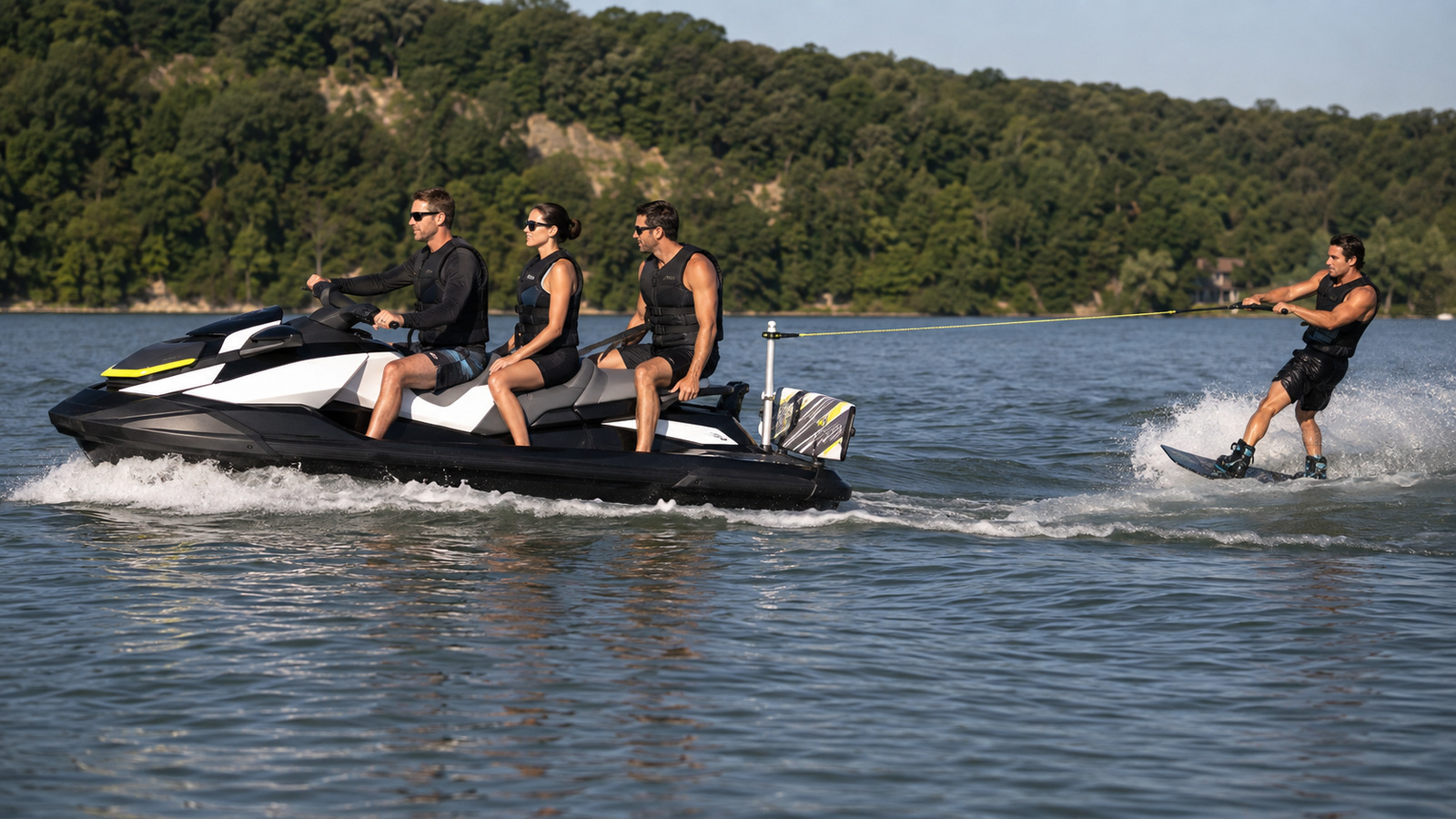
On paper, the Wake Pro is the larger, more planted tow-sports model, combining the ST3 hull and 230 hp with dedicated ski hardware, board storage, premium audio and a larger touchscreen. On the water, its best owner is riders who tow frequently, carry spotters or gear, and want more acceleration and rough-water stability than the GTI-based Wake. The buyer should therefore judge it through frequent tow sports with more power, rough-water stability and a larger ST3 platform before considering trim packages or payment.
The 2026 reference platform is 135.8 in long and 49.4 in without rack wide, carries 18.5 gal of fuel, stores 26.1 gal and is rated for up to 3 riders. Power is 230 hp. Those numbers matter because they set the scale of the trailer, passenger load and riding day, but they do not replace a fit test, especially on an ST3 tow-sports platform.
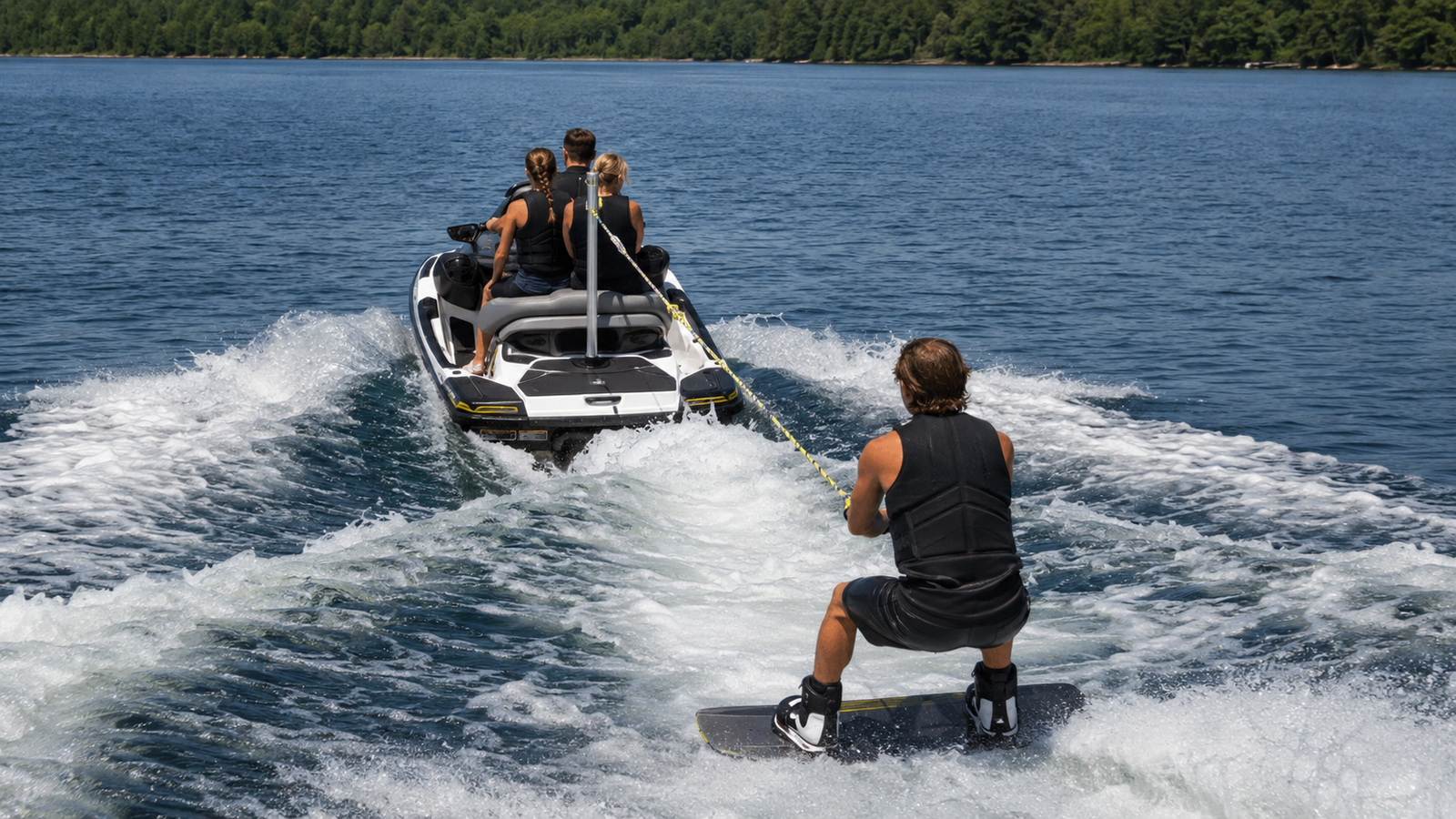
Wake Pro moves tow sports onto the larger ST3 hull with 230 hp. The upgrade matters most when a spotter, heavier rider and rougher water make the lighter Wake feel busy.
The compromise is equally important. On this 230-hp Wake setup, wake Pro costs more, weighs more and carries less internal storage than Wake, so occasional tow-sports users may not need the larger platform. The nearest useful comparison is Wake; that matters on a premium tow-sports package. For a pylon-and-touchscreen PWC, if the rider keeps wishing the Wake Pro behaved more like that alternative, the model decision should be settled before financing.
Published factory figures. Confirm every dimension against the individual boat before you commit.
Wake Pro moves tow sports onto the ST3 hull, adding mass and 230 hp. The bigger platform helps when a spotter and gear are aboard and gives the driver more composure in rougher water, especially on an ST3 tow-sports platform. On this 230-hp Wake setup, the trade is a heavier machine with less internal storage than Wake. Buyers should test rider pickup and low-speed maneuvering after a tow, because that repeated routine is where the larger hull either earns its keep or feels unnecessarily bulky; that matters on a premium tow-sports package.
For a pylon-and-touchscreen PWC, the ST3 Hull is built in Fiberglass, and the machine weighs 836 lb dry. Test it with the rider and passenger load the owner actually expects, especially on an ST3 tow-sports platform. On this 230-hp Wake setup, a PWC can feel planted solo and noticeably different when another adult shifts weight during idle, reboarding or a turn.
Before launch, inspect the intake grate, hull bottom, ride-plate area and edges around the pump opening; that matters on a premium tow-sports package. For a pylon-and-touchscreen PWC, deep gouges, impact repairs or evidence of repeated beaching deserve more attention than upper-body cosmetics. Then cross the same wake from several angles so the buyer sees how the hull reacts instead of judging it from one straight acceleration run, especially on an ST3 tow-sports platform.
Wake Pro’s 230-hp supercharged engine gives the driver more reserve when a heavier rider, passenger and gear are aboard. On this 230-hp Wake setup, that power also raises fuel and service intensity compared with Wake 170. The buyer should test the exact tow setup, including pylon, board rack and spotter, because the machine’s premium exists to make repeated tow sessions easier rather than simply to produce a larger horsepower number; that matters on a premium tow-sports package.
For a pylon-and-touchscreen PWC, jet-pump condition belongs beside engine condition. The impeller, wear-ring area and intake can make a healthy Rotax 1630 ACE, supercharged feel weak if the pump is damaged, especially on an ST3 tow-sports platform. On this 230-hp Wake setup, during the ride, listen for cavitation and make sure engine speed translates into clean thrust.
Low-speed control should be tested after the machine is warm; that matters on a premium tow-sports package. For a pylon-and-touchscreen PWC, iBR-equipped examples should move predictably between forward, neutral and reverse, because trailer loading, docking and rider pickup depend on that behavior. Match the engine designation, hours and service records to the exact craft before comparing value, especially on an ST3 tow-sports platform.
The Wake Pro carries 18.5 gal of fuel. For frequent tow sports with more power, rough-water stability and a larger ST3 platform, range should be learned from the exact machine’s display and the route the owner repeats, not from a universal mileage claim. On this 230-hp Wake setup, engine output changes the meaning of the tank. A rider using 230 hp aggressively can see very different consumption from an owner cruising steadily, towing a rider or spending long periods trolling; that matters on a premium tow-sports package. For a pylon-and-touchscreen PWC, leave reserve for weather, detours and repeated acceleration. Fuel also adds operating weight before passengers and cargo, especially on an ST3 tow-sports platform. On this 230-hp Wake setup, when trailering, calculate the PWC, fuel, trailer and accessories together. Use the fuel grade specified for the exact engine package, and treat old fuel as a possible cause when a low-hour machine has sat for long periods; that matters on a premium tow-sports package.
The sea trial should reproduce frequent tow sports with more power, rough-water stability and a larger ST3 platform. For a pylon-and-touchscreen PWC, that means more than a full-throttle pass: include idle control, normal cruise, several turns, wake crossings and the activity that makes this model different from Wake. Rider ergonomics are part of performance, especially on an ST3 tow-sports platform. On this 230-hp Wake setup, seat shape, footwell support and handlebar reach determine whether the available 230 hp can be used without fatigue. A rider who feels locked in comfortably will experience the same hull differently from someone fighting knee or wrist position; that matters on a premium tow-sports package. For a pylon-and-touchscreen PWC, add the normal passenger when the Wake Pro will regularly carry one. Repeat low-speed turns, acceleration and reboarding, especially on an ST3 tow-sports platform. On this 230-hp Wake setup, passenger weight changes a PWC immediately, so capacity on a specification sheet is not proof that the owner will enjoy the machine loaded. The useful result is confidence after a sustained ride, especially on an ST3 tow-sports platform. On this 230-hp Wake setup, if the pump cavitates, the steering needs constant correction or the rider keeps wishing for the Wake’s platform, investigate the setup or change models before deciding the behavior is simply normal.
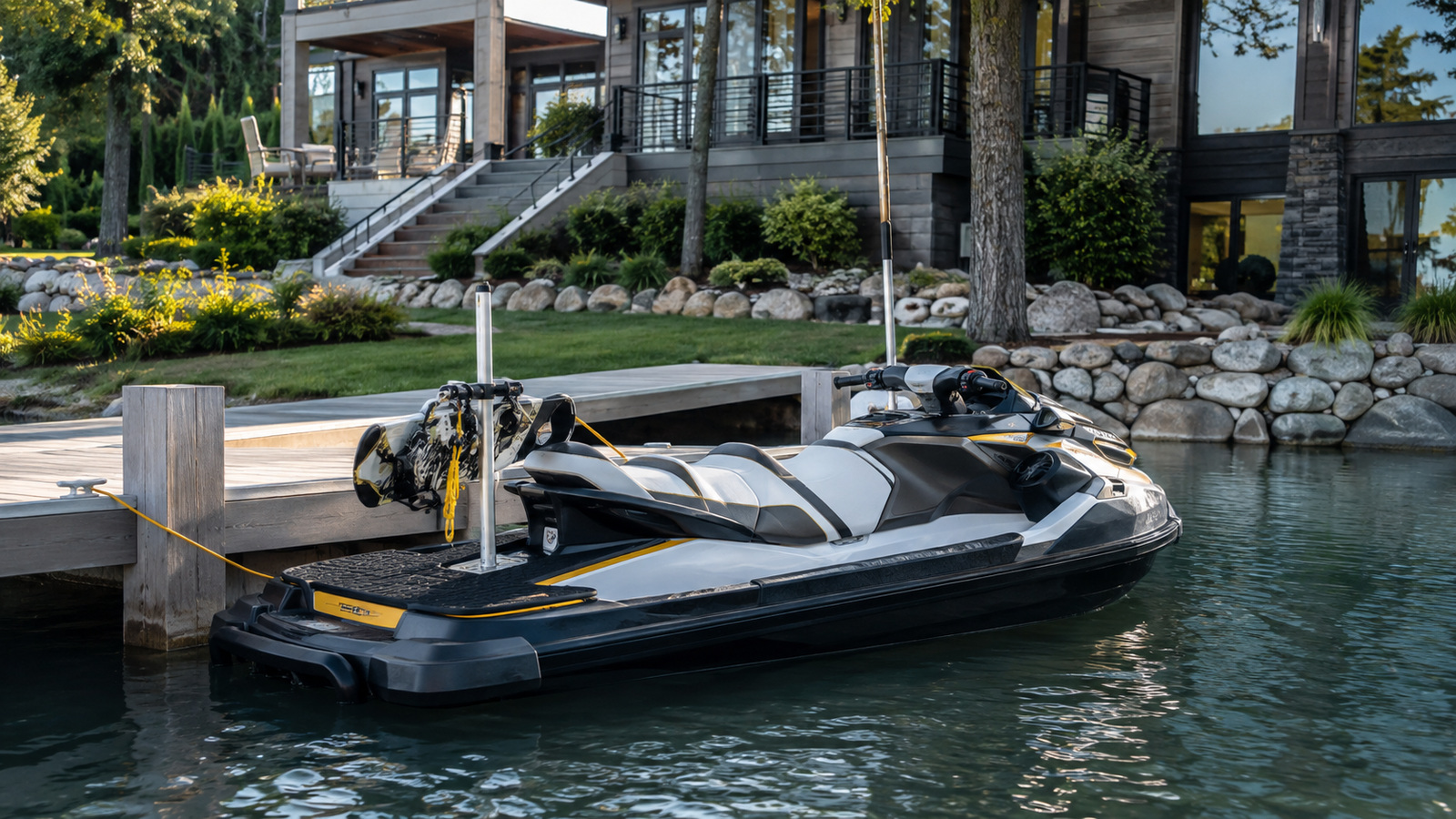
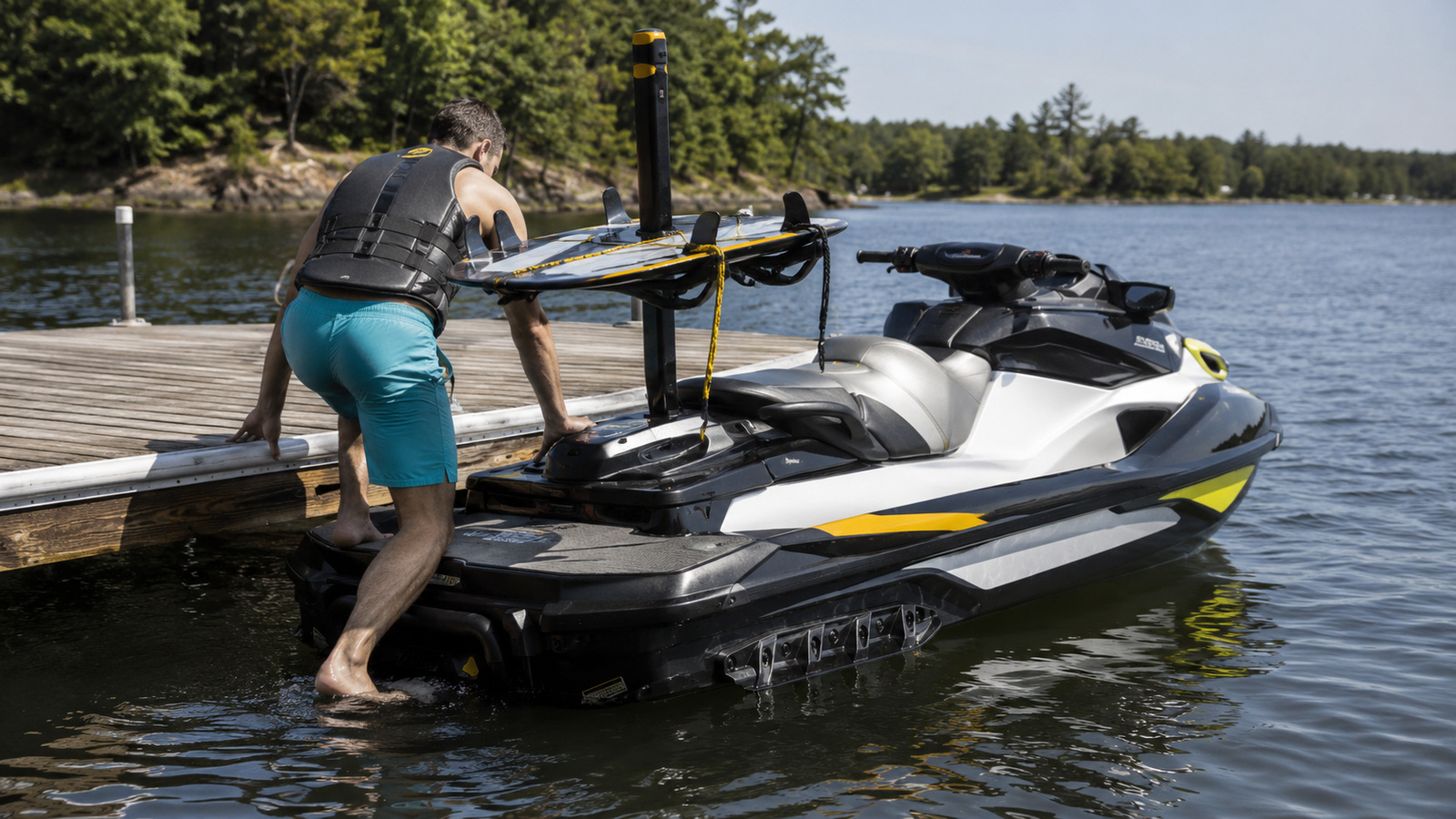
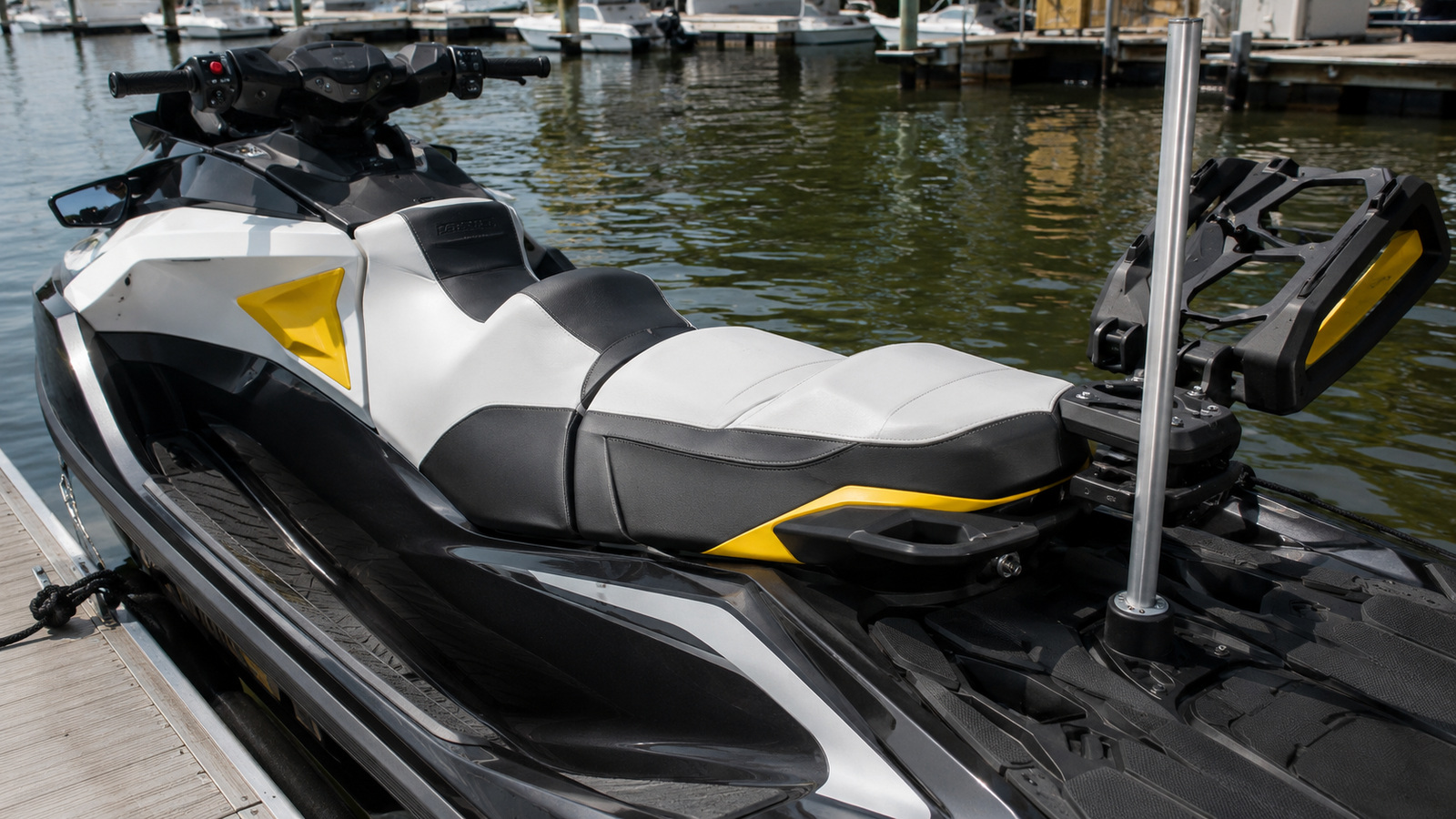
The rider deck should be tested around spotter seating, pylon access, board-rack clearance, rider pickup, reboarding and how gear moves around the rear platform. Put the normal PFD, passenger and activity gear aboard, then open storage, reboard from the water and move through the positions used during frequent tow sports with more power, rough-water stability and a larger ST3 platform. Wake Pro has 26.1 gallons of storage; that matters on a premium tow-sports package. For a pylon-and-touchscreen PWC, its larger hull and tow hardware are optimized around stability and power rather than maximizing internal cargo volume. Storage volume is only useful when the compartment can be reached and loaded without making the rider area awkward or shifting too much weight into one end of the craft, especially on an ST3 tow-sports platform. On this 230-hp Wake setup, seat seams, traction surfaces, grab handles and rear-platform edges often reveal actual use better than an hour meter. Fishing machines show mounting and gear wear; tow models show board and rope contact; performance models concentrate wear where the rider braces against the machine; that matters on a premium tow-sports package. For a pylon-and-touchscreen PWC, loose cargo is a safety and handling issue on a PWC. The Wake Pro should have a secure place for the equipment central to its mission, whether that means fishing gear, boards, route cargo or simple family-day supplies, especially on an ST3 tow-sports platform.
feature, look at how it changes rider use, and price repairs separately if it is present but not fully functional.
Ski Mode is worth evaluating on the exact Wake Pro rather than assuming every package includes it. Operate the
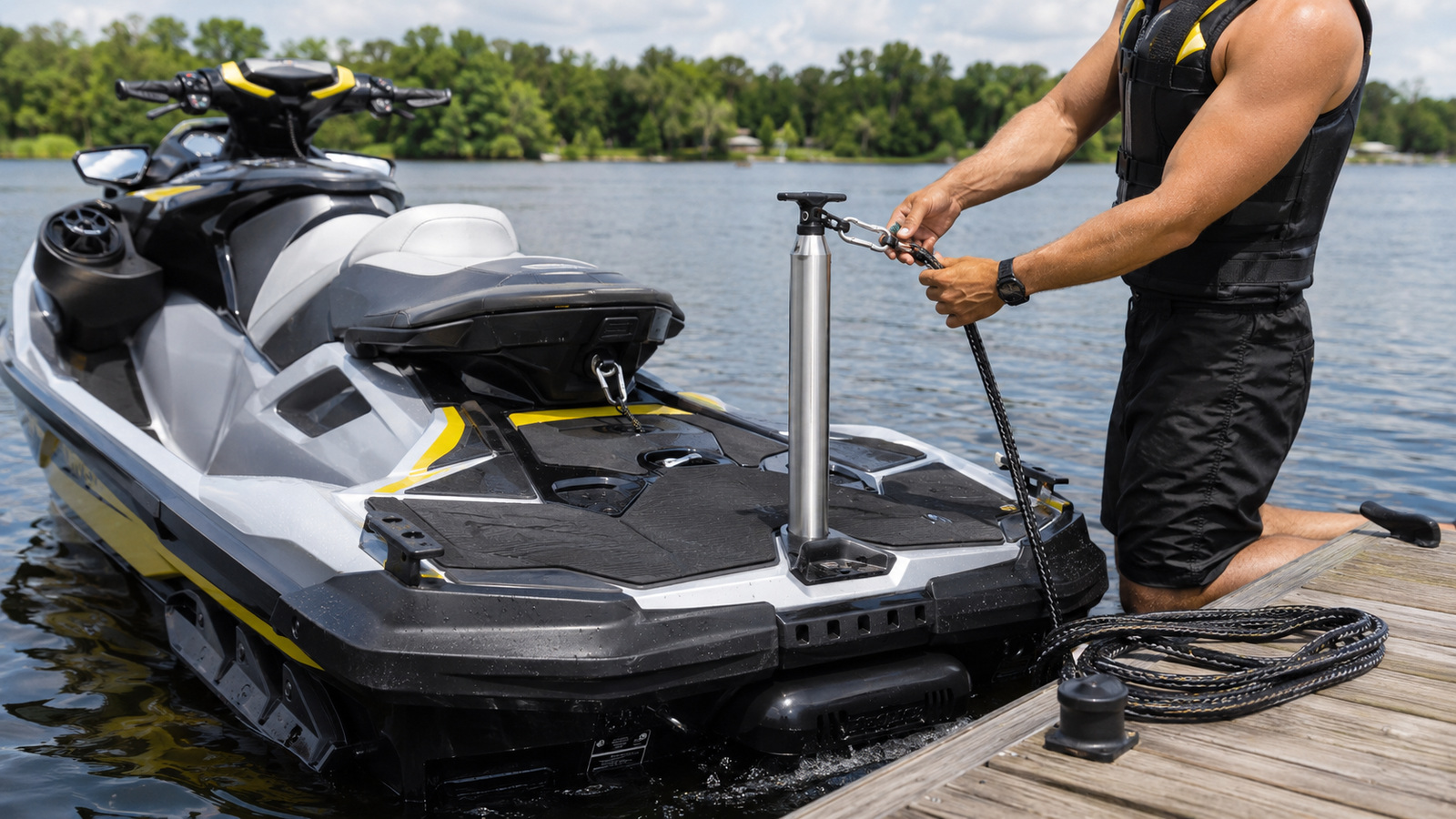
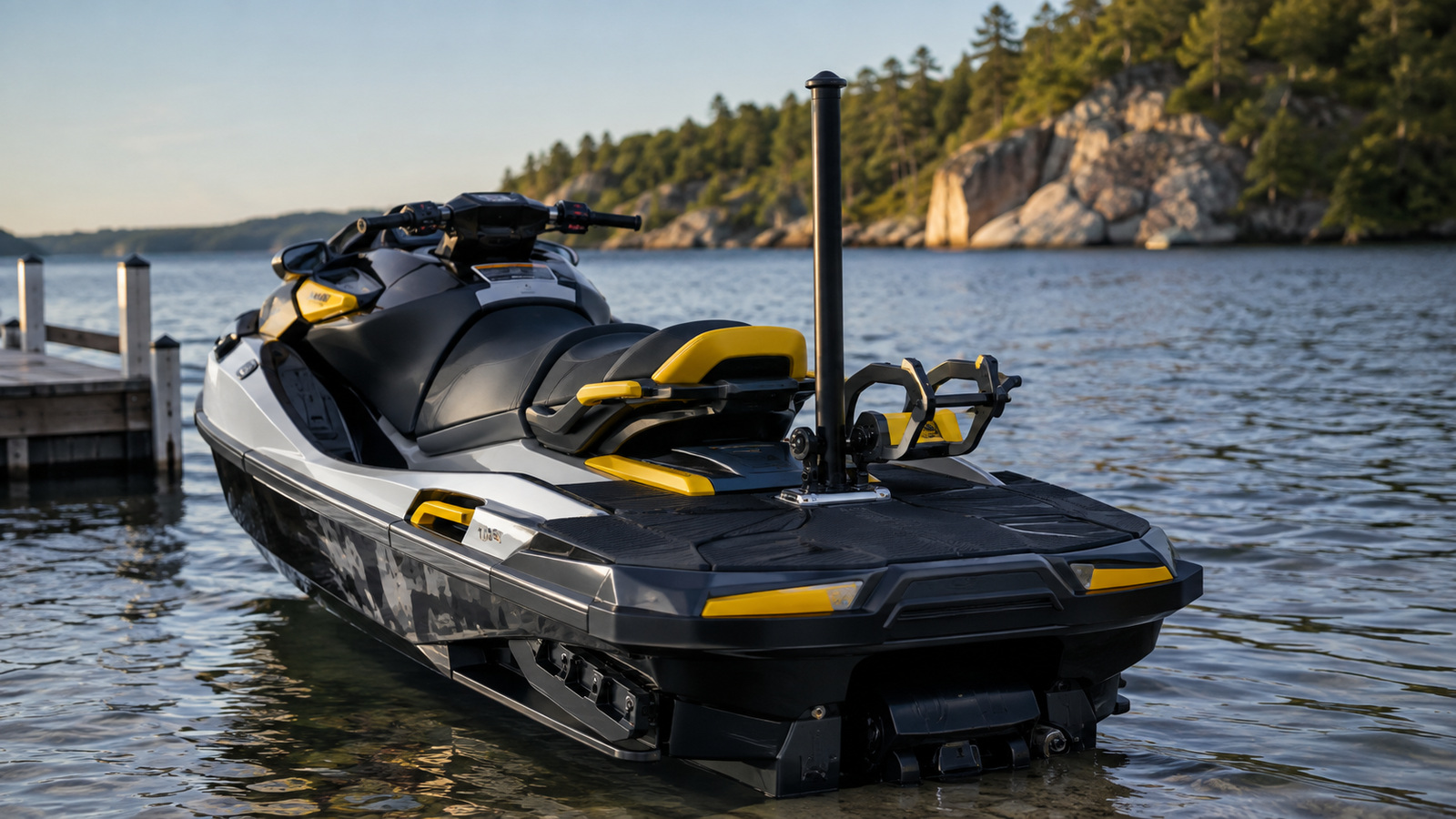
LinQ retractable ski pylon is a working load point. Extend it fully, check locking hardware and inspect the
ST3 Hull is central to how the Wake Pro rides, not a styling label. The hull choice affects turning response,
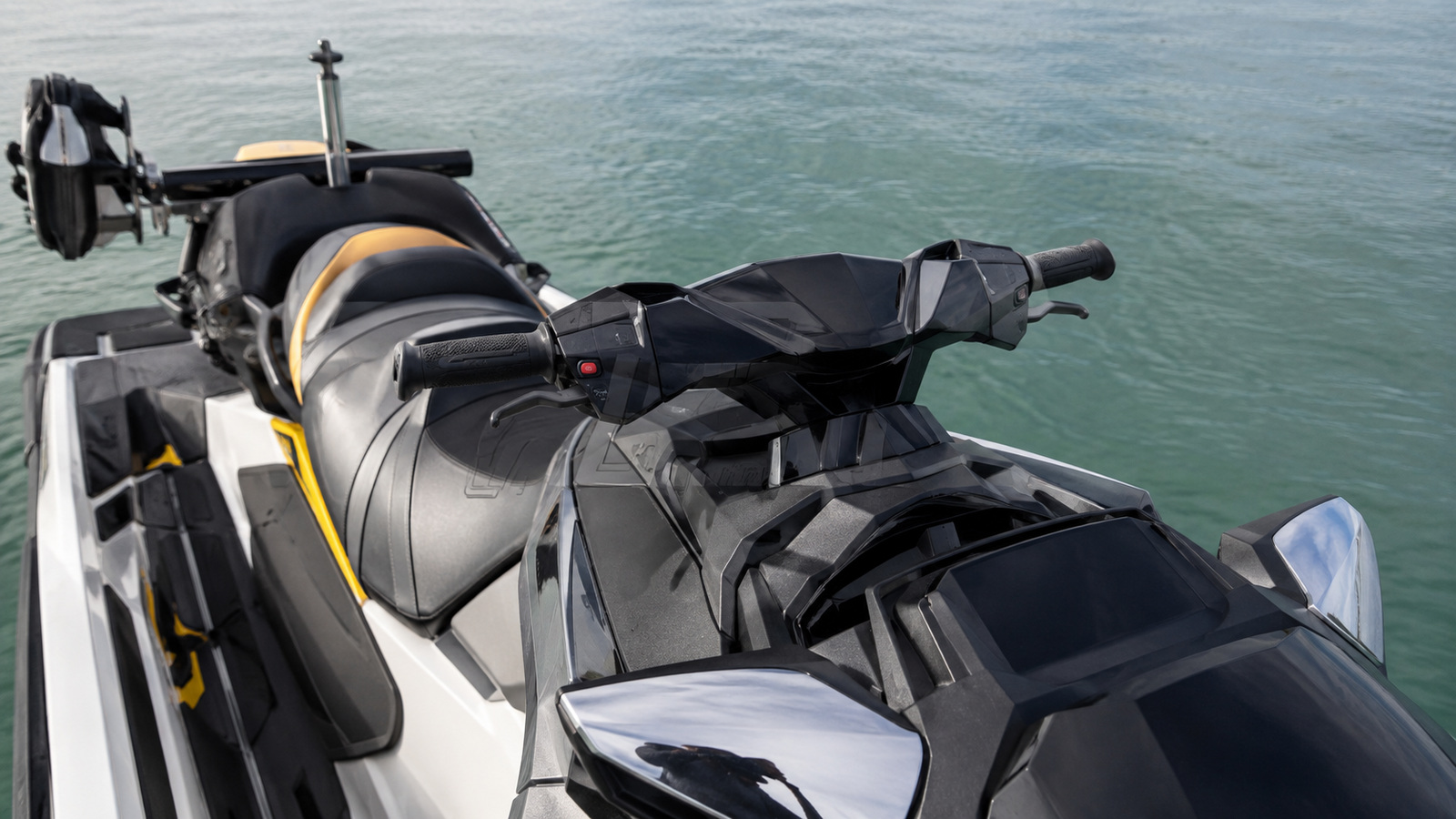
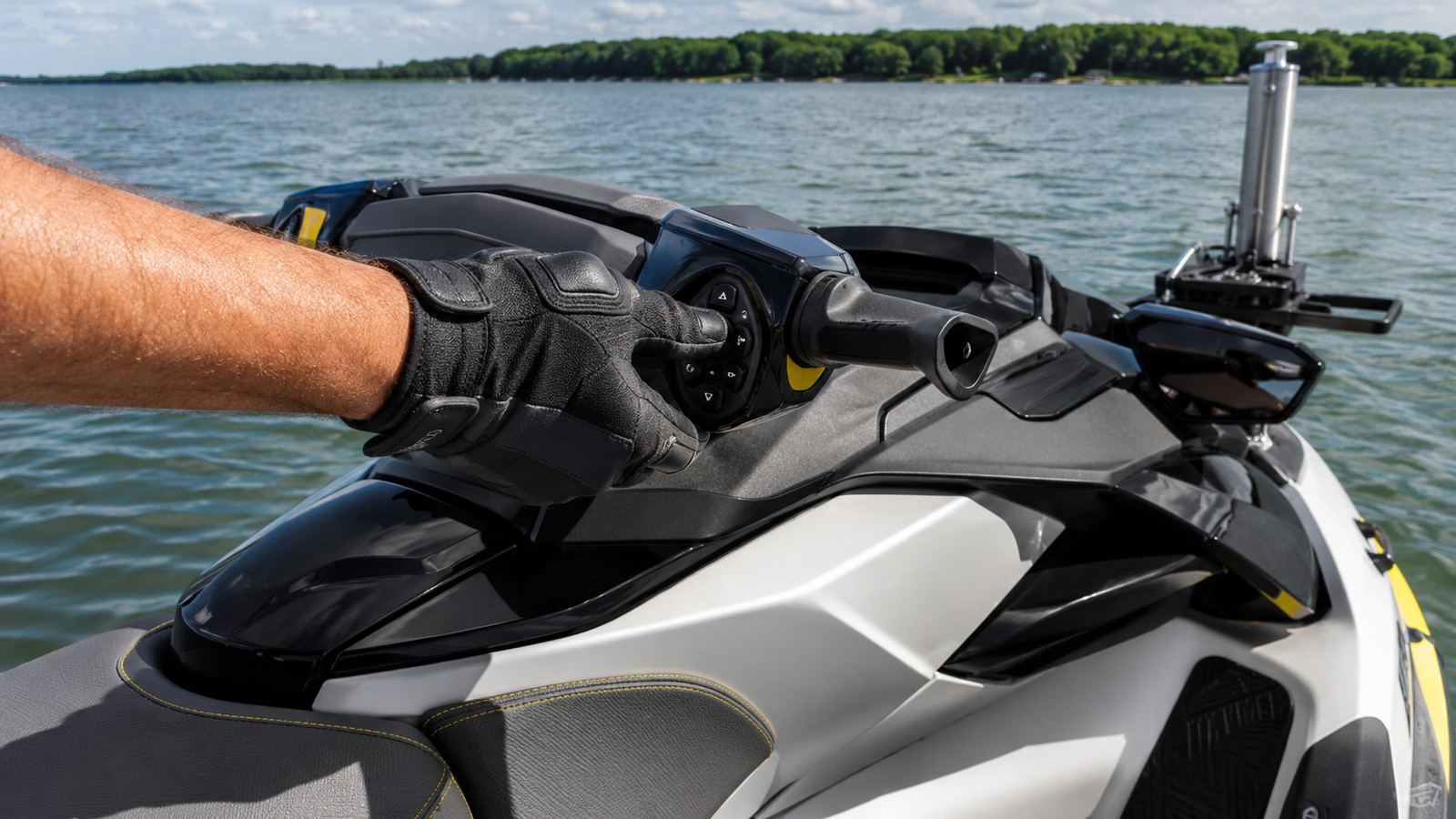
The systems check should focus on Ski Mode, retractable pylon, board rack, iBR, VTS, audio, display and the jet pump under repeated towing load. On this 230-hp Wake setup, test the display, iBR, trim and model-specific equipment after several starts rather than assuming one clean power-up proves the electrical system is healthy. Battery voltage matters because weak power can create confusing display or control faults. If audio, navigation, fishing electronics or USB accessories are installed, run them long enough to see whether charging remains stable. After the ride, look inside the hull again. New water, fuel odor, hot connections, loose hoses or components that shifted under vibration deserve explanation before the machine is treated as ready for the season.
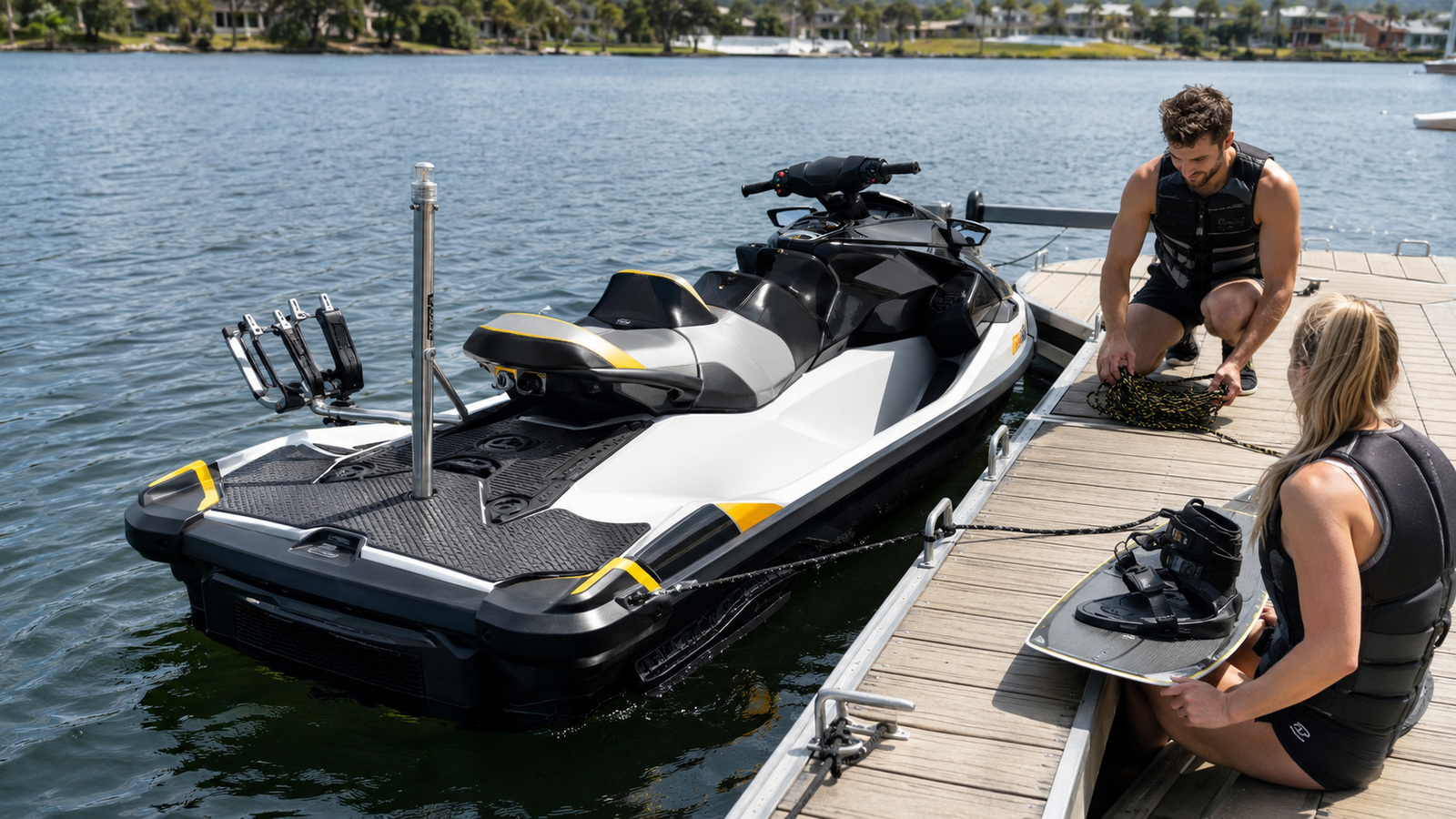
Ownership logistics revolve around trailer setup with board rack clearance, wet-gear storage, tow-rope management and the added wear created by repeated rider pickups. The craft itself is 135.8 in long and 49.4 in without rack wide, but the trailer adds its own length, width and tongue weight. Measure the complete stored package rather than assuming the PWC fits because the hull does. Dry weight is 836 lb. Add fuel, trailer, accessories and normal gear before choosing a tow vehicle, rack or lift. Windshields, board racks and fishing equipment can also change stored height and clearance. Beach and dock habits matter to jet-pump life. Shut down before the intake reaches sand or gravel, use fenders where bodywork can rub, and follow Sea-Doo guidance for flushing, corrosion prevention, battery care and seasonal storage.
Use photography to show the details specifications cannot explain well on the Wake Pro: rider posture, hull stance,
Compare like-for-like year, engine output, trailer inclusion and package equipment before assuming one example is a bargain. Condition can move value faster than hours. Pump or wear-ring work, battery replacement, iBR faults, trailer tires and bearings, damaged upholstery or failed electronics can erase a lower asking price during the first season. Accessories deserve value only when they fit the buyer’s use and were installed cleanly. A board rack, fishing electronics, audio package or LinQ cargo system is useful when it supports frequent tow sports with more power, rough-water stability and a larger ST3 platform; it should not command a premium if it needs repair or will be removed.
Illustration only and not an offer of credit.
Include the trailer and financed accessories only when they are part of the actual transaction.
Illustration only and not an offer of credit. Your actual rate and term depend on credit profile, vessel age, loan amount and ownership structure.
Compare the Wake Pro with the Wake around tow hardware, rider pickup and platform stability. The Wake Pro is 135.8 in long with 18.5 gal of fuel and 230 hp available, while the Wake uses a GTI Hull and is rated at 170 hp. The useful question is which differences change the owner’s normal ride instead of merely creating a higher specification.
Compare the Wake Pro with the GTX around long-distance comfort, storage and engine choice. The Wake Pro is 135.8 in long with 18.5 gal of fuel and 230 hp available, while the GTX uses an ST3 Hull and is rated at 170, 230 or 300 hp by 2026 package. The useful question is which differences change the owner’s normal ride instead of merely creating a higher specification.
The Wake Pro belongs on the short list when its advantage is still clear after those rides. The deciding question remains: Do frequent tow sessions, heavier riders and rougher water justify the heavier 230-hp ST3 platform?
Confirm the exact model year, package, engine output, HIN, hours and included trailer before negotiating. Sea-Doo can use one model name across multiple power or equipment configurations, so the craft in front of the buyer matters more than a remembered specification. Wake Pro’s extra mass and power mean the trailer, pylon and steering system all deserve closer attention. Test the 10.25-inch display, audio and Ski Mode while the machine is warm. If the craft has been used heavily for group towing, inspect rear platform wear and boarding areas for repeated impact from boards and riders. Inspect the hull bottom, intake grate, jet pump, iBR hardware where fitted, steering, seat, storage seals and battery. Inspect the trailer separately, including tires, bearings, bunks, winch, lights and coupler. A reliable PWC on a neglected trailer is not a ready-to-use purchase. Water-test the Wake Pro from a cold start if possible, let it reach normal temperature, then restart it hot. A short hose test cannot show pump loading, hull behavior or low-speed control. After the ride, check the hull interior again for water or anything that changed under heat and vibration. Ask how the machine was stored and whether it was used in saltwater. Service and corrosion-control history should fit that environment. Verify title, lien status and trailer paperwork separately from mechanical condition before funds move.
Once the Wake Pro has passed the rider-fit, condition and sea-trial checks, evaluate financing for the actual machine. Float Finance can help consumers pursue marine financing for eligible Sea-Doo purchases, subject to borrower, collateral and transaction requirements.
The Wake Pro fits riders who tow frequently, carry spotters or gear, and want more acceleration and rough-water stability than the GTI-based Wake. The decision turns on this question: Do frequent tow sessions, heavier riders and rougher water justify the heavier 230-hp ST3 platform? Wake Pro costs more, weighs more and carries less internal storage than Wake, so occasional tow-sports users may not need the larger platform.
For the 2026 reference configuration, the Wake Pro measures 135.8 in long and 49.4 in without rack wide, carries 18.5 gal of fuel, offers 26.1 gal of storage and is rated for up to 3 riders. Power is 230 hp and the platform uses the ST3 Hull.
Wake Pro moves tow sports onto the ST3 hull, adding mass and 230 hp. The bigger platform helps when a spotter and gear are aboard and gives the driver more composure in rougher water. The trade is a heavier machine with less internal storage than Wake. Buyers should test rider pickup and low-speed maneuvering after a tow, because that repeated routine is where the larger hull either earns its keep or feels unnecessarily bulky. The important part for a buyer is how that behavior fits frequent tow sports with more power, rough-water stability and a larger ST3 platform; the hull should be tested with the normal passenger and cargo load.
The Wake Pro uses the Rotax 1630 ACE, supercharged with 230 hp. Wake Pro’s 230-hp supercharged engine gives the driver more reserve when a heavier rider, passenger and gear are aboard. That power also raises fuel and service intensity compared with Wake 170. The buyer should test the exact tow setup, including pylon, board rack and spotter, because the machine’s premium exists to make repeated tow sessions easier rather than simply to produce a larger horsepower number.
Sea-Doo lists 26.1 gal of storage for the reference configuration. Wake Pro has 26.1 gallons of storage. Its larger hull and tow hardware are optimized around stability and power rather than maximizing internal cargo volume.
Wake Pro’s extra mass and power mean the trailer, pylon and steering system all deserve closer attention. Test the 10.25-inch display, audio and Ski Mode while the machine is warm. If the craft has been used heavily for group towing, inspect rear platform wear and boarding areas for repeated impact from boards and riders. Also inspect the hull bottom, intake grate, impeller and wear-ring area, iBR hardware where fitted, battery, steering and the trailer before closing.

The Wake Pro and Wake solve different versions of the same purchase. The Wake Pro uses the ST3 Hull with 230 hp and 26.1 gal of storage; the Wake uses the GTI Hull with 170 hp and 40.3 gal of storage. Ride both with the same passenger load and decide which compromise fits the normal day.
Float Finance can help consumers pursue marine financing for eligible Sea-Doo purchases, subject to borrower, collateral and transaction requirements.
Tell us a little bit about yourself and the boat you are looking to finance.