
Call Us : 207-994-5109
Mon – Fri: 8 am to 9 pm & Sat – Sun: 10 am to 8 pm
A upper-middle upper-midsize recreational scale weekender focused on compact overnight cruising with a cuddy or cabin, social cockpit and simpler scale than a full express cruiser.
The Sea Ray 280 Weekender is an upper-middle upper-midsize recreational scale Weekender focused on compact overnight cruising with a cuddy or cabin, social cockpit and simpler scale than a full express cruiser. From a Sea Ray Weekender buyer’s perspective, it fits used-boat shoppers wanting occasional overnight capability without taking on the systems and size of a larger express cruiser. As part of a weekender cruiser buying decision, the useful question is not where the badge sits in a hierarchy; it is whether this boat makes compact overnight cruising with a cuddy or cabin, social cockpit and simpler scale than a full express cruiser easier for the owner who will actually use it.
Within a Sea Ray Weekender ownership plan, the closest same-series checks are the 270 Weekender and 300 Weekender. In a Sea Ray Weekender comparison, use those boats to define the trade: what is gained by stepping up from the smaller sibling, and what additional burden is avoided by stopping short of the larger one.
When a weekender cruiser is being surveyed, length, beam, fuel, weight and propulsion are model-year specific. Verify the HIN and year-correct Sea Ray documentation for the exact boat; it is especially relevant to a Weekender purchase.
Anchor the specification check to the production year and the exact propulsion configuration before publishing dimensions or capacities; that belongs in the condition review for a Sea Ray Weekender. For long-term Weekender ownership, historical-model note: Sea Ray used many numeric model names across changing production years. For a Sea Ray Weekender buyer, treat the name as a model family. When evaluating a Sea Ray Weekender, exact length, beam, fuel, weight, engine package, sleeping capacity and factory equipment should be verified against the HIN, model year and Sea Ray documentation for the exact boat.
For this weekender cruiser category, weekenders are intentionally compact, so cabin headroom, berth space and galley functions can be limited compared with larger Express Cruiser or Sundancer models.
For owners shopping the Weekender family, before price or payment drives the decision, answer this: Does this model solve the normal trip better than the adjacent 300 Weekender, or is the buyer moving up mainly because a larger Sea Ray is available.
Best for: used-boat shoppers wanting occasional overnight capability without taking on the systems and size of a larger express cruiser.
Main compromise: Weekenders are intentionally compact, so cabin headroom, berth space and galley functions can be limited compared with larger Express Cruiser or Sundancer models.
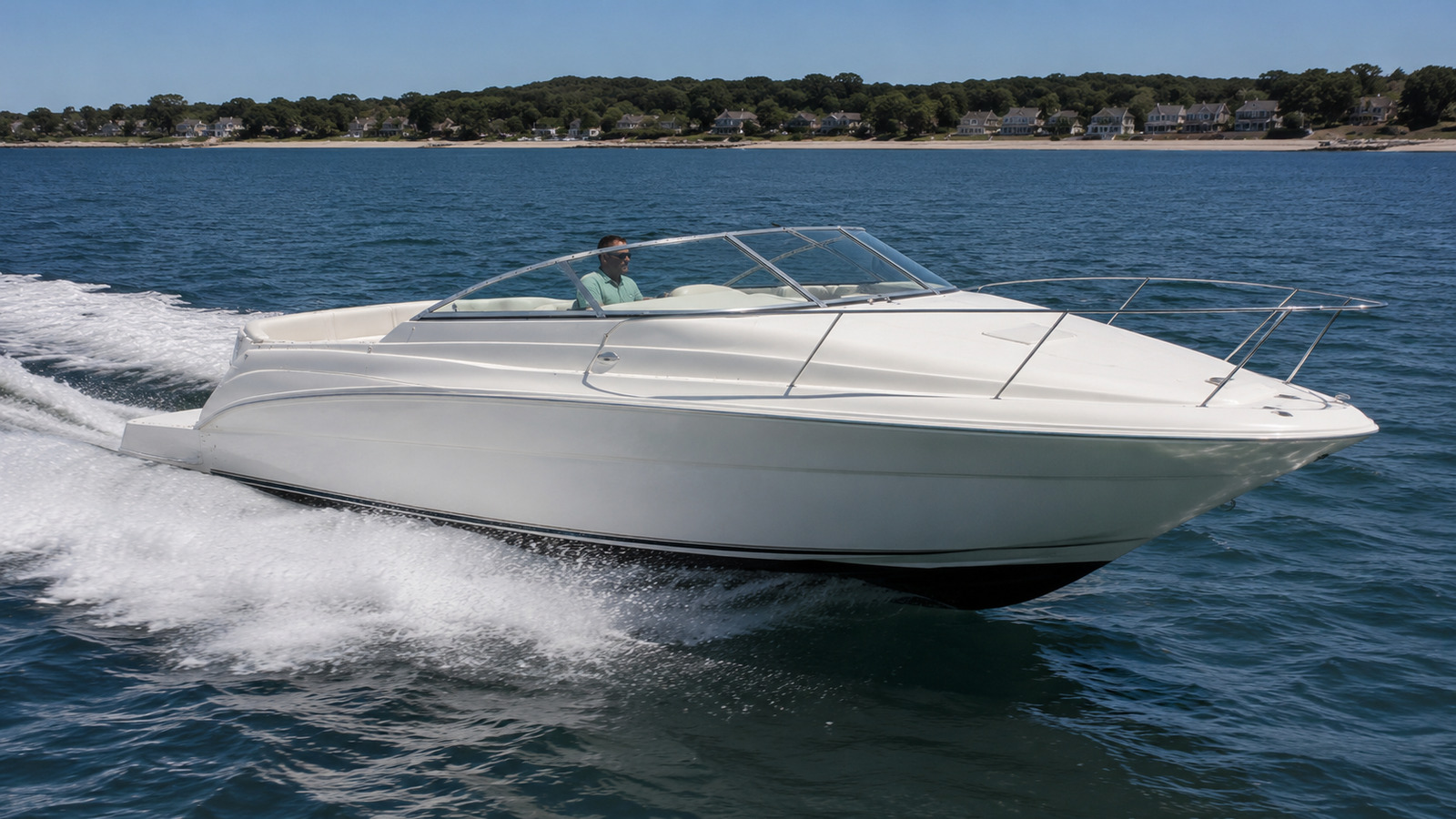
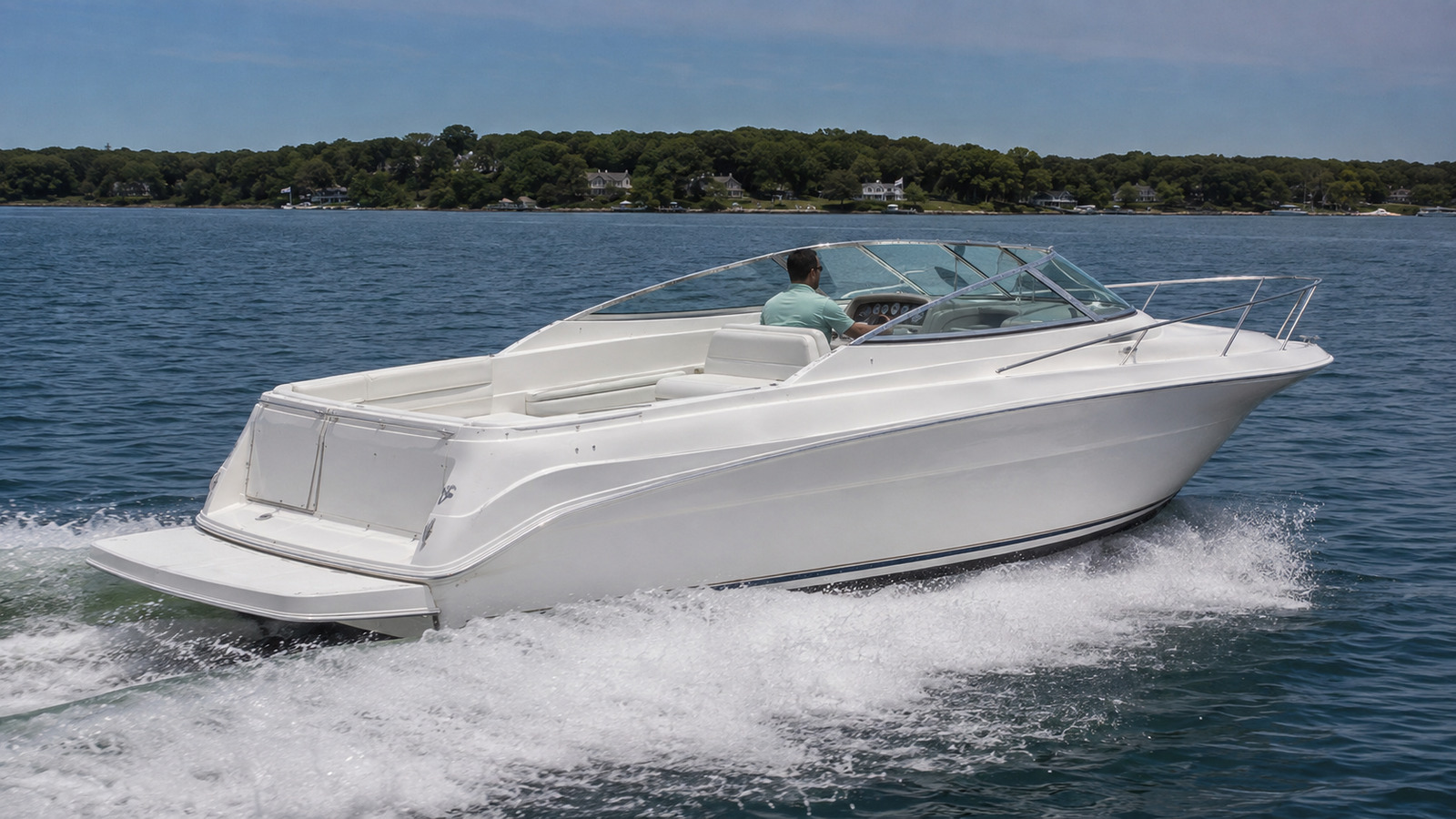
The Weekender architecture gives the hull a specific job: compact overnight cruising with a cuddy or cabin, social cockpit and simpler scale than a full express cruiser. When a weekender cruiser is being surveyed, a structural review should be shaped by that use, because trailer contact, beaching, dock impacts, bridge loads or heavy cruising systems leave different evidence on different Sea Rays.
Check the hull, deck joint, transom and any previous repair areas with repair history and survey findings in view; it is especially relevant to a Weekender purchase. Look for repairs that do not match surrounding laminate, stress around hardware, moisture in lockers or bilges, and damage near chines, strakes or through-hulls; that belongs in the condition review for a Sea Ray Weekender.
For long-term Weekender ownership, model-year identification belongs in the hull section because Sea Ray can keep a familiar numeric name while changing dimensions or layout. For a Sea Ray Weekender buyer, anchor the specification check to the production year and the exact propulsion configuration before publishing dimensions or capacities.
When evaluating a Sea Ray Weekender, loaded behavior matters as much as the dry hull. For this weekender cruiser category, fuel, water, passengers, batteries and options change trim and ride. For owners shopping the Weekender family, test the 280 Weekender with a representative crew when possible, especially if the normal use includes overnight gear or a large passenger load.
The engine review begins by matching the installed engine or engines, drive system and control hardware before comparing it with another Sea Ray. The engine package should match the exact year and version before performance or value is compared; that belongs in the condition review for a Sea Ray Weekender.
For long-term Weekender ownership, the standard Weekender version should be judged on how directly it serves compact overnight cruising with a cuddy or cabin, social cockpit and simpler scale than a full express cruiser. For a Sea Ray Weekender buyer, equipment can change across years, so the exact boat matters more than assumptions carried over from another same-name Sea Ray.
When evaluating a Sea Ray Weekender, start every engine cold when practical, watch charging and cooling behavior, then test steering, shifts, trim and throttle response after the machinery is warm. For this weekender cruiser category, sterndrives need bellows, gimbal and lower-unit attention; inboards need running-gear inspection; outboards need transom, rigging and gearcase checks.
For owners shopping the Weekender family, service access is part of ownership cost on a weekender cruiser. Filters, batteries, impellers, belts, pumps and electrical panels should be reachable without unreasonable disassembly; the Weekender ownership plan should account for it. Difficult access turns ordinary maintenance into recurring labor; it belongs in a sound Weekender family comparison.
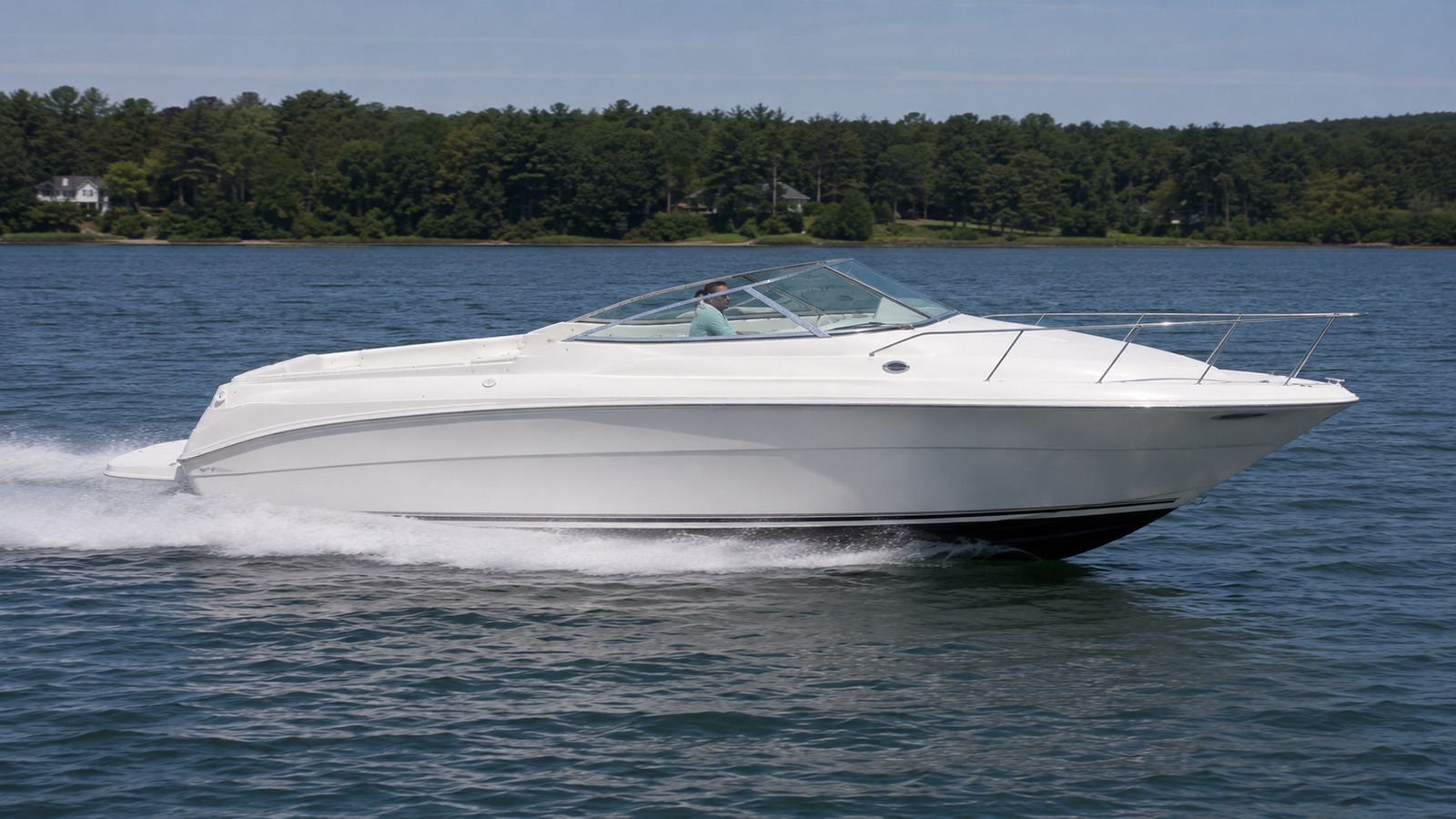
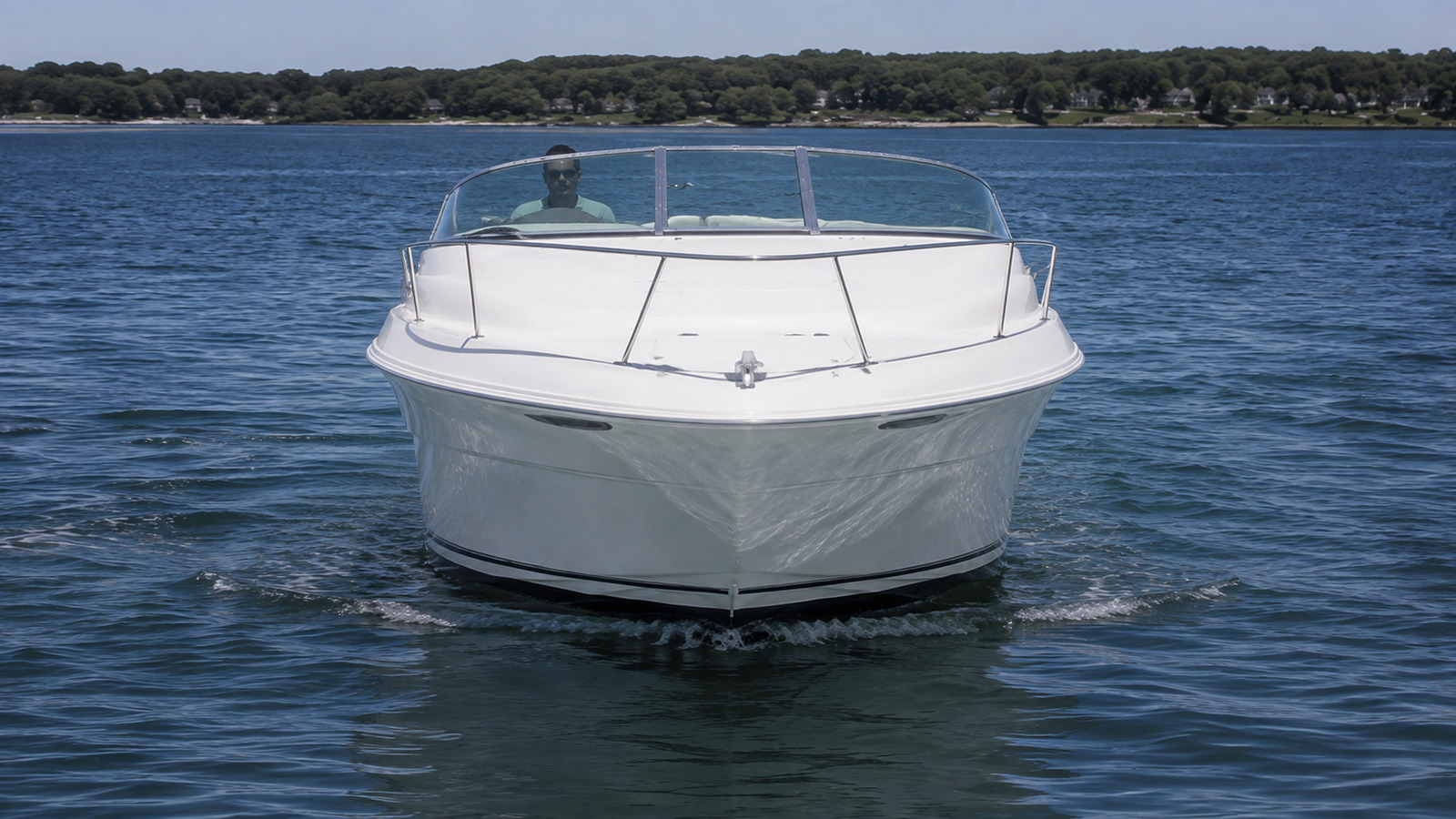
For a model-year-correct fuel discussion, confirm the tank capacity and engine package so the return leg is not dependent on perfect conditions. From a Sea Ray Weekender buyer’s perspective, do not use a tank number from another production year simply because the model name matches.
As part of a weekender cruiser buying decision, range should come from the actual engine package at a repeatable cruise. Within a Sea Ray Weekender ownership plan, bottom condition, propeller health, sea state, load and speed can change consumption enough that another owner’s best case is not a safe trip plan.
Fuel is also weight. In a Sea Ray Weekender comparison, add full or partial tank load to freshwater, batteries, gear and passengers when thinking about trailer capacity, planing attitude, draft and marina handling. When a weekender cruiser is being surveyed, on large cruisers, generator use can also affect the daily fuel picture.
Put the hull through acceleration, turns and wake crossings before calling the setup comfortable. When the Weekender mission is the priority, the purpose is to learn how the boat behaves through the speeds the owner will use, not to collect one top-speed number.
On a Sea Ray Weekender purchase, weekenders should be evaluated around actual overnight expectations. During a Sea Ray Weekender inspection, a compact cuddy can be excellent for changing, napping or one night aboard without being a substitute for the volume of a larger Express Cruiser. On a weekender cruiser purchase, this is especially relevant on the 280 Weekender, which sits at the upper-middle of the series and carries the ownership expectations of an upper-midsize recreational scale boat.
Record rpm, speed, temperature and fuel-flow information when available; that belongs in a Sea Ray Weekender review. Pay attention to vibration, steering effort, bow rise and whether the boat needs unusual tab or trim input to run level; a weekender cruiser buyer should treat that as part of due diligence. From a Sea Ray Weekender buyer’s perspective, a healthy setup should be repeatable.
Finish at idle. As part of a weekender cruiser buying decision, back toward a dock, hold position in crosswind and shift repeatedly. Within a Sea Ray Weekender ownership plan, a boat that is easy at cruise can still be tiring in a slip, while a small day boat can be sensitive to wind and passenger movement.
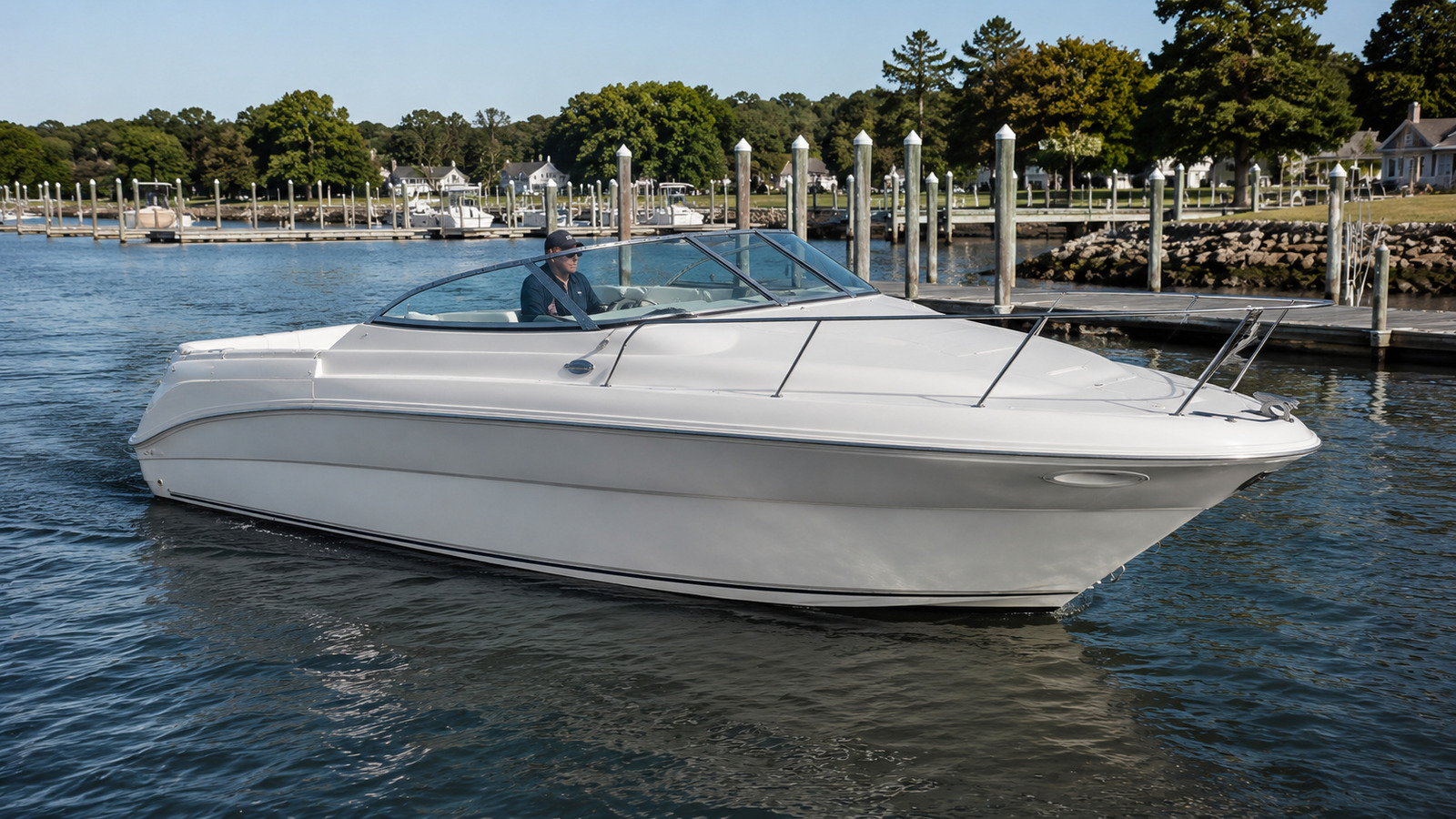
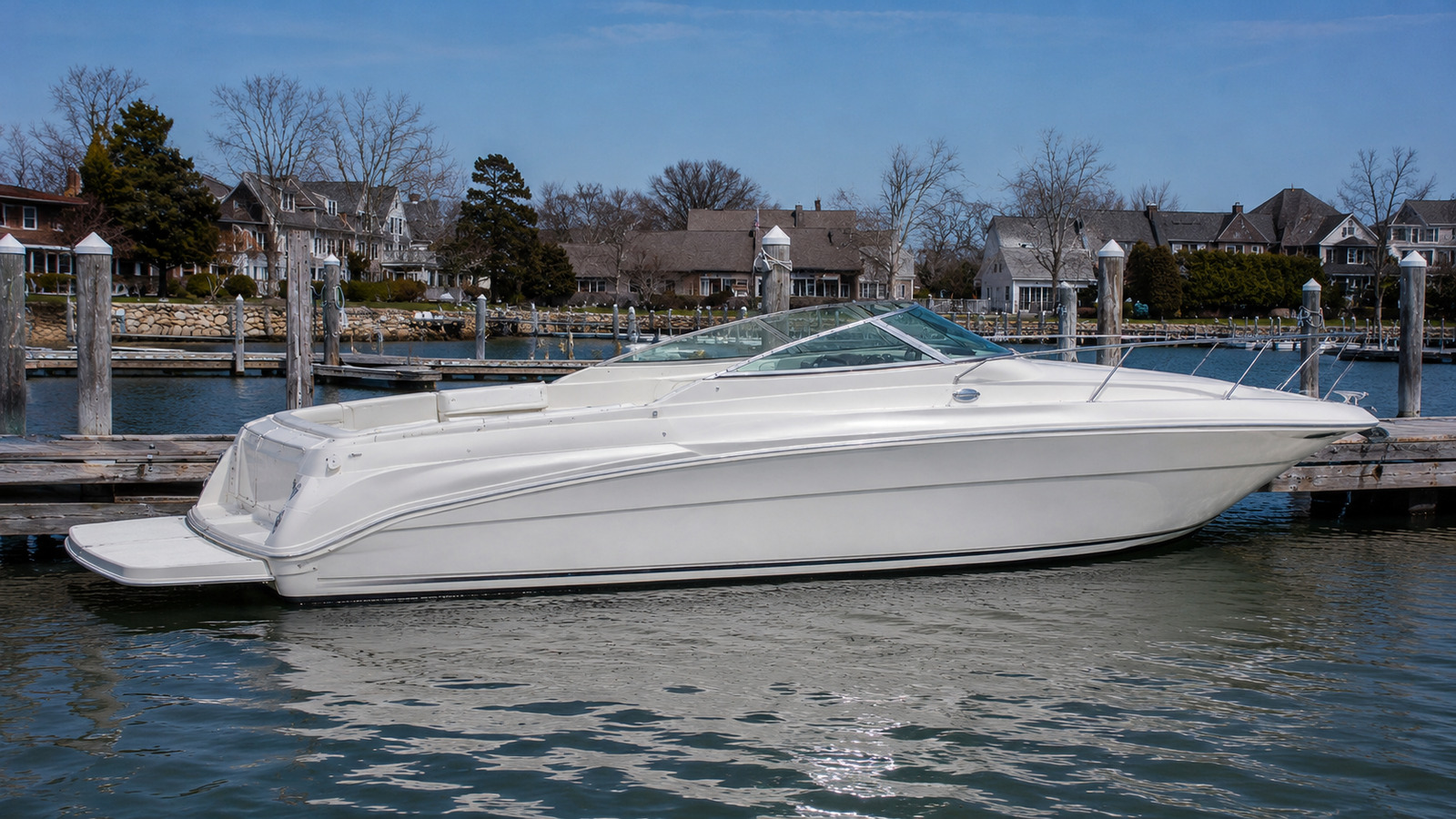
Organize the passenger spaces with coolers, PFDs, bags and lines already aboard while checking drains, hinges and hatch clearance. When the Weekender mission is the priority, the Weekender layout should still support its mission after bags, lines, fenders, coolers or activity gear come aboard.
On a Sea Ray Weekender purchase, older Weekenders often live on trailers or in seasonal storage, so fuel age, bellows, batteries, canvas and moisture inside the cuddy can matter as much as engine hours.
During a Sea Ray Weekender inspection, open lockers, hatches, tables and mechanical access with adjacent seating in normal position. On a weekender cruiser purchase, frequently used gear should remain reachable. Check drains, hinges, gas struts, latches and any carpeted or upholstered storage for trapped water; that belongs in a Sea Ray Weekender review.
Test boarding from the water where relevant; a weekender cruiser buyer should treat that as part of due diligence. From a Sea Ray Weekender buyer’s perspective, on cruisers and yachts, also move from dock to cockpit, salon, cabin or bridge carrying bags. As part of a weekender cruiser buying decision, the best layout is the one that remains intuitive when the boat is busy.
Use these eight 280 Weekender features as a hands-on checklist and verify each item on the exact boat being purchased.
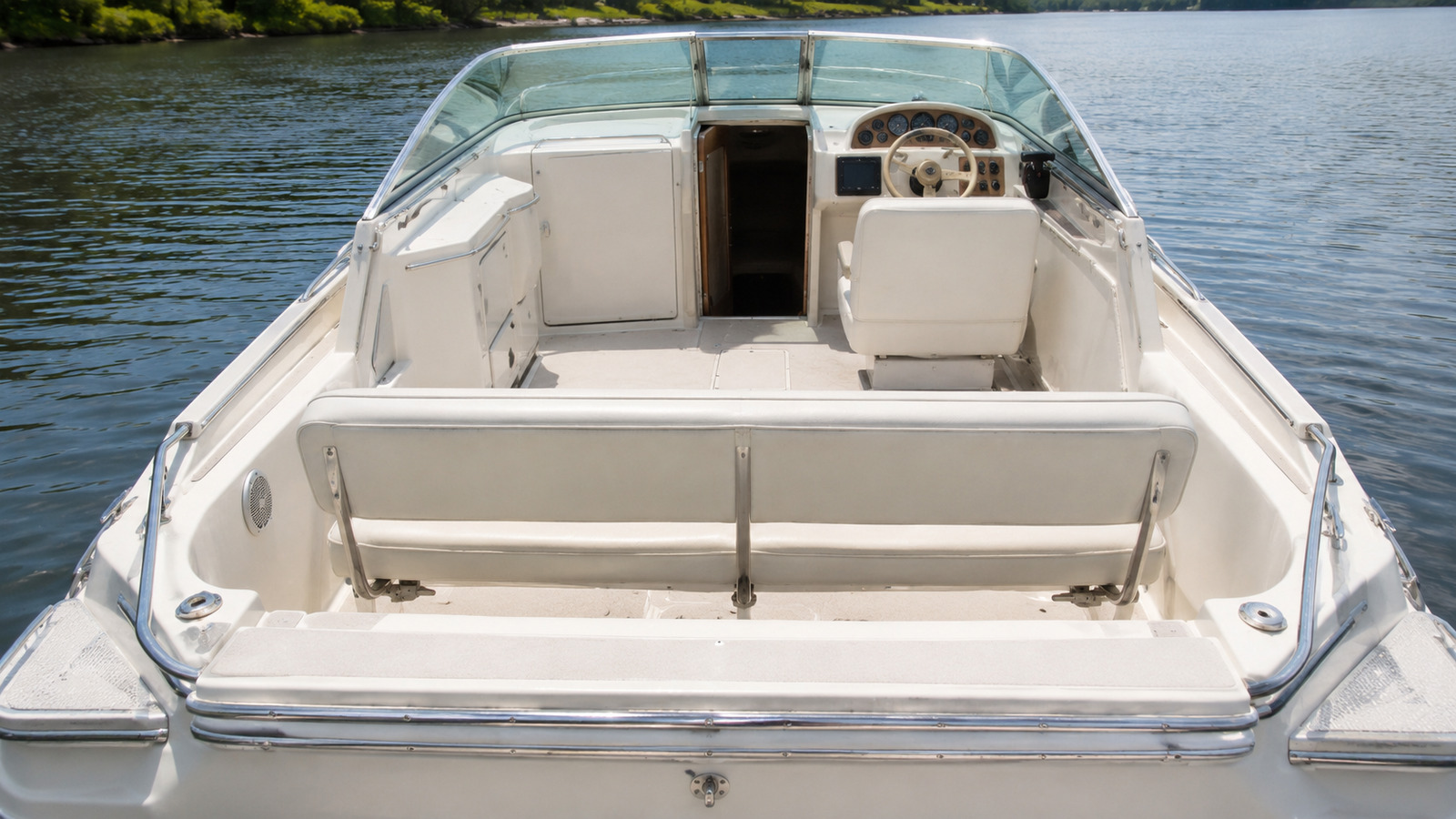
The cockpit seating deserves its own check on the 280 Weekender. Use the space with the normal crew aboard, then inspect bases, tables, storage access and upholstery for movement, water damage or UV wear; that belongs in a Sea Ray Weekender review.
On the 280 Weekender, the helm should earn its place through function; a weekender cruiser buyer should treat that as part of due diligence. From a Sea Ray Weekender buyer's perspective, sit at the controls, confirm sightlines and run steering, throttles, displays and electronics after the boat has reached operating temperature.
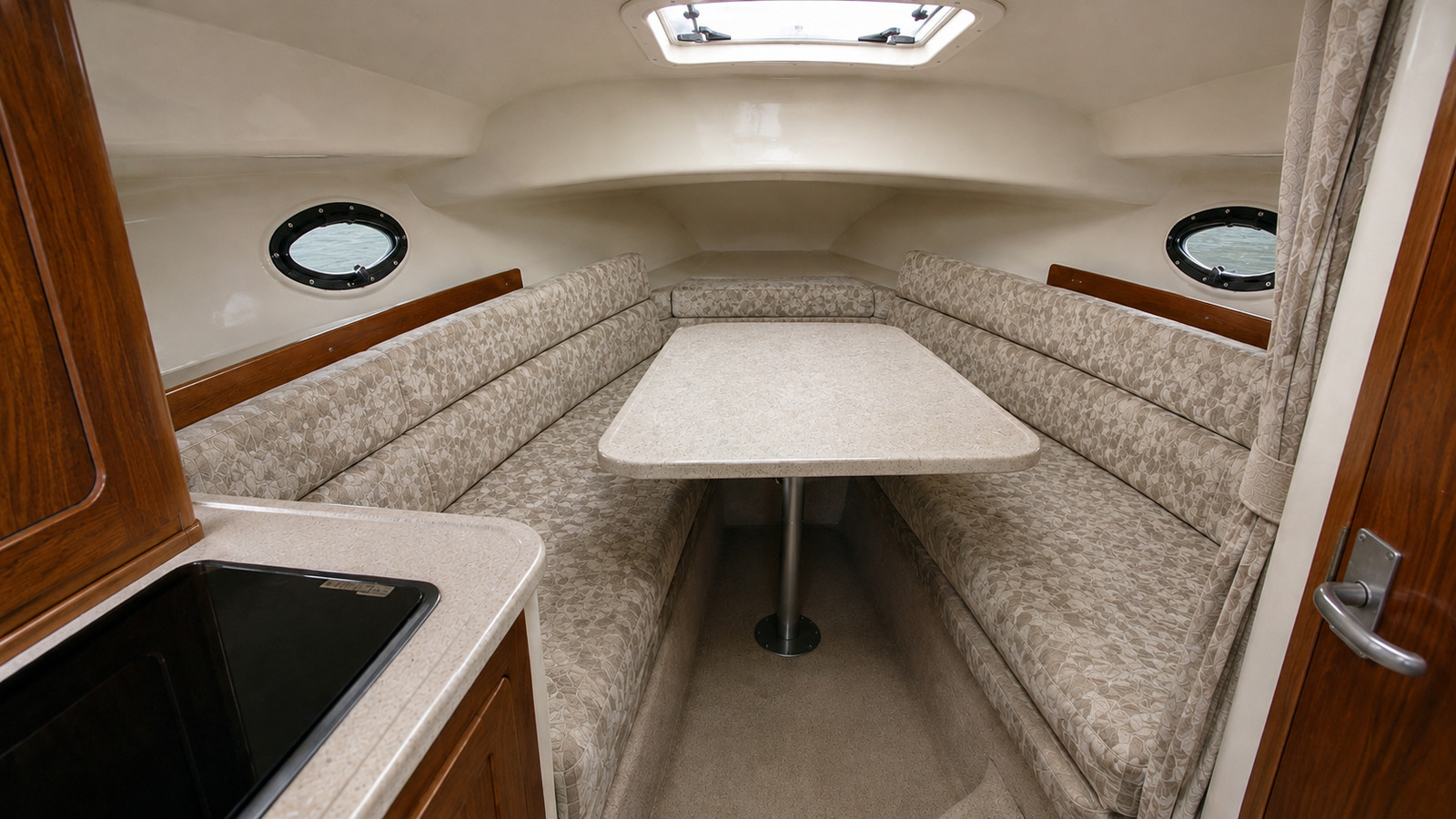
Evaluate the cuddy or cabin berth with the Weekender mission in mind. Within a Sea Ray Weekender ownership plan, check berth access, ventilation, portlights, hatch seals and headliner for moisture. In a Sea Ray Weekender comparison, sleep space has value only when it is comfortable and dry.
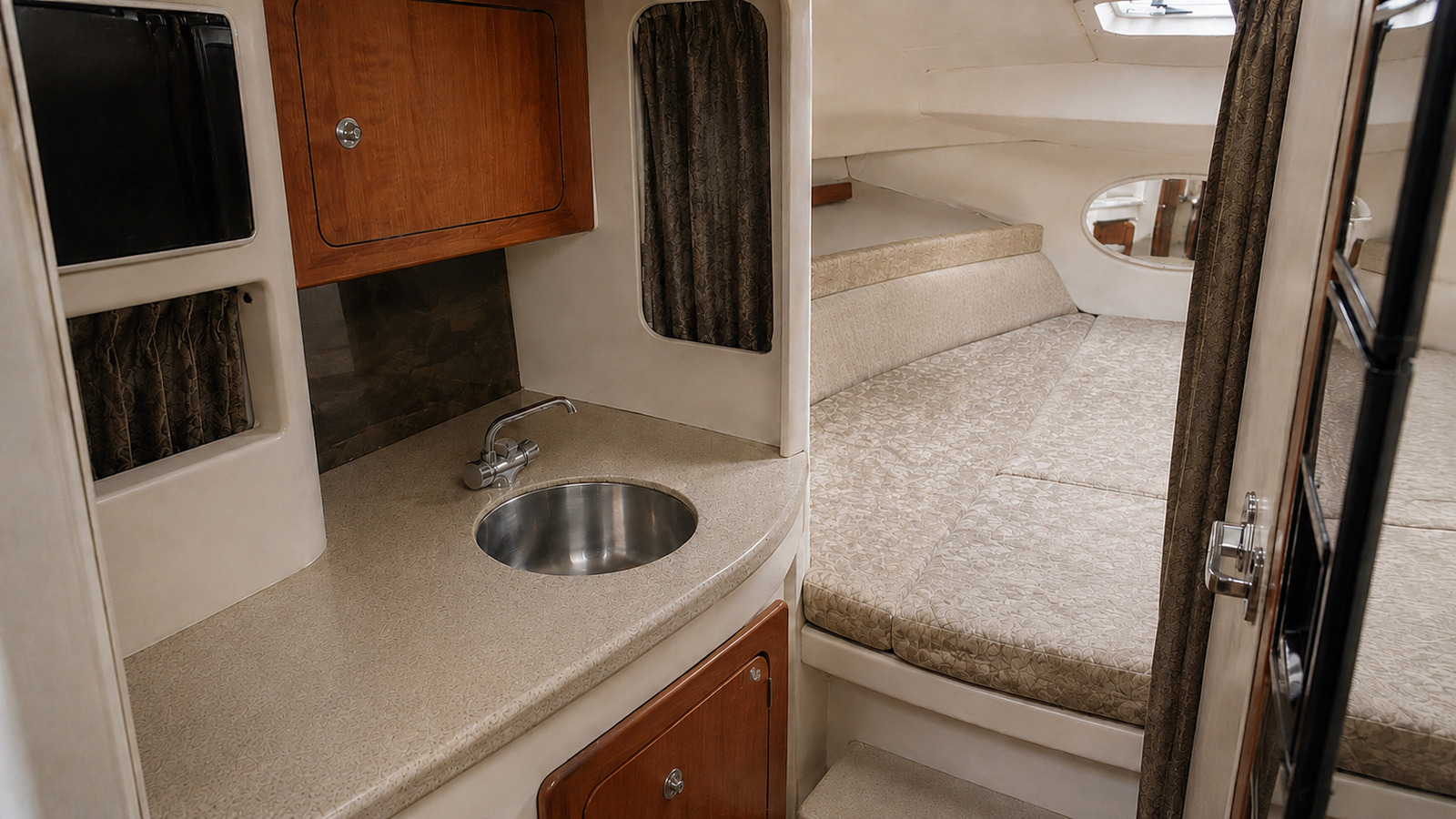
Treat the compact galley or refreshment area as part of the ownership package on this upper-midsize recreational scale boat. When a weekender cruiser is being surveyed, operate refrigeration, water and cooking equipment if fitted, and inspect cabinet latches plus the electrical load behind the convenience.
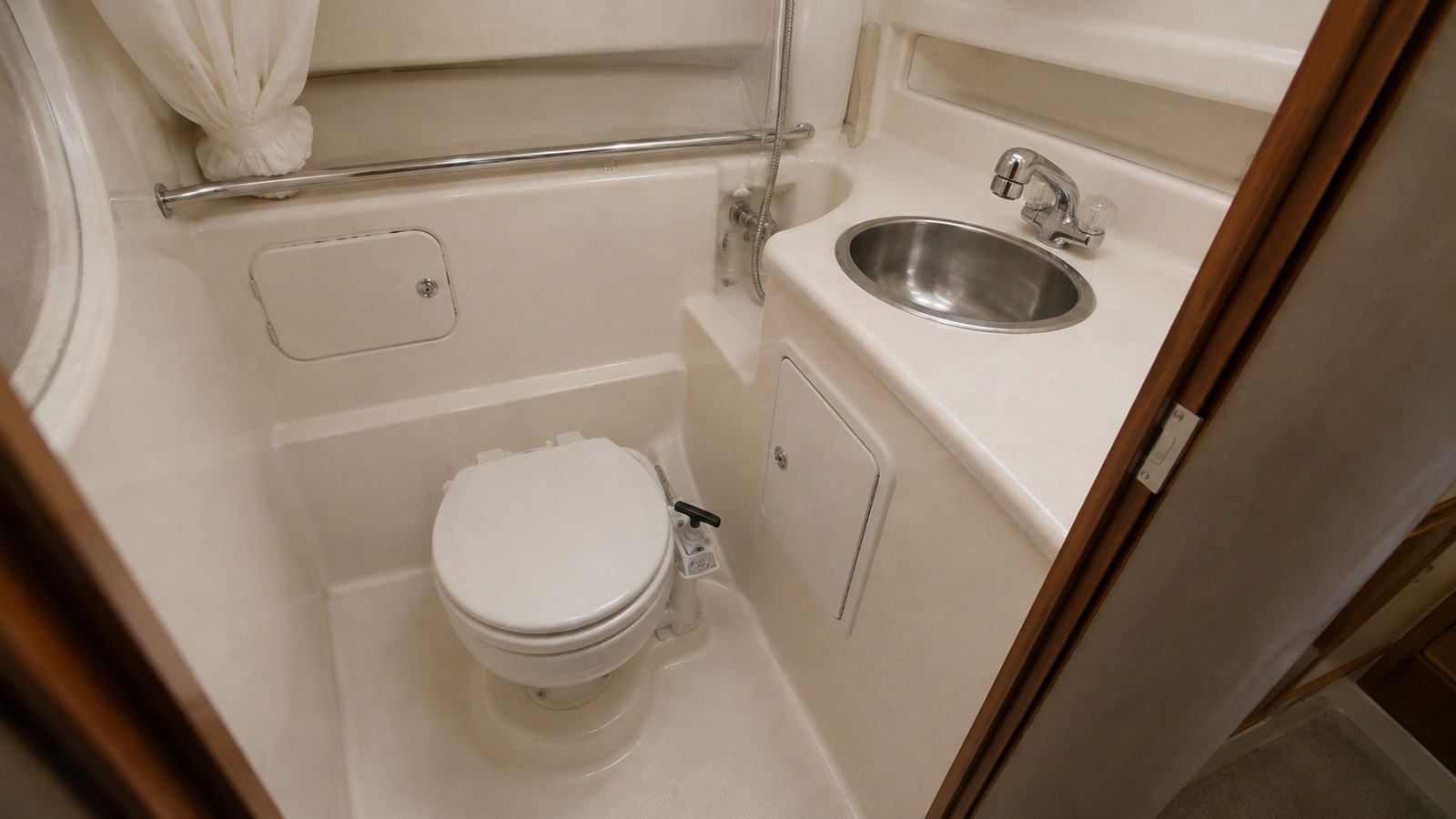
A hands-on review of the head arrangement is more useful than assuming it matches another model year; it is especially relevant to a Weekender purchase. Run the toilet, sink, pumps and ventilation, then inspect hoses, valves and the holding system for odor or leakage; that belongs in the condition review for a Sea Ray Weekender.
The swim platform can affect both day use and repair cost on the 280 Weekender. For a Sea Ray Weekender buyer, board from the water, inspect ladders and attachment points, and check how the propulsion arrangement affects usable stern space.
Use the 280 Weekender's storage as a working system, not a brochure line. For this weekender cruiser category, open every compartment with adjacent seating in normal position. For owners shopping the Weekender family, damp carpet, trapped water, odors or corroded hinges often reveal deferred care.
The engine compartment deserves its own check on the 280 Weekender; the Weekender ownership plan should account for it. Confirm access, ventilation, mounts, steering, controls and service history; it belongs in a sound Weekender family comparison. When the Weekender mission is the priority, propulsion condition can outweigh cosmetic condition on a pre-owned boat.
Cycle the installed electronics, pumps and digital controls under real load and make sure service access is realistic for future maintenance. As part of a weekender cruiser buying decision, weak voltage can create misleading display, pump and control faults, so batteries and charging should be checked before an accessory is blamed.
Within a Sea Ray Weekender ownership plan, for the 280 Weekender, the highest-priority systems follow the Weekender mission: sterndrive service, canvas, cabin ventilation, freshwater and portable or fixed head systems by year, trailer and upholstery. In a Sea Ray Weekender comparison, older electronics or pumps can be replaced; poor wiring, hidden leaks or inaccessible installations deserve more caution.
When a weekender cruiser is being surveyed, after the sea trial, reopen bilges and machinery spaces. New water, fuel odor, coolant, hydraulic fluid, hot connections or loose components should be explained before the boat is treated as ready; it is especially relevant to a Weekender purchase.
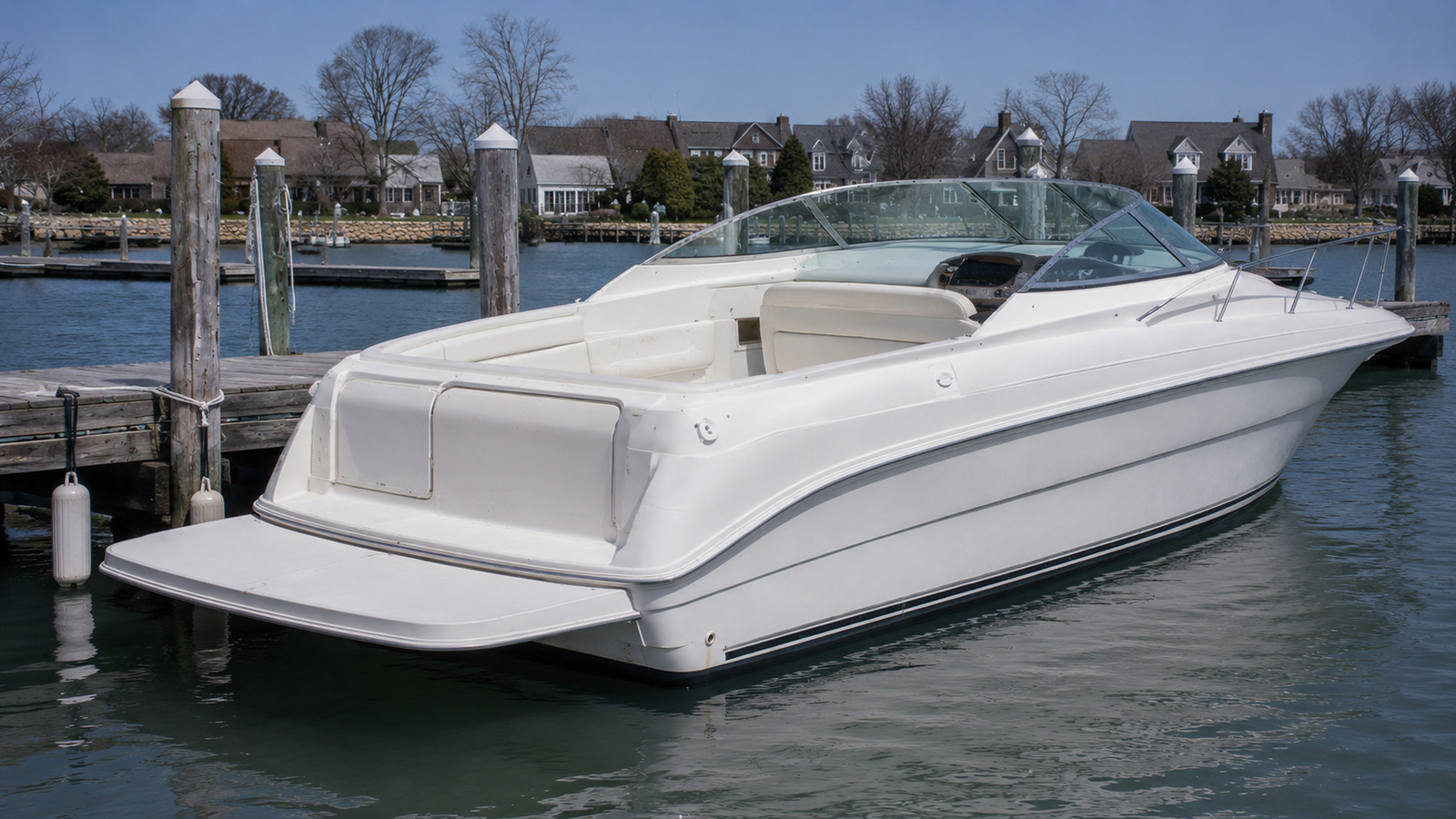
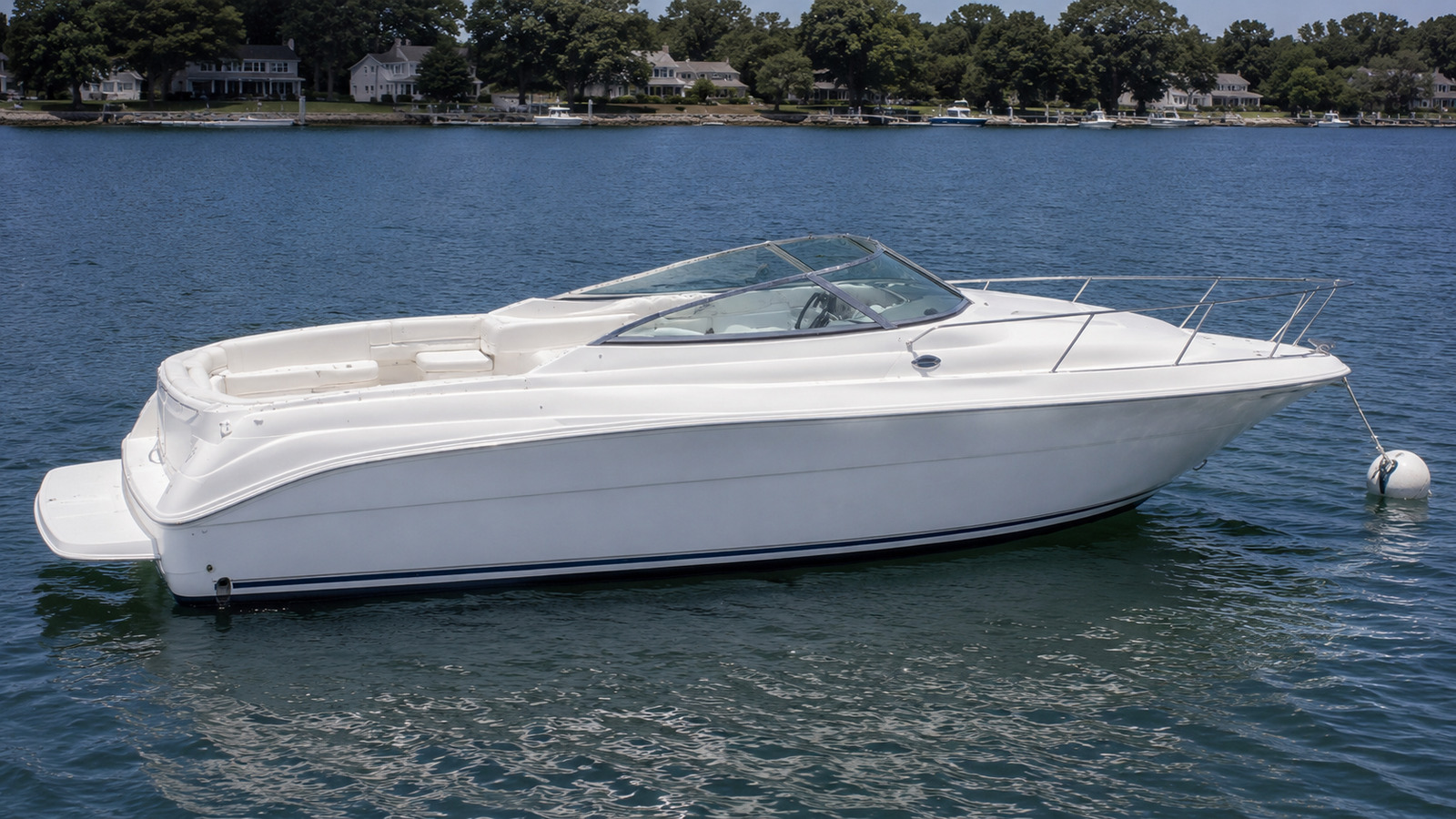
Before choosing a marina or trailer plan, use the real transport or slip dimensions of the exact model year so the boat is easy to use after purchase. A brochure dry-weight number is not the same as loaded transport or lift weight; it belongs in a sound Weekender family comparison.
When the Weekender mission is the priority, the 280 Weekender is upper-midsize recreational scale. On a Sea Ray Weekender purchase, engines, fuel, water, batteries, generator, tower or bridge structure, canvas and gear can change what the boat needs from a trailer, lift, slip or service yard.
Seasonal planning should include batteries, fuel, freshwater and waste winterization where climate requires it, propulsion service, ventilation and enclosure care. Storm planning and haul-out access belong in the storage decision for marina-kept boats.
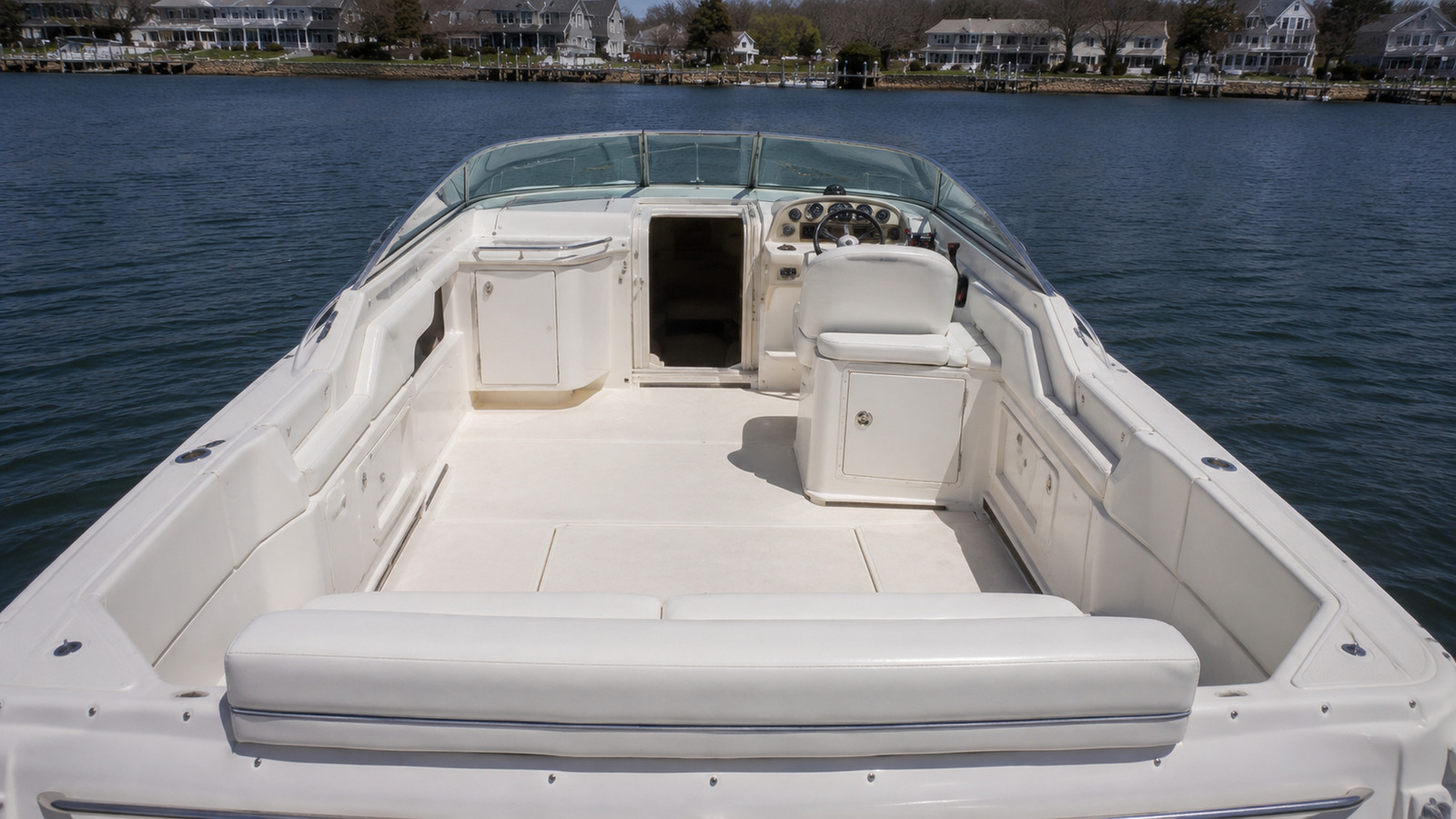
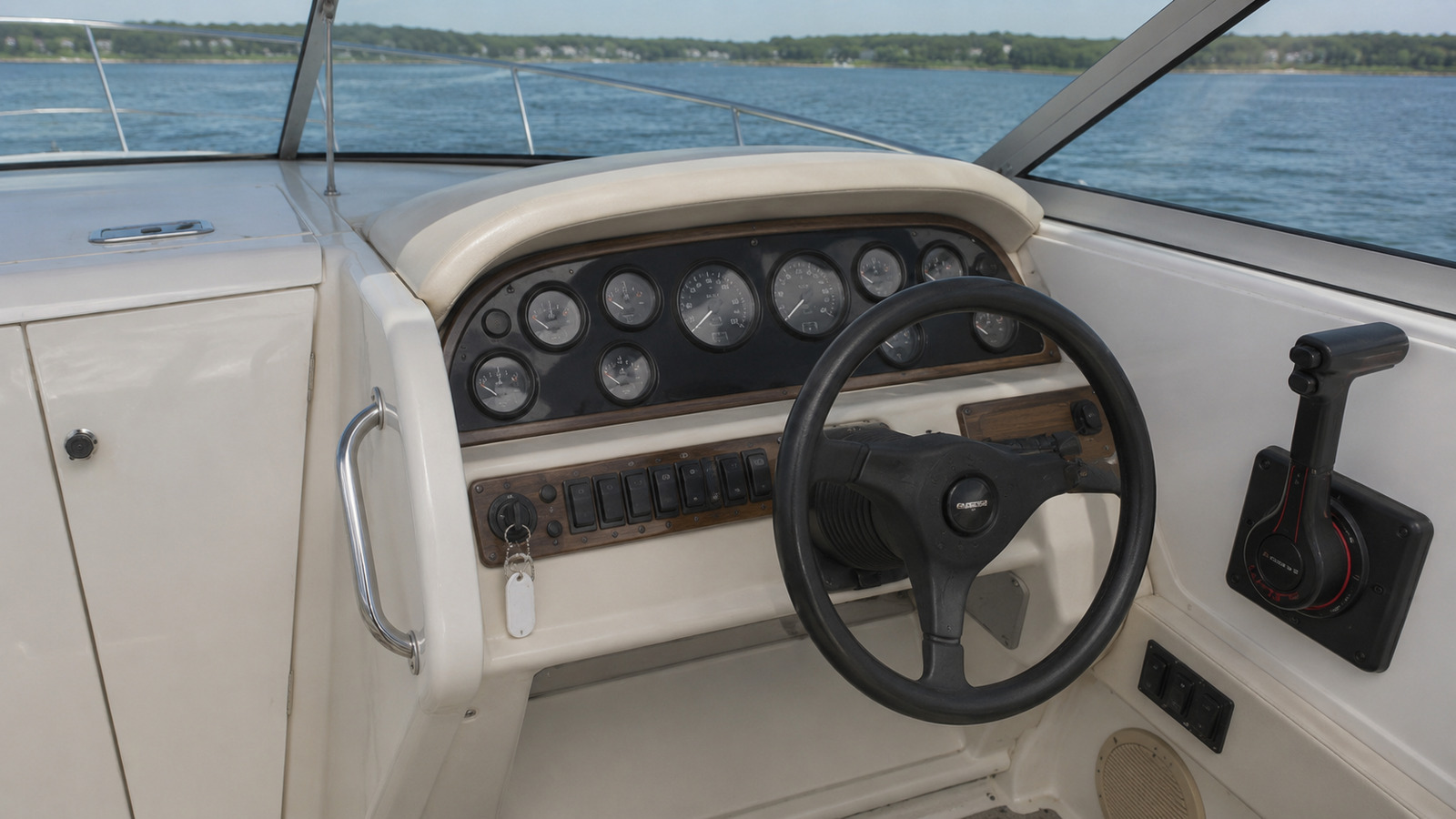
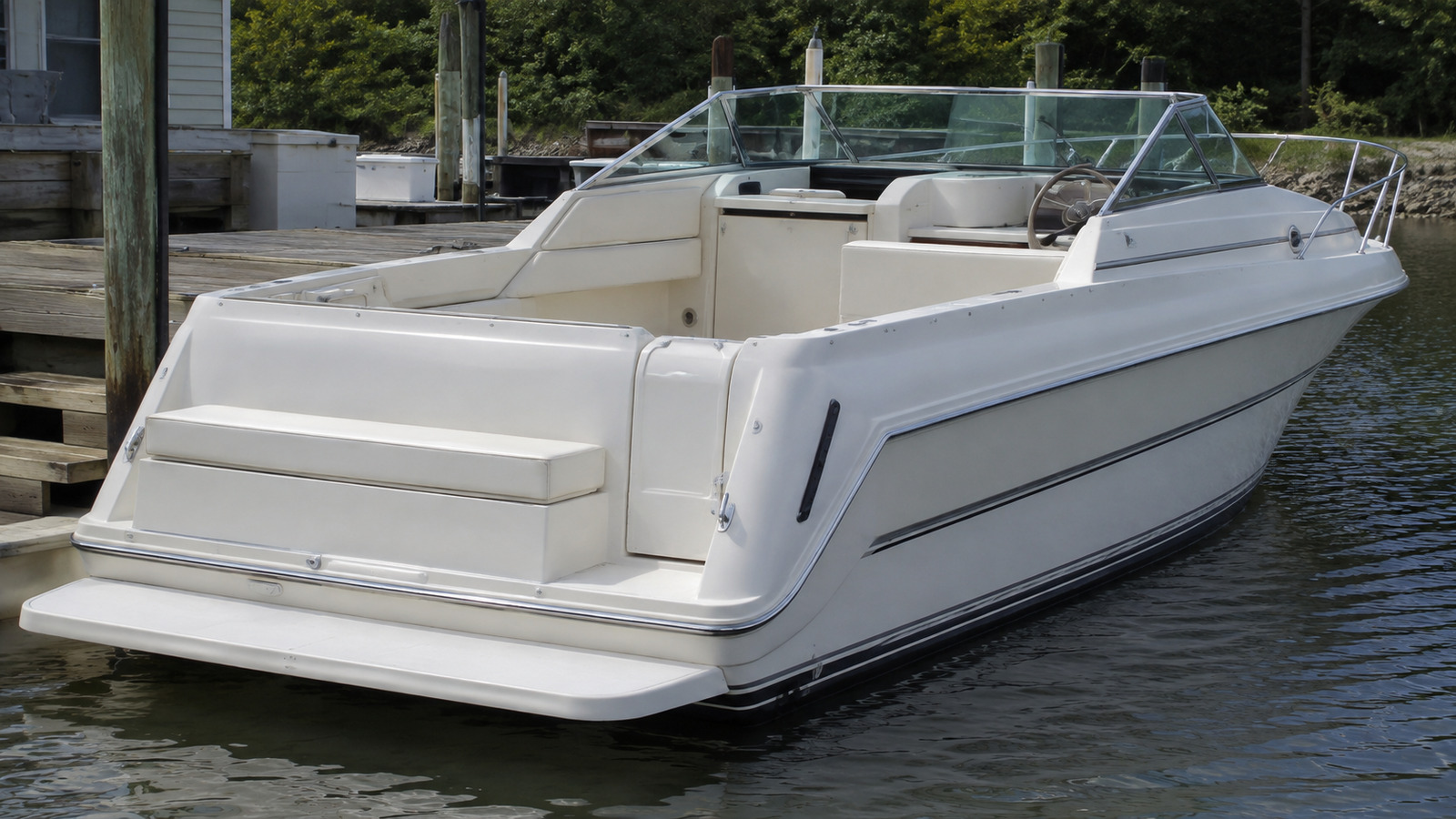
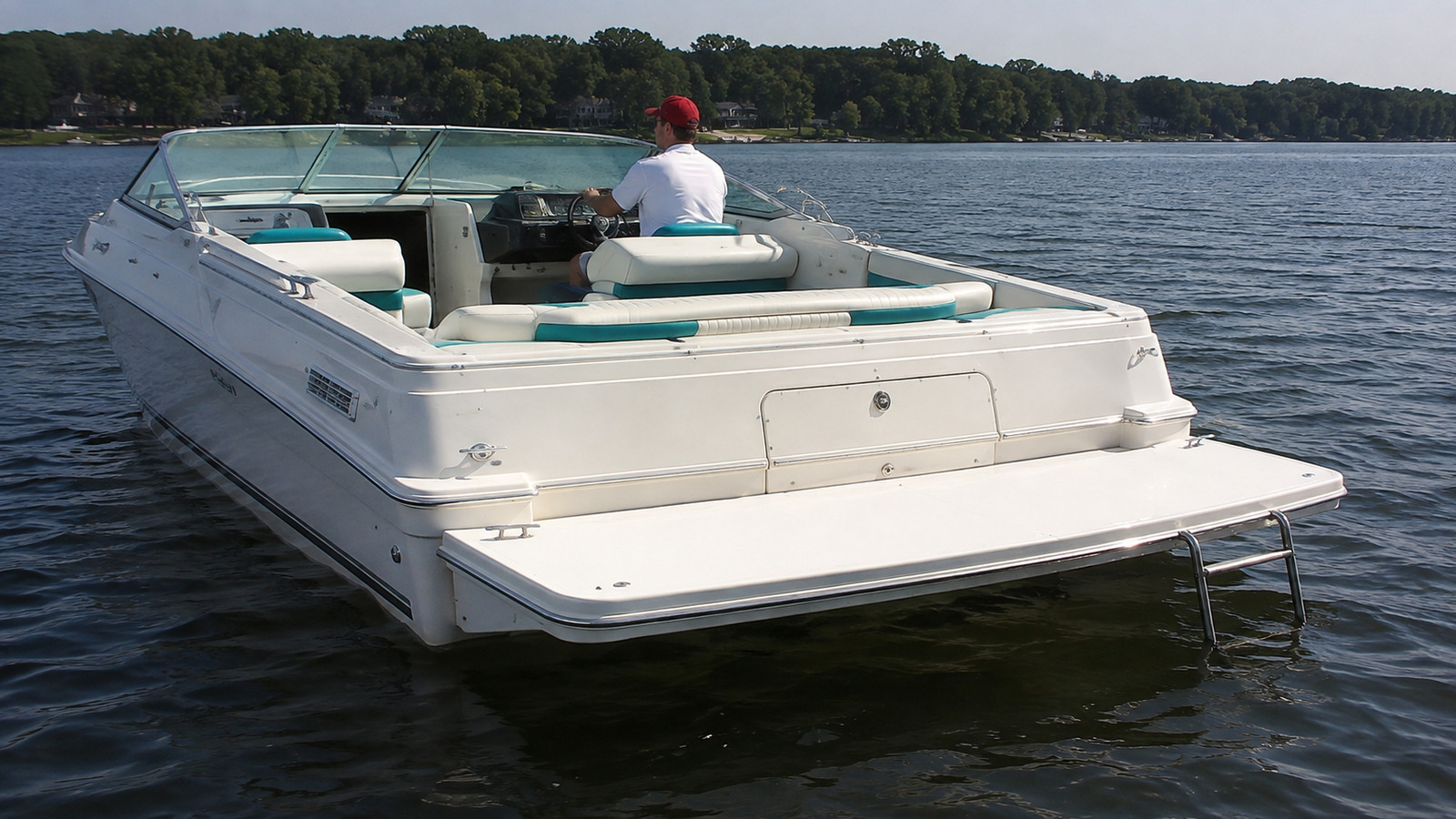
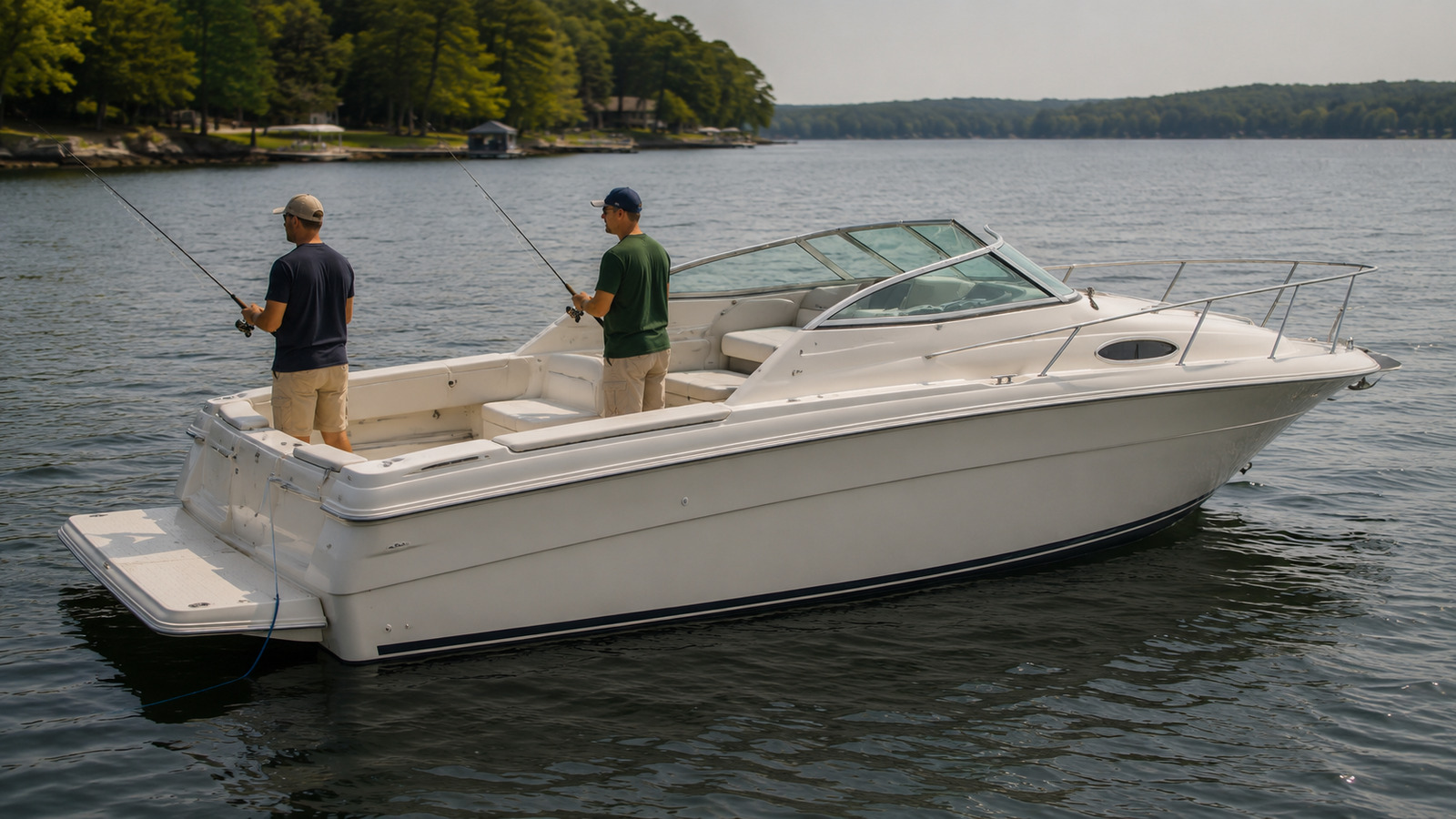
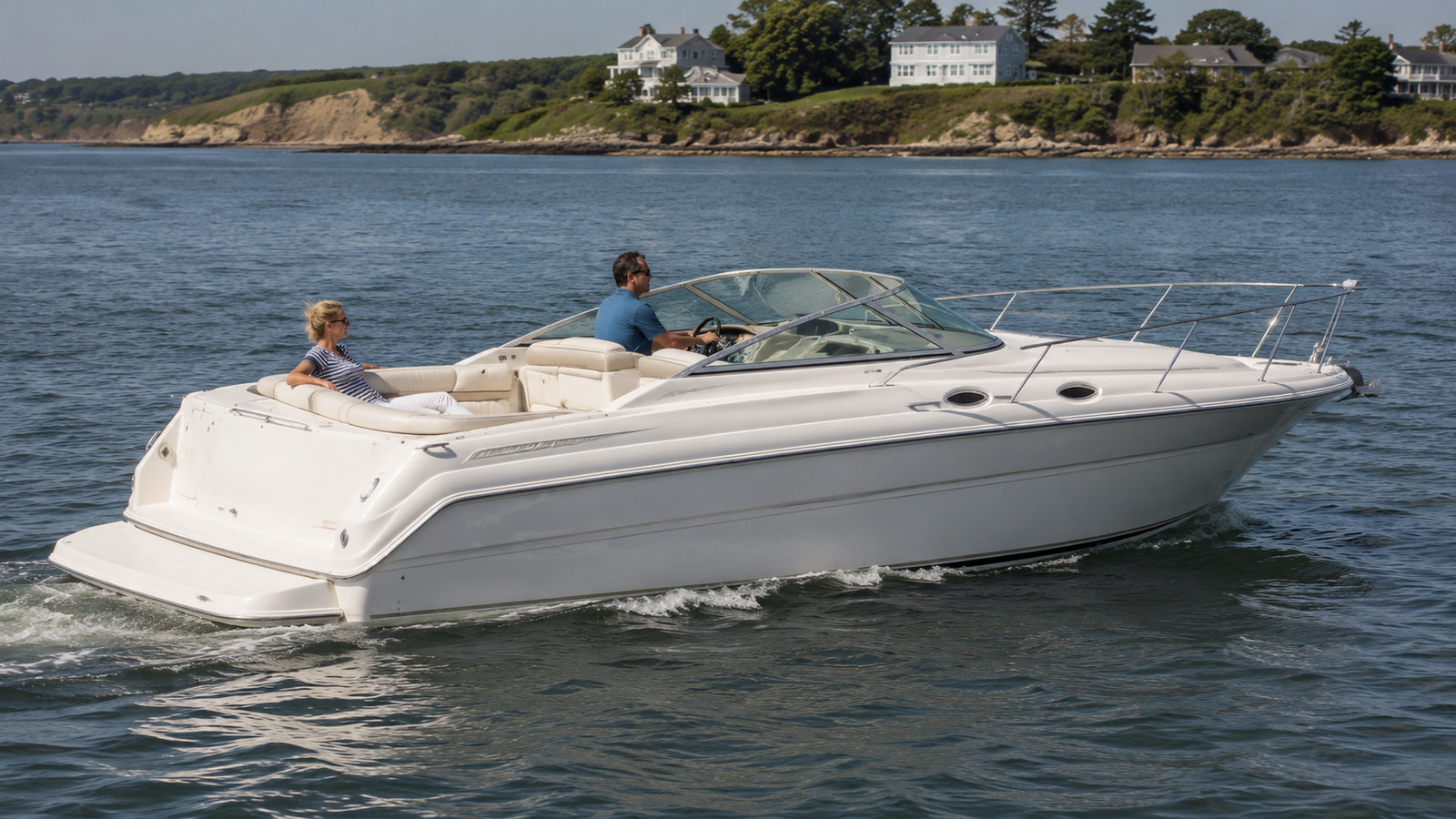
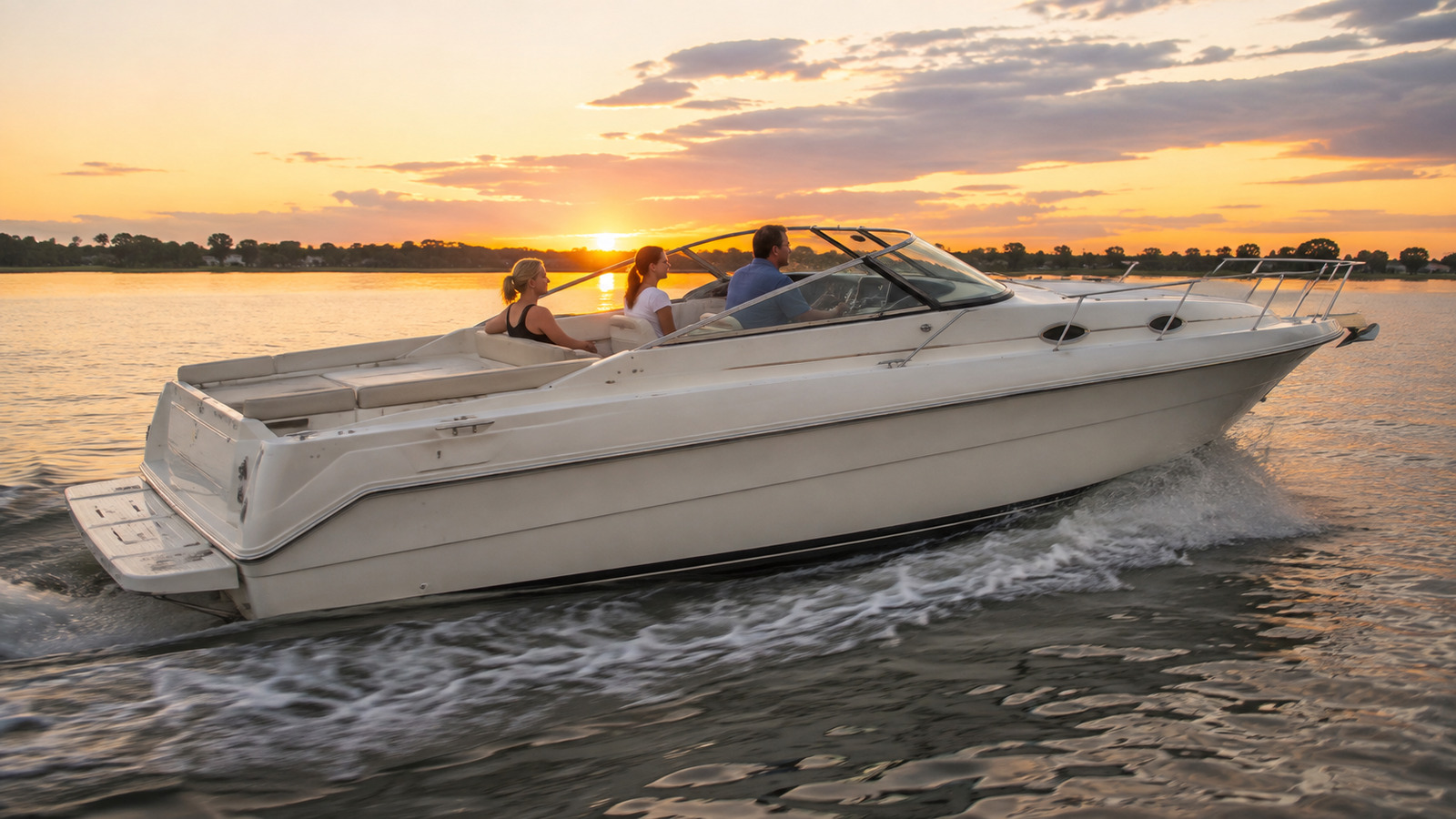
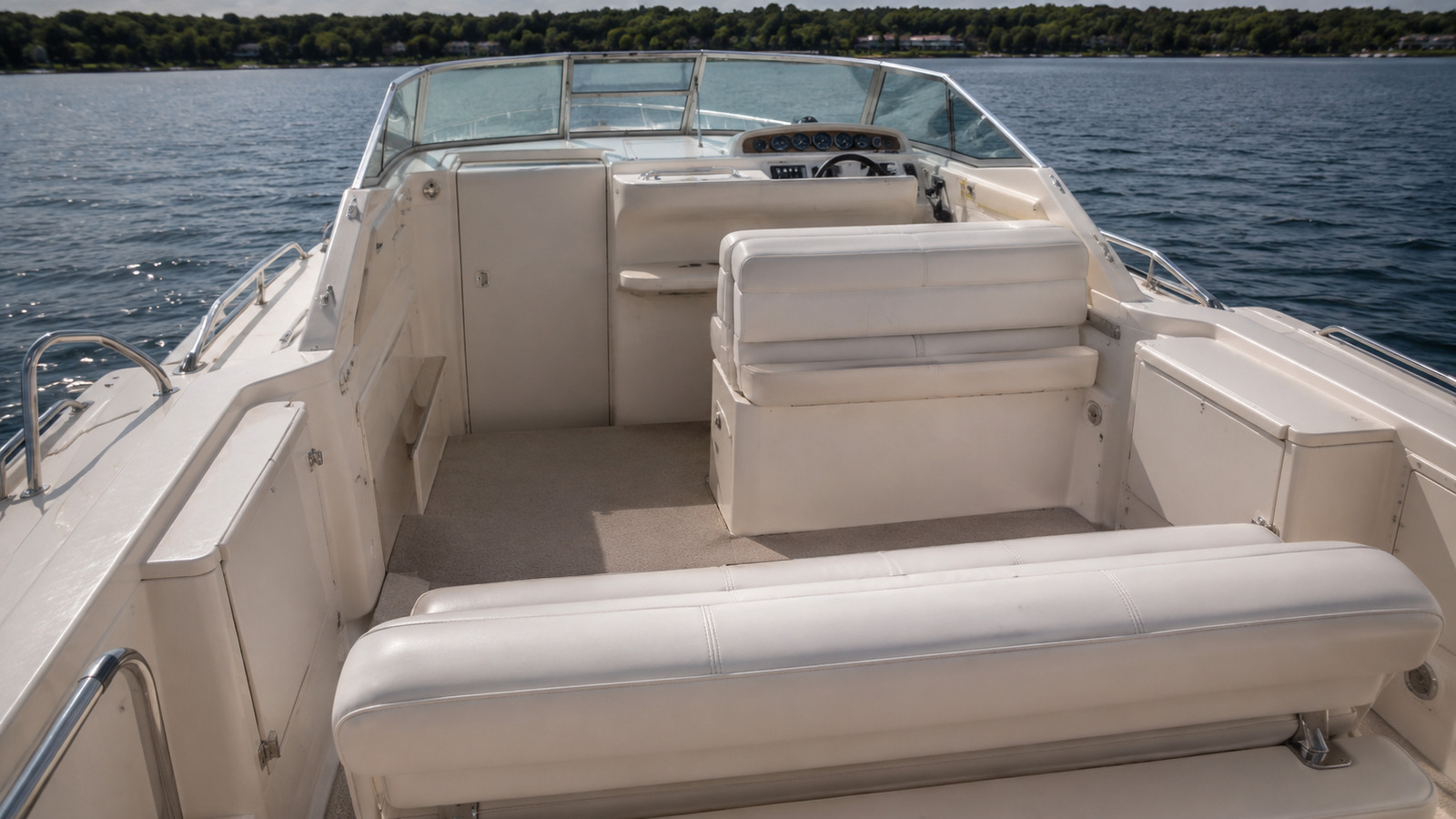
Use the gallery to show the exact 280 Weekender configuration rather than a similar Sea Ray from another year.
Buyers should be able to see hull profile, propulsion, helm, primary social space, cabin or bow layout, stern access
and model-year identification details.
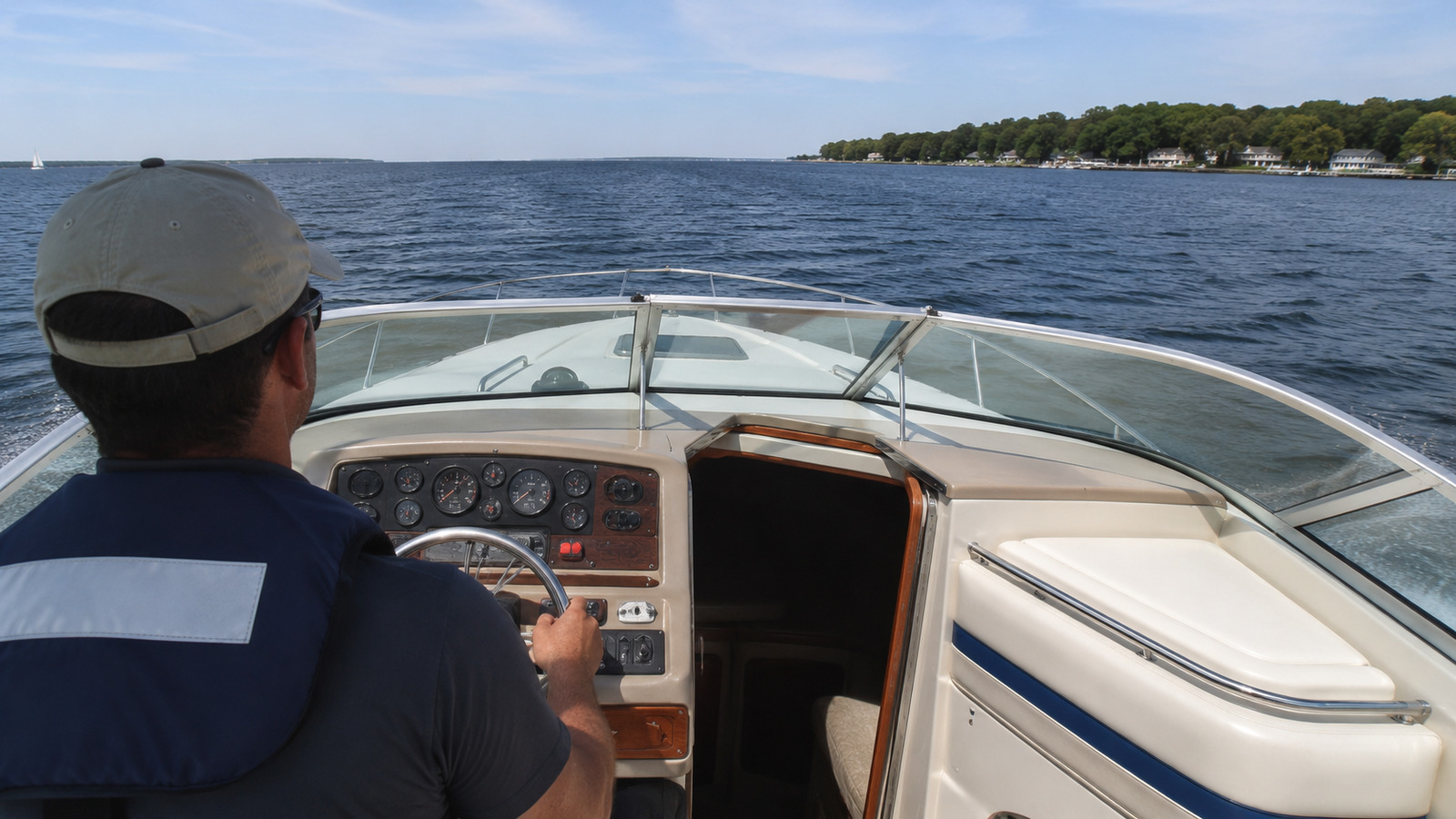
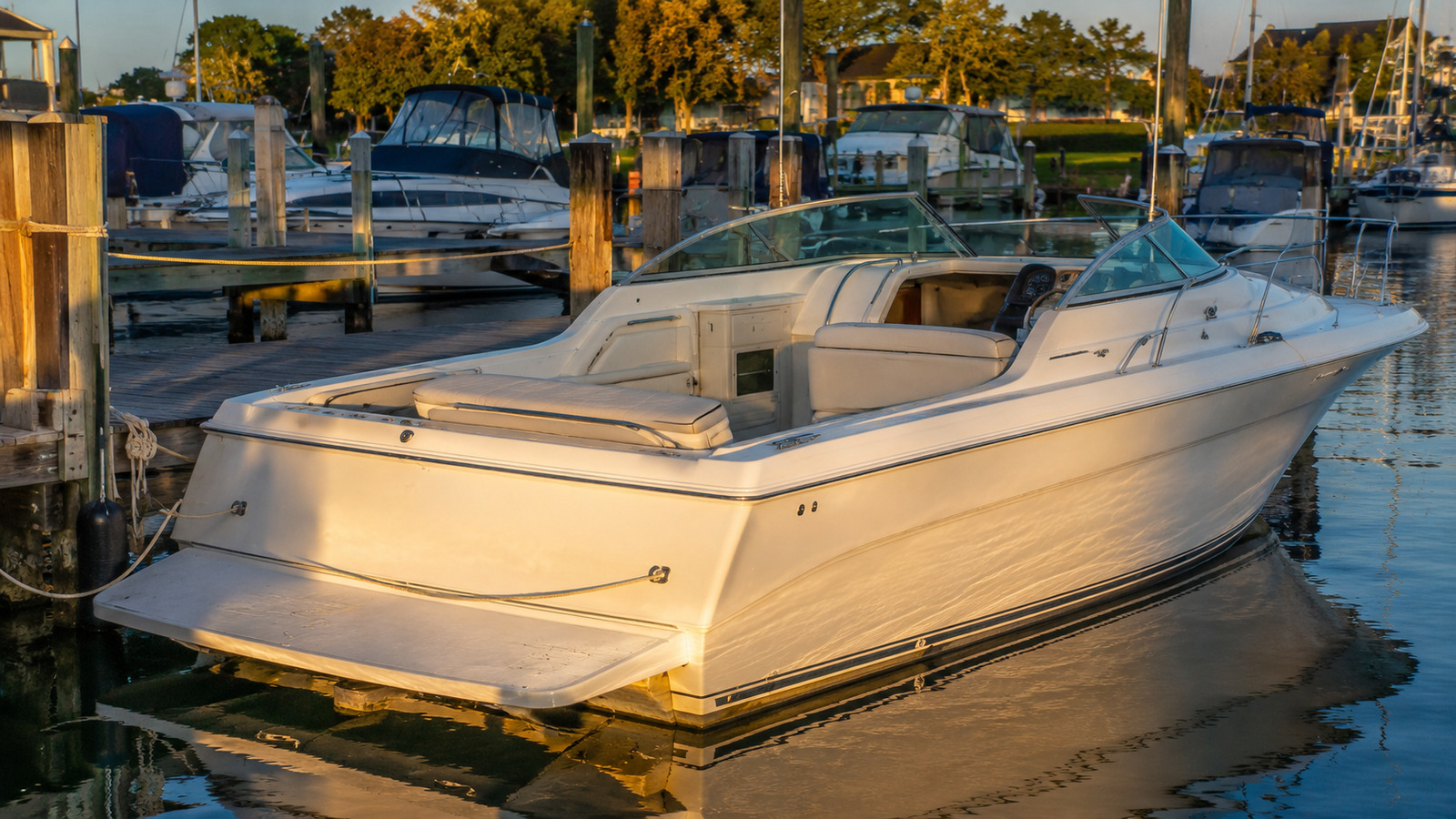
Value the boat around the repairs required for readiness and the upgrades that are optional with first-season correction cost included. Use the live market range only after year, propulsion and condition are normalized.
Hours matter, but maintenance history can matter more. A lower-hour boat that sat with old fuel, weak batteries or water intrusion may need more correction than a regularly used example with documented care.
Separate readiness repairs from optional upgrades. Drive service, unsafe wiring, failed pumps or leaking systems belong in the purchase-cost calculation. New audio, electronics or cosmetic changes are preferences and should not hide the mechanical budget.
Illustration only and not an offer of credit.
Use the live purchase range, then test down payment and term with the estimated monthly payment. Add annual storage, insurance, fuel, propulsion service, batteries, seasonal care and a repair reserve before calling the boat affordable.
Illustration only and not an offer of credit. Your actual rate and term depend on credit profile, vessel age, loan amount and ownership structure.
Compare the 280 Weekender with the 270 Weekender using boats from the same production era when possible. Hold condition and engine health as equal as you can, then decide whether the change in size improves the actual trip enough to justify different storage, fuel and service demands. Compare the 280 Weekender with the 300 Weekender using boats from the same production era when possible. Hold condition and engine health as equal as you can, then decide whether the change in size improves the actual trip enough to justify different storage, fuel and service demands.
The 280 Weekender should remain on the short list only when its advantage survives those comparisons. Does this model solve the normal trip better than the adjacent 300 Weekender, or is the buyer moving up mainly because a larger Sea Ray is available?
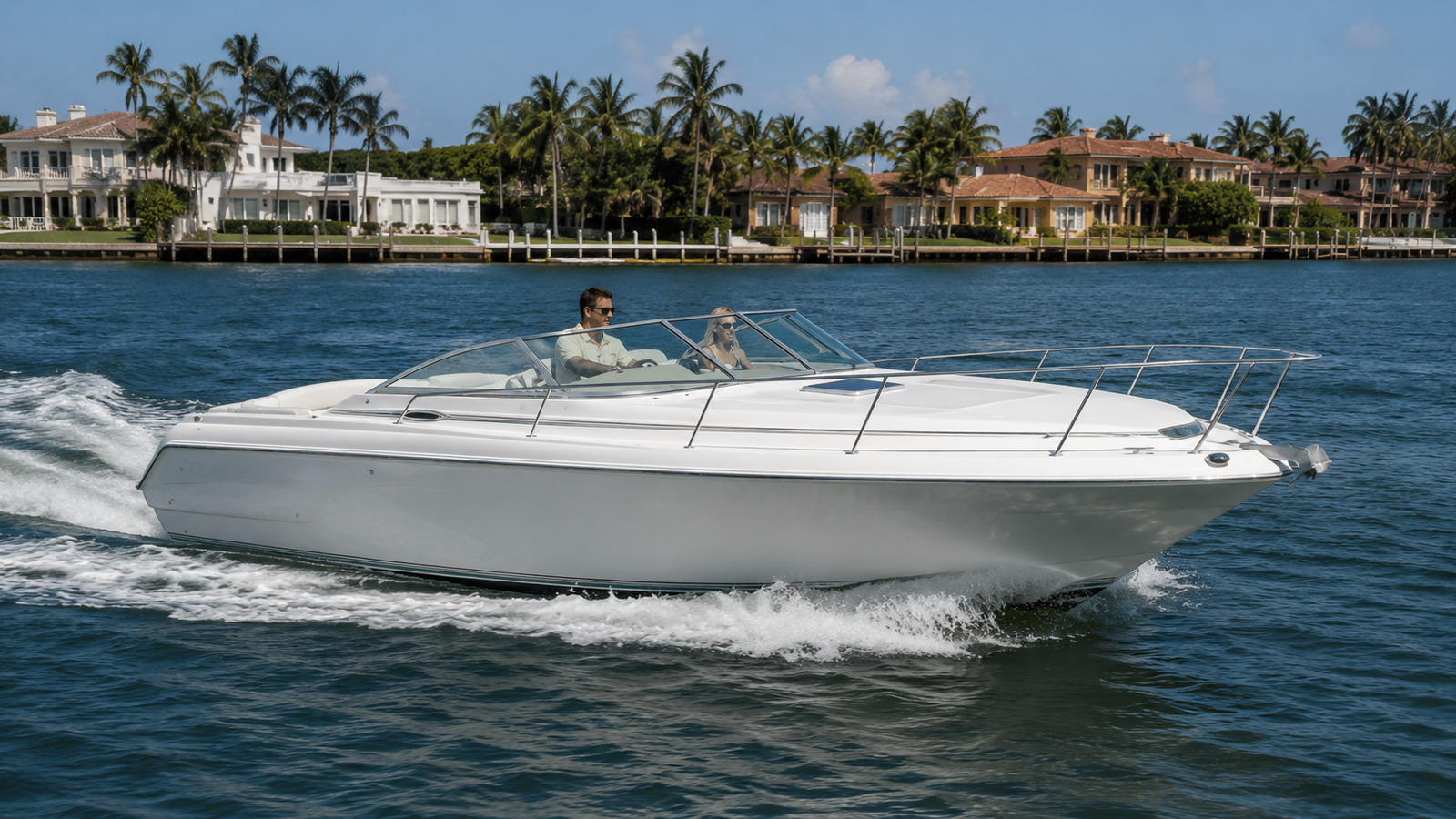
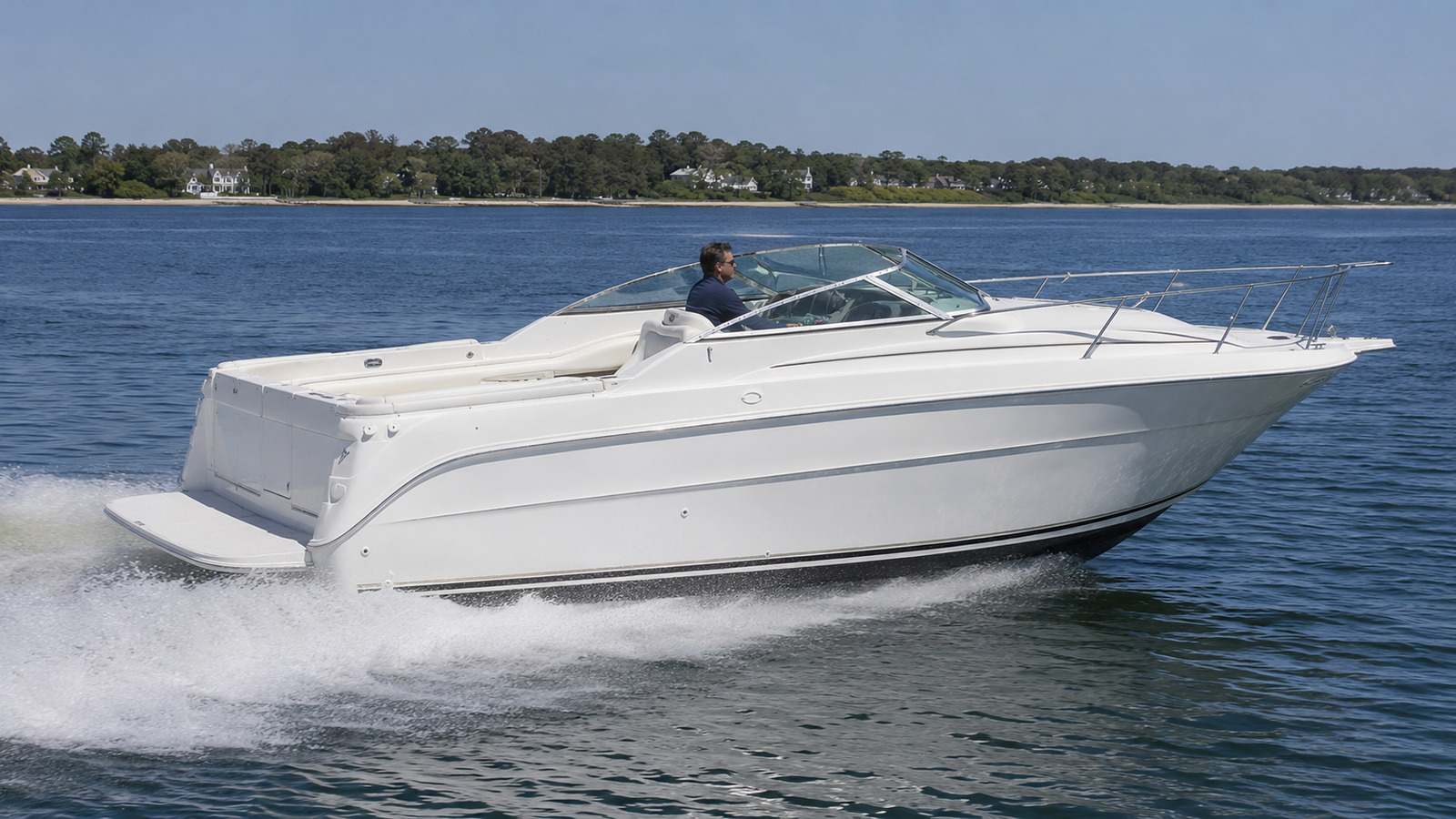
Before closing, make sure the exact boat, not a similar example, is the collateral being financed with survey findings still available for negotiation. Year-specific Sea Ray documentation should stay with the purchase file so dimensions, capacities and original equipment remain traceable.
Inspect hull, transom, propulsion, steering, bilge, electrical, fuel and every through-hull, then move into the Weekender-specific systems: sterndrive service, canvas, cabin ventilation, freshwater and portable or fixed head systems by year, trailer and upholstery. Use an independent marine survey when hidden defects would be expensive.
Run the boat from cold start to normal temperature, then repeat shifts, steering, trim and electrical loads. Restart hot and inspect the bilge again. A brief dockside run cannot show how the hull, controls and machinery behave under load.
Verify title, lien status, registration or documentation, trailer paperwork when applicable and engine serial numbers separately from the mechanical review. Clean paperwork and a clean survey are two different requirements.
Price the first season before closing. Service due immediately, safety equipment, batteries, canvas, electronics corrections and storage can arrive before the first recreational trip. That budget is part of the purchase, not an afterthought.
Once the 280 Weekender has passed the year, condition, survey and sea-trial checks, evaluate financing for that exact boat. Keep the estimated monthly payment beside insurance, storage, fuel and the Weekender-specific service burden.
It fits used-boat shoppers wanting occasional overnight capability without taking on the systems and size of a larger express cruiser. Weekenders are intentionally compact, so cabin headroom, berth space and galley functions can be limited compared with larger Express Cruiser or Sundancer models. The purchase should come back to this question: Does this model solve the normal trip better than the adjacent 300 Weekender, or is the buyer moving up mainly because a larger Sea Ray is available?
The specification answer is year-specific. Confirm the boat’s own HIN and build-year records before treating another example as identical. Do not publish one beam, fuel capacity, weight or engine package for every 280 Weekender unless the model year is fixed.
Propulsion is model-year specific unless a current official reference is shown on the page. A useful propulsion survey starts with engine model, serial number, drive type and hours before price is normalized. Inspect the actual engines, drives or outboards rather than assuming another 280 Weekender is mechanically identical.
The answer follows the Weekender layout. Compact overnight cruising with a cuddy or cabin, social cockpit and simpler scale than a full express cruiser. Inspect the actual berth, ventilation, head, galley and storage because sleeping arrangements can change across production years.
Look closely at the hull bottom, chines, transom and deck-to-hull joint for evidence that use and maintenance tell the same story. Then test the systems most important to this Weekender: sterndrive service, canvas, cabin ventilation, freshwater and portable or fixed head systems by year, trailer and upholstery.
Start with the 270 Weekender if available, then compare the other adjacent Weekender size. The closest same-series checks are the 270 Weekender and 300 Weekender. Use those boats to define the trade: what is gained by stepping up from the smaller sibling, and what additional burden is avoided by stopping short of the larger one?
Plan for storage, insurance, fuel, propulsion service, batteries and first-season corrections. On this weekender cruiser, also budget for sterndrive service, canvas, cabin ventilation, freshwater and portable or fixed head systems by year, trailer and upholstery. Keep the estimated monthly payment beside those annual costs.
Float Finance can help consumers pursue marine financing for eligible Sea Ray purchases, subject to borrower, collateral and transaction requirements. Choose the exact year, configuration and condition first, then use the application to evaluate the purchase.
The Sea Ray 280 Weekender makes sense when the owner truly wants compact overnight cruising with a cuddy or cabin, social cockpit and simpler scale than a full express cruiser. Weekenders are intentionally compact, so cabin headroom, berth space and galley functions can be limited compared with larger Express Cruiser or Sundancer models. When the exact year, propulsion, condition, storage plan and annual budget all make sense, use the Float Finance application for the purchase.
Tell us a little bit about yourself and the boat you are looking to finance.