
Call Us : 207-994-5109
Mon – Fri: 8 am to 9 pm & Sat – Sun: 10 am to 8 pm
Yellowfin’s bay-to-offshore crossover concept, combining a 16-inch draft with the range, storage and power choices needed for coastal and offshore work.
Yellowfin Hybrid is built around one difficult promise: one boat that can work shallow bays, coastal water and
selected offshore runs without feeling badly compromised in any of them. The 26 Hybrid is the only model in this
series package, and its value comes from that breadth rather than from winning a single specification.
The published 16-inch draft keeps shallow-water access in the conversation, while 118 gallons of fuel and single-or-twin power up to 500 hp create much more offshore reach than the 24 Carbon Elite. Yellowfin also makes Seakeeper
Ride 450 standard, reinforcing that the boat is expected to see more open water.
The buyer should be honest about what ‘hybrid’ means in their own calendar. If 90 percent of trips happen on flats
and creeks, the 24 Carbon Elite may be cleaner and lighter. If most trips start with an inlet run and rarely visit
skinny water, the 32 Offshore may be the more natural platform.
The 26 succeeds when its compromise is useful. It is not the shallowest or the largest boat in the range. It is the
boat for owners who actually move between those environments.
The useful way to shop this series is to start with the water and trip rather than the maximum purchase amount.
Draft, fuel, engine count, crew comfort and storage location should describe a real need before a buyer moves into a
more complex Yellowfin.
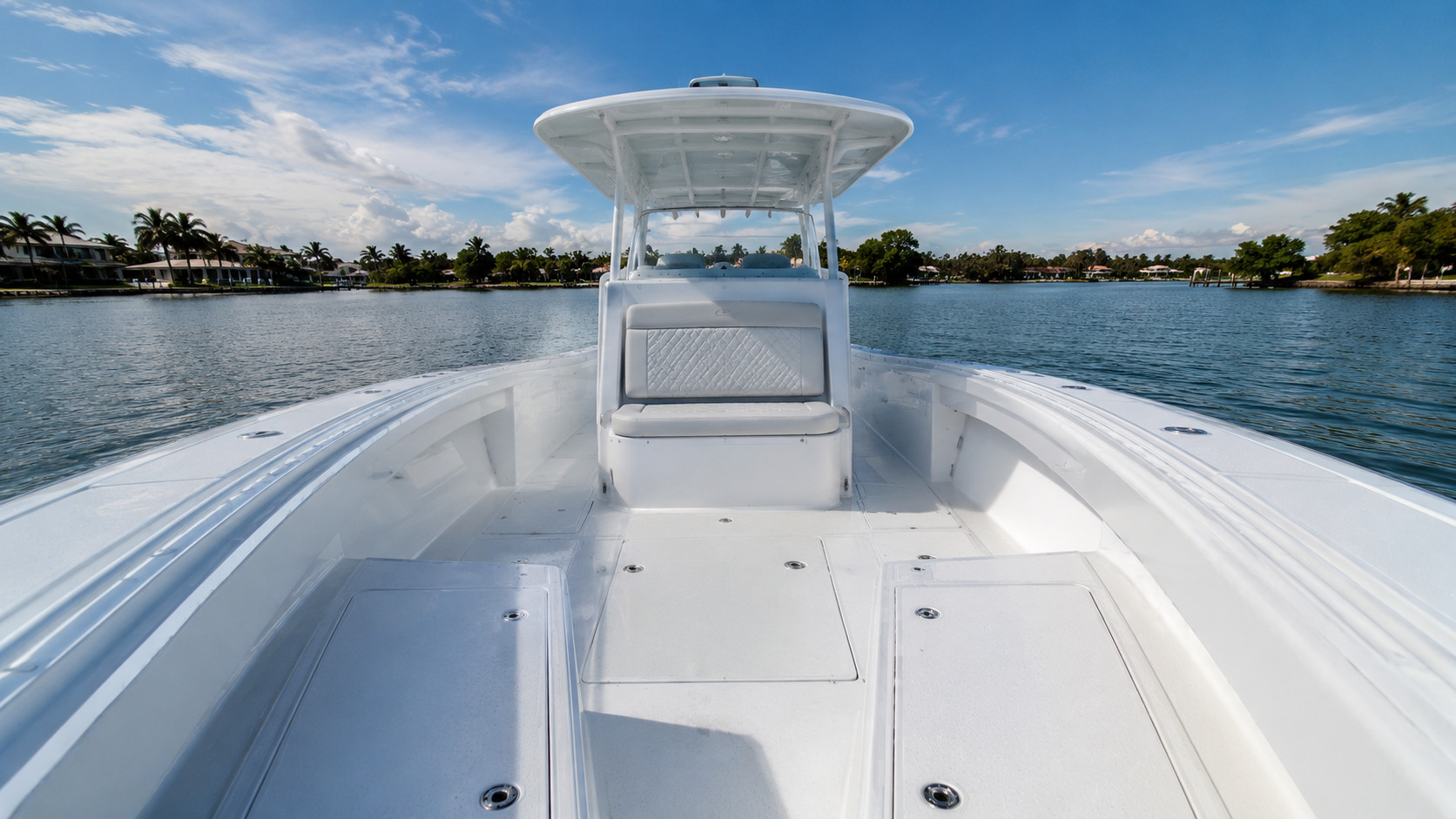
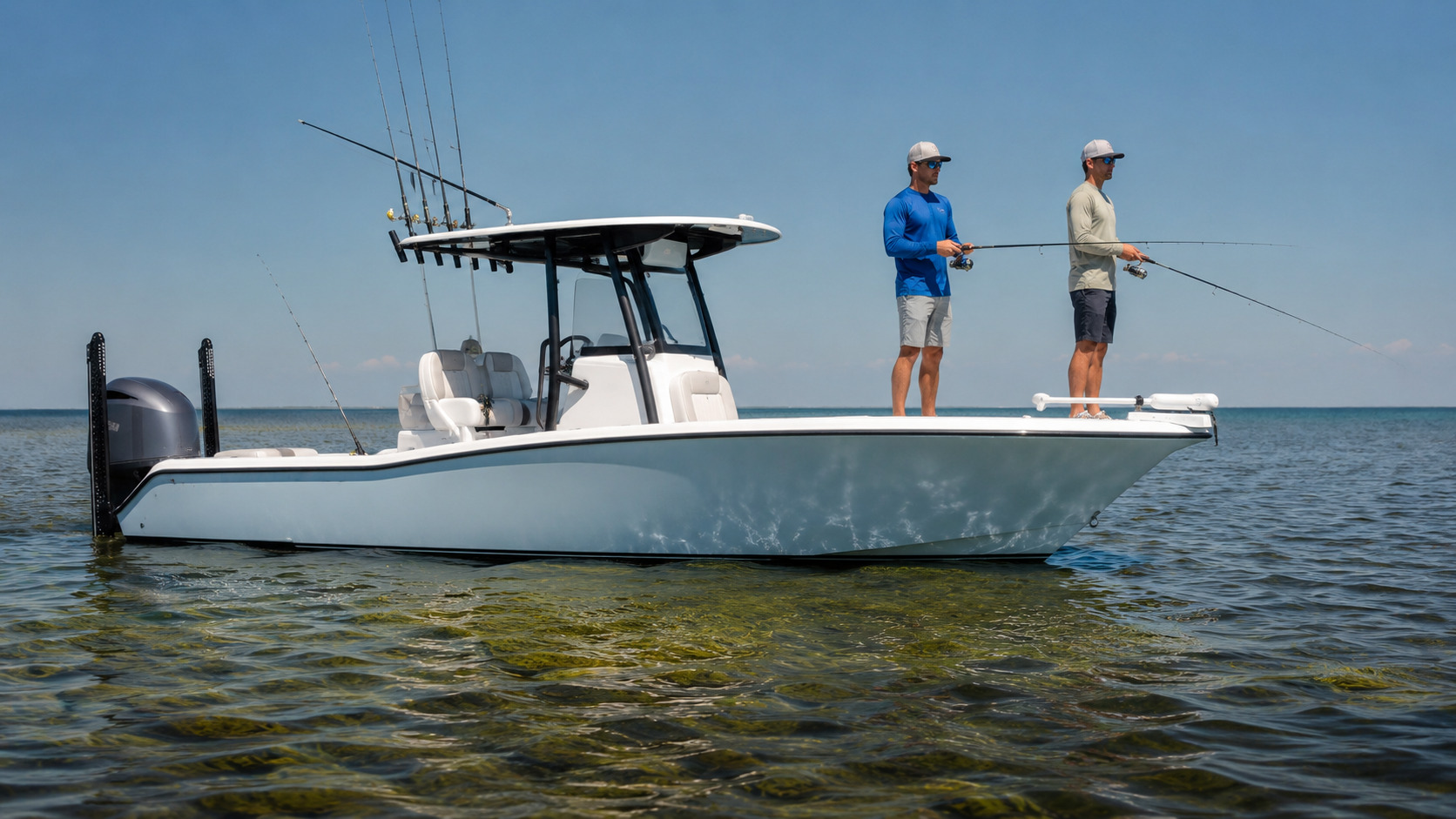
The 26 Hybrid is 26 feet long with an 8’8″ beam and a published approximate weight of 6,775 pounds. That is
materially heavier than the 24 Carbon Elite but still far below the Offshore boats that follow it.
Single or twin outboards are available up to 500 hp. That choice can change redundancy, service cost, transom space
and how the boat balances with shallow-water accessories.
The rear bench provides inner-hull access, while the bow can remain open for fishing or be configured with forward
seating. That makes layout selection important before the build is finalized.
Options such as wing fuel tanks, Power-Poles, hydraulic jackplates, trolling motor and additional livewells can pull
the boat toward different uses. A heavily rigged backcountry 26 and an offshore-oriented twin-engine 26 are not the
same ownership proposition.
Yellowfin offers substantial customization across its boats, so model name alone does not describe every delivered
hull. Engine package, seating, hardtop or tower, livewell layout, electronics and stabilization should be confirmed
on the exact build before price or performance comparisons are treated as final.
Yellowfin’s categories solve different ownership problems. Move outside the current series when shallow-water
Compare this category when the buyer's normal trips move away from the core hybrid mission.
Compare this category when the buyer's normal trips move away from the core hybrid mission.
The pages in this guide cover 26 Hybrid. Specifications are useful, but model choice should also reflect crew size,
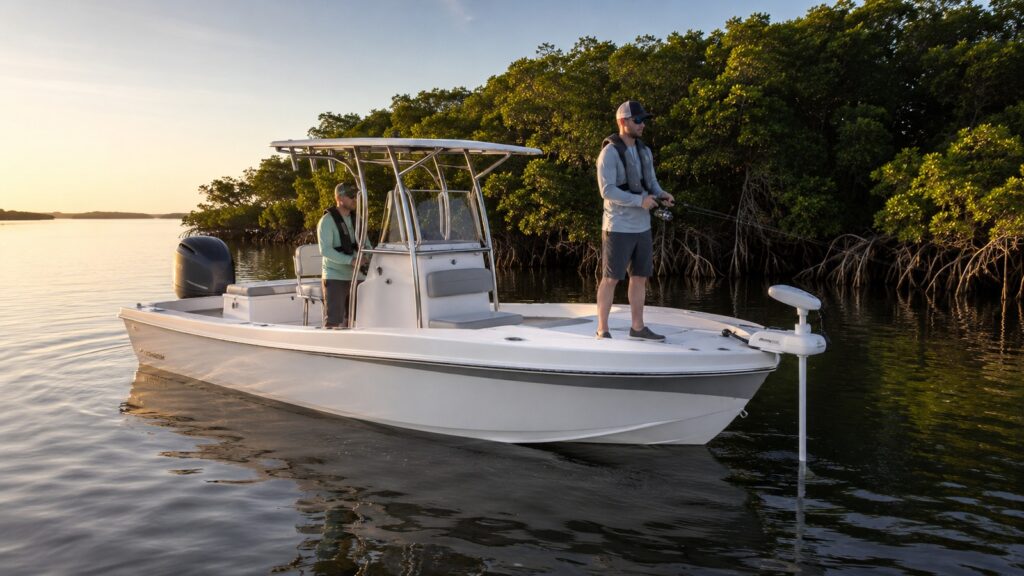
Choose a single-outboard 26 when lower engine count, cleaner transom space and simpler service fit the way the boat
is used. Compare twin power when redundancy and offshore confidence are worth the added weight and maintenance.
Choose the open-bow fishing layout when casting room matters most. Add forward seating only if family and social use
genuinely compete with fishing days.
Compare the 24 Carbon Elite if shallow draft, towing weight and technical inshore fishing dominate the calendar.
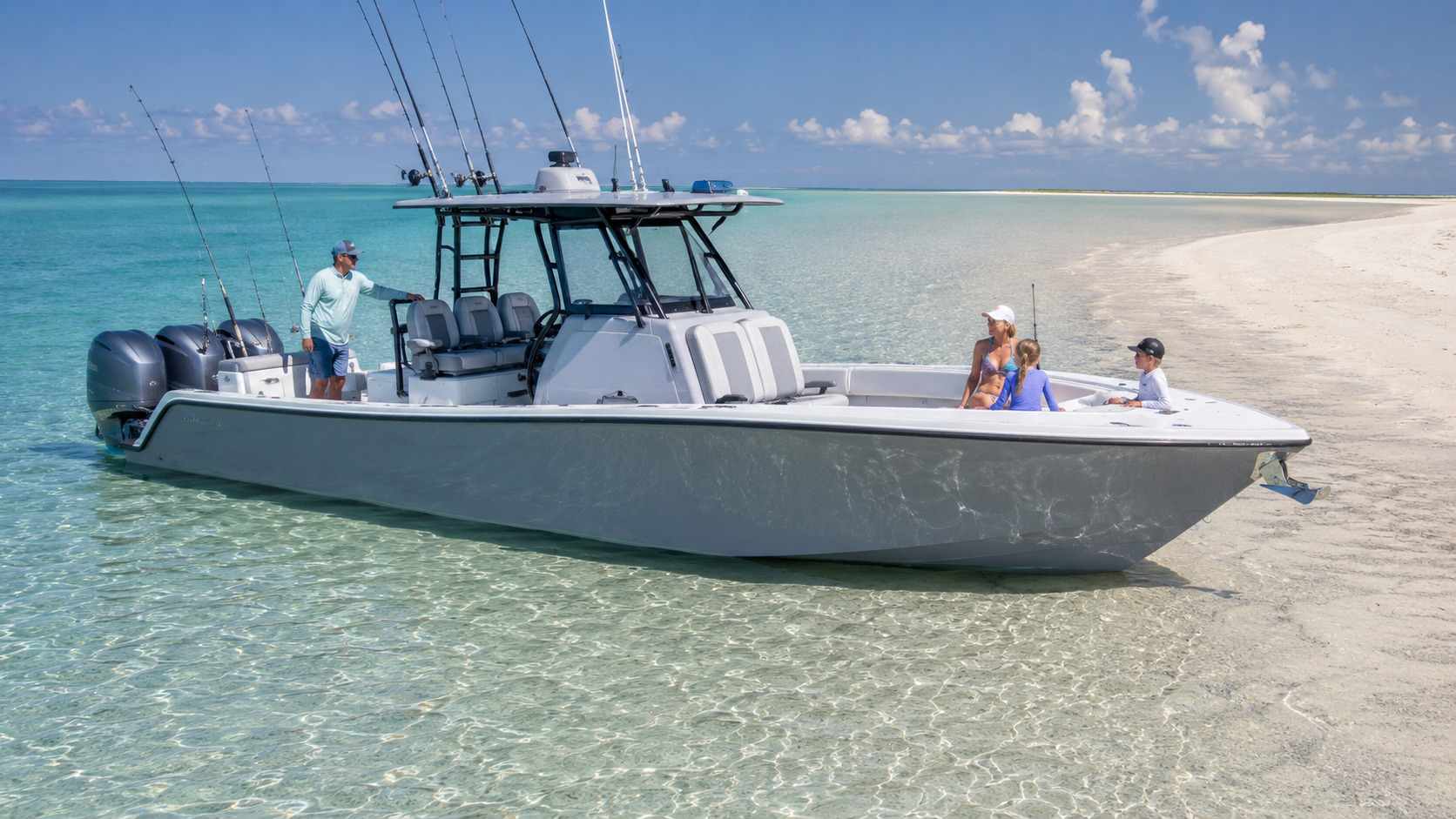
Compare the 32 Offshore if offshore range, twin-engine power and a larger fishing platform matter more than 16-inch
draft.
Treat optional wing tanks and additional livewells as mission choices. More capacity can extend the day, but every
gallon and system adds weight, complexity and another item to maintain.
A useful final test is to describe the normal trip in one sentence. Where does the boat launch or live, how many
people go, how far does it run and what do they do once they arrive? The correct Yellowfin should answer that trip
without requiring the owner to justify features that stay unused.
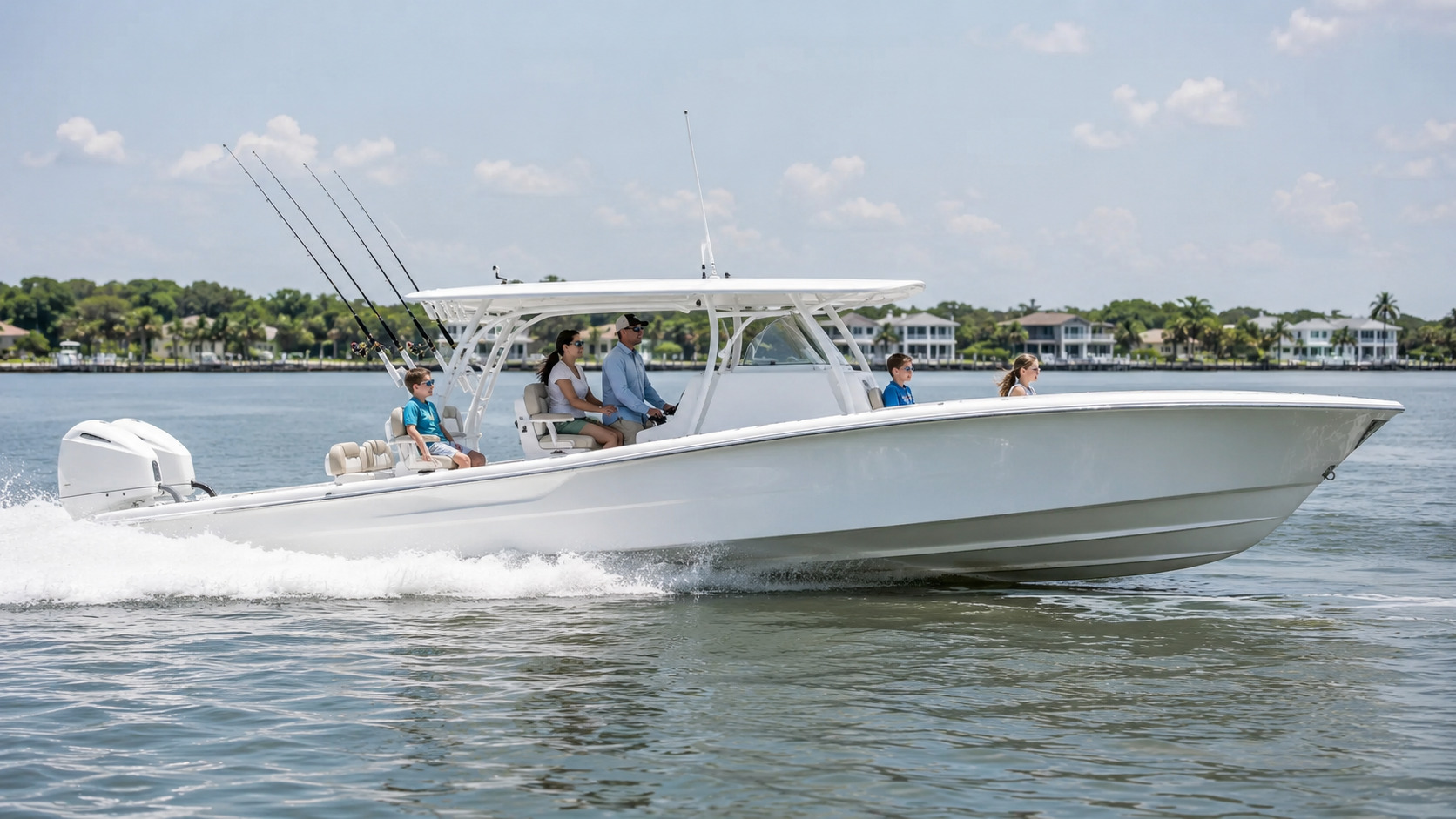
The Hybrid can still live as a trailer boat for many owners, but complete weight climbs quickly once fuel,
batteries, trolling motor, Power-Poles, a second engine and fishing gear are aboard. Tow-vehicle selection should be
based on the built boat, not the published approximate weight alone.
Because the boat may move between fresh, brackish and saltwater environments, corrosion prevention and flushing
habits matter. The owner should also inspect shallow-water hardware and offshore systems with equal discipline.
Seakeeper Ride adds useful running control but also another system to understand. Keep service information with the
boat and test the system as part of every serious used-boat inspection.
optional equipment that makes the Hybrid truly versatile. The value of one boat doing multiple jobs disappears if
the rig becomes too complicated to use often.
Insurance, survey requirements and storage can also change sharply with size and speed. Get those quotes before
closing, especially on high-horsepower Offshore models where engine value, hurricane exposure and marina location
can affect the total annual cost.
The Hybrid’s strongest ownership case often appears in places where the run changes character during the same day. A
calm back-bay morning can become an open coastal return, or a family trip can turn into a fishing run without
changing boats. That flexibility should be tested with the actual crew and gear because the boat will carry
different weight depending on the mission. If the owner always strips the boat down for one type of use, the value
of the crossover concept is smaller.
Use these topics to turn model comparison into a complete Yellowfin purchase plan.
This guide covers 26 Hybrid. The models should be compared by mission, fuel, engine count, deck layout and ownership
The series fits buyers looking for Yellowfin’s bay-to-offshore crossover concept, combining a 16-inch draft with the
Use the same crew assumptions and real trip length for each boat. Compare fuel, power, storage, fishing layout and
Choose Hybrid when the same boat genuinely needs to fish shallow water and make coastal or offshore runs. Carbon
Inspect hull and running surface, transom, outboards, steering, fuel system, livewell and bilge plumbing, batteries,
Float Finance can help consumers pursue marine financing for eligible Yellowfin purchases, subject to borrower,
Tell us a little bit about yourself and the boat you are looking to finance.