Call Us : 207-994-5109
Mon – Fri: 8 am to 9 pm & Sat – Sun: 10 am to 8 pm
Shop this Boston Whaler family for first-boat ownership, tender duty, inshore exploring and simple family use.
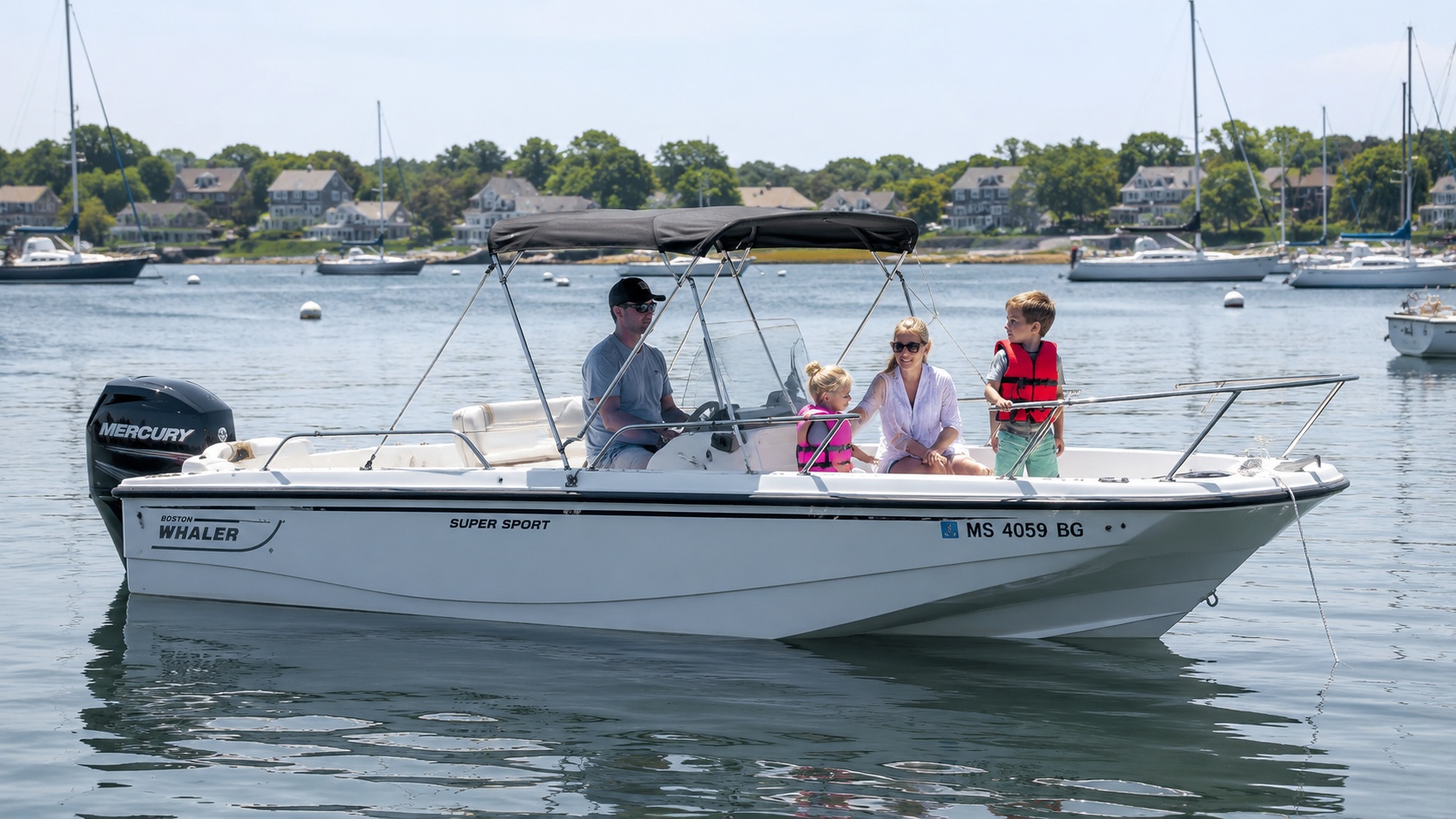
The Boston Whaler Super Sport Series is built around first-boat ownership, tender duty, inshore exploring and simple family use. Its strongest differentiator is small size, shallow draft and low maintenance, which should matter to the buyer before price separates two boats.
The right series decision should happen before the model decision. A simple trailer-boat buyer should not move into yacht-scale systems just because financing works, and an offshore family should not choose a protected-water boat only because it fits the garage.
Boston Whaler’s foam-filled fiberglass construction runs across the brand, but ownership changes sharply with beam, engine count, fuel capacity, hardtops, cabin systems and weather protection.
160 Super Sport: 16′ 2″ LOA · 90 HP max · 6 persons
As size rises, buyers should expect more than extra seating. Engines multiply, fuel capacity grows, lifts get heavier and marina requirements become more important.
Super Sport is the opposite end of Boston Whaler from Realm and Conquest. These small side-console skiffs are about light weight, shallow draft, simple single-outboard power and a trailer that one owner can realistically manage without a marina.
Both models remain current and have healthy used markets. That lets buyers prioritize engine age, trailer condition and clean factory-style rigging rather than paying a premium for equipment that works against the Super Sport simplicity.
A useful family comparison should also consider how the boat will be stored. Beam, hardtop height, loaded weight and engine count often create a larger ownership difference than a few feet of nominal length.
For Float Finance shoppers, the practical sequence is to identify the right family and model first, then start your application with the details. That keeps the financing discussion attached to a real engine package, condition and seller rather than an abstract budget.
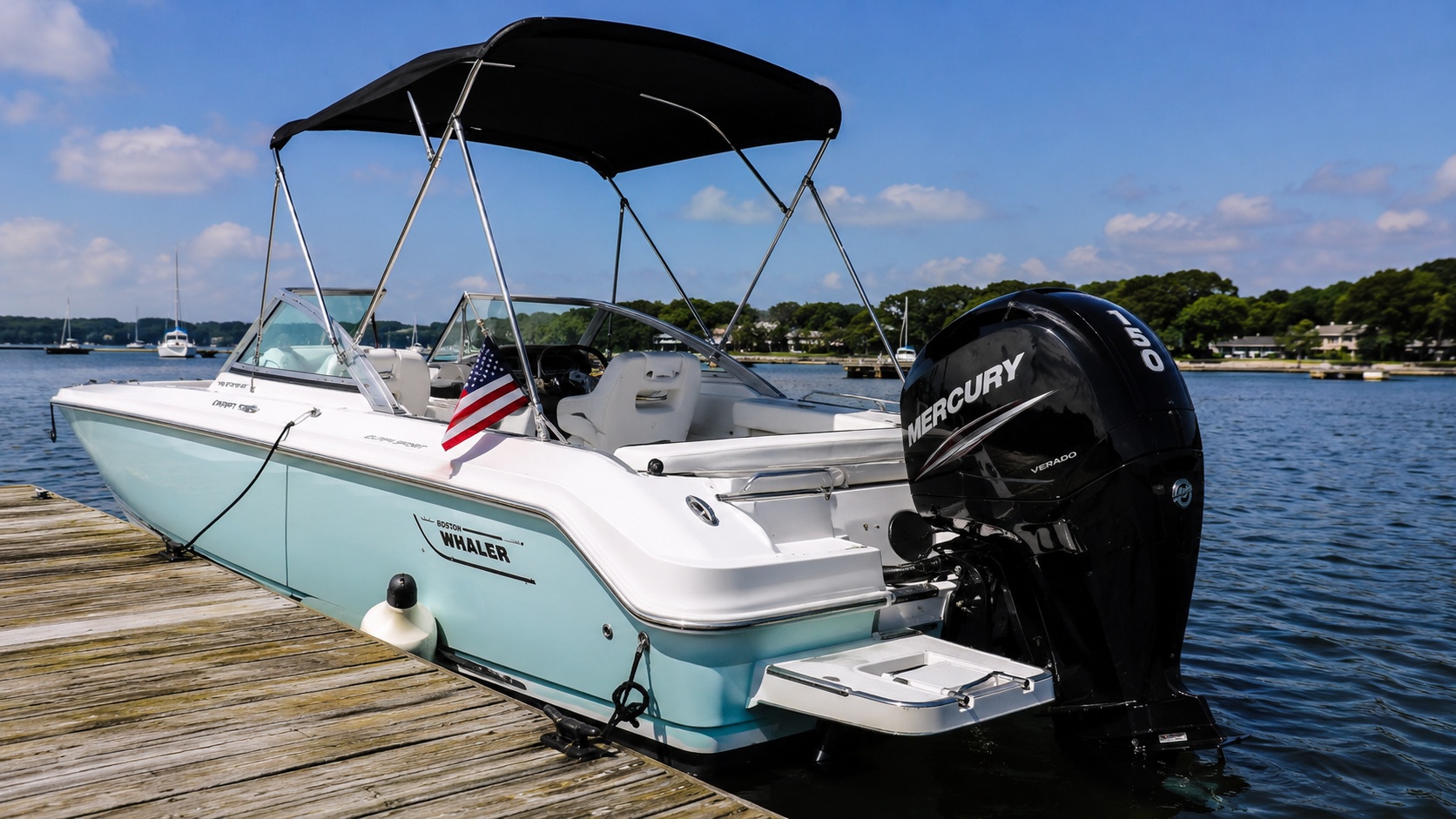
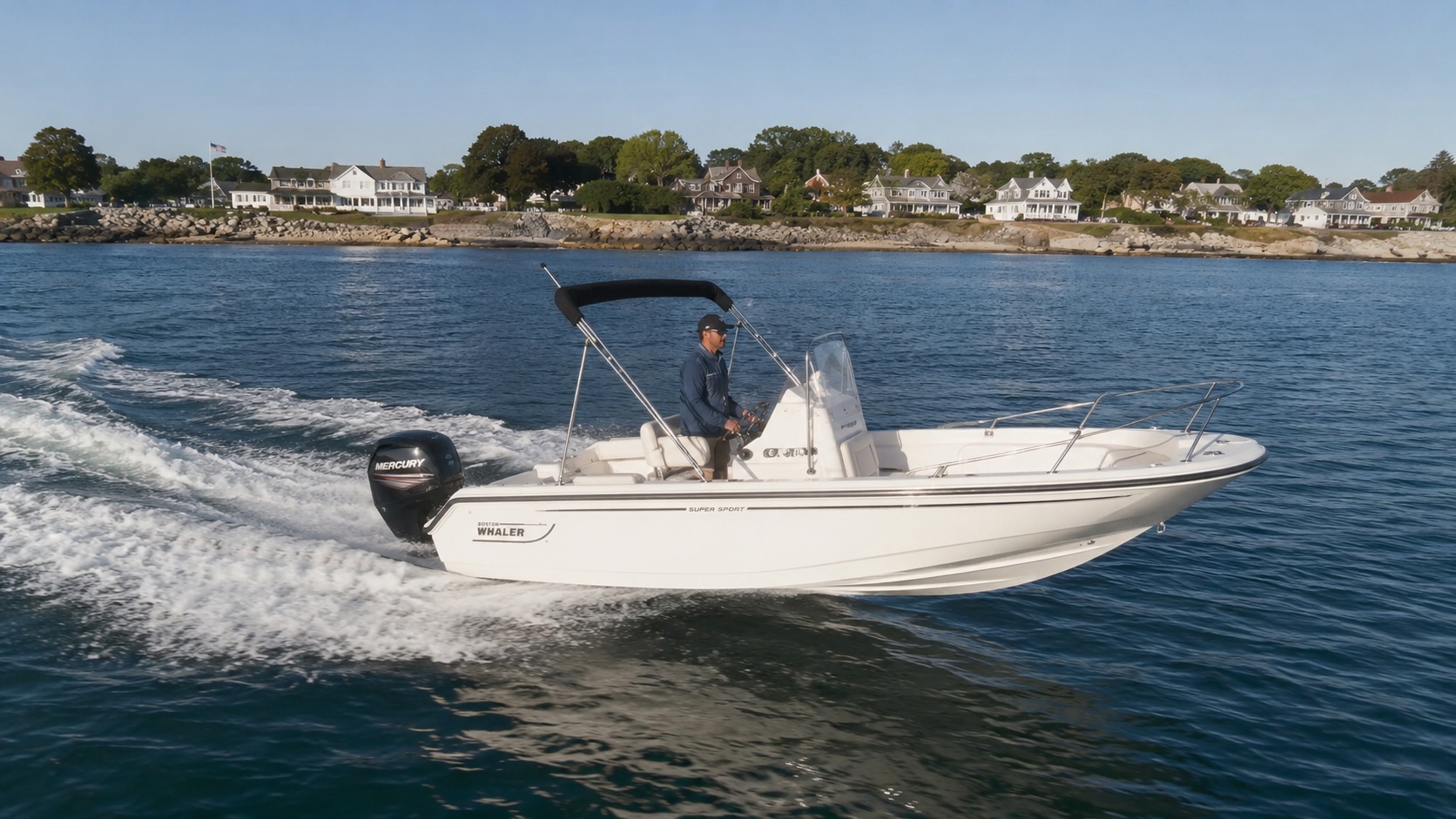
This is a side-console skiff family. The central mission is first-boat ownership, tender duty, inshore exploring and simple family use.
The feature spine is small size, shallow draft and low maintenance. That equipment should solve a recurring use case before a buyer pays a premium for it.
Whaler construction uses foam-filled fiberglass structure and extensive stainless hardware, but used buyers still need to inspect repairs, gelcoat, through-hulls, transom hardware and evidence of hard docking.
Mercury outboards dominate the propulsion story. Service cost rises with horsepower and engine count, so engine history becomes more important as the boats get larger.
Modern models also use more networked electronics and pumps. A clean-looking helm does not prove the entire system is healthy.
A used boat in this family should be inspected around the equipment that defines its mission. Trailer bearings, tires, lights and frame condition can matter almost as much as the hull because these boats are designed to move. Mechanical simplicity is a strength, so messy aftermarket wiring or unnecessary accessories should be viewed critically.
Factory specifications are a starting point, not a substitute for the capacity plate and build sheet on the boat. Boston Whaler changes electronics, power choices and option packages over time, so a seller’s copied spec list should be verified against the exact model year.
The strongest purchase usually has documented engine service, clean structural condition and equipment the buyer will use. Cosmetic options should come after those fundamentals.
Cross-shop Montauk. Boston Whaler families overlap in length while solving different boating problems.
130 Super Sport:
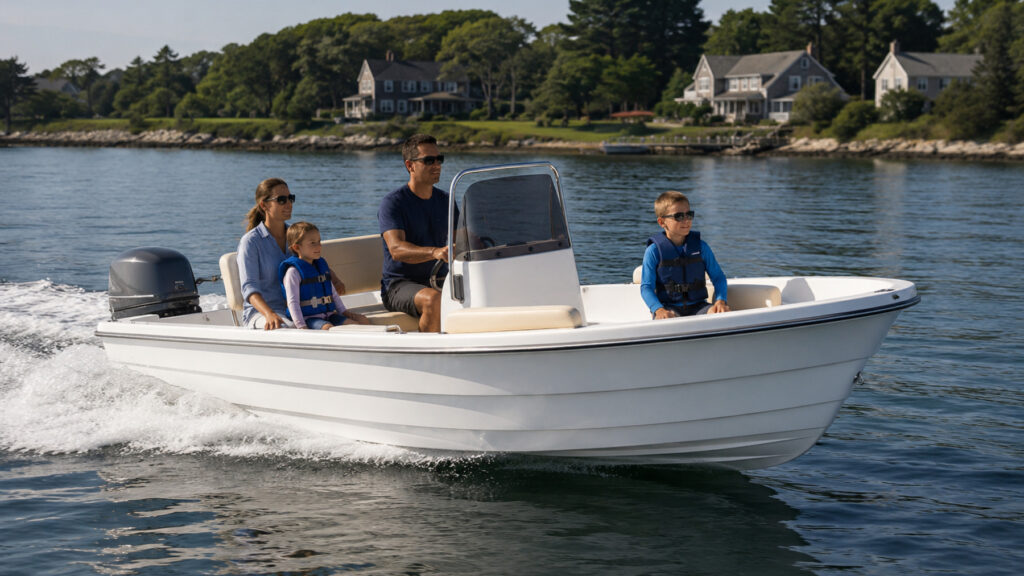
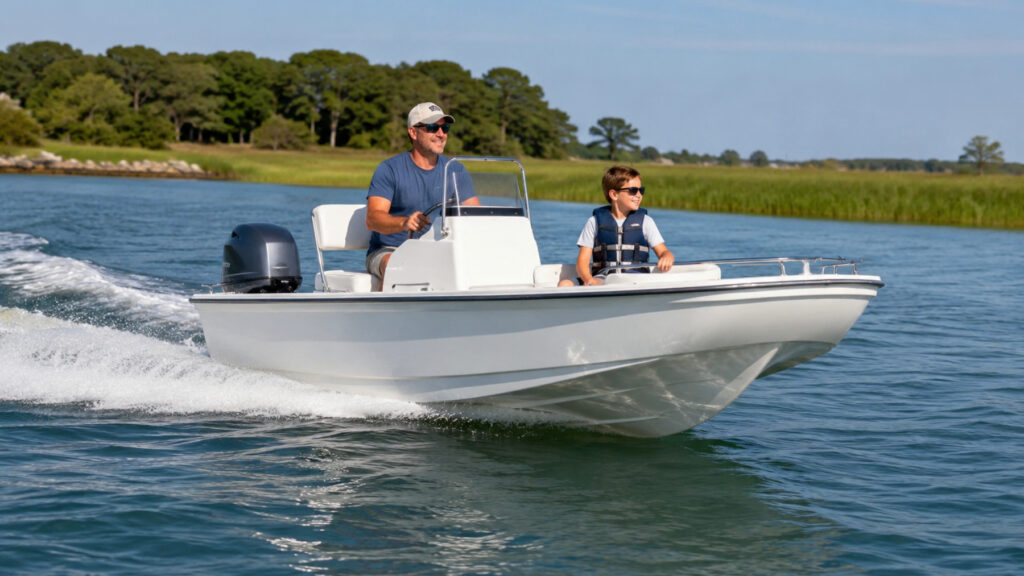
Start your application with the details with model year, engine package and asking price. Float Finance can work from the real boat instead of a broad family budget.
Start with real passenger count rather than maximum capacity. Coolers, rods, day bags and overnight gear all consume usable deck space.
Choose hull mission next. Shallow-water access, offshore ride, windshield protection and overnight accommodation are different priorities.
Then compare propulsion. One outboard is simpler. Multiple engines add performance and redundancy but increase service and fuel.
Storage comes next. Beam and loaded weight can turn a seemingly manageable boat into a marina-first purchase.
Only then compare price and payment. A larger model should earn its extra cost through features the family will use.
The 130 is the tender, first-boat and compact-water choice. The 160 is dramatically more flexible because it adds three feet of hull, two more people of rated capacity and much more horsepower while preserving a simple side-console layout.
After selecting size, compare engine count and horsepower with the normal passenger load. More power can improve acceleration and offshore capability, but it also increases service, insurance and fuel expense.
Finally, price the storage plan. A boat that requires a wider slip, larger lift or professional transport may cost more over several seasons than a higher-priced model that fits existing infrastructure.
The loan payment is only one part of Boston Whaler ownership.
Engine service rises with horsepower and engine count. Multiple Verados create a different annual budget from a small single-outboard skiff.
Fuel is the next major variable. Large offshore boats carry hundreds of gallons and can burn quickly when run hard.
Insurance reacts to value, speed, navigation area and storage location.
Marina slips, lifts, trailers and professional transport can become major fixed costs depending on beam.
Electronics and pumps deserve an annual reserve. Cabin families add freshwater, waste, climate control, refrigeration and shore-power systems.
A realistic ownership budget makes the financing decision more durable.
Trailer bearings, tires, lights and frame condition can matter almost as much as the hull because these boats are designed to move. Mechanical simplicity is a strength, so messy aftermarket wiring or unnecessary accessories should be viewed critically.
Saltwater use should increase the inspection standard. Corrosion on electrical connections, pumps, trim hardware, steering and trailers can create repeated small failures even when gelcoat and upholstery still look excellent.
A first-year reserve should cover engine service, batteries, pump replacements and the family-specific systems most likely to age. That reserve makes a used Boston Whaler easier to enjoy and keeps the monthly loan from consuming the entire boating budget.
Use the actual model year, engines, options and seller before estimating payment.
They are side-console skiff boats built around first-boat ownership, tender duty, inshore exploring and simple family use. The family is differentiated by small size, shallow draft and low maintenance.
130 Super Sport is the smallest model in this model group. Compare true LOA and beam rather than the badge alone.
160 Super Sport is the largest model in this comparison. Larger size also increases propulsion, fuel and storage requirements.
Yes, although emphasis varies. Outrage and Dauntless are more fishing-first, while Realm, Conquest and Vantage balance fishing with cruising comfort.
Potentially. Year, value, condition, seller type and borrower qualifications matter. Start your application with the actual details.
New offers current equipment and clean ownership history. Used can provide depreciation savings when engines, hull and systems have been maintained.
Start with hull condition, propulsion, steering, pumps and electronics, then inspect the equipment that defines this family.
Compare monthly payments only after model year, engines, options and condition are normalized. A lower payment on the wrong model is not a better purchase.
Pick the family first, then model and engine package. Once the exact boat works for the crew and storage plan, evaluate financing around that purchase.
Tell us a little bit about yourself and the boat you are looking to finance.