Call Us : 207-994-5109
Mon – Fri: 8 am to 9 pm & Sat – Sun: 10 am to 8 pm
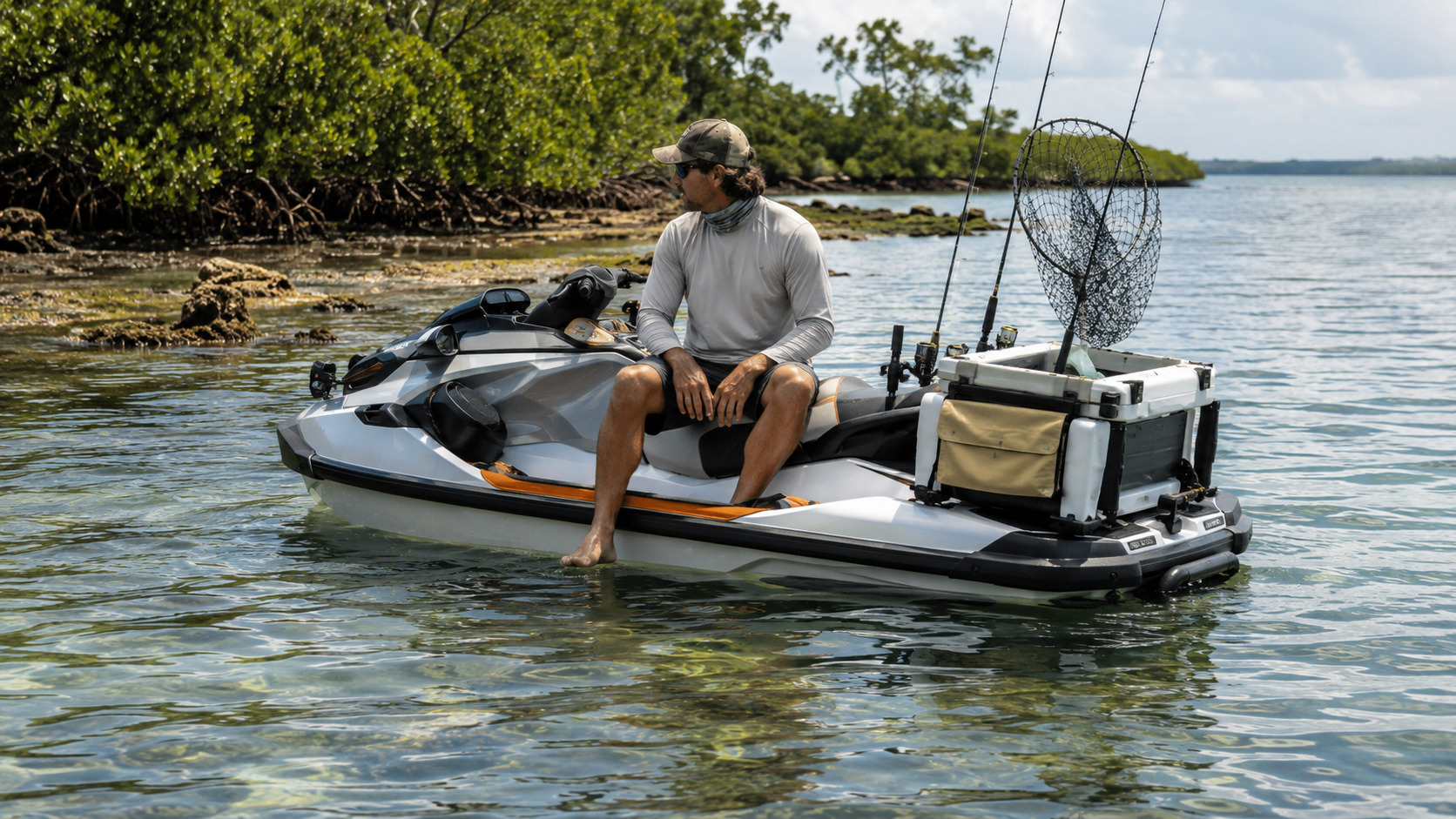
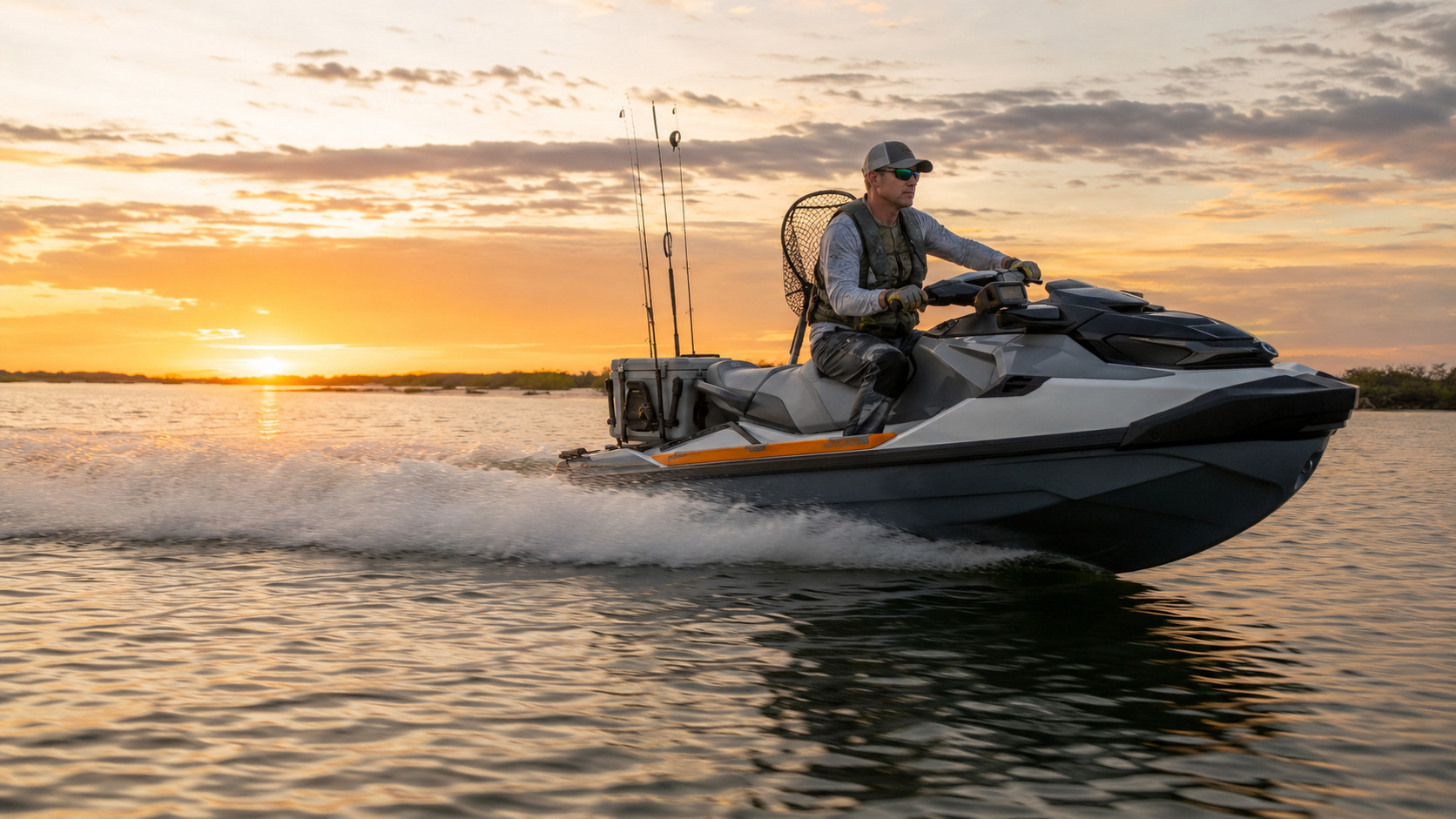
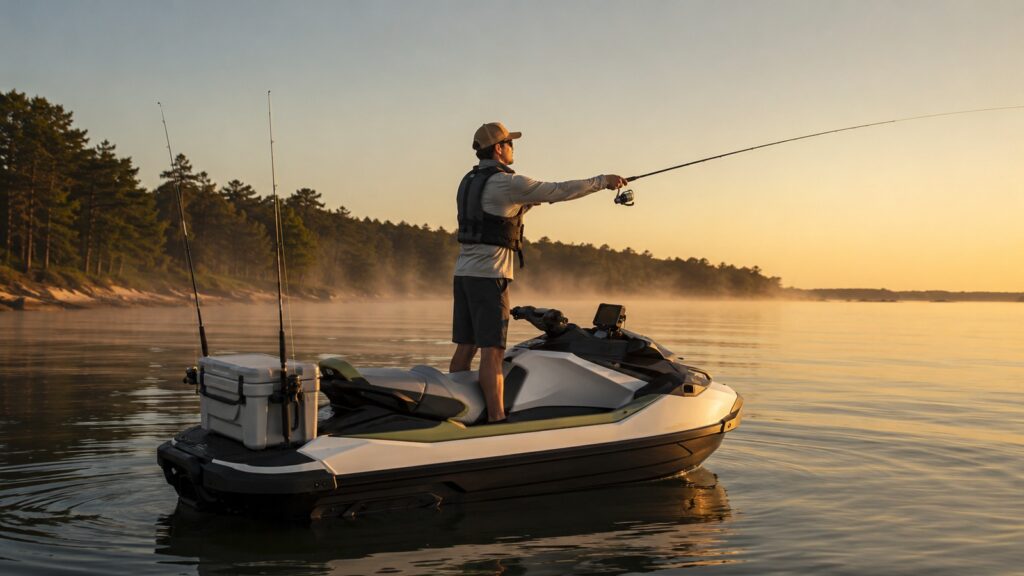
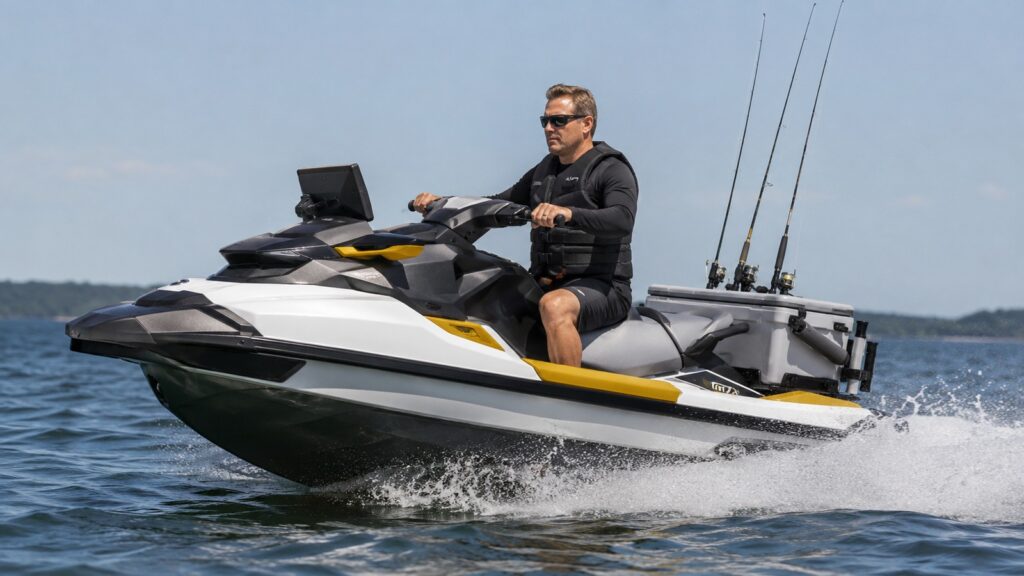
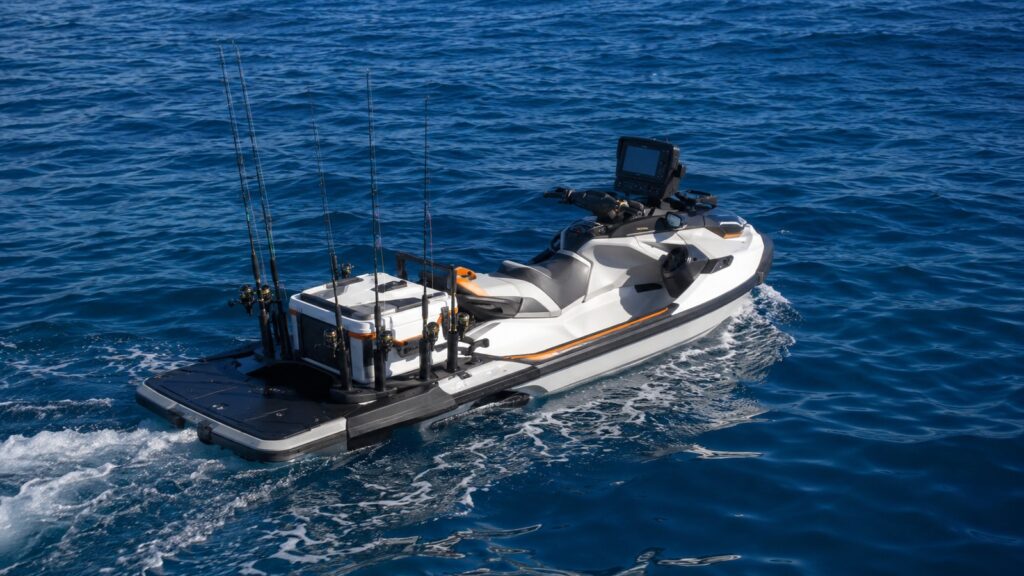
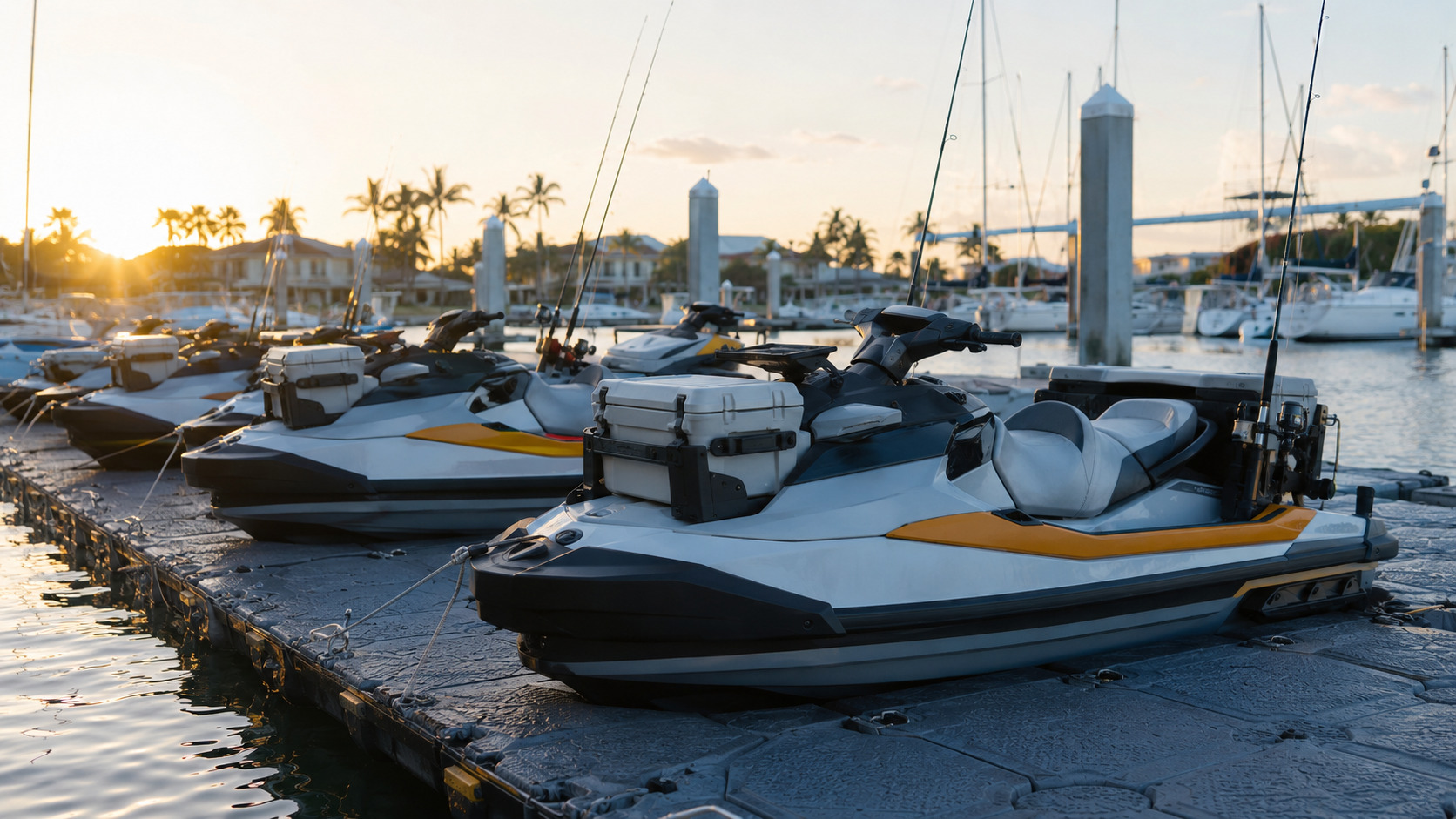
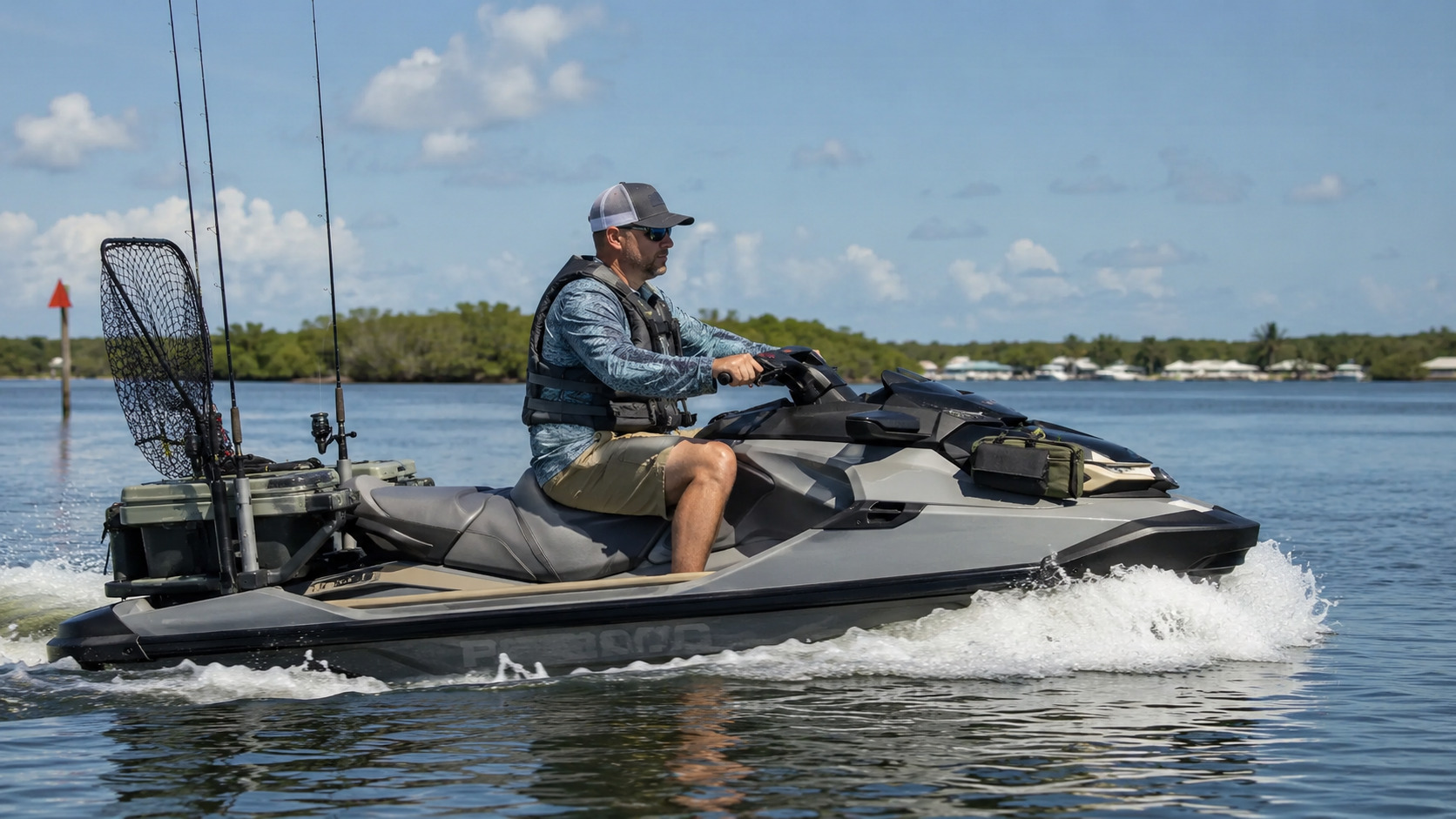
Sea-Doo’s fishing-specific PWC range, progressing from family-friendly fishing utility to dedicated angling hardware and longer-day capability.
Sea-Doo’s Sport Fishing lineup answers a specific question: how much fishing specialization does a PWC owner
actually need? FishPro Scout begins with a GTI-based machine that can still serve family recreation. FishPro Sport
moves to the longer ST3 platform. FishPro Trophy adds the most dedicated fishing hardware.
The three models all carry 18.5 gallons of fuel, but they use that capacity differently. Scout’s 130 hp and shorter
hull favor casual versatility. Sport and Trophy use 170 hp on the longer ST3 platform for more stable standing,
moving and open-water travel.
Storage numbers can be misleading because the cooler is included in published totals. More important is how the
cargo is organized around rods, electronics, bait and the rider’s need to shift position without stepping over gear.
A fishing PWC should be purchased from the fishing routine backward. Morning casting with family is a Scout
question. Longer, more dedicated trips point toward Sport. Live bait, anchoring and sitting sideways to work a spot
describe Trophy.
The series should be approached as a rider-use decision rather than a ranking. A machine can be more powerful, more
stable or more heavily equipped and still be the wrong choice if those advantages do not show up during the owner’s
normal ride.
FishPro Scout uses the GTI hull and Polytec construction. Sport and Trophy use the fiberglass ST3 hull and a
146.8-inch platform.
All three are three-rider machines, but fishing usually works best with fewer people and more working space.
Capacity rating does not mean three anglers will enjoy the same freedom of movement.
GPS/fish-finder equipment, trolling modes, rod storage and LinQ fishing cooler hardware separate the range from
recreation PWCs. Trophy adds livewell conversion, anchor system, swivel seat and more dedicated angling tools.
Saltwater and bait use put unusual demands on electrical connections, cooler hardware, deck surfaces and accessory
mounts. Fishing inspection should look beyond the engine hours.
Across the Sea-Doo Sport Fishing Series, the purchase is also a trailer and storage decision. PWC dimensions are
compact compared with boats, but package weight, trailer length, garage height, accessory racks and the owner’s tow
vehicle still determine how spontaneous ownership feels.
Sea-Doo categories solve different riding problems. Compare outside the current series when the rider keeps wishing
Compare this category when the rider's normal use shifts away from the core sport fishing series mission.
The model set in this guide includes FishPro Scout, FishPro Sport, FishPro Trophy. Read the specifications together
Choose FishPro Scout when fishing shares the calendar with cruising, swimming and family use. It keeps the shorter
GTI platform and the largest published storage total in this group.
Choose FishPro Sport when the rider wants ST3 stability and a longer platform without paying for every Trophy-specific tool.
Choose FishPro Trophy when the integrated livewell, anchor, swivel seat, footrests and electronics will be part of
real fishing days. If those systems stay unused, the premium is difficult to justify.
Compare trailer and garage requirements before moving from Scout to the 146.8-inch Sport/Trophy platform. Fishing
gear already adds storage pressure before the hull grows.
A useful final check is to describe the normal Saturday in one sentence. If the selected Sea-Doo requires explaining
activities the owner rarely does, the category or model may be too specialized. If the features solve the same
problems every weekend, the premium is easier to justify.
Fish-finder wiring, transducer mounting and battery demand deserve regular checks. A small corrosion issue can take
out the electronics that justify the FishPro package.
Cooler and livewell weight changes balance. Secure the cooler correctly and understand how water or catch weight
affects the rear platform.
Rod holders, anchor gear and footrests should be checked for looseness because they see repeated leverage that
normal recreation accessories do not.
The most expensive FishPro is not automatically the most useful one for the way the owner fishes.
PWC ownership is also seasonal in many markets. Battery care, fuel condition, winterization or long-term storage,
trailer tires and bearings, and corrosion prevention can matter as much as engine hours. A low-hour machine that sat
neglected can require more correction than a well-used example with consistent maintenance.
Fishing electronics evolve faster than hulls. A well-kept FishPro with older sonar may still be the better purchase
if the hull, pump and wiring are clean, because electronics can be upgraded. Corroded connectors, overloaded battery
circuits or poorly sealed transducer work are harder to ignore. Value the installation quality separately from the
age of the display.
Use these topics to turn model comparison into a complete PWC purchase plan.
This guide covers FishPro Scout, FishPro Sport, FishPro Trophy. The important differences are hull family,
The series fits buyers interested in Sea-Doo’s fishing-specific PWC range, progressing from family-friendly fishing
Ride the smallest model that appears to fit, then test the next step up on the same water. The larger or more
Scout is the lighter GTI-based fishing/recreation crossover. Sport uses the longer ST3 platform and 170 hp. Trophy
Inspect the hull bottom, intake grate, jet pump, iBR hardware, steering, seat, battery, display and trailer. Then
Float Finance can help consumers pursue marine financing for eligible Sea-Doo purchases, subject to borrower,
Tell us a little bit about yourself and the boat you are looking to finance.
Accessibility Tools