
Call Us : 207-994-5109
Mon – Fri: 8 am to 9 pm & Sat – Sun: 10 am to 8 pm
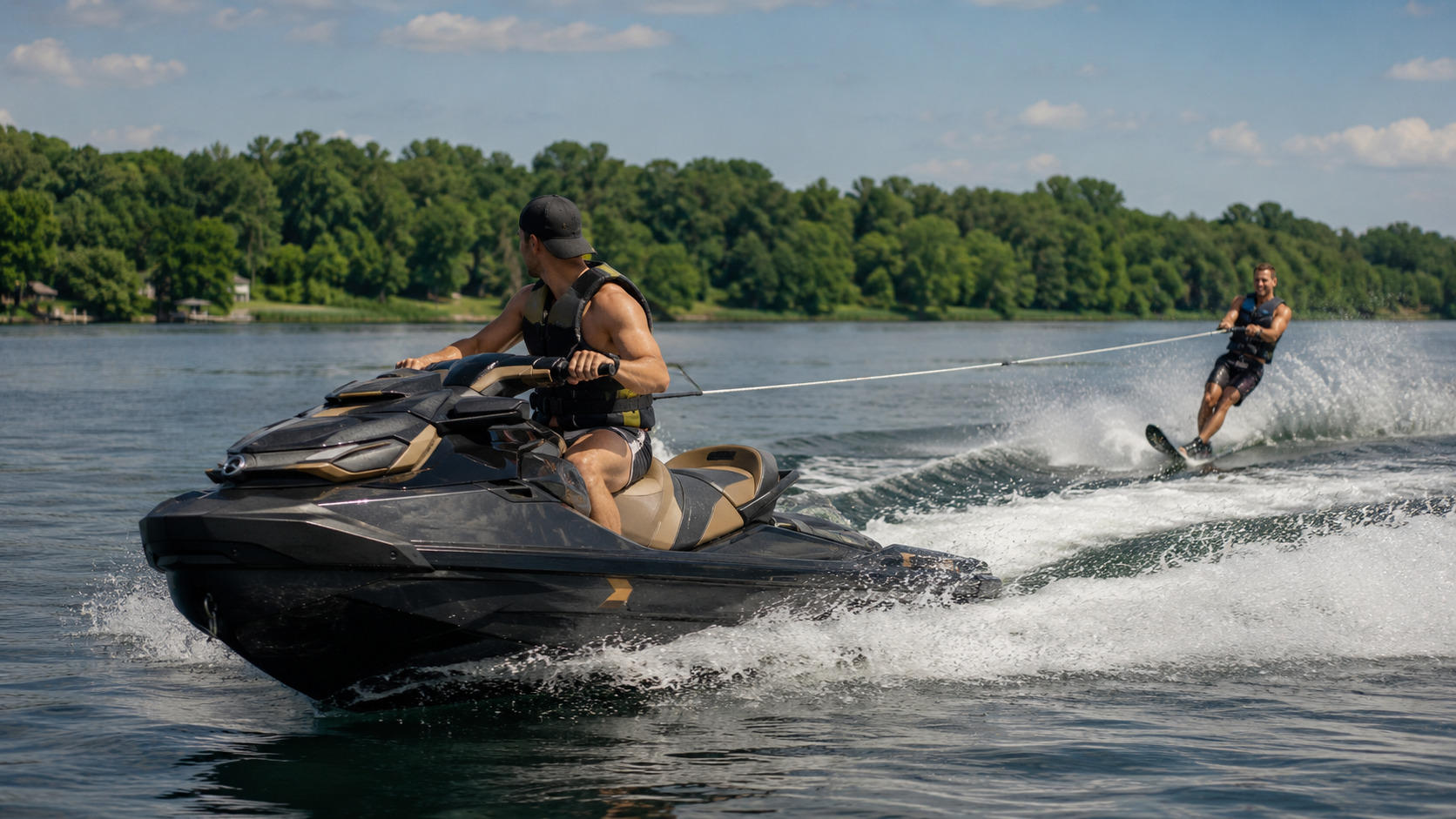
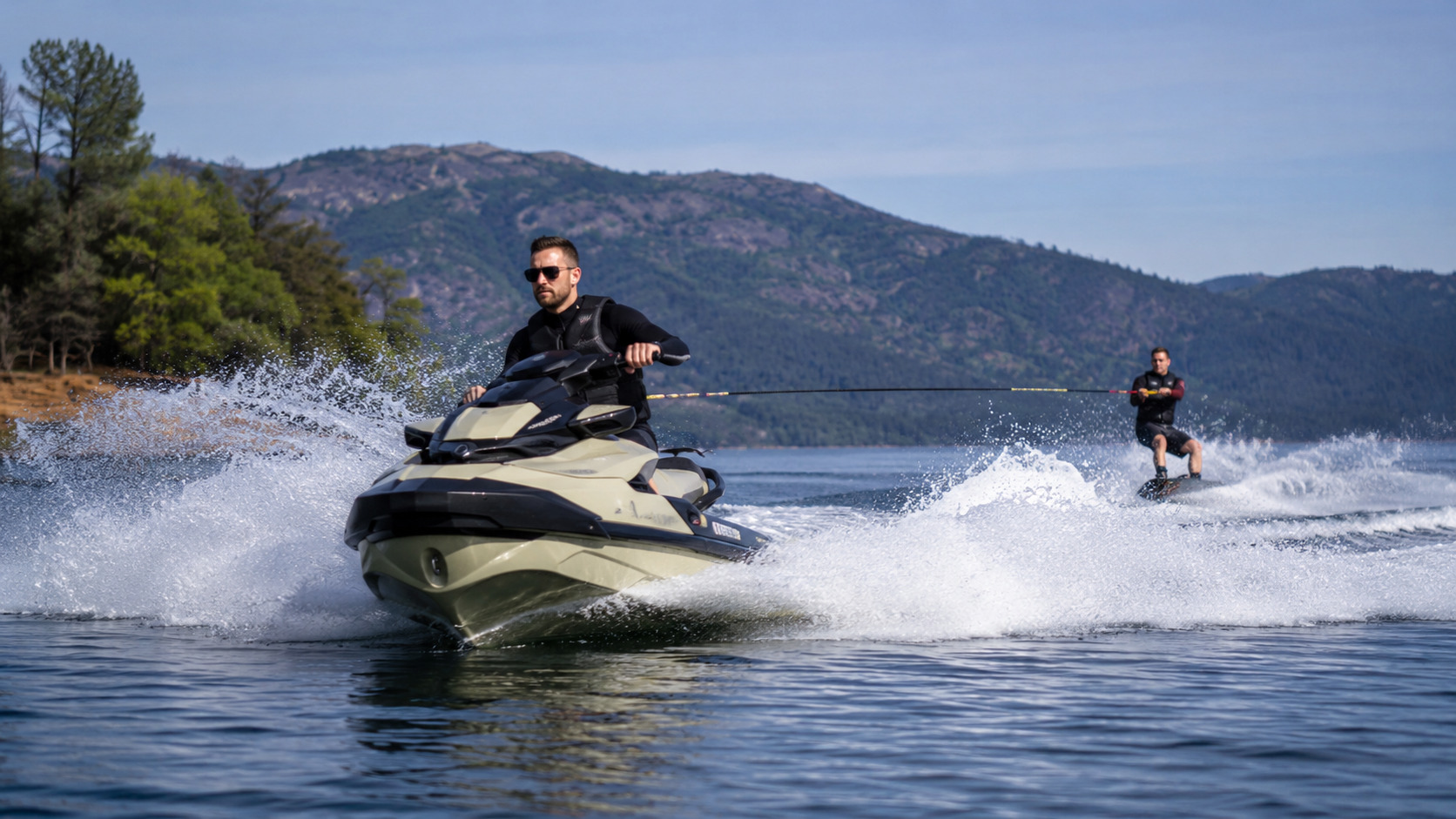
Sea-Doo’s tow-sports range with factory ski-pylon, board-rack and Ski Mode equipment for wakeboarding, skiing and tow-focused family days.
Sea-Doo Tow Sports models are not just recreation PWCs with a rope attached. Wake and Wake Pro integrate Ski Mode, a
retractable ski pylon and board rack so setup, pull and rider pickup become part of the factory design.
Wake uses the GTI hull and 170 hp. That makes it lighter, gives it 40.3 gallons of storage and keeps family-day
versatility high. Wake Pro moves to the ST3 hull, 230 hp and a larger display, giving up some cargo capacity in
exchange for a more planted towing platform.
The right model depends on who is behind the rope. Children and lighter riders on protected water may never need 230
hp. Larger wakeboarders, repeated deep-water starts and rougher lakes give Wake Pro’s extra thrust and mass a
clearer purpose.
Tow sports also add wear patterns that ordinary cruising does not. The pylon, board rack, rear platform and seat see
constant use as riders launch, fall, reboard and reset.
The series should be approached as a rider-use decision rather than a ranking. A machine can be more powerful, more
stable or more heavily equipped and still be the wrong choice if those advantages do not show up during the owner’s
normal ride.
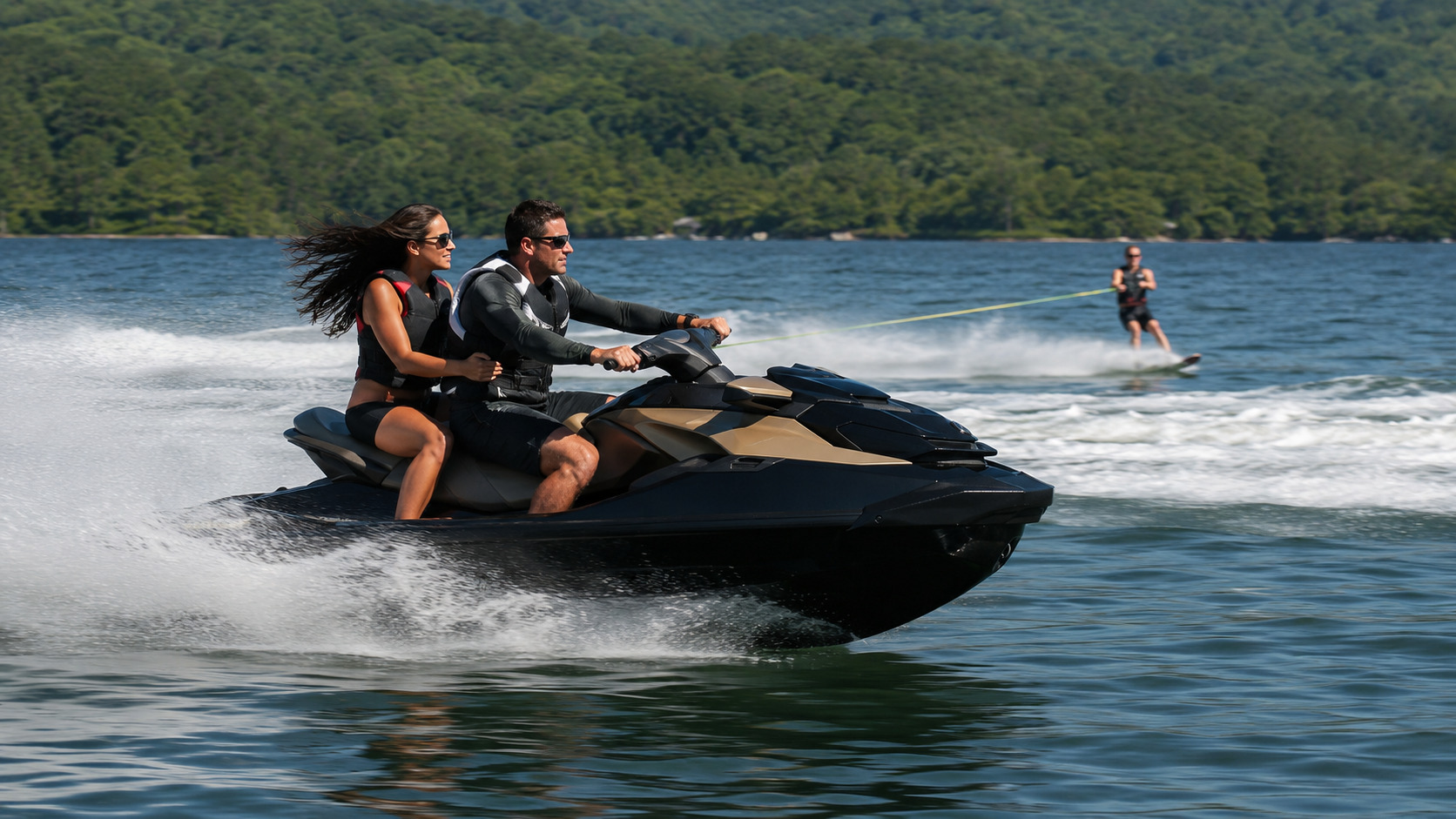
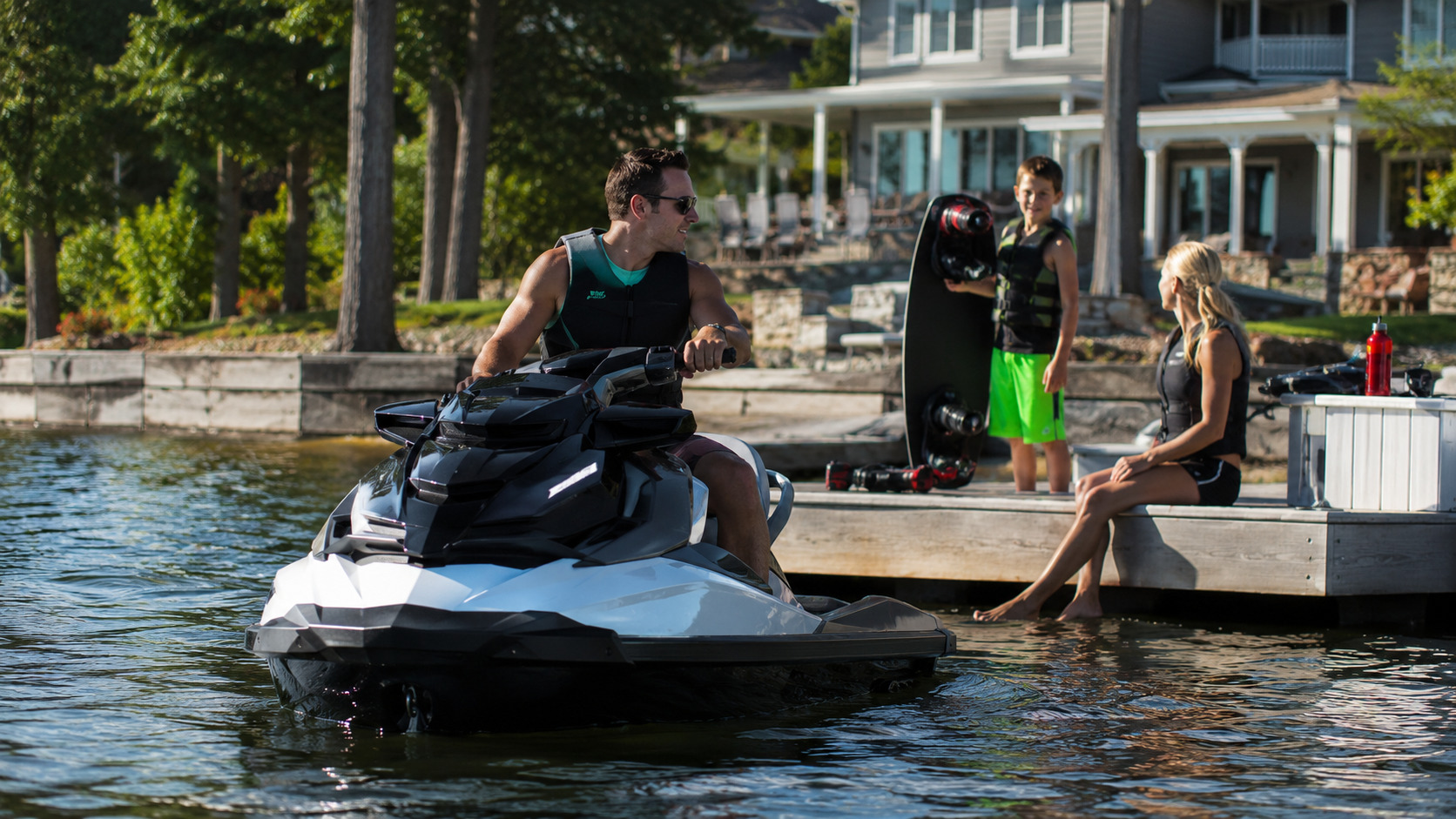
Ski Mode makes pull characteristics more repeatable, which can be more valuable to a beginner than raw horsepower.
The retractable pylon raises the tow point and includes spotter-oriented utility. Its mounting and latch should be
inspected as working hardware, not treated like a static accessory.
Wake’s GTI hull is lighter and storage-rich. Wake Pro’s ST3 hull is longer and more stable, especially with a
passenger or spotter aboard.
Board racks move bulky gear off the seat and platform, but they add width and must be considered when trailering,
docking and storing the PWC.
Across the Sea-Doo Tow Sports Series, the purchase is also a trailer and storage decision. PWC dimensions are
compact compared with boats, but package weight, trailer length, garage height, accessory racks and the owner’s tow
vehicle still determine how spontaneous ownership feels.
Tow-sports buyers should also consider rider progression. Beginners benefit from consistent pull and easy pickup
more than maximum thrust. As riders become heavier or more advanced, the 230-hp Wake Pro can provide more reserve
for deep-water starts and repeated acceleration. That progression can justify starting with Wake instead of buying
the larger model before the family needs it.
Sea-Doo categories solve different riding problems. Compare outside the current series when the rider keeps wishing
Compare this category when the rider's normal use shifts away from the core tow sports series mission.
Compare this category when the rider's normal use shifts away from the core tow sports series mission.
The model set in this guide includes Wake, Wake Pro. Read the specifications together with the rider mission.
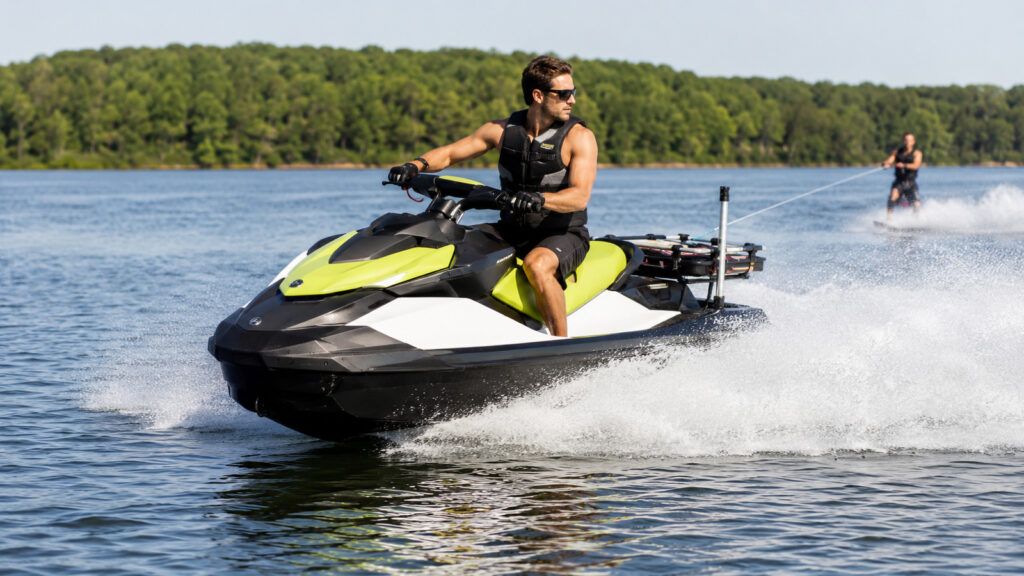
Choose Wake when tow sports share the day with ordinary recreation and the 170-hp GTI platform provides enough pull
for the intended riders.
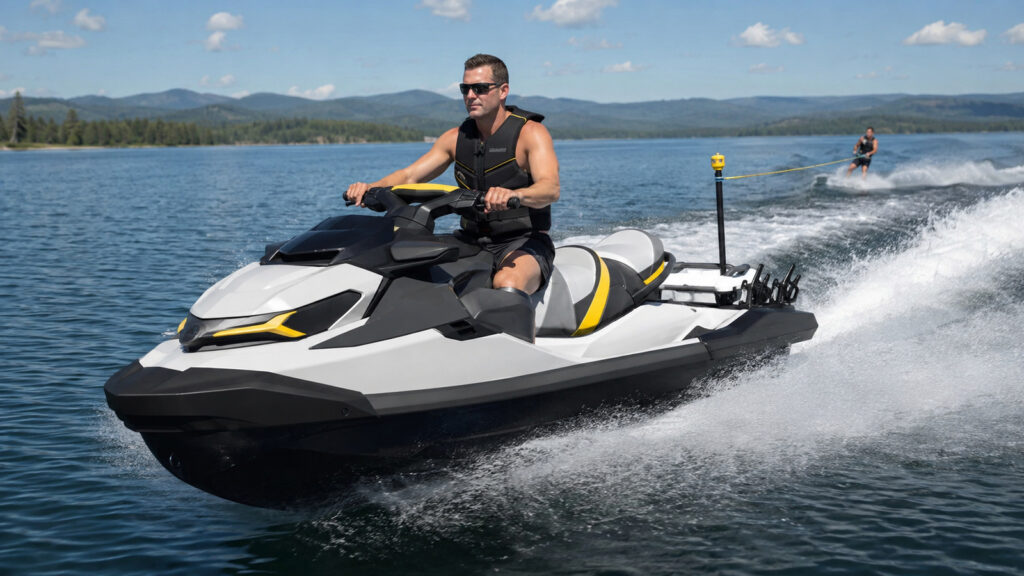
Choose Wake Pro when towing is frequent, riders are heavier or the water gets rough enough that ST3 stability
matters.
Compare storage honestly. Wake Pro is larger but publishes less internal storage than Wake, so the bigger machine is
not automatically better for a gear-heavy family.
Test the tow package with a real spotter and rider. A solo sea trial does not reveal whether the pylon, rack, rear
platform and engine output make repeated sessions easier.
A useful final check is to describe the normal Saturday in one sentence. If the selected Sea-Doo requires explaining
activities the owner rarely does, the category or model may be too specialized. If the features solve the same
problems every weekend, the premium is easier to justify.
Tow-line load goes into the pylon and surrounding structure repeatedly. Check for movement, damage or looseness
before every season.
Boards and wet riders can mark the rear platform quickly. Cosmetic wear is normal; damaged traction, loose rack
hardware or sharp edges are not.
Supercharged Wake Pro raises fuel and service intensity relative to naturally aspirated Wake 170. That trade should
be justified by the riders being towed.
The point of a tow-sports PWC is more water time, not a feature list that makes the machine harder to afford.
PWC ownership is also seasonal in many markets. Battery care, fuel condition, winterization or long-term storage,
trailer tires and bearings, and corrosion prevention can matter as much as engine hours. A low-hour machine that sat
neglected can require more correction than a well-used example with consistent maintenance.
Ropes, boards and wet gear create storage habits that can damage a PWC if they are improvised. Keep tow lines away
from the pump intake, use the rack for boards instead of balancing them on the seat, and inspect rear traction
surfaces for damage from fins. A dedicated tow model is valuable because it gives those items an intended place.
Use these topics to turn model comparison into a complete PWC purchase plan.
This guide covers Wake, Wake Pro. The important differences are hull family, horsepower, rider ergonomics, storage
The series fits buyers interested in Sea-Doo’s tow-sports range with factory ski-pylon, board-rack and ski mode
Ride the smallest model that appears to fit, then test the next step up on the same water. The larger or more
Wake uses the GTI hull with 170 hp and more internal storage. Wake Pro uses the longer ST3 hull with a 230-hp
Inspect the hull bottom, intake grate, jet pump, iBR hardware, steering, seat, battery, display and trailer. Then
Float Finance can help consumers pursue marine financing for eligible Sea-Doo purchases, subject to borrower,
Tell us a little bit about yourself and the boat you are looking to finance.