
Call Us : 207-994-5109
Mon – Fri: 8 am to 9 pm & Sat – Sun: 10 am to 8 pm
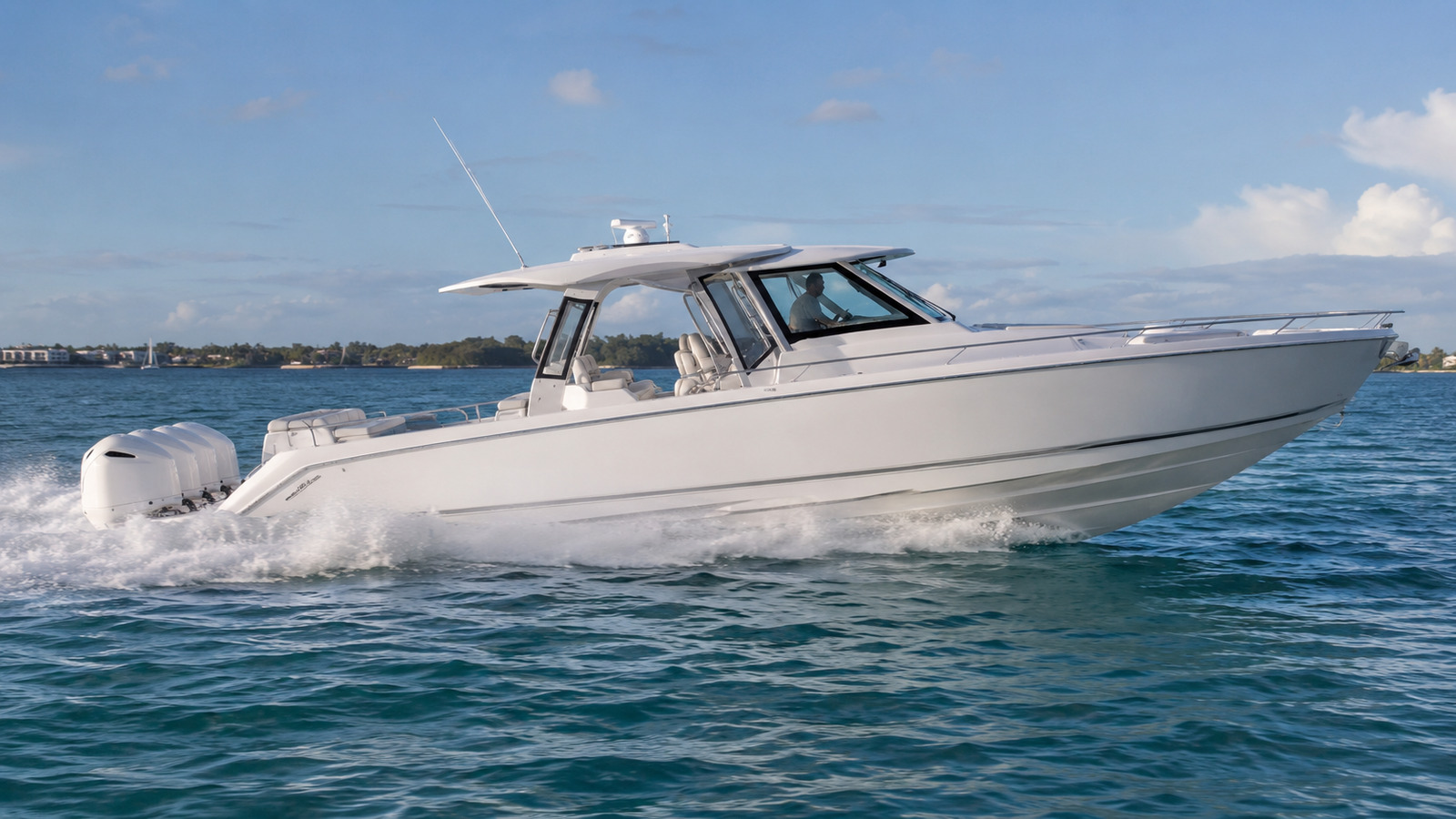
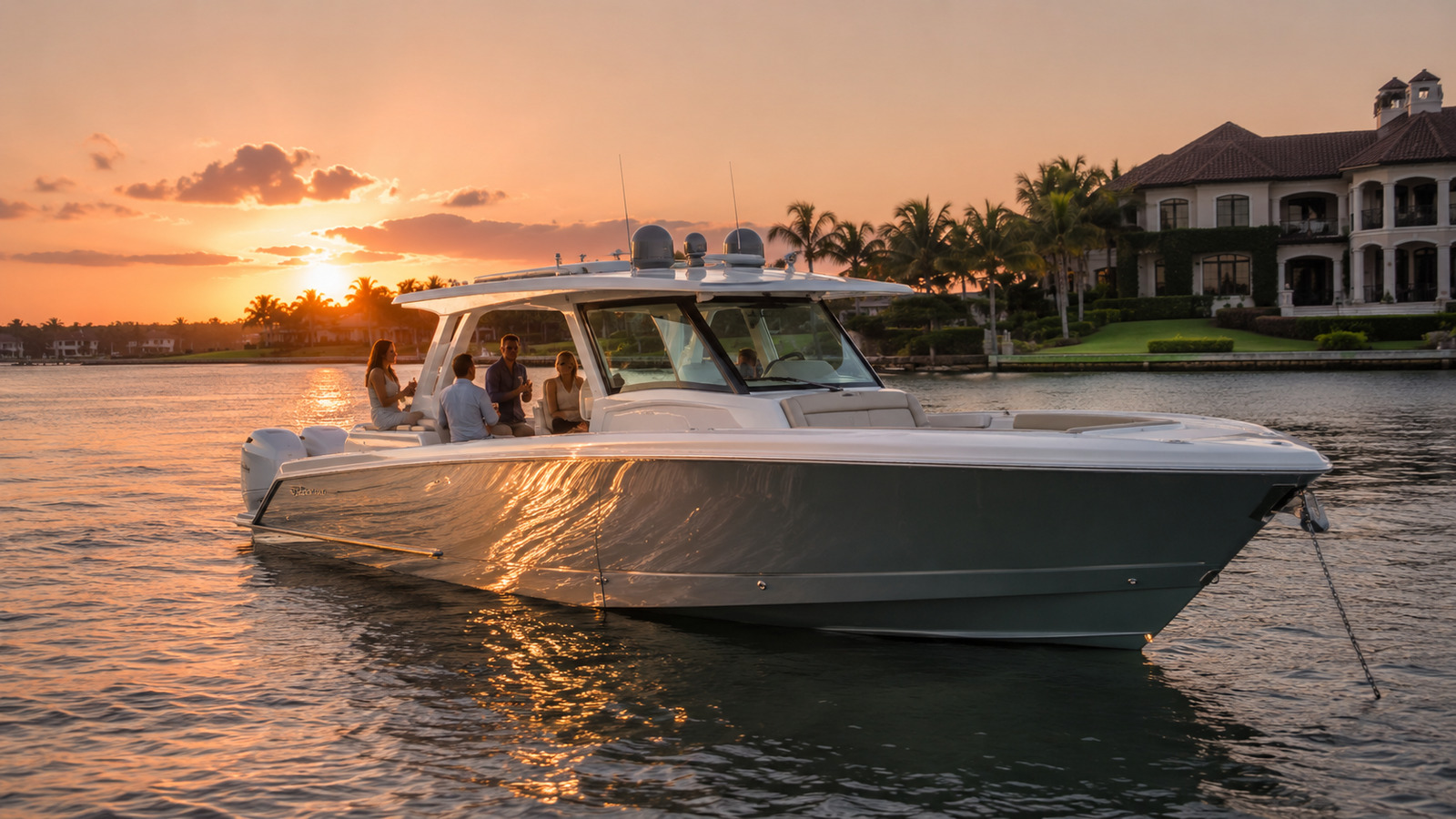
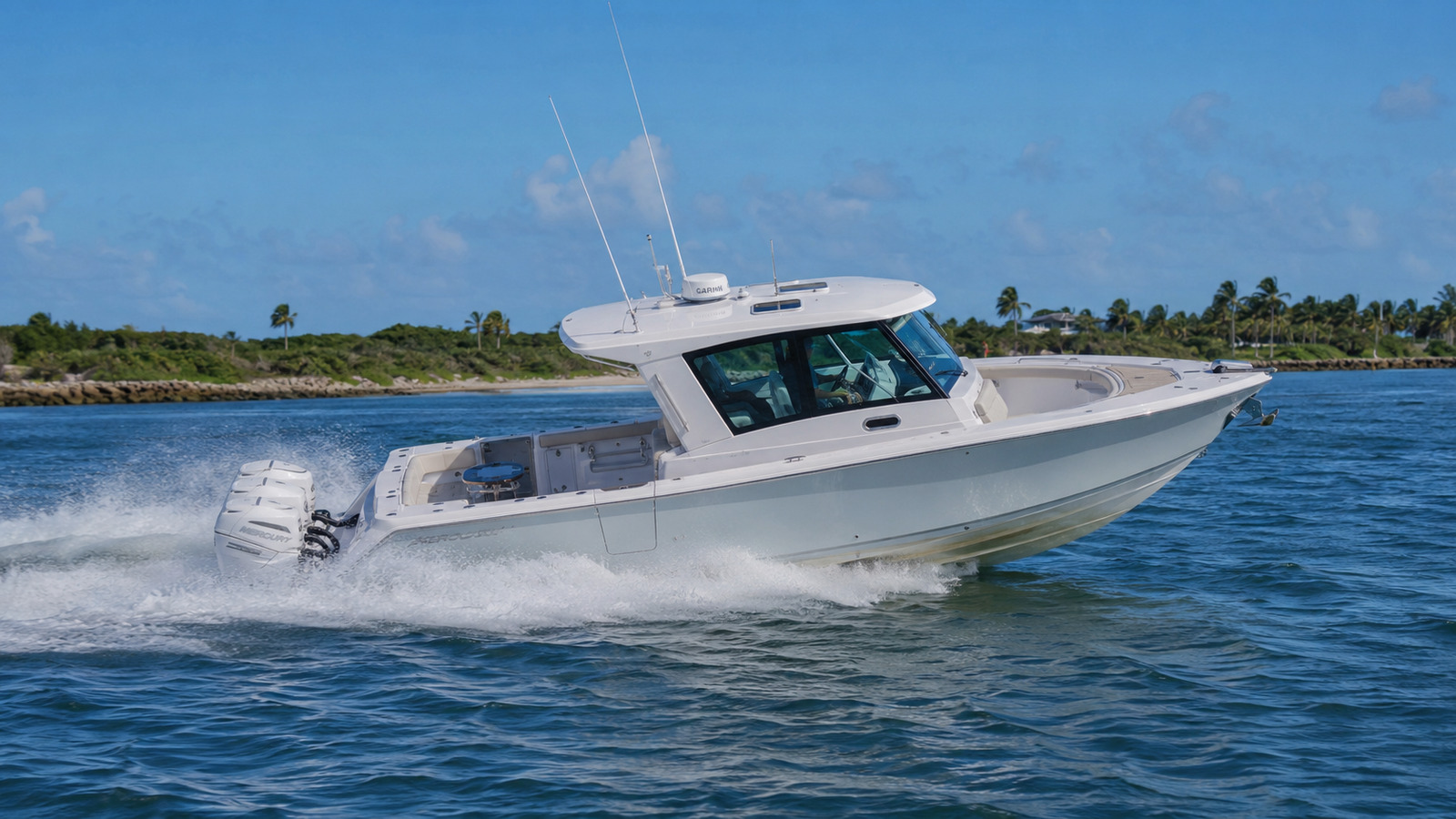
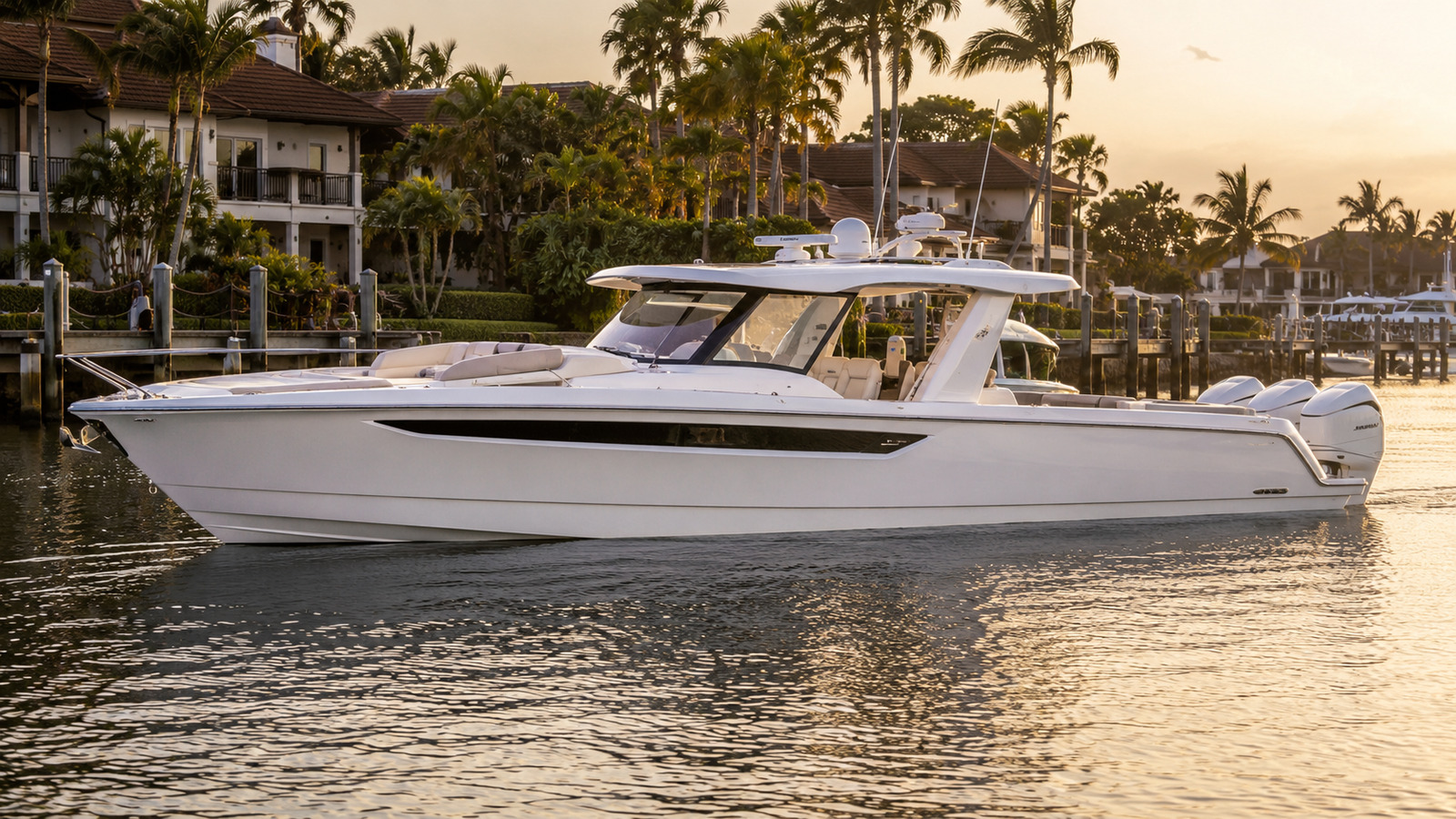
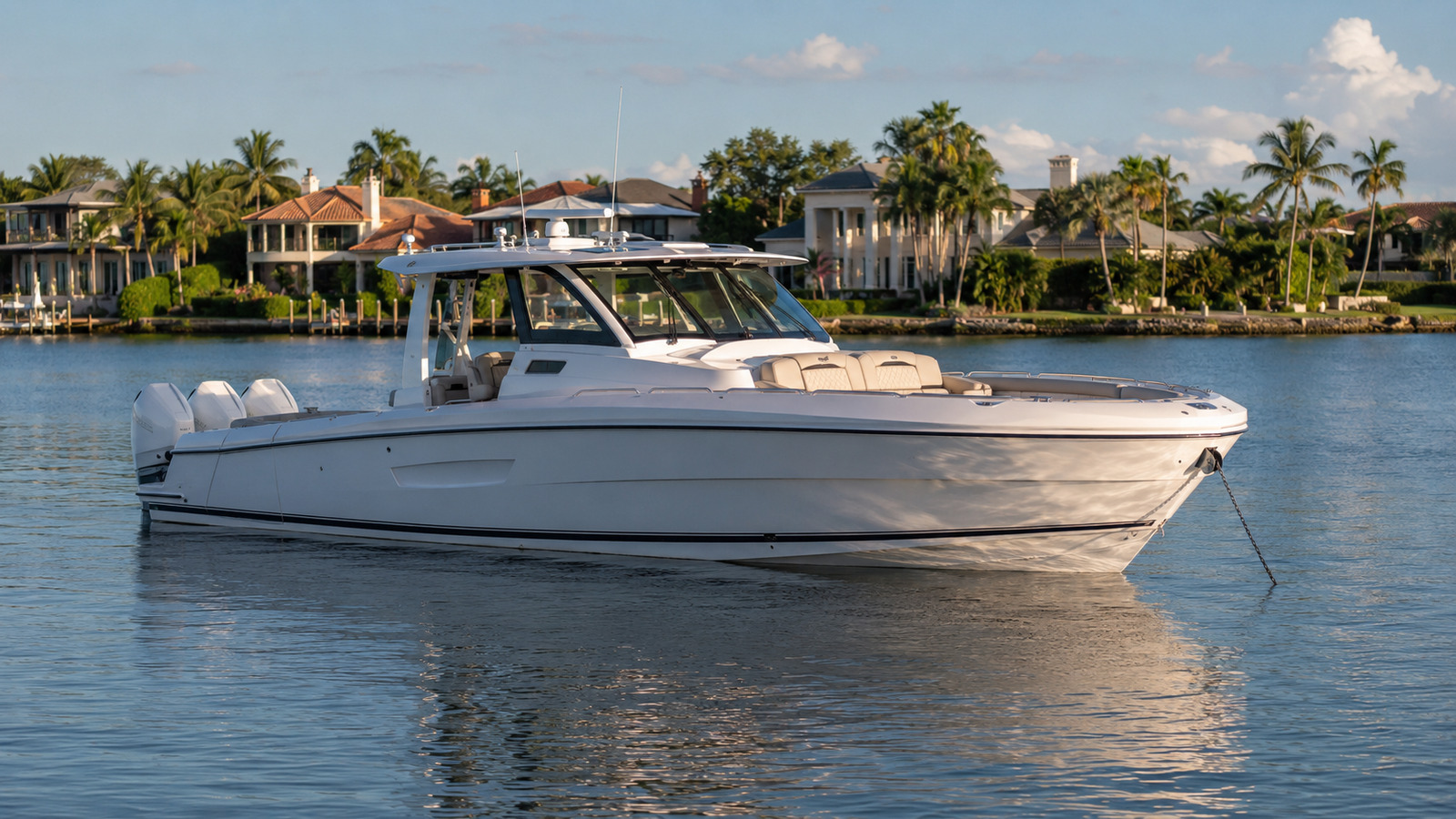
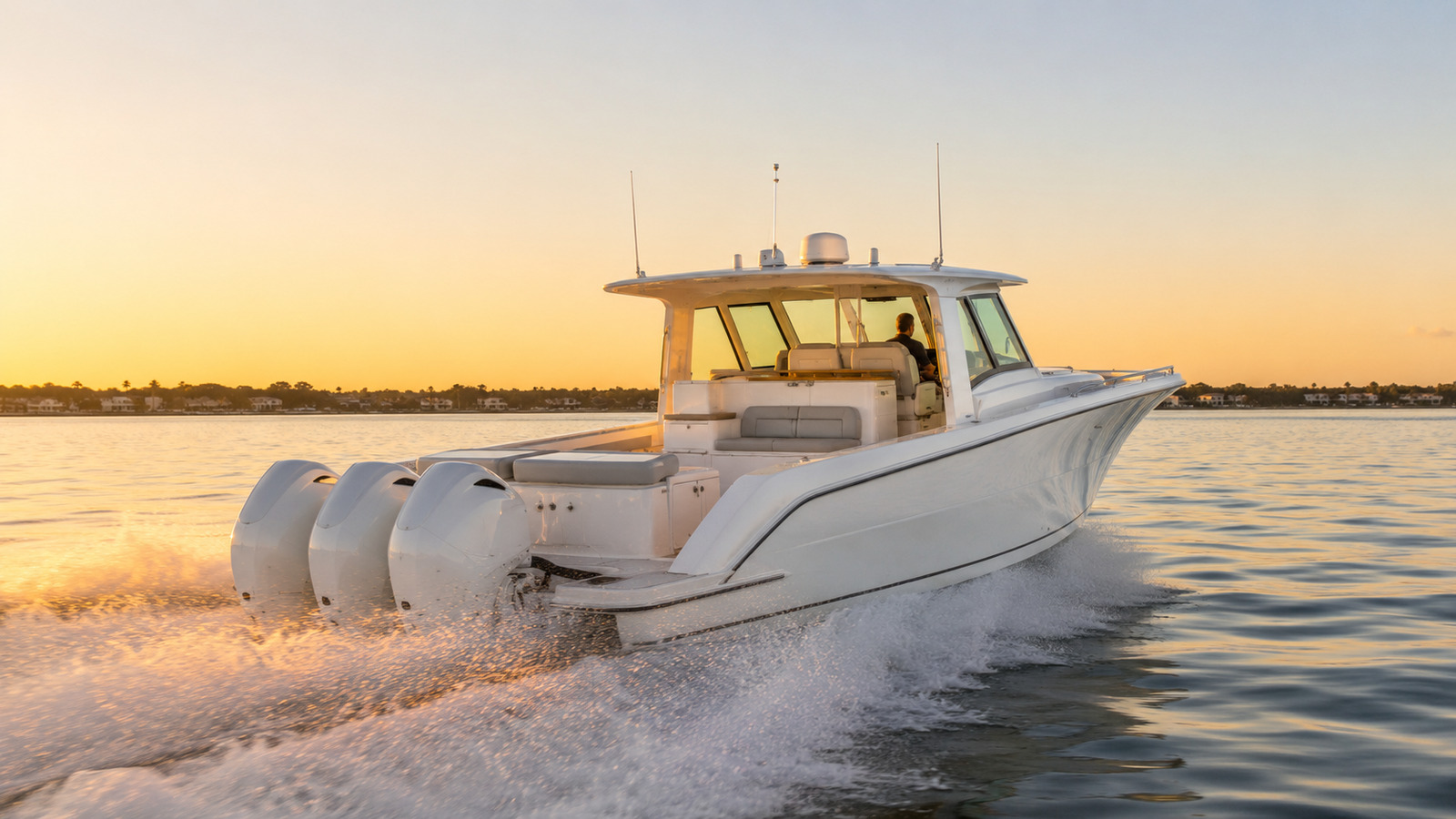
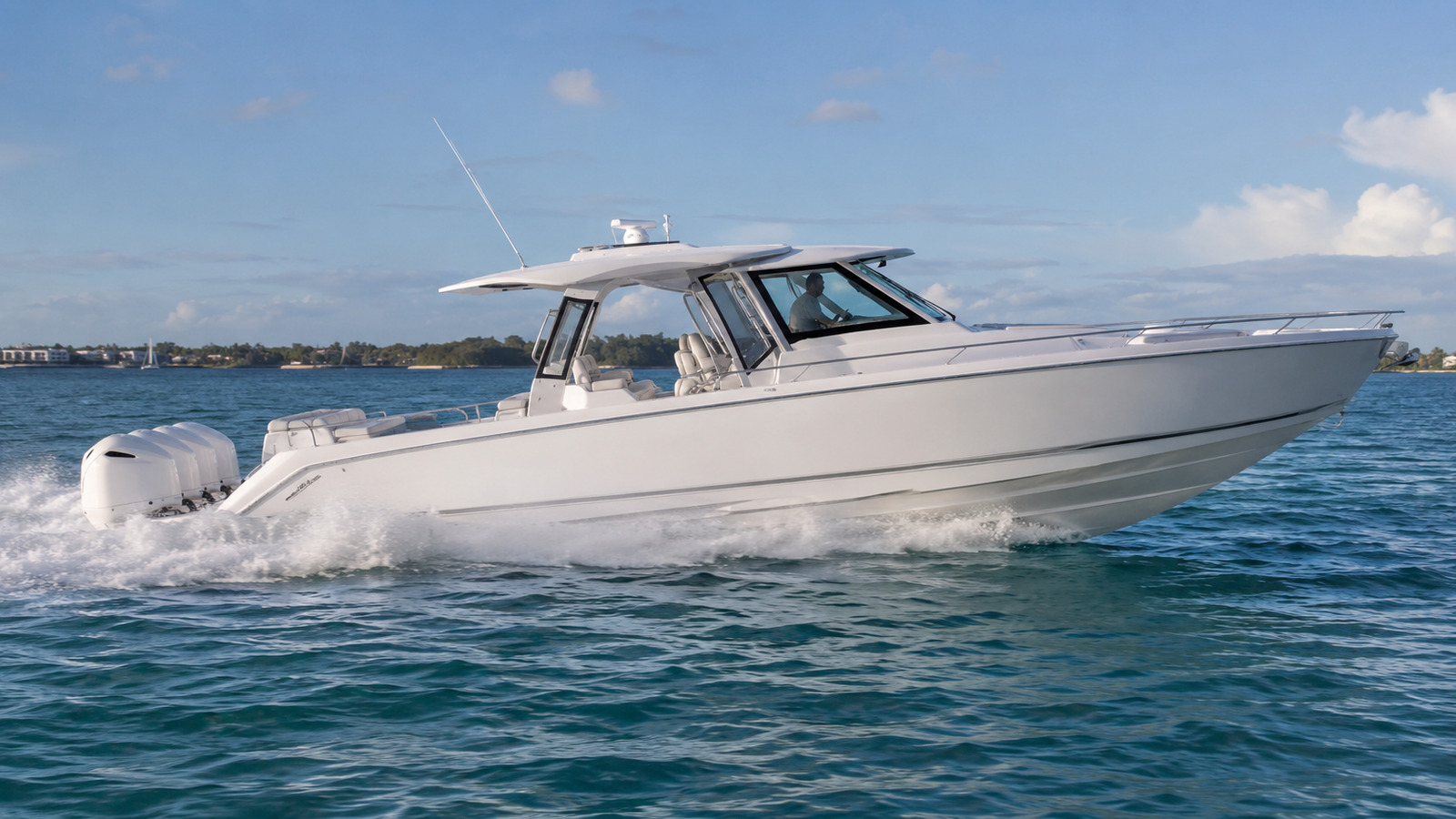
The Intrepid 41 Panacea is the middle Panacea, balancing triple-engine offshore range with a real V-berth, full head, luxury finishes, forward lounge, and meaningful fishing capability.
The Intrepid 41 Panacea is the middle Panacea, balancing triple-engine offshore range with a real V-berth, full head, luxury finishes, forward lounge, and meaningful fishing capability. It is built for an owner who wants a true overnight-capable center console with more cabin and deck volume than the 35 without moving to the 51’s quad-engine scale.
On triple-engine Panacea use, panacea is the luxury center-console-with-cabin branch: open deck utility and fishing capability above, real climate-controlled retreat below.
For owners of 42-foot luxury-center-console operation, at 42′ 2″ long with a 11′ 9″ beam, the 41 Panacea is large enough that marina fit, fuel access, service support, and haul-out strategy belong in the buying conversation before cosmetic options.
With V-berth offshore trips, factory information lists Triple Mercury V10 400, 480 gallons of fuel, 12 passengers, a 30 mph published cruise reference, and a 57 mph published maximum-speed reference. Because this is three-engine overnight use, intrepid also publishes an estimated range of ~350 miles, subject to configuration, load, and conditions.
In day-to-day use of middle-Panacea ownership, those numbers matter because the 41 Panacea is not a generic premium boat. Before committing to wide-beam marina use, its engine count, beam, cabin or cockpit mission, and fuel load define a specific ownership pattern.
The 41 Panacea gains meaningful cabin and deck volume over the 35, but triple engines, 480 gallons of fuel, more plumbing, and a larger hardtop create a more substantial service and marina plan.
Published factory figures. Confirm every dimension against the individual boat before you commit.
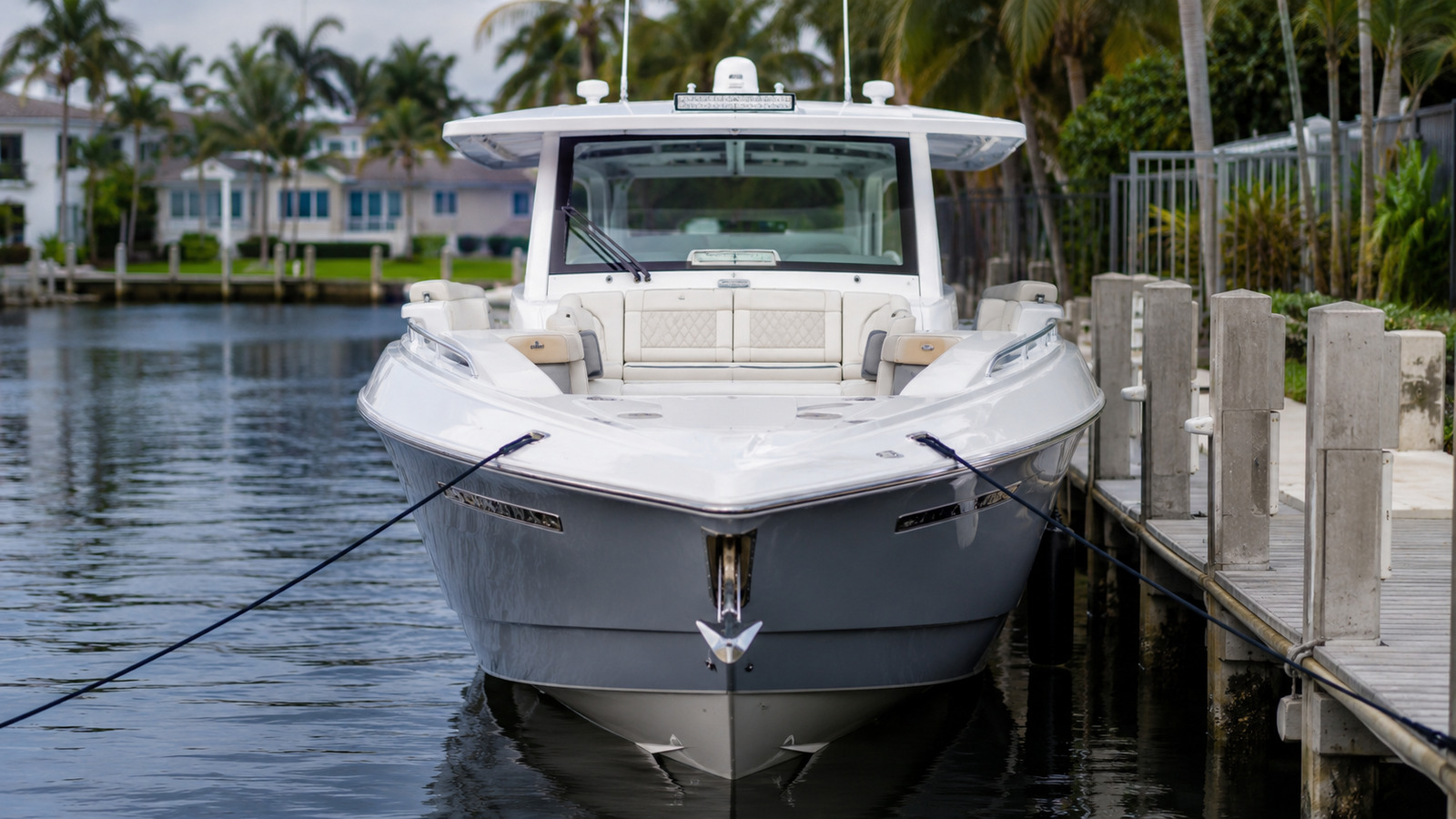
The 41 Panacea uses Intrepid’s stepped-hull philosophy and resin-infused construction. On triple-V10 ownership, the stepped running surface is intended to reduce drag, create lift, and preserve speed and efficiency on a boat carrying substantial fuel, engines, and premium equipment.
For owners of triple-engine Panacea use, the hull should be evaluated under real offshore load. With 42-foot luxury-center-console operation, full fuel, passengers, ice, fishing gear, freshwater, cabin stores, batteries, and stabilization equipment can change how a premium performance boat settles onto its running surface.
Because this is V-berth offshore trips, a 11′ 9″ beam also determines more than cockpit comfort. In day-to-day use of three-engine overnight use, slip width, lift spacing, haul-out availability, transport permits, and service-yard access can become limiting factors long before the family runs out of seating.
Before committing to middle-Panacea ownership, the 41 Panacea’s hull inspection should begin at the stem and move aft along chines, strakes, steps, keel, transom, hull-side openings, and boarding structures. During a survey of wide-beam marina use, high-speed stepped hulls deserve careful attention to previous impact or poorly blended repair.
On fish-and-cruise weekends, where the boat uses a hull-side door or opening platform, inspect hinges, latches, seals, hydraulic components, surrounding laminate, and alignment. For owners of triple-V10 ownership, a large moving section in the hull side should close cleanly and carry no unexplained stress cracking.
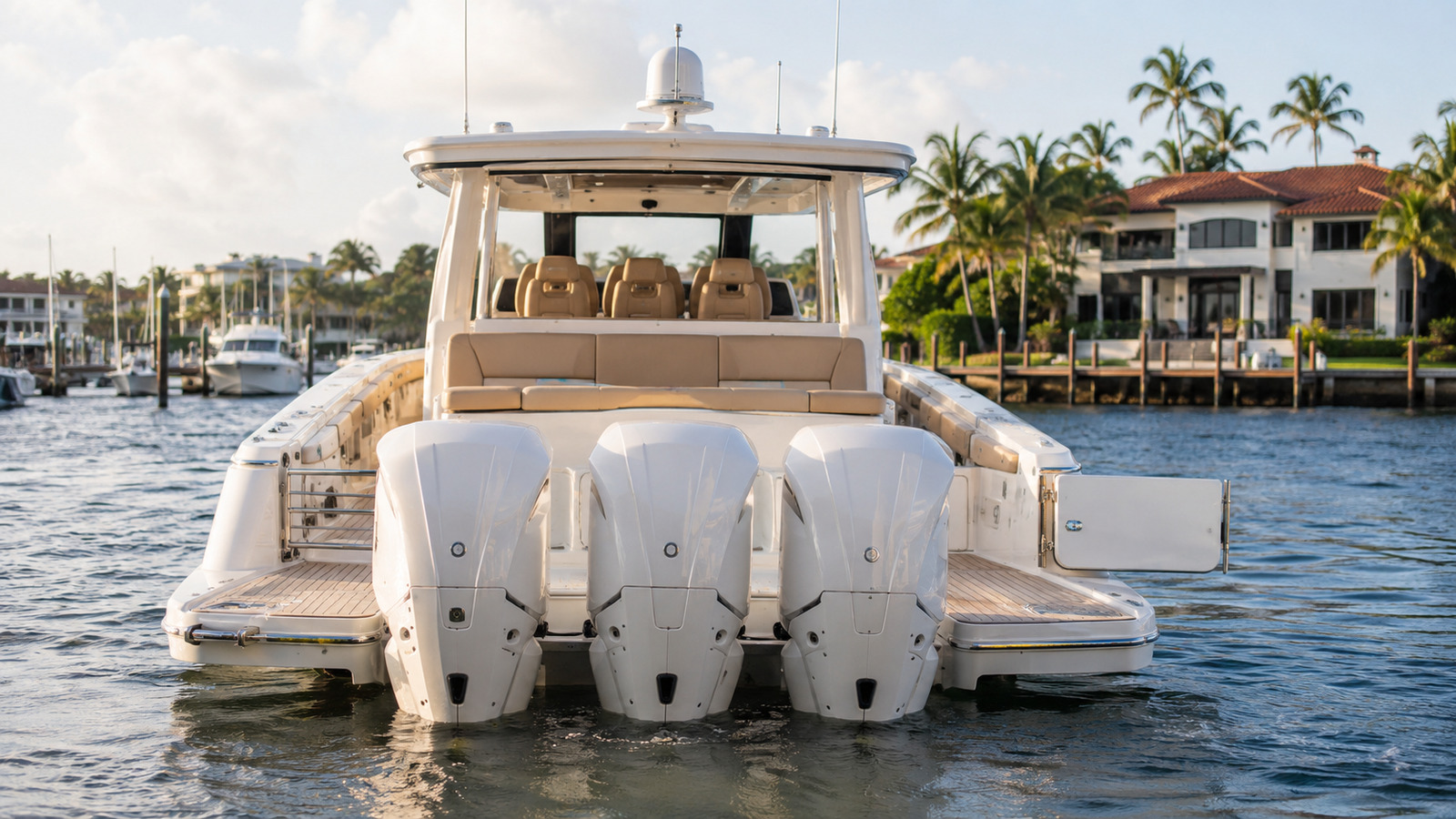
The 41 Panacea’s propulsion package is central to both performance and value. During a survey of middle-Panacea ownership, multiple large outboards buy acceleration, redundancy, joystick maneuvering, and offshore speed, but they also multiply lower-unit service, propellers, anodes, water pumps, steering components, and engine-hour histories.
On wide-beam marina use, every engine should be scanned and evaluated individually. For owners of fish-and-cruise weekends, matching cowlings do not guarantee matching hours, fault histories, compression, maintenance intervals, or lower-unit condition.
On triple-V10 ownership, inspect the transom and engine-mounting structure before the sea trial. Because this is triple-engine Panacea use, steering cylinders, tie bars where applicable, rigging tubes, battery cables, fuel lines, and engine-flush plumbing should move cleanly and show no chafe.
In day-to-day use of 42-foot luxury-center-console operation, the boat should start all engines cold. During ownership of V-berth offshore trips, watch voltage, charging, cooling flow, smoke, idle quality, and digital engine data before leaving the dock.
During a survey of three-engine overnight use, during the sea trial, bring the 41 Panacea onto plane with a realistic load and watch whether the engines share load evenly. On middle-Panacea ownership, uneven rpm, excessive steering correction, propeller ventilation, or a warning on one engine deserves diagnosis.
For owners of wide-beam marina use, at cruise, compare the actual fuel-flow display with the speed and range expectations for the exact build. With fish-and-cruise weekends, published performance is useful as a reference, not a guarantee.
The 41 Panacea’s fuel system is part of its mission. During a survey of V-berth offshore trips, a tank of this size supports long offshore runs, island hopping, or extended cruising, but it also creates a large variable-weight load.
On three-engine overnight use, a full tank can add thousands of pounds on the largest Intrepids. For owners of middle-Panacea ownership, that changes acceleration, draft, trim response, lift requirements, and how much reserve remains before the boat reaches a comfortable loaded condition.
With wide-beam marina use, range planning should use observed fuel flow from the actual engines at the actual cruise speed. Because this is fish-and-cruise weekends, weather, head sea, current, generator use, passenger load, bottom condition, and time spent idling or trolling all change the number.
In day-to-day use of triple-V10 ownership, the owner should preserve a generous offshore reserve rather than treating the factory range estimate as a trip-planning target.
During ownership of triple-engine Panacea use, inspect fills, vents, tank-access areas, separators, fuel manifolds, sender accuracy, and any transfer or auxiliary plumbing on the exact build. During a survey of 42-foot luxury-center-console operation, fuel odor or staining should be explained before closing.
On V-berth offshore trips, high-capacity fuel systems also make marina logistics important. For owners of three-engine overnight use, the buyer should know whether the home marina can comfortably fuel the boat and whether the slip allows access to the preferred fill locations.
The 41 Panacea should feel composed rather than merely fast. Before committing to triple-V10 ownership, intrepid’s stepped hull is designed to carry speed efficiently, but the sea trial should show whether the exact boat remains balanced with its real engines, fuel, and equipment.
Run first at displacement speed. Because the boat is triple-engine Panacea use, check visibility, steering effort, joystick response, and the way the hull responds to wind near the dock.
On 42-foot luxury-center-console operation, accelerate from a normal cruise load rather than an empty demonstration condition. For owners of V-berth offshore trips, the bow should rise predictably and the boat should transition cleanly onto the steps without unusual vibration.
With three-engine overnight use, at the factory cruise reference of 30 mph, listen for hardtop movement, cabinet noise, windshield vibration, loose deck hardware, and engine harmonics. Because this is middle-Panacea ownership, large premium boats reveal build and maintenance issues when speed loads the structure.
Cross wakes at several angles. In day-to-day use of wide-beam marina use, the stepped hull should not require dramatic steering corrections or feel nervous when weight shifts between passengers.
During ownership of fish-and-cruise weekends, run turns with trim set correctly for the sea state. During a survey of triple-V10 ownership, high-performance center consoles and cabin boats can feel very different when over-trimmed, under-trimmed, or heavily loaded aft.
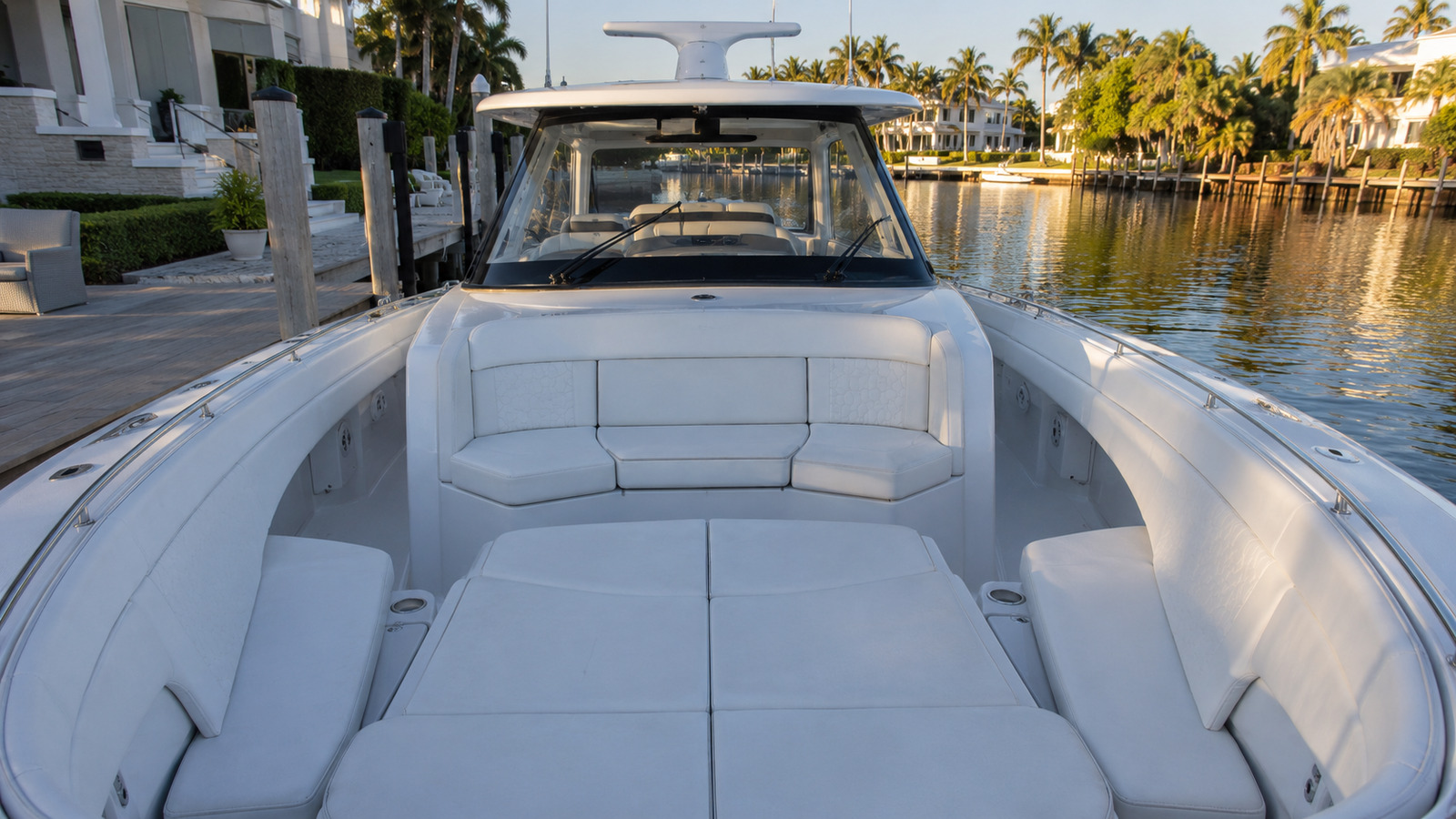
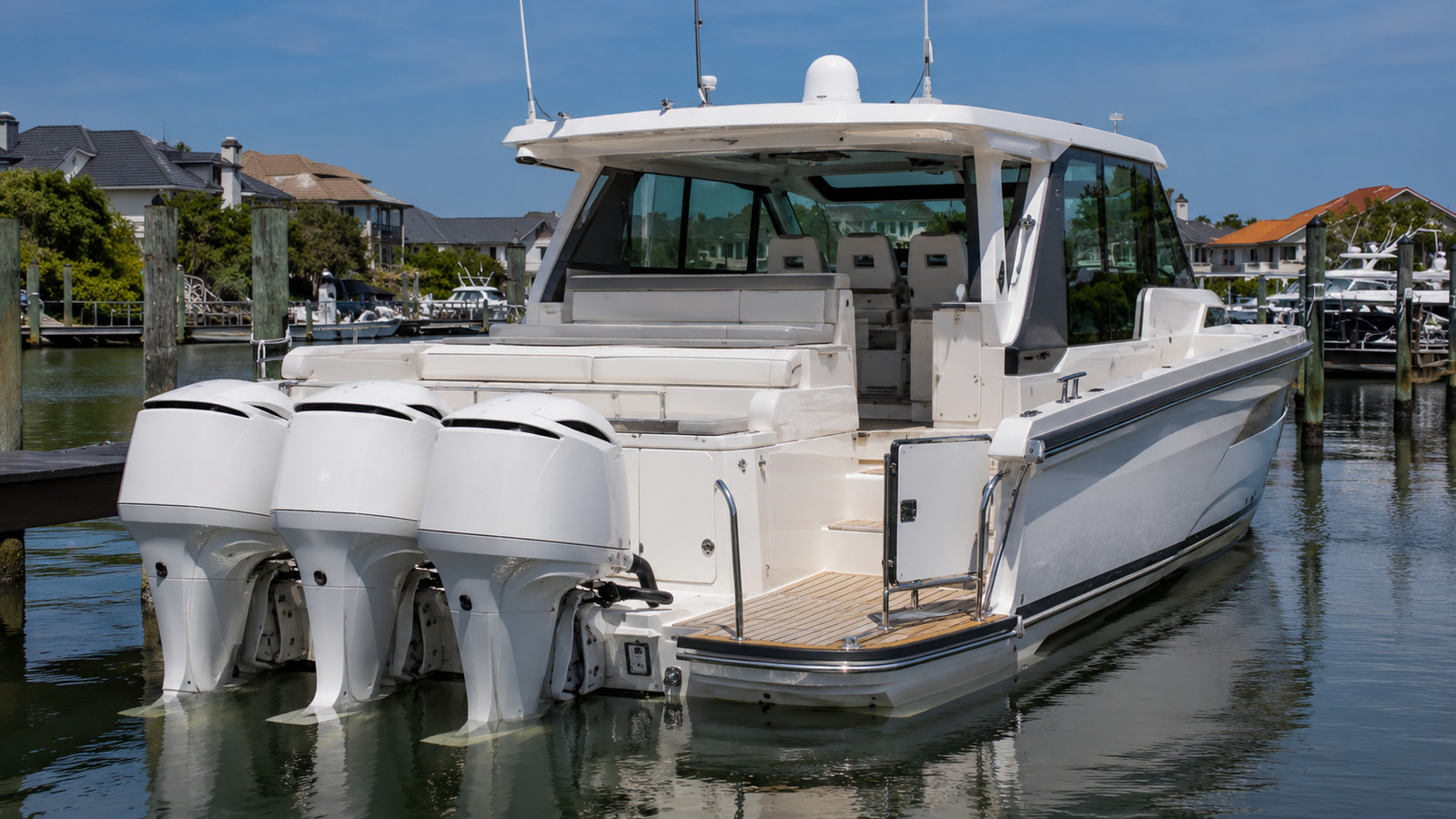
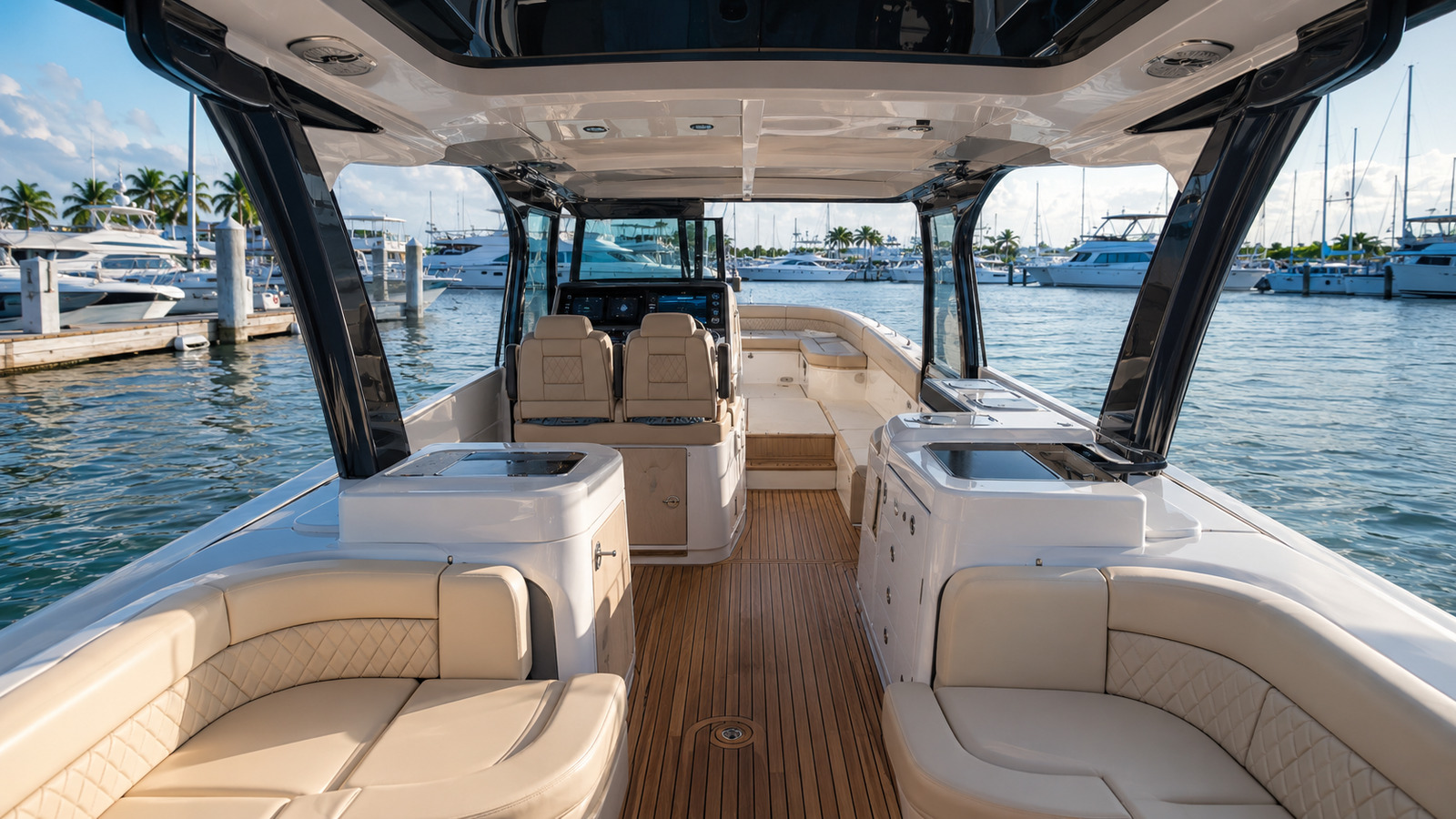
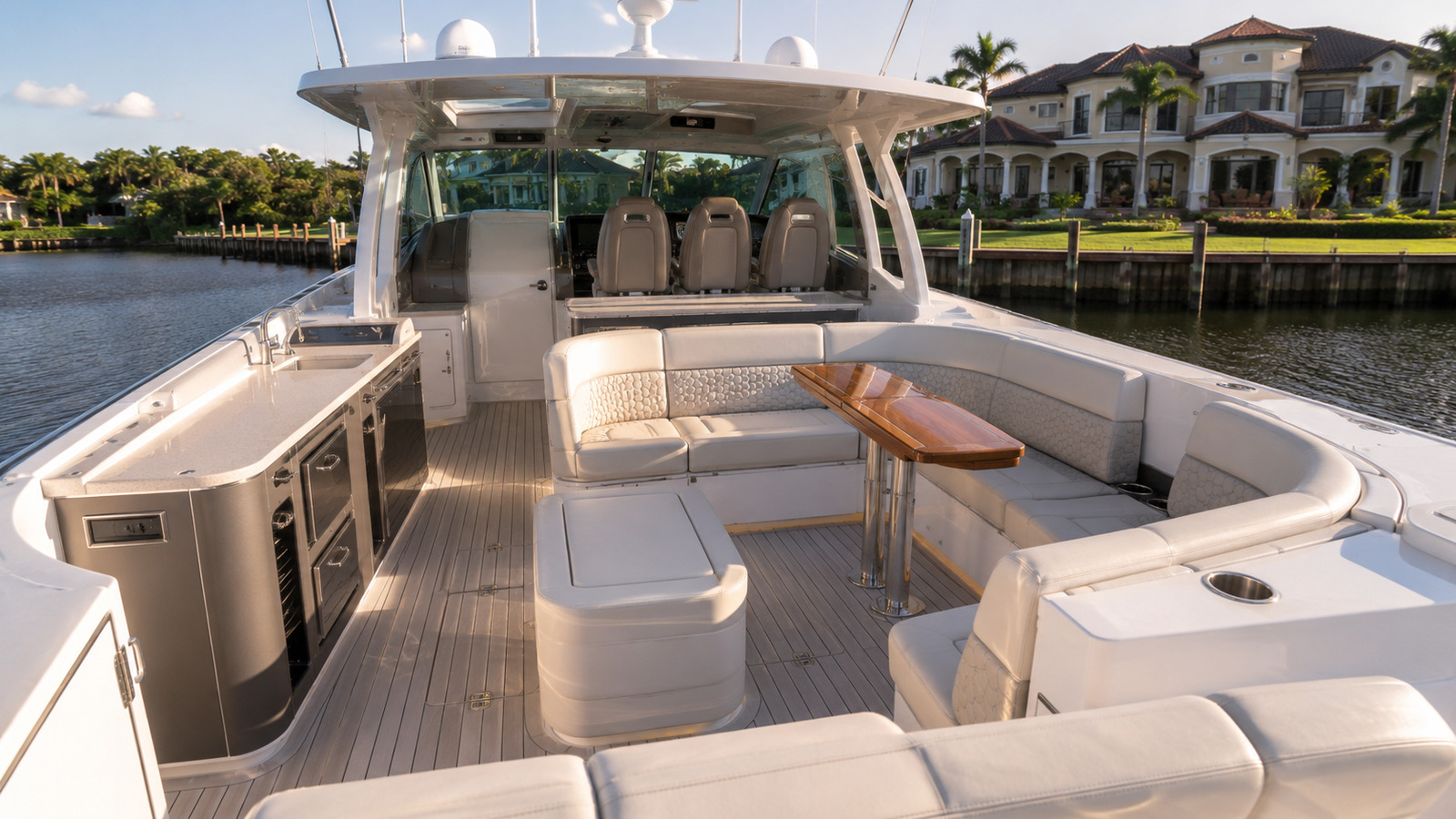
The center-console geometry keeps both gunwales usable, so passengers, anglers, and divers can move around the helm without treating the cabin as a wall.
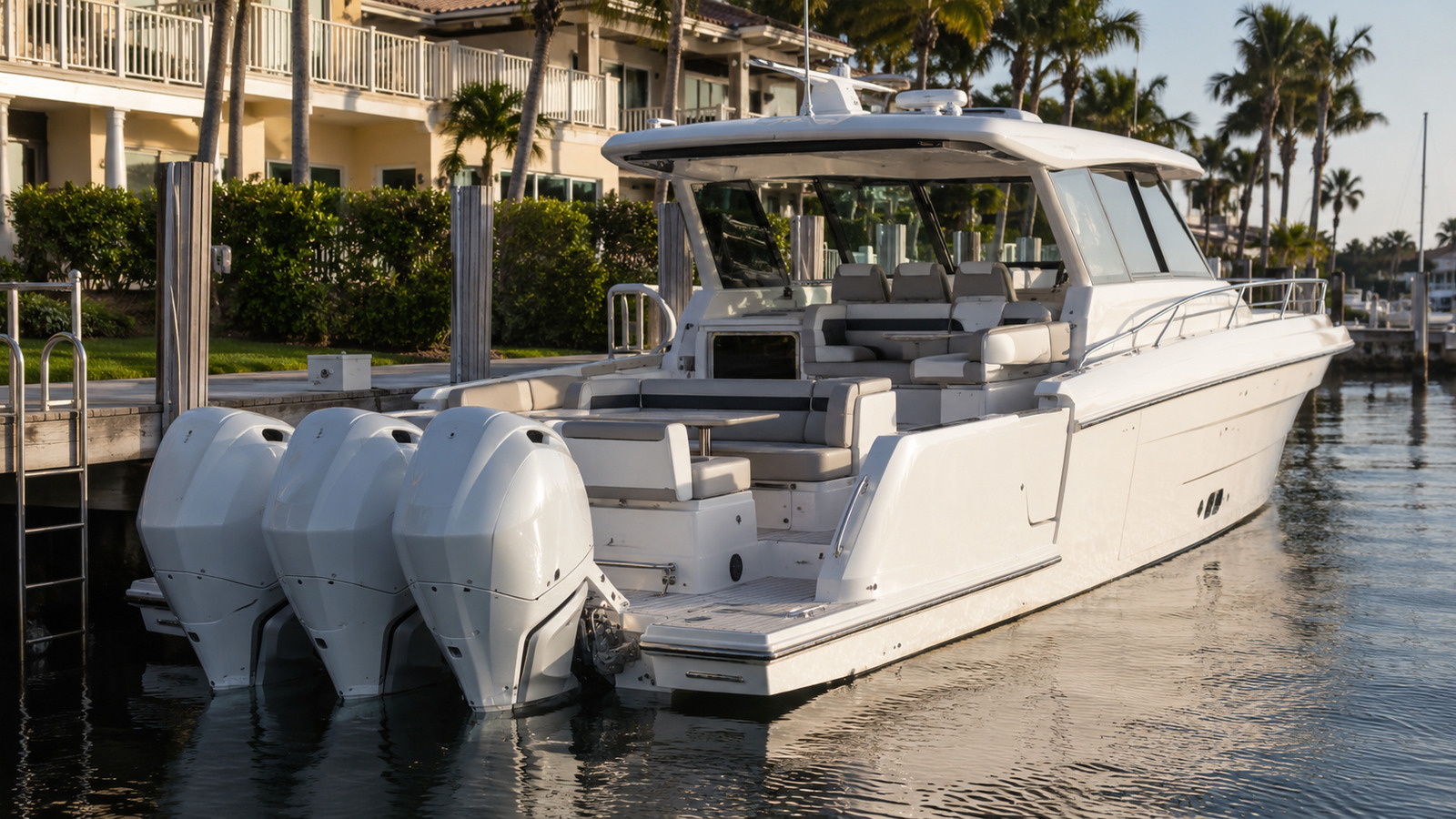
V-berth cabin, full head, forward lounge, mezzanine seating, hardtop storage, hull-side dive door, transom platform, and a deck that can shift between entertaining and fishing.
Because this is three-engine overnight use, the buyer should move through the boat with several adults aboard. With middle-Panacea ownership, open lockers, deploy tables, use boarding doors, walk around the helm, and access the transom without asking everyone to relocate.
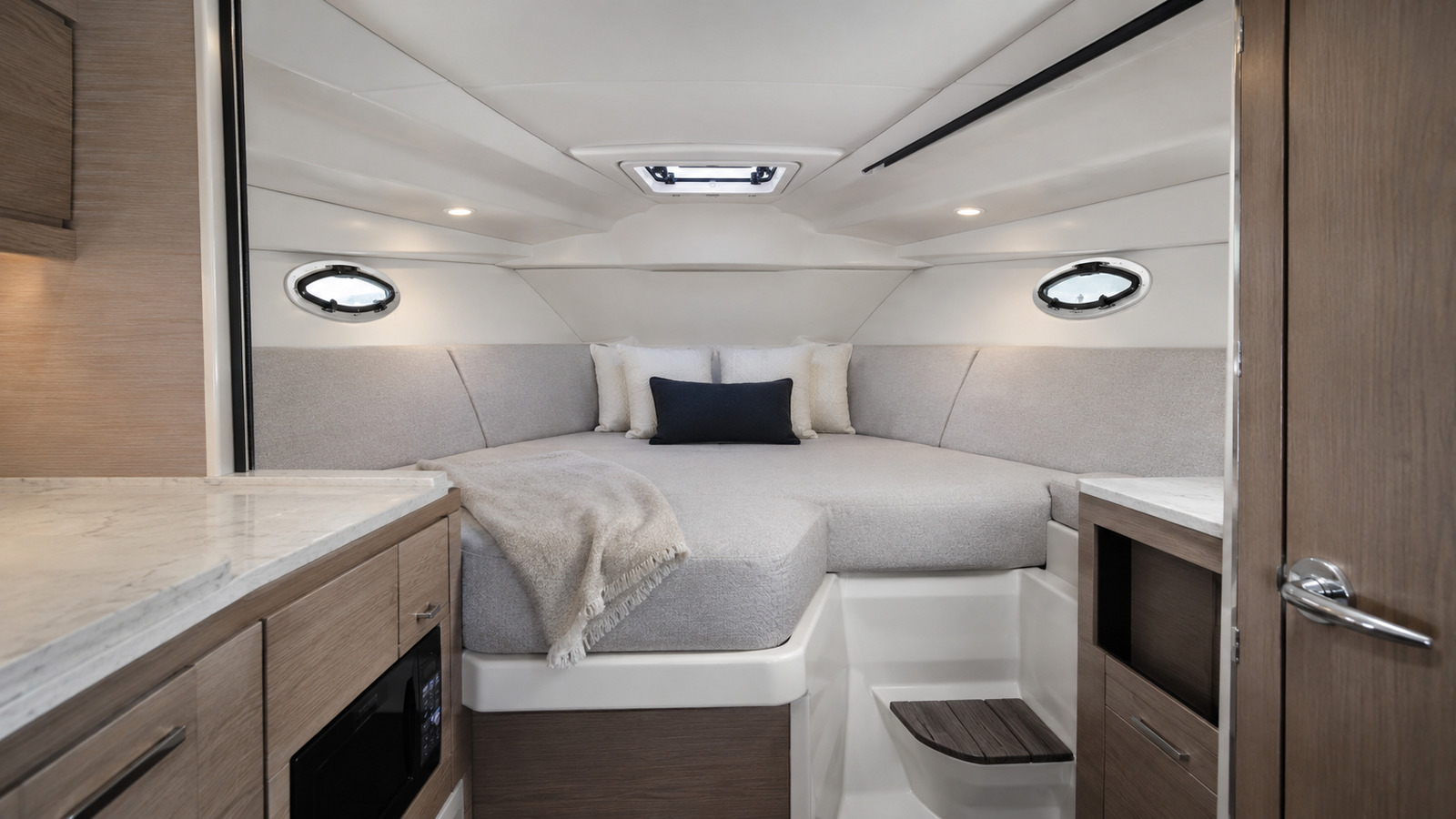
The cabin is not decorative. Before committing to wide-beam marina use, it should support real cooling, sleeping, head use, storage, and weather refuge.
During a survey of fish-and-cruise weekends, fishing hardware should be evaluated according to the model’s mission. On triple-V10 ownership, rod holders, livewells, fish boxes, washdowns, tackle storage, transom access, and cockpit drains should be easy to use without turning the boat into an obstacle course.
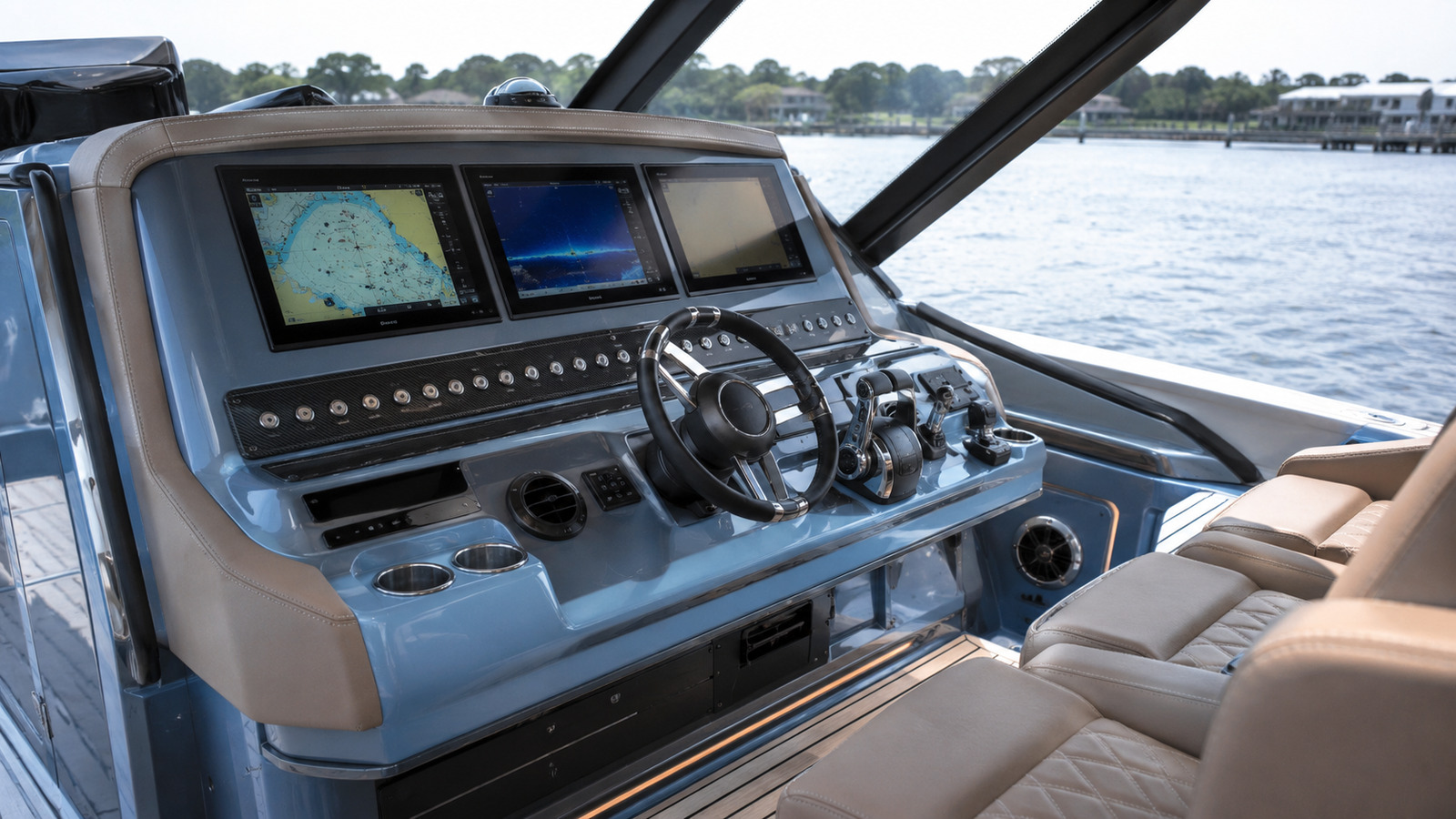
For owners of triple-engine Panacea use, at the helm, the driver should have clear sightlines seated and standing. With 42-foot luxury-center-console operation, large displays, engine data, switches, joystick, autopilot, and trim controls should fall into a repeatable workflow.
Because this is V-berth offshore trips, shade systems matter on long days. In day-to-day use of three-engine overnight use, hardtop coverage, electric aft shades, side glass, opening windows, or cabin air conditioning should be used long enough to reveal noise, leaks, or weak actuators.
480-gallon fuel system – The 41 carries enough fuel for serious offshore trips and substantially more full-tank weight than the 35.
The 41's berth gives the boat legitimate overnight capability and should be judged for ventilation, storage, privacy, and mattress condition.
A real enclosed head changes how long families and guests can comfortably remain aboard.
Side boarding is valuable for diving and floating docks; hinges, seals, latch alignment, and ladder hardware should feel precise.
Aft-facing seating keeps guests near cockpit activity while integrating cold storage into the helm-seat structure.
The hardtop carries glass, lighting, shade, electronics, and storage, making it both comfort equipment and a structural inspection area.
Three V10 outboards define the 41's performance and create three independent service histories to verify.
The 41 Panacea is a premium systems-heavy boat, but the systems list should follow the model’s purpose rather than a generic luxury checklist.
Triple mercury v10 400s, joystick and helm controls, freshwater and head systems, shower sump, fuel monitoring, hardtop systems, cabin equipment, electric shade, washdowns, and optional stabilization.
Start with batteries and charging. On fish-and-cruise weekends, multiple outboards, large electronics, pumps, refrigeration, shades, climate control, thrusters, and stabilization can expose a weak house bank very quickly.
Before buying triple-V10 ownership, cycle every major helm function with the engines running and again with them off. With triple-engine Panacea use, networked displays should retain engine, navigation, switching, and sensor data without repeated rebooting.
For 42-foot luxury-center-console operation, run livewells, washdowns, freshwater pumps, bilge pumps, macerators, shower sumps, and heads long enough to reveal leaks or weak pumps.
In day-to-day use of V-berth offshore trips, cabin models should have shore power, inverter or charger systems, air conditioning, refrigeration, lighting, and entertainment equipment tested at the dock.
Before committing to three-engine overnight use, if the boat has a Seakeeper or other gyro, review service records and run it through startup, operating speed, and shutdown. During a survey of middle-Panacea ownership, stabilization is a valuable system and a valuable repair item.
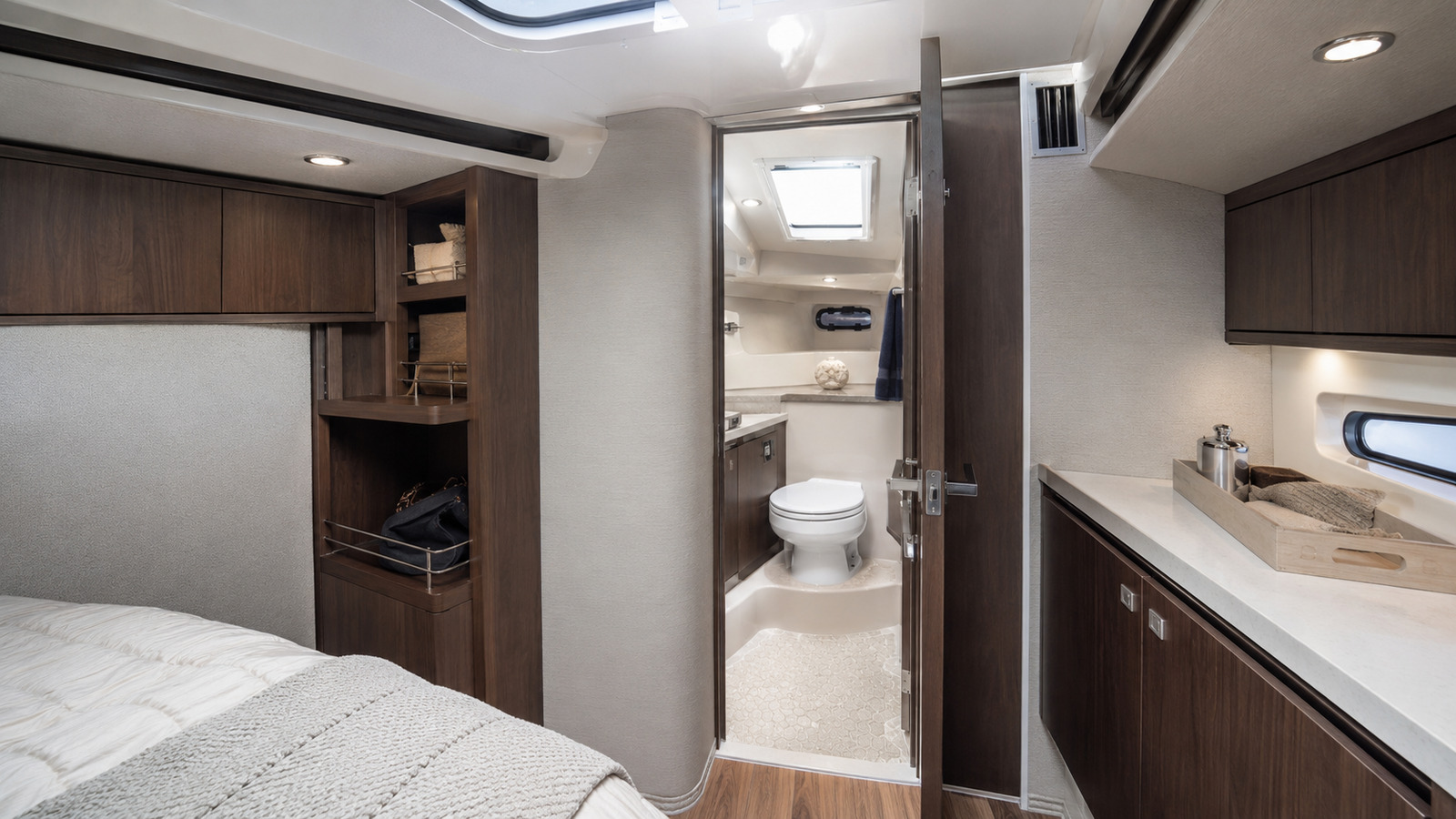
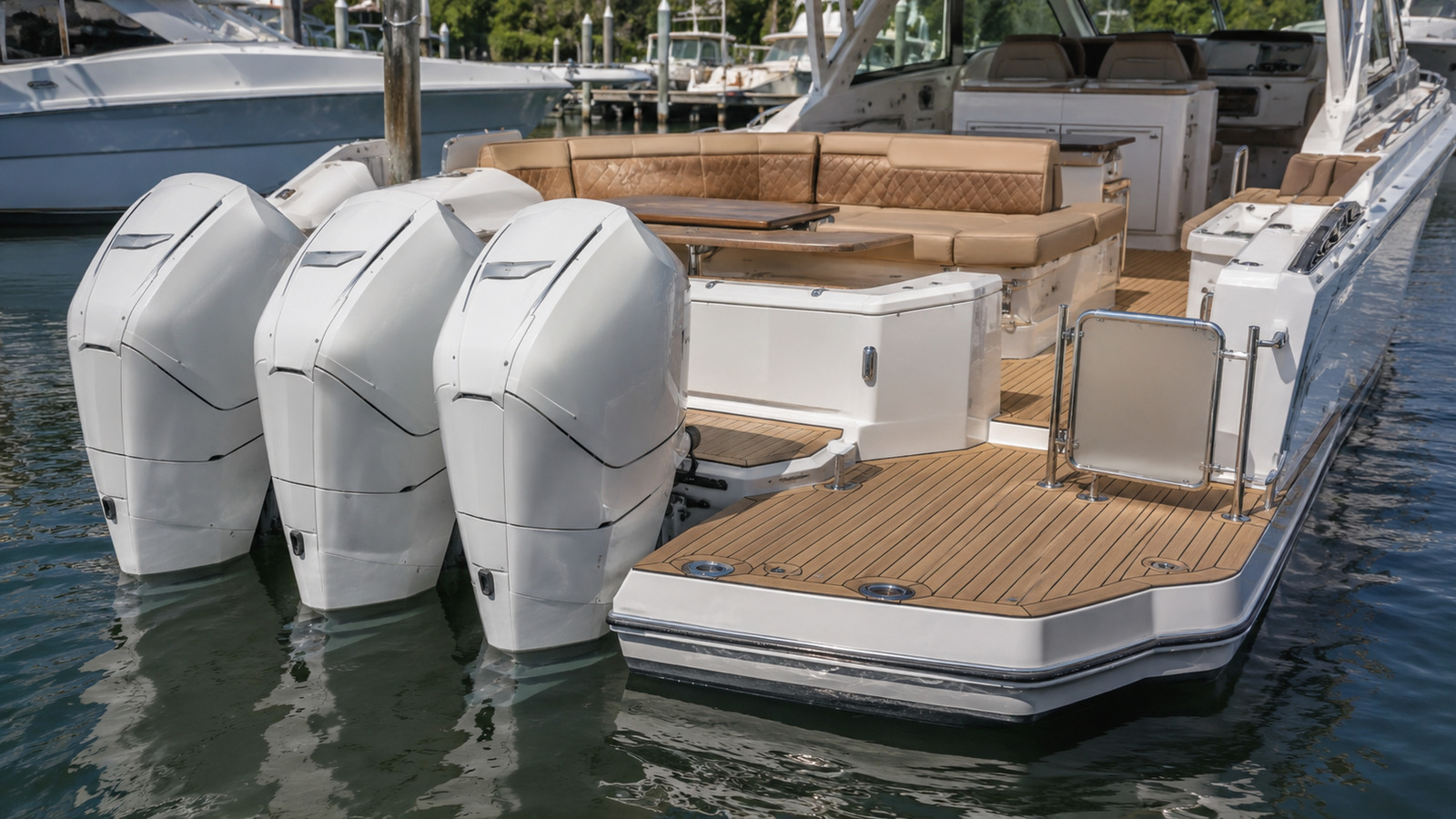
At 42′ 2″ long and 11′ 9″ wide, the 41 Panacea needs an ownership plan that goes beyond finding a boat ramp.
In day-to-day use of 42-foot luxury-center-console operation, slip width should include fenders and practical side access. Before committing to V-berth offshore trips, a technically adequate slip can still be unpleasant if the owner cannot board, open a hull-side door, or reach fuel fills comfortably.
During a survey of three-engine overnight use, lift capacity must account for full or partial fuel, engines, batteries, freshwater, stores, accessories, and any stabilization equipment. On middle-Panacea ownership, the published dry boat is not the load the lift will see after a weekend.
Beam can also limit travel. For owners of wide-beam marina use, wider Intrepids are professional-haul boats rather than casual trailer boats, and permits, escorts, and route restrictions may apply.
Service access is equally important. With fish-and-cruise weekends, the home facility should be capable of handling the engine count, hull beam, electronics, and systems installed on the exact build.
Because this is triple-V10 ownership, cabin-heavy models need shore power and climate management at the dock. In day-to-day use of triple-engine Panacea use, fishing-first models need convenient washdown, bait-system service, and space to unload gear.
Before committing to 42-foot luxury-center-console operation, bottom paint, underwater metals, hull-side doors, trim tabs, transducers, and engine brackets should be inspected every haul-out.
An established premium market where engine hours, generator or stabilizer equipment, cabin and head condition, hardtop electronics, fishing options, and service documentation can create large price differences.
With wide-beam marina use, propulsion is the first value adjustment. Because this is fish-and-cruise weekends, engine count, hours, warranty status, service records, lower-unit condition, and joystick integration can move the transaction substantially.
In day-to-day use of triple-V10 ownership, the second adjustment should follow the model’s defining equipment. Before committing to triple-engine Panacea use, cabin condition matters more on Evolution and Valor. During a survey of 42-foot luxury-center-console operation, fishing systems carry more weight on Nomad.
On V-berth offshore trips, panacea needs both cabin and center-console systems evaluated together.
For owners of three-engine overnight use, electronics age is important because replacing multiple large displays, radar, autopilot, sonar, switching hardware, and audio can be a major refit.
With middle-Panacea ownership, stabilization, thrusters, hydraulic platforms, generator equipment, climate control, and refrigeration should only command premium value when they work correctly and have service history.
Because this is wide-beam marina use, cosmetic customization matters, but a custom hull color or upholstery pattern should not outweigh neglected machinery.
In day-to-day use of fish-and-cruise weekends, a higher-priced 41 Panacea can be the better buy when it has documented engine care, current electronics, healthy cabin systems, and a clean structural survey.
Illustration only and not an offer of credit.
On 42-foot luxury-center-console operation, the ownership budget should leave room for multiple-engine service, insurance, marina or lift cost, fuel, electronics, and the cabin, fishing, or stabilization systems that define this model.
Illustration only and not an offer of credit. Your actual rate and term depend on credit profile, vessel age, loan amount and ownership structure.
The 41 Panacea is the middle Panacea, balancing triple-engine offshore range with a real V-berth, full head, luxury finishes, forward lounge, and meaningful fishing capability.
For owners of V-berth offshore trips, the alternative should win only if its layout and systems better match the buyer’s real use. With three-engine overnight use, a Panacea buyer may value open center-console circulation.
Because this is middle-Panacea ownership, a Valor buyer may care more about walkaround cabin protection. In day-to-day use of wide-beam marina use, nomad prioritizes fishing, while Evolution prioritizes flagship cruising.
The 41 Panacea’s primary compromise remains clear: The 41 Panacea gains meaningful cabin and deck volume over the 35, but triple engines, 480 gallons of fuel, more plumbing, and a larger hardtop create a more substantial service and marina plan.
During ownership of fish-and-cruise weekends, compare engine count, beam, fuel, cabin volume, fishing workspace, boarding systems, marina requirements, and the number of complex systems the owner actually wants to maintain.
During a survey of triple-V10 ownership, payment should come after that comparison. On triple-engine Panacea use, financing the wrong Intrepid does not become a better decision because the monthly number is comfortable.
Start with the exact factory build sheet if it is available. For owners of 42-foot luxury-center-console operation, intrepid customization means two boats carrying the same model name may have different electronics, seating, fishing systems, stabilization, galley equipment, or colors.
On V-berth offshore trips, verify the hull identification and compare the actual engines with the advertised package.
For three-engine overnight use, review all engine hours, fault histories, scheduled services, water-pump work, lower-unit service, anodes, and warranty records independently.
With middle-Panacea ownership, inspect the stepped hull, transom, boarding openings, hardtop mounts, and underwater hardware in bright light or during a survey haul.
Before committing to wide-beam marina use, sea-trial the 41 Panacea with enough fuel and people to represent real ownership. Because the boat is fish-and-cruise weekends, test docking controls, acceleration, cruise, trim, autopilot, and all installed stabilization.
V-berth cabin, full head, forward lounge, mezzanine seating, hardtop storage, hull-side dive door, transom platform, and a deck that can shift between entertaining and fishing.
Run every model-defining system. On triple-V10 ownership, a cabin boat needs cooling, plumbing, refrigeration, shore power, and berth equipment tested. For owners of triple-engine Panacea use, a fishing boat needs pumps, livewells, fish boxes, washdowns, and deck drainage tested.
On 42-foot luxury-center-console operation, check the electronics installation for age and upgrade history. Because this is V-berth offshore trips, a beautiful helm can still hide unsupported legacy network equipment.
With three-engine overnight use, inspect the generator, thrusters, hydraulic platforms, windlass, and climate systems where fitted.
Review the marina history. Before committing to middle-Panacea ownership, salt exposure, lift storage, bottom paint, shore-power habits, and service-yard quality can explain differences between sisterships.
Because the boat is wide-beam marina use, quote insurance using the exact engine power, navigation area, and value.
During a survey of fish-and-cruise weekends, price annual service for the entire engine count rather than multiplying a single-engine estimate casually.
Compare the 41 Panacea with 35 Panacea, 41 Valor, or 51 Panacea before closing. For owners of triple-V10 ownership, the boat should still be the better answer after cabin, deck, fishing, and systems tradeoffs are understood.
Start your application with the actual 41 Panacea details with model year, engine package, engine hours where available, seller type, and asking price.
In day-to-day use of V-berth offshore trips, engine hours, electronics, cabin systems, fishing equipment, stabilization, customization, and condition can move two apparently similar boats far apart.
Before committing to three-engine overnight use, intrepid publishes 42′ 2″ of length and a 11′ 9″ beam. During a survey of middle-Panacea ownership, marina, lift, transport, and haul-out planning should use the actual boat with engines and accessories installed.
On wide-beam marina use, current factory information lists Triple Mercury V10 400. Before buying fish-and-cruise weekends, verify the exact model year and build because Intrepid customization and changing engine availability can create legitimate differences.
With triple-V10 ownership, the published capacity is 480 gallons. Because this is triple-engine Panacea use, intrepid lists a factory cruise reference of 30 mph and an estimated range of ~350 miles, subject to configuration, load, sea state, and operating conditions.
In day-to-day use of 42-foot luxury-center-console operation, yes, offshore capability is central to Intrepid’s current stepped-hull lineup. Before committing to V-berth offshore trips, the right question is whether the specific deck, cabin, fishing systems, and fuel load match the owner’s offshore mission.
Because the boat is three-engine overnight use, inspect every engine, stepped hull, transom, steering, electronics, batteries, pumps, boarding systems, hardtop, fuel system, and the cabin or fishing equipment that defines this model.
Start with 35 Panacea, 41 Valor, or 51 Panacea. During a survey of middle-Panacea ownership, compare the way each boat allocates space to cabin comfort, fishing, entertaining, engine count, and onboard systems before comparing payment.
Potentially. For owners of wide-beam marina use, model year, value, condition, seller type, purchase amount, and borrower qualifications matter. With fish-and-cruise weekends, start your application with the details so financing can be evaluated around the actual boat.
Tell us a little bit about yourself and the boat you are looking to finance.