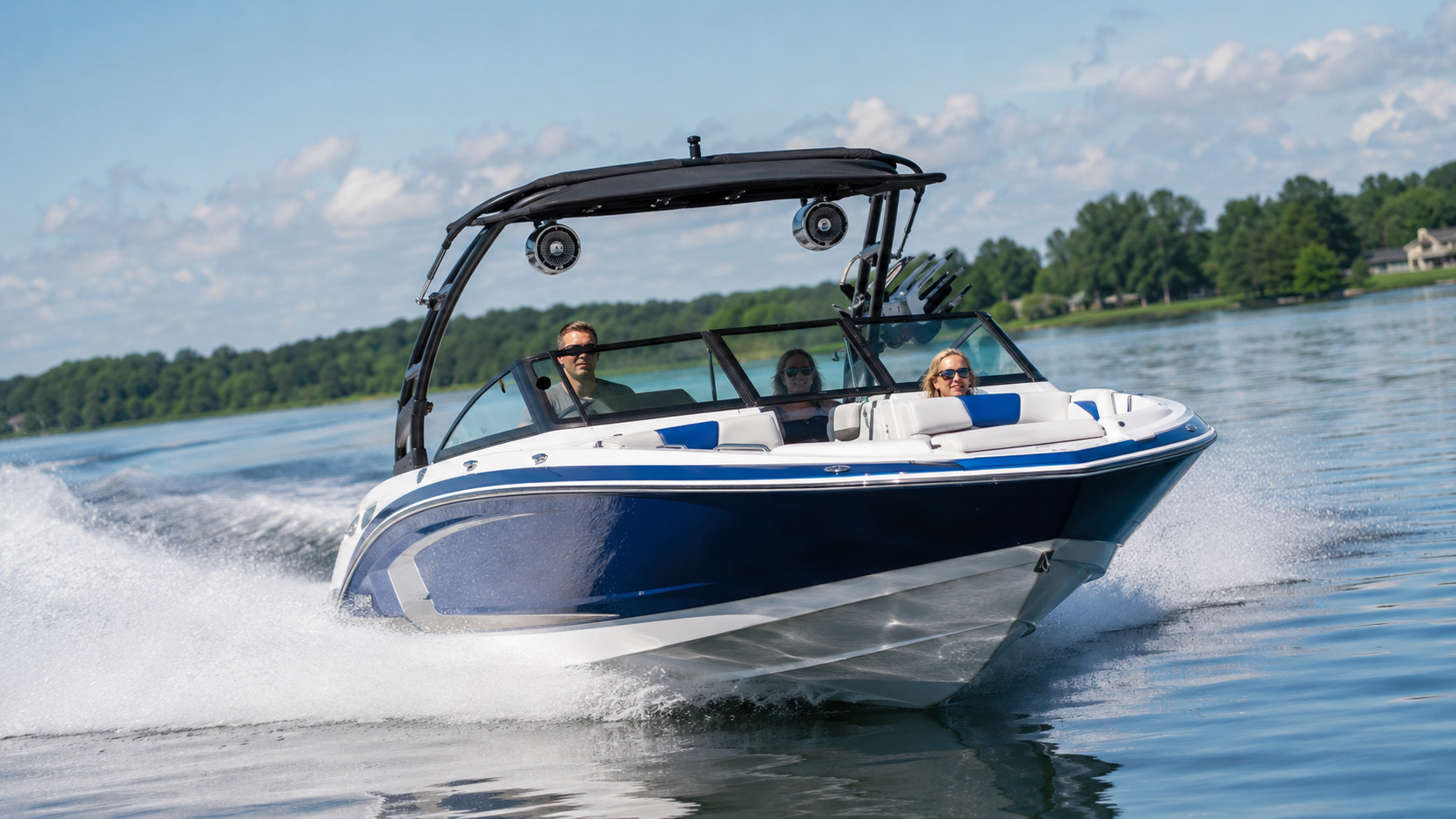
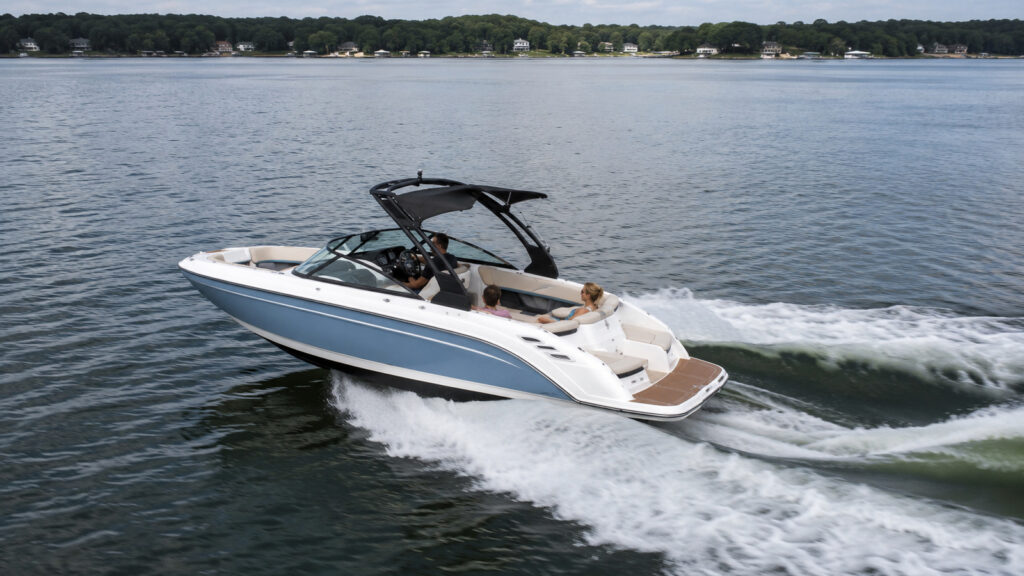
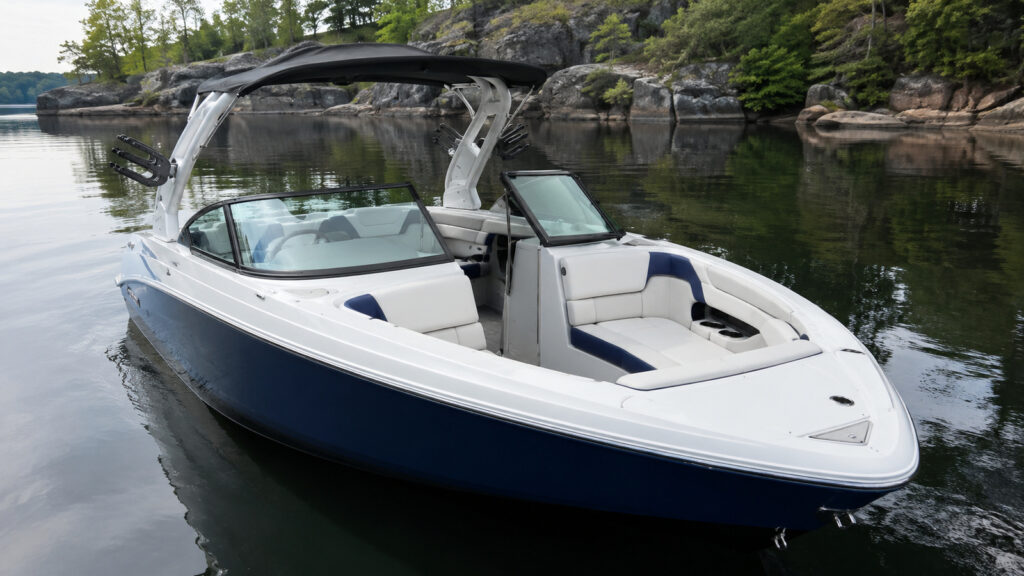
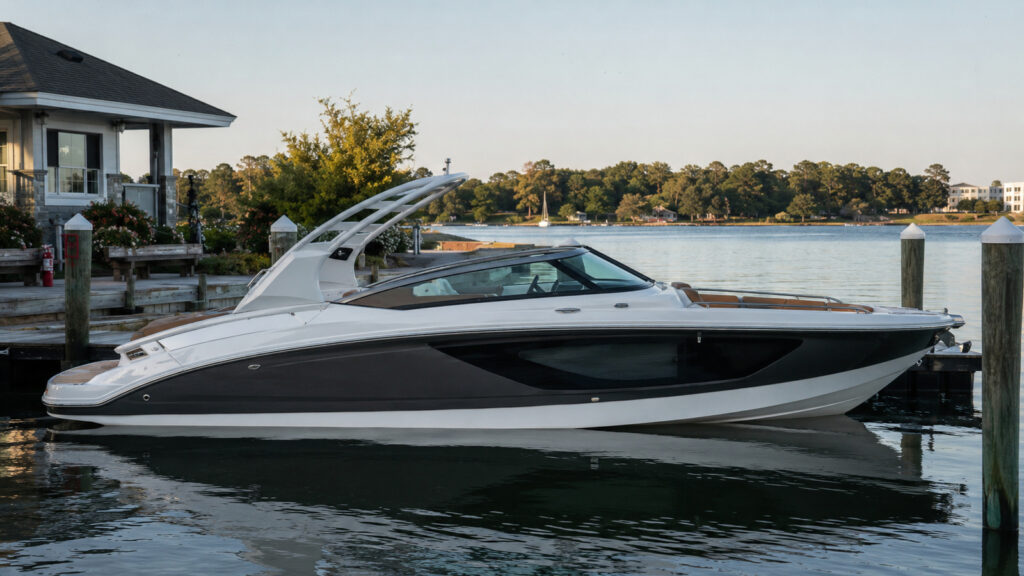
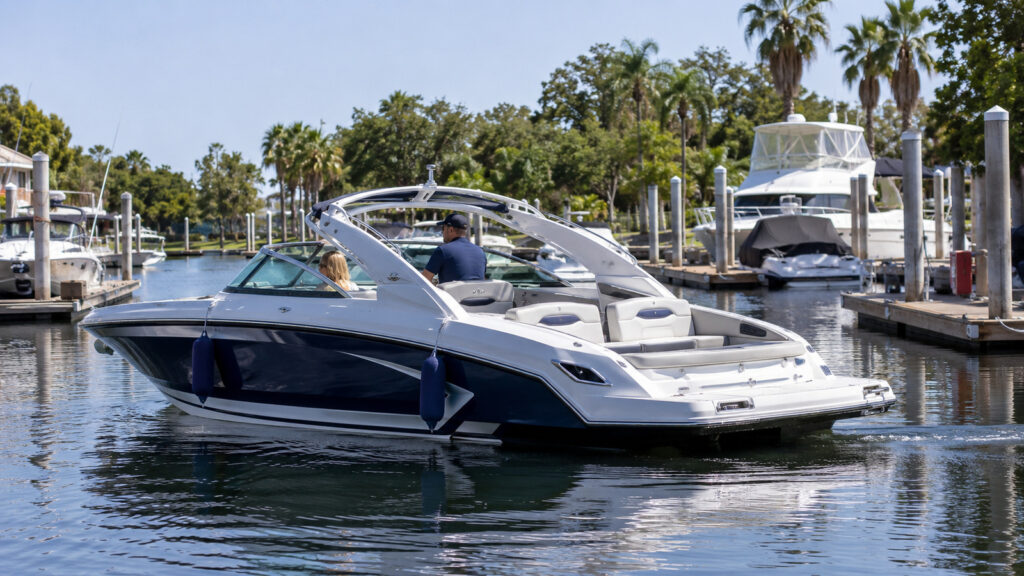
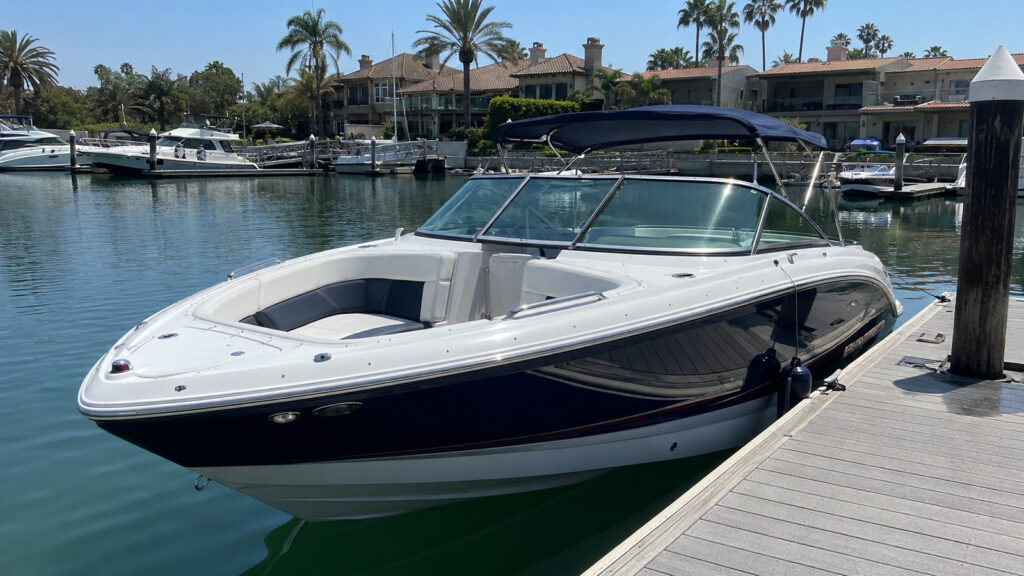
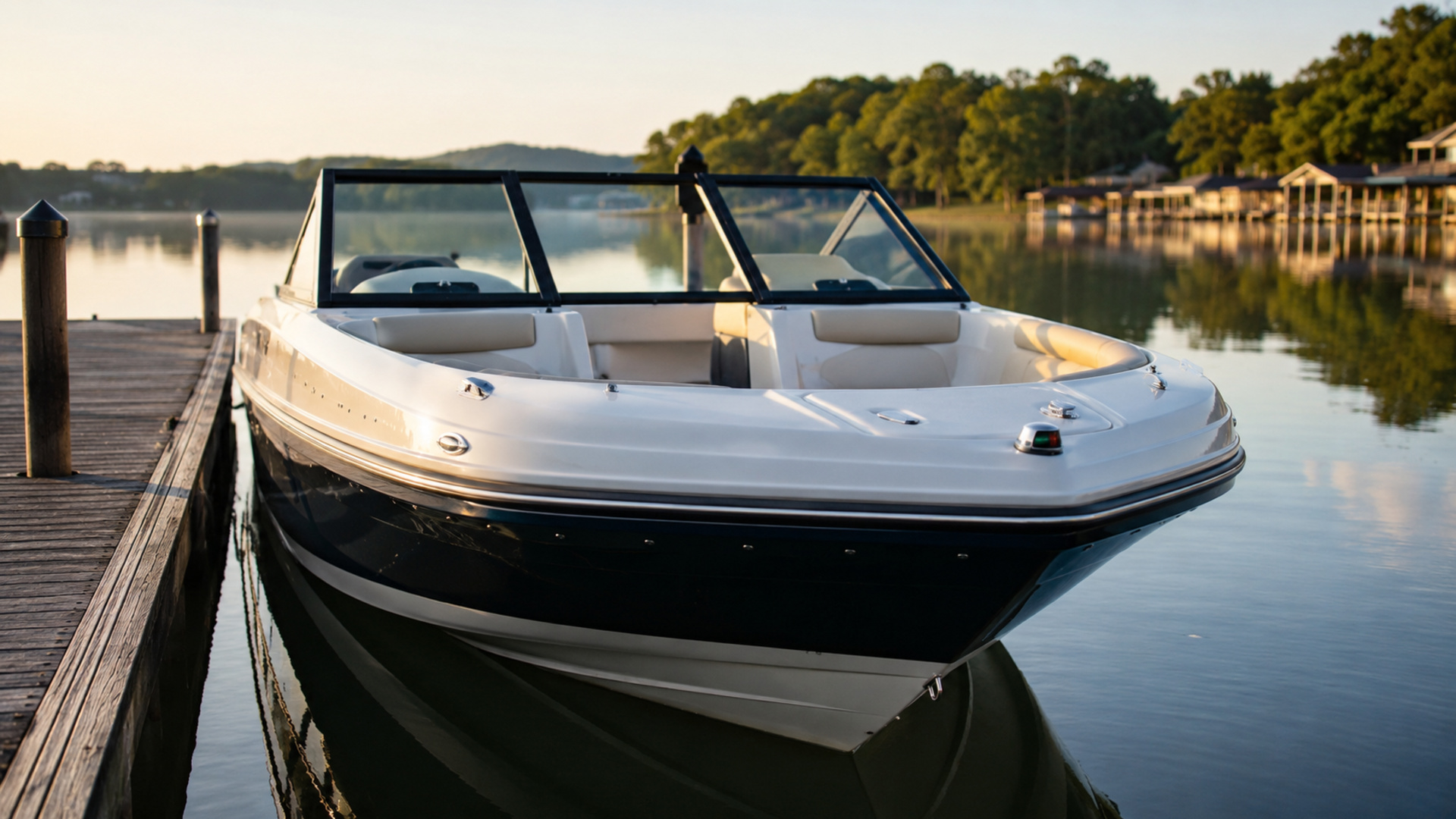
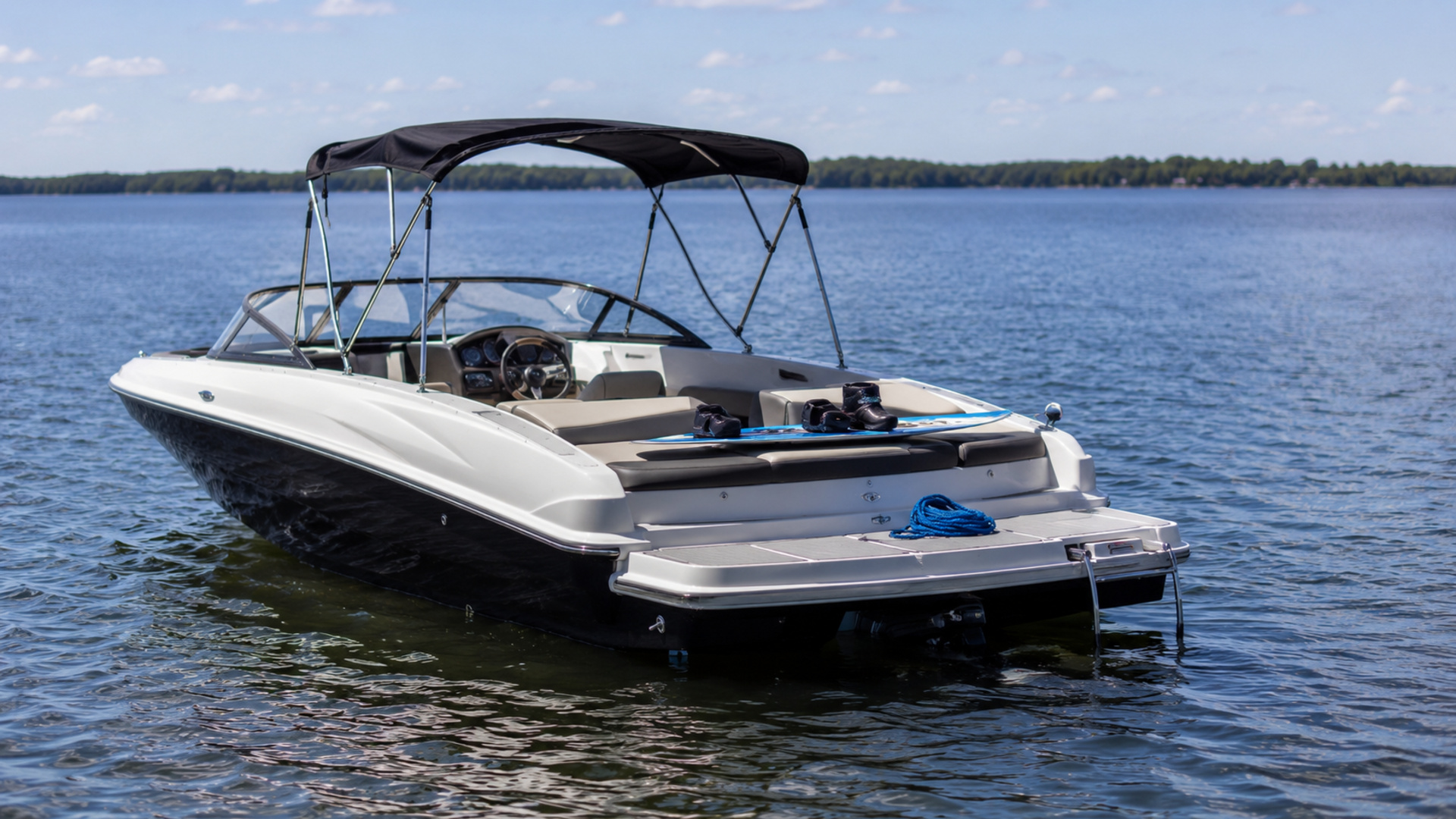
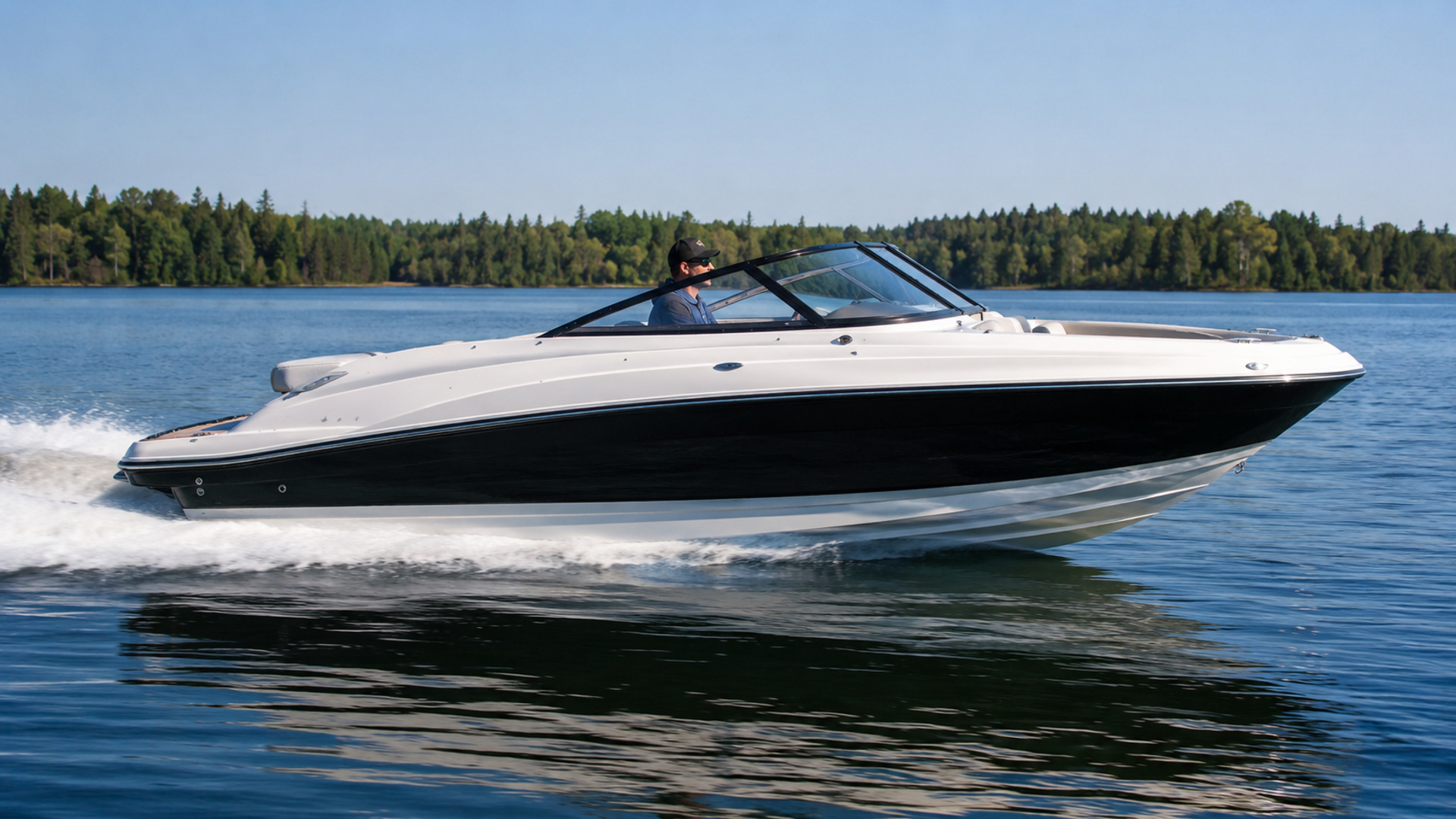
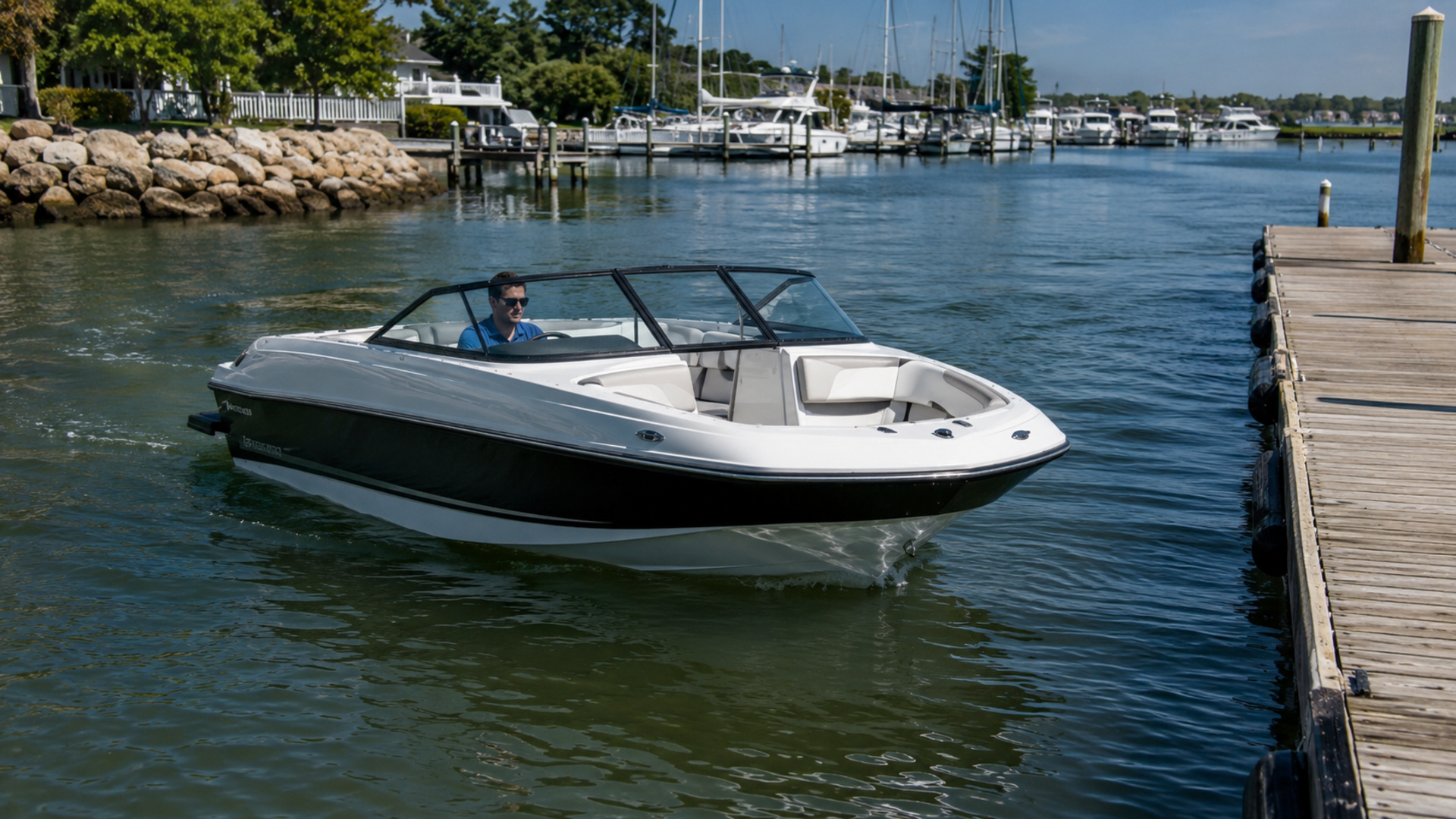
Chaparral’s current GTS-Surf family runs from the 21-foot GTS 1 to the 30-foot-2-inch 30 Surf, pairing family bowrider layouts with forward-drive propulsion, ballast, Malibu Surf Gates, and touchscreen rider controls.
The Chaparral GTS-Surf family is built for buyers who want wakesurfing without giving up the broad utility of a traditional Chaparral bowrider. The boats still have deep family seating, walk-through windshields, storage, swim platforms, and conventional cruising manners, but they add a wake-shaping package designed around repeated rider sessions.
Chaparral currently groups five models under GTS-Surf: GTS 1, GTS 3, GTS 6, 28 Surf, and 30 Surf. The naming is slightly unusual because the three newer GTS models use GT Surf branding while the two largest boats continue with 28 Surf and 30 Surf names.
Every model uses forward-drive sterndrive propulsion rather than a conventional aft-facing sterndrive. Chaparral pairs that power with Malibu Surf Gates and ballast so a rider can surf close behind the boat while the driver manages the wave through the helm interface.
The size progression is meaningful. GTS 1 is 21 feet with an 8-foot-4-inch beam and 675 pounds of ballast. GTS 3 grows to 23 feet and 300 horsepower but publishes 425 pounds of ballast. GTS 6 jumps to 26 feet 5 inches with 1,080 pounds of ballast, freshwater, a head compartment, and yacht certification.
The 28 Surf keeps an 8-foot-6-inch beam while growing to 6,100 pounds dry with engine, 80 gallons of fuel, and the same 1,080-pound ballast figure. The 30 Surf reaches 30 feet 2 inches and a 9-foot beam with 100 gallons of fuel.
That means this lineup is not a simple bigger-is-better ladder. A GTS 3 shopper gets more passenger room than GTS 1 but a smaller published ballast bag. A GTS 6 shopper gets much more all-day equipment. A 30 Surf shopper accepts oversize-width transport issues in exchange for the largest social platform.
The right GTS-Surf purchase starts with the family’s rider load, storage setup, and normal passenger count before horsepower or payment is compared.
Start with storage. The GTS 1 is 8 feet 4 inches wide. GTS 3, GTS 6, and 28 Surf use an 8-foot-6-inch beam. The 30 Surf is 9 feet wide and changes the road-transport conversation immediately.
Then choose passenger room. GTS 1 and GTS 3 have numeric capacity ratings, while GTS 6, 28 Surf, and 30 Surf are yacht certified and should be loaded conservatively for conditions.
Surf hardware comes next. Do not assume ballast grows with model size. The published 675-pound GTS 1 and 425-pound GTS 3 figures prove that the family was engineered around complete packages rather than one simple scaling rule.
Choose all-day equipment after that. GTS 6, 28 Surf, and 30 Surf introduce head compartments, freshwater, larger fuel tanks, powered stern access, and more elaborate arch systems.
Power should finish the decision. GTS 1 tops out at 250 HP, GTS 3 at 300 HP, and the larger boats reach 430 HP. More power is useful under ballast and passenger load but also increases fuel and service expense.
Finally compare the exact price. The model with the best spec sheet is not automatically the model that fits the family’s storage, towing, and actual rider count.
A GTS-Surf boat has more maintenance points than an ordinary bowrider because the owner is maintaining both a sterndrive family boat and a wake-shaping system.
Forward-drive service belongs near the top of the budget. Drive oil, propellers, seals, cooling systems, engine-compartment ventilation, and winterization where required all need scheduled attention.
Ballast adds pumps, hoses, tanks or bags, vents, and controls. The system should be drained and winterized correctly in freezing climates.
Surf Gates and actuators need clean hardware and unobstructed movement. Damage at the transom can become expensive because the surf equipment depends on alignment.
Tower and arch systems add hinges, actuators, canvas, board racks, and speakers. A boat stored outside may age these components faster than a garage-kept GTS.
Audio and electronics matter because rider sessions use them heavily. Weak batteries can create display resets, pump problems, and stereo shutdowns that appear unrelated until the electrical system is load-tested.
Larger models add freshwater, holding tanks, head systems, and more complex swim-platform hardware. Those systems increase all-day comfort but also create more winterization and leak points.
Trailer maintenance remains central on GTS 1 and GTS 3. The 28 Surf and 30 Surf increasingly justify marina or heavy-tow planning instead.
A sustainable ownership budget includes loan payment, insurance, fuel, sterndrive service, ballast maintenance, storage, winterization, trailer or lift upkeep, and an electrical reserve.
The GTS 1, GTS 3, and GTS 6 represent the newer GT Surf generation, while the larger 28 Surf and 30 Surf retain Surf model names. All five remain in Chaparral’s current 2026 GTS-Surf grouping.
Wakesurfing places riders close behind the transom. Forward-drive systems move the propellers farther under the hull than a conventional aft-facing sterndrive while preserving the broad integrated swim-platform layout Chaparral buyers expect.
GTS 1 is the smallest at 21 feet with an 8-foot-4-inch beam. GTS 3, GTS 6, and 28 Surf remain at 8 feet 6 inches wide. The 30 Surf’s 9-foot beam changes road-transport requirements in many jurisdictions.
The larger GTS 6, 28 Surf, and 30 Surf publish head and freshwater equipment in their current specifications. GTS 1 and GTS 3 should not be assigned those systems unless an individual build documents them.
Potentially. Model year, value, condition, seller type, purchase amount, and borrower qualifications matter. Send the actual listing so the financing discussion reflects the exact boat.
Choose the Chaparral Surf Boat That Fits the Whole Day
Pick the storage footprint and passenger room first. Then choose ballast, surf hardware, and power. Once the exact GTS or Surf model fits the family’s real use, evaluate financing around that boat.