Call Us : 207-994-5109
Mon – Fri: 8 am to 9 pm & Sat – Sun: 10 am to 8 pm
Compare the current Redfisher 16, Redfisher 18, and Redfisher 21 by draft, power, fishing range, towing burden, and the kind of shallow-water day each boat is actually built to handle.
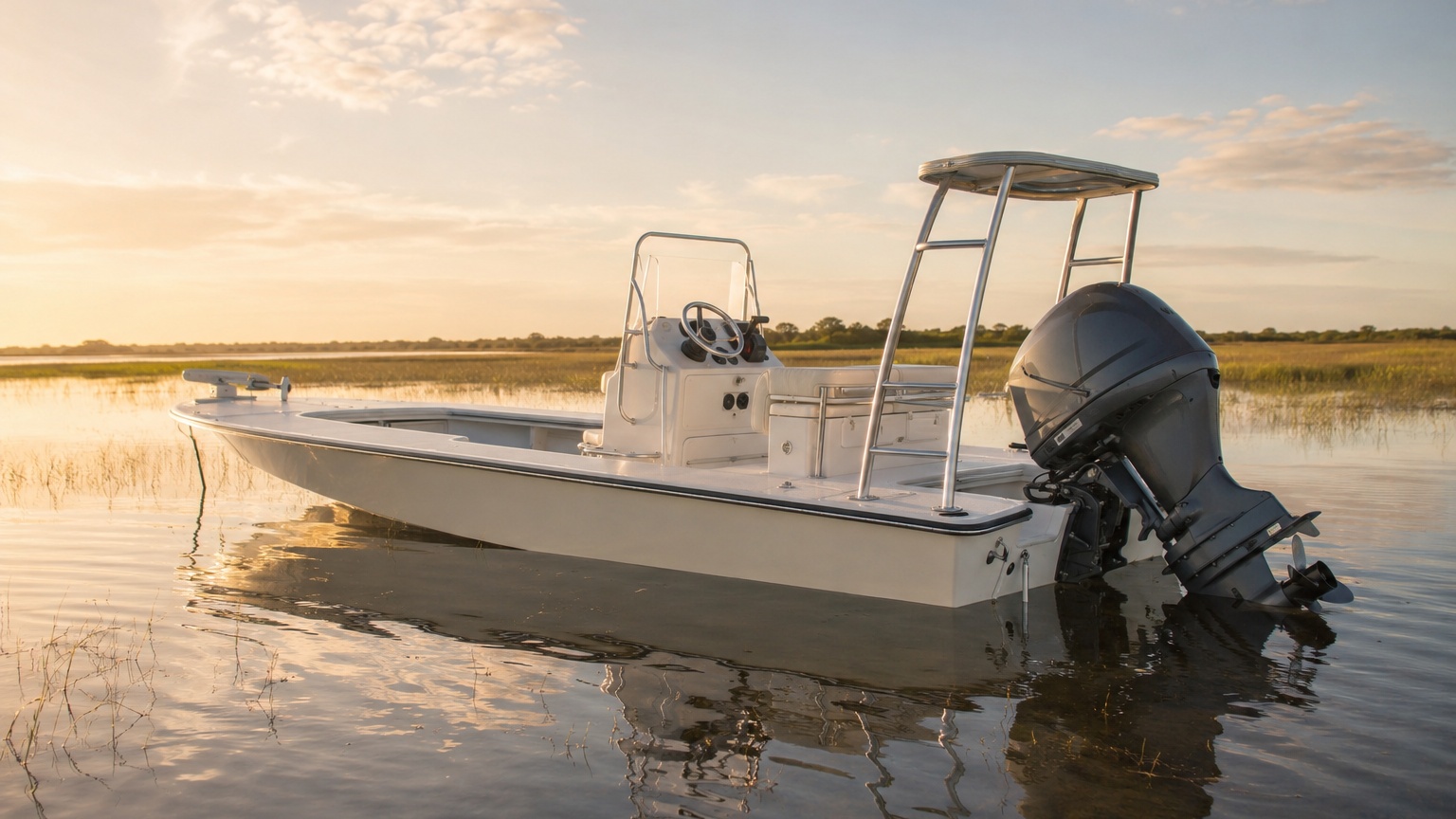
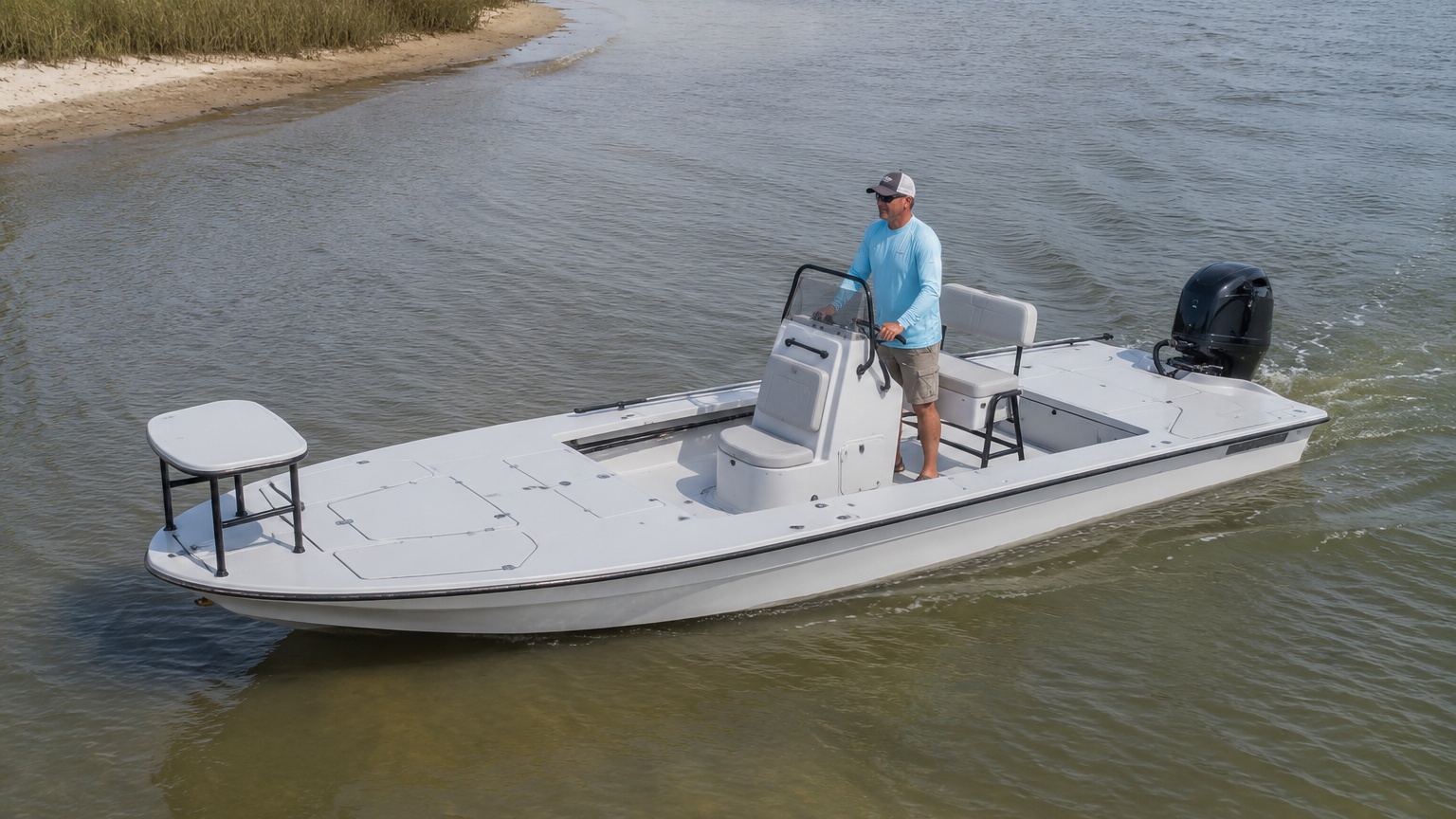
Hewes currently builds exactly three Redfisher models: the 16, 18, and 21. All three are vacuum-infused VARIS flats boats designed around shallow-water fishing, but the ownership logic changes sharply as the hulls grow.
The Redfisher 16 is the compact end of the range. It measures 16 feet 6 inches, publishes an 11-inch draft, weighs about 1,700 pounds with engine, and tops out at 115 horsepower. Hewes specifically positions it as a serious backcountry boat that can still fit in a garage.
The Redfisher 18 is the line’s classic middle ground. At 18 feet 10 inches with a 10-inch draft, 31 gallons of fuel, and up to 150 horsepower, it stays highly poleable while adding more working deck, more beam, and more long-run comfort than the 16.
The Redfisher 21 is a different kind of tool. It stretches to 21 feet 6 inches, 8 feet 6 inches of beam, 50 gallons of fuel, a 44-gallon livewell, and a 350-horsepower ceiling. That is the model for anglers who may catch bait deep in the backcountry, cross an inlet, work off the beach, and still want the same boat to pole a shoreline later.
All three use Hewes’ current VARIS vacuum-infusion construction. Hewes describes that process as a way to control resin and core structure so the hull remains stiff and strong for its weight. For a buyer, that matters because the Redfisher identity depends on combining shallow draft with enough structure for rougher runs than a pure technical skiff normally sees.
The right model is not automatically the biggest Redfisher the budget allows. The correct boat is the smallest hull that still carries the crew, bait, fuel, tackle, and range needed for the owner’s normal water.
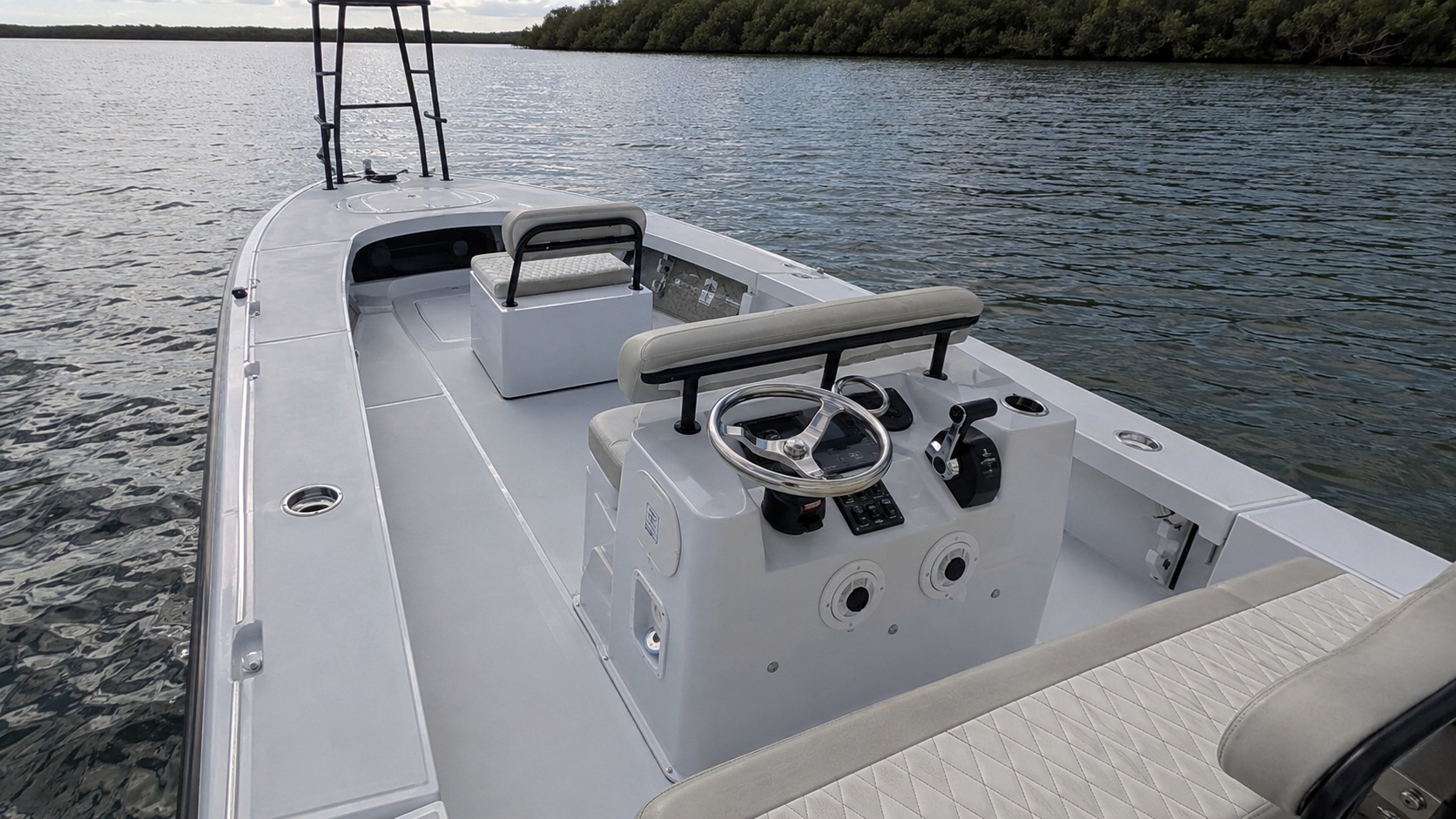
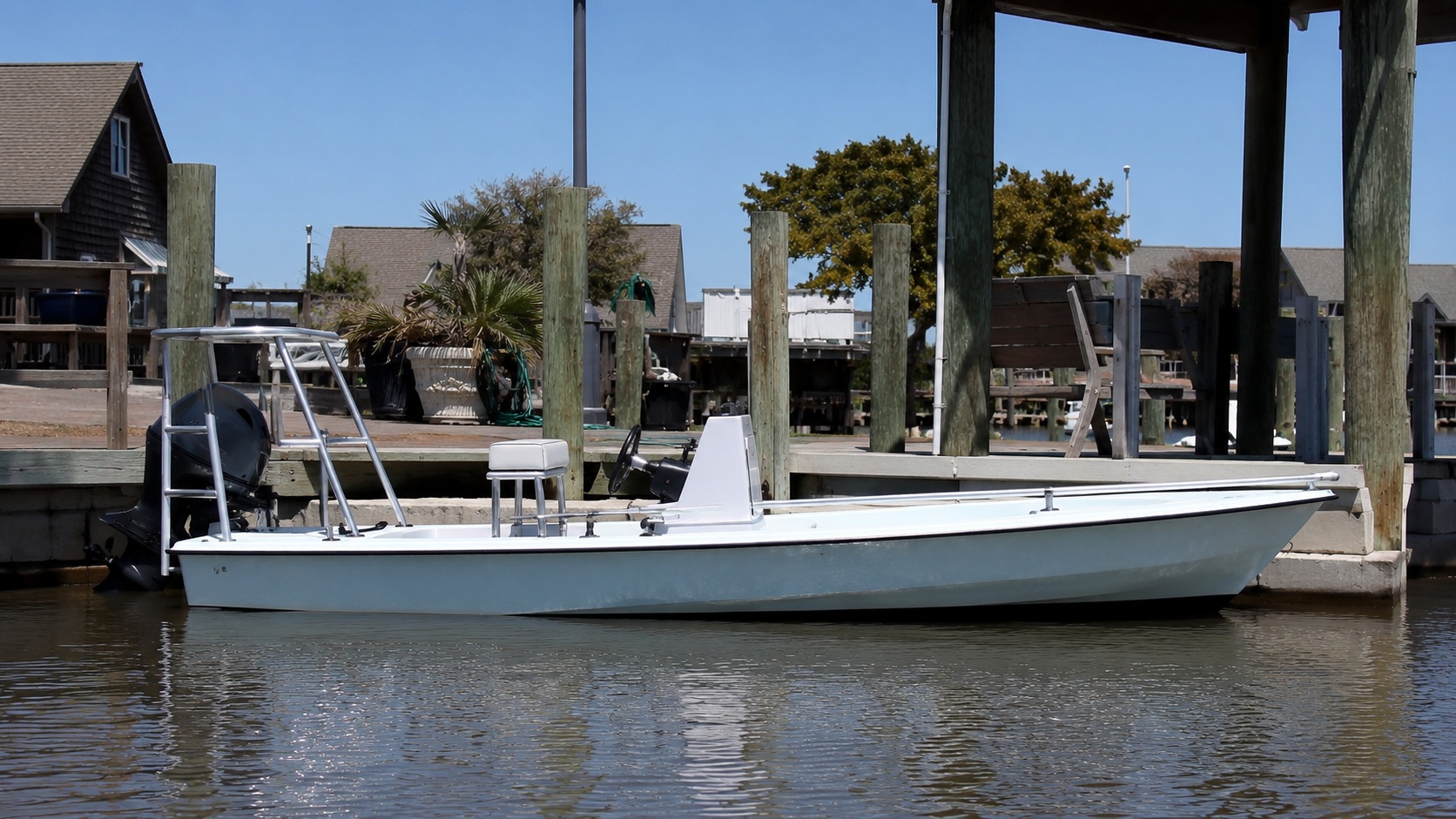
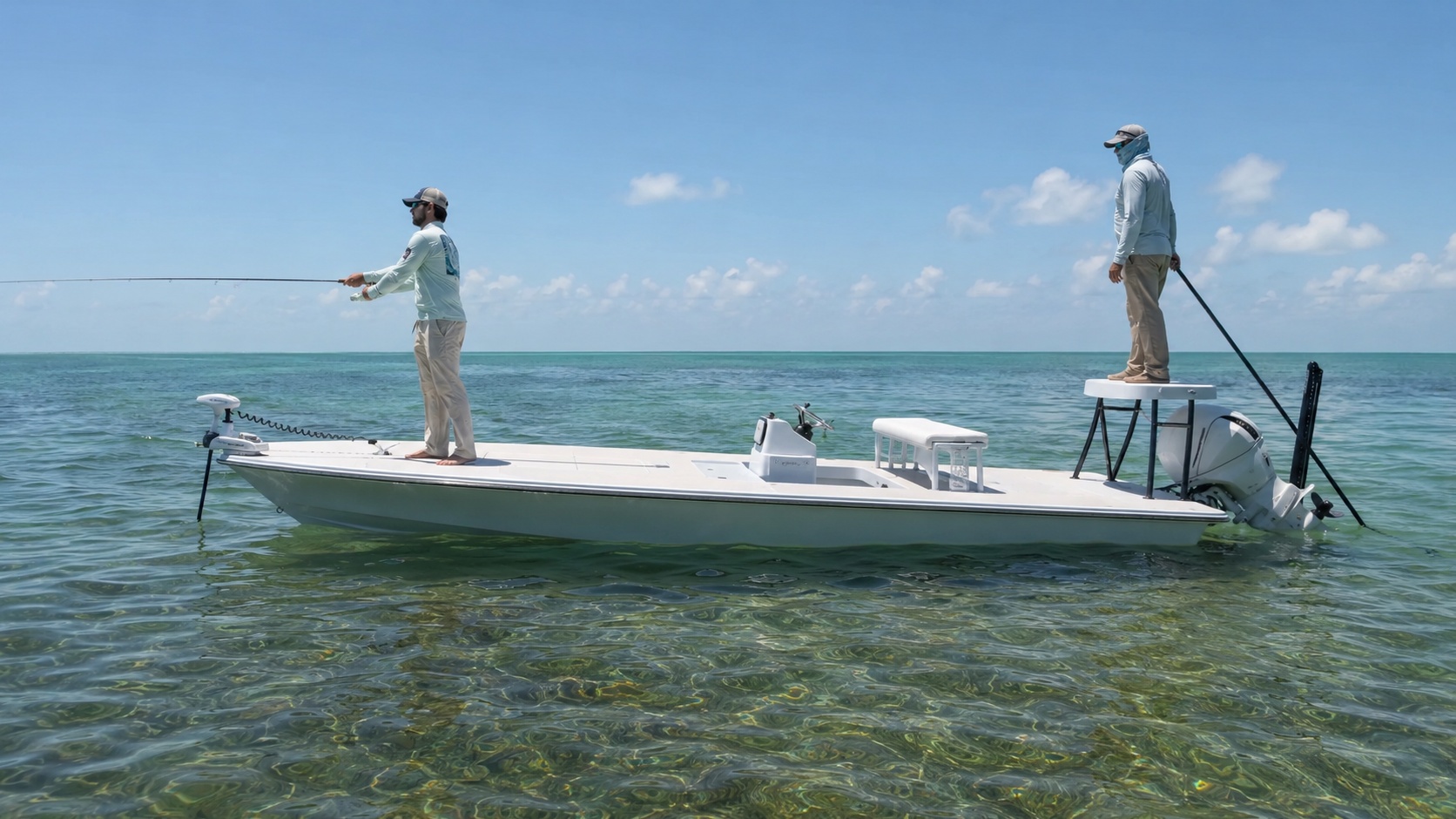
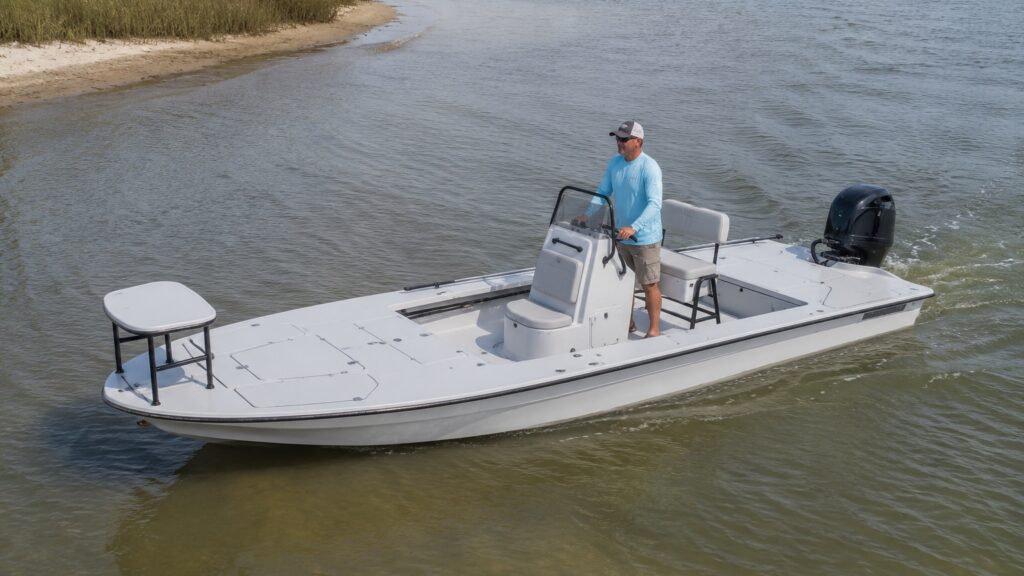
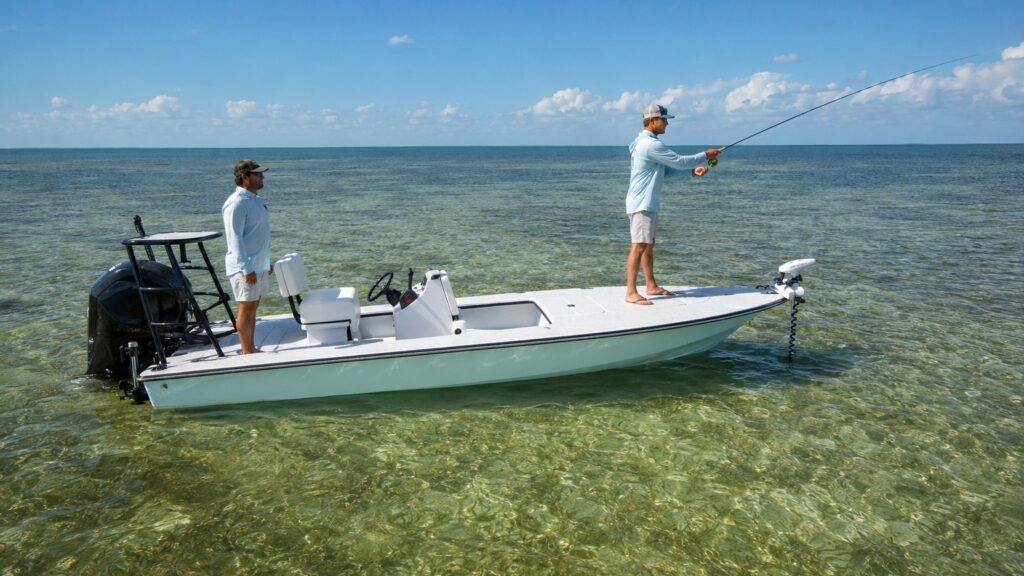
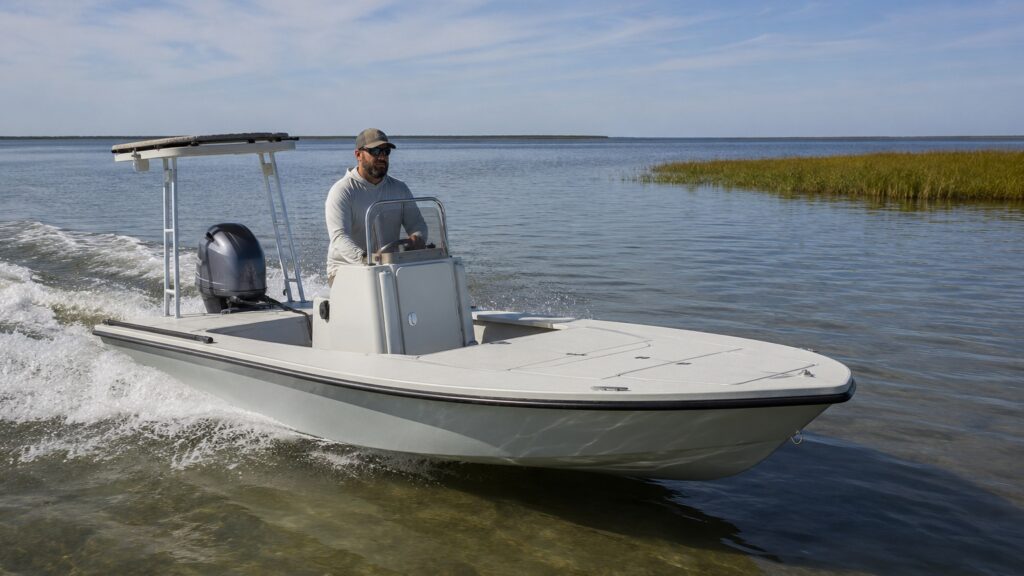
Redfishers are flats and backcountry boats first. Their layouts prioritize casting decks, walk-around gunwales, protected rod storage, live bait, shallow draft, poling capability, trolling-motor integration, and clear movement around the boat when a fish changes direction.
Every current Redfisher uses hydraulic steering and trim tabs. All three support poling-platform configurations, Power-Pole shallow-water anchors, trolling-motor equipment, serious electronics, lockable storage, undergunnel rod management, and self-bailing cockpits.
The construction story is shared, but the running surfaces are not identical. The 16 and 21 publish 15 degrees of transom deadrise, while the 18 publishes 13 degrees. The 18 also publishes the shallowest draft in the line at 10 inches.
Power progression is unusually large. The 16 tops out at 115 horsepower, the 18 at 150, and the 21 at 350. That makes the 21’s operating cost, insurance profile, propeller choice, steering setup, and driver responsibility meaningfully different from the two smaller skiffs.
Livewell capacity also reveals the mission. The 16 uses a 20-gallon aft-center livewell, the 18 grows to 23.5 gallons, and the 21 jumps to 44 gallons for anglers who carry substantially more bait.
Trailer ownership remains realistic throughout the family, but it stops feeling equally light. The 16 is the obvious garage-and-ramp boat. The 18 remains easy to move for a midsize flats boat. The 21 carries far more hull, engine, fuel, batteries, and trailer under the same 8-foot-6-inch road-width ceiling.
Choose the Redfisher 16 when storage, tow simplicity, low operating cost, and precise shallow-water handling matter more than carrying extra people or making long exposed runs. The 16’s narrow beam and 1,700-pound published weight create an ownership experience the other two cannot duplicate.
Best fit: garage-friendly flats fishing, poling, smaller crews, lighter tow vehicles, and owners who value simplicity.
Start your application with the exact details with model year, engine, hours where available, trailer, electronics, trolling motor, Power-Pole equipment, and asking price.
Start with where the boat spends most of its time. If the day begins in a small garage, crosses a short bay, and ends on very shallow shoreline, the 16 may be the strongest tool even when the budget supports more boat.
The 18 becomes compelling when run comfort and deck room need to improve without giving up poling performance. Its published 10-inch draft is actually shallower than the 16’s figure, while the nearly eight-foot beam gives anglers more room to work around one another.
The 21 should be chosen for capability, not status. A 350-horsepower ceiling, standard jackplate, 44-gallon livewell, 50 gallons of fuel, and 8-foot-6-inch beam make sense when those systems solve real fishing problems.
Next decide how the boat will be propelled and controlled. The 16 and 18 are naturally suited to lighter Yamaha SHO packages, while the 21 supports 250 to 350 horsepower and can be configured with more advanced digital steering and control systems.
Then price the fishing systems the owner actually uses. A poling platform, trolling motor, shallow-water anchors, livewell recirculation, electronics, bow casting platform, and battery charger can transform the transaction even though the hull model does not change.
Finish with the complete rig. Trailer condition, tongue style, spare tire, wheel package, battery weight, Power-Poles, trolling-motor batteries, and fuel all matter when the boat is towed every weekend.
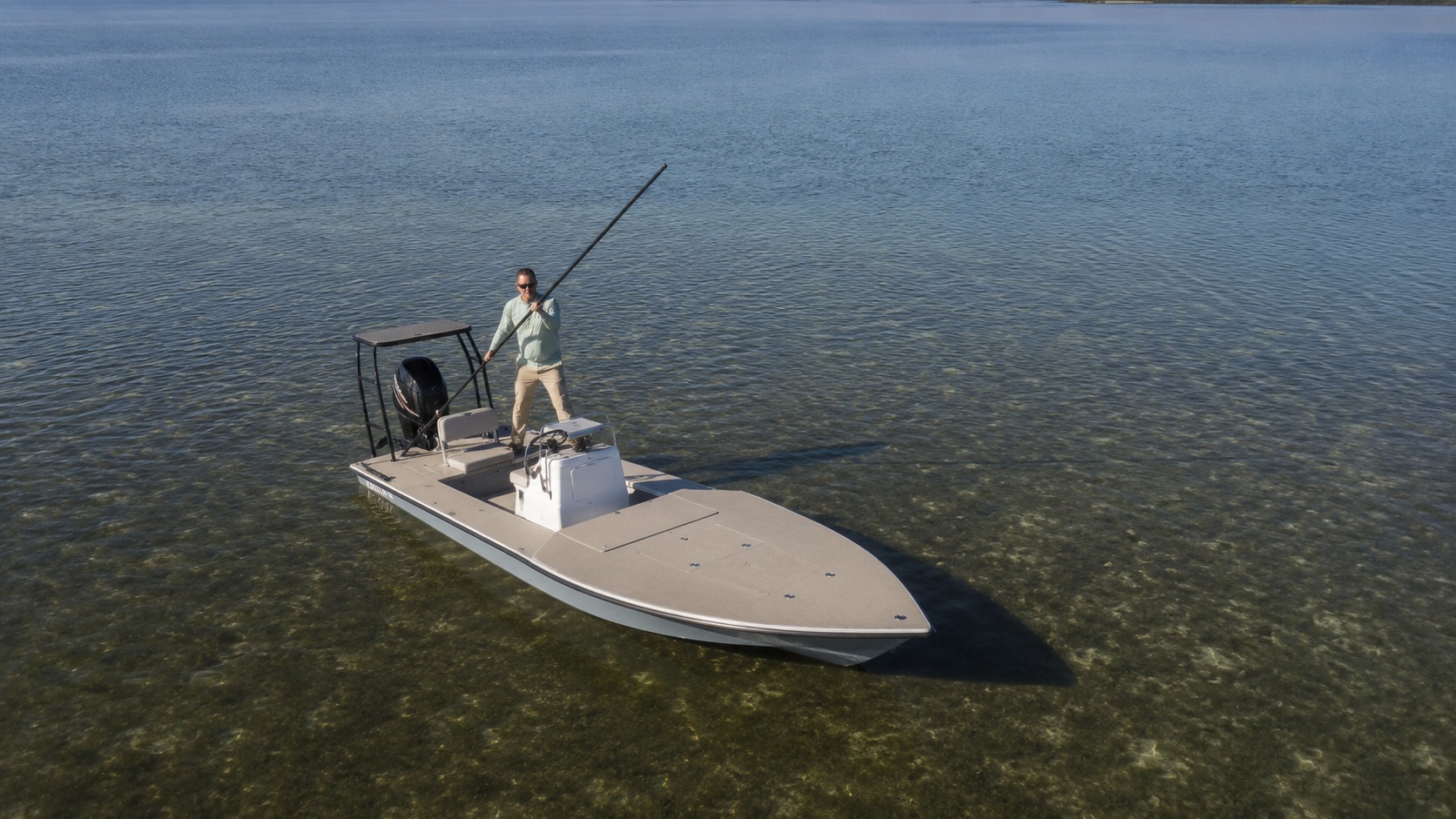
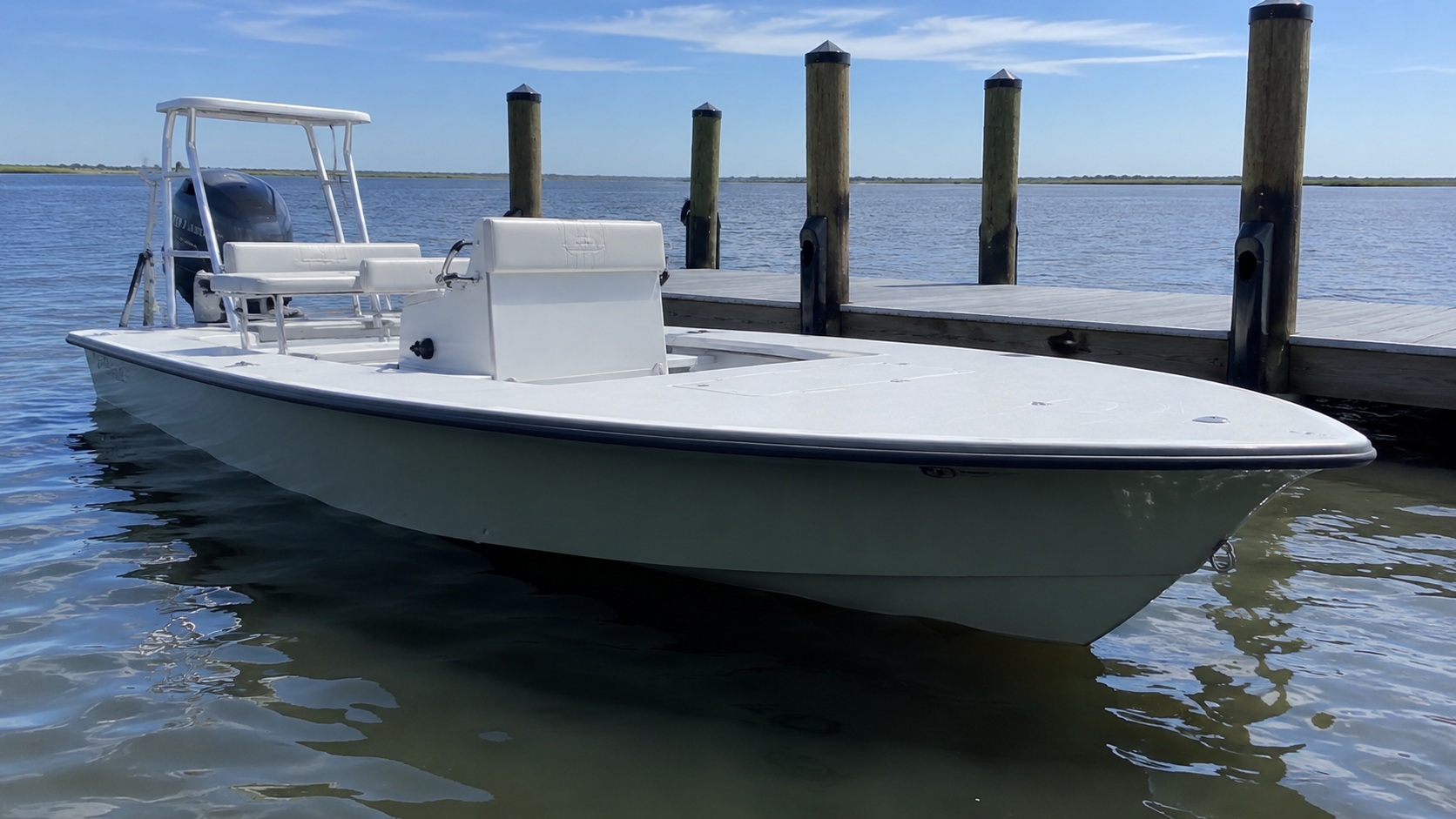
The outboard is the largest recurring mechanical cost. Oil, gearcase service, water-pump service, propeller condition, trim, hydraulic steering, fuel filters, batteries, and corrosion control should be planned by engine hours and environment.
Shallow-water equipment adds another maintenance layer. Jackplates, trim tabs, Power-Poles, trolling motors, chargers, and livewell pumps all live in wet, high-use areas and should be tested rather than assumed to work because the boat looks clean.
Poling-platform hardware deserves inspection after years of use. Look at welds, deck mounting points, powder coating, backrest or step hardware, and any clamp-on rod holders.
Electronics can be expensive but age quickly. A functioning older Garmin unit may still be useful, yet it should not be valued like a current 12-inch system simply because the screen powers on.
Trailer ownership is central to the Redfisher experience. Tires, hubs, bearings, brakes where fitted, bunks, winch, coupler, lights, corrosion, and swing-tongue hardware can make a well-priced skiff expensive if they need immediate replacement.
Insurance and fuel change most sharply on the Redfisher 21. The same family name covers a 115-horsepower 16 and a 350-horsepower 21, so annual costs should be quoted around the exact engine instead of the Redfisher badge.
A bare hull name is not enough. Engine, electronics, poling tower, trolling motor, Power-Poles, trailer, and model year all affect value.
The current lineup is Redfisher 16, Redfisher 18, and Redfisher 21.
The Redfisher 18 publishes a 10-inch draft. The 16 publishes 11 inches, and the 21 publishes 14 inches.
The Redfisher 16 is the clear answer because it is shortest, narrowest, and lightest, and Hewes specifically emphasizes its garage-friendly manageability.
For many buyers, the 18 is the natural middle choice because it combines 10-inch draft, nearly eight feet of beam, 115 or 150 horsepower, a larger working deck, and easier ownership than the 21.
The Redfisher 21 is the strongest nearshore choice. Hewes gives it 50 gallons of fuel, a 350-horsepower ceiling, larger casting decks, a 44-gallon livewell, and an 8-foot-6-inch beam.
Yes. All three support poling-platform configurations, and the line is designed around flats and backcountry fishing where push-pole control remains important.
Inspect hull and transom condition, engine service, jackplate where fitted, trim tabs, steering, livewell, trolling motor, Power-Poles, poling platform, storage hatches, electronics, batteries, and trailer.
Potentially. Model year, value, condition, purchase amount, seller type, and borrower qualifications matter. Start your application with the details so financing reflects the actual boat.
The 16, 18, and 21 share the same shallow-water heritage, but they solve different range, storage, bait, crew, and power problems. Choose the mission first, then finance the exact boat.
Tell us a little bit about yourself and the boat you are looking to finance.